Newsletters


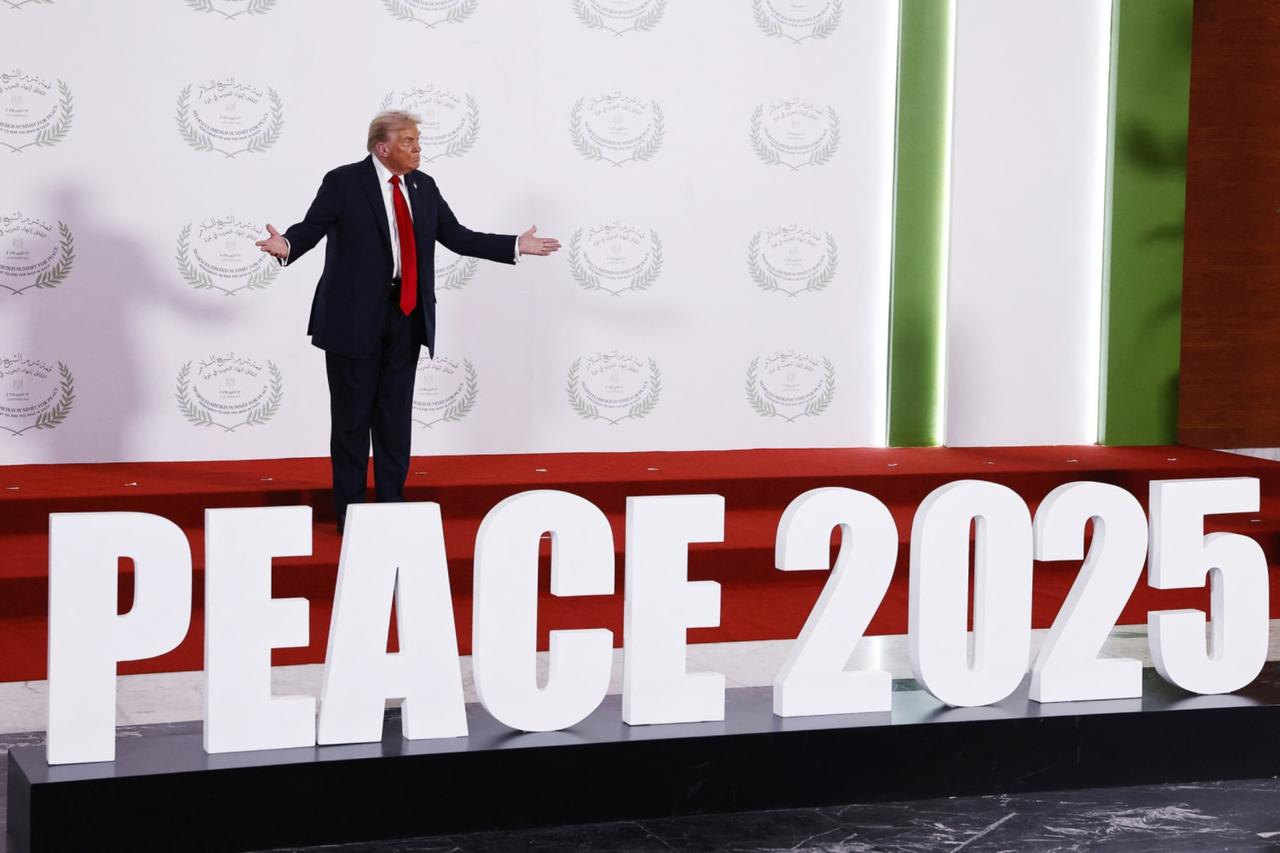


On Oct. 10, 2025, Israel and Hamas reached a ceasefire that was presented internationally as a step toward humanitarian relief and a possible political horizon.
Yet, in reality, the ceasefire functioned more as a recalibration of Israeli violence than as a cessation of hostilities.
Israel’s systematic violations of the agreement, documented by many international organizations through hundreds of military attacks, including airstrikes, sniper fire, raids, and continued infrastructure destruction, demonstrate that the ceasefire neither stopped the genocidal war on Gaza nor altered the underlying logic of control. Instead, it temporarily suspended high-intensity warfare while enabling lower-visibility, spatially structured forms of coercion.
Israel’s non-compliance is therefore not incidental or tactical. It signals a deliberate strategy in which ceasefire arrangements are instrumentalized to consolidate gains achieved through war.
The continued targeting of civilians outside officially declared “combat zones,” the obstruction of humanitarian aid despite formal guarantees, and the ongoing demolition of residential areas reveal that the ceasefire did not impose constraints on Israeli aggressiveness. Rather, it created a permissive environment in which violence could be normalized under administrative and security rationales.
In this sense, the ceasefire marked a transition from overt war to bureaucratic violence. Therefore, the ceasefire is not a resolution to end Israeli occupation, genocide, and ethnic cleansing since Israel has not stopped killing civilians but reorganizes the occupation and continues to occupy Palestine through 'legal frameworks' such as Trump's Gaza plan and UNSC 2803 resolution.
The emphasis has shifted from battlefield confrontation to territorial reclassification, population management, and the reshaping of Gaza’s physical and demographic landscape.
This transformation is central to understanding why Israel’s repeated ceasefire violations are politically meaningful: they expose the ceasefire as a governance mechanism rather than a pathway to peace.
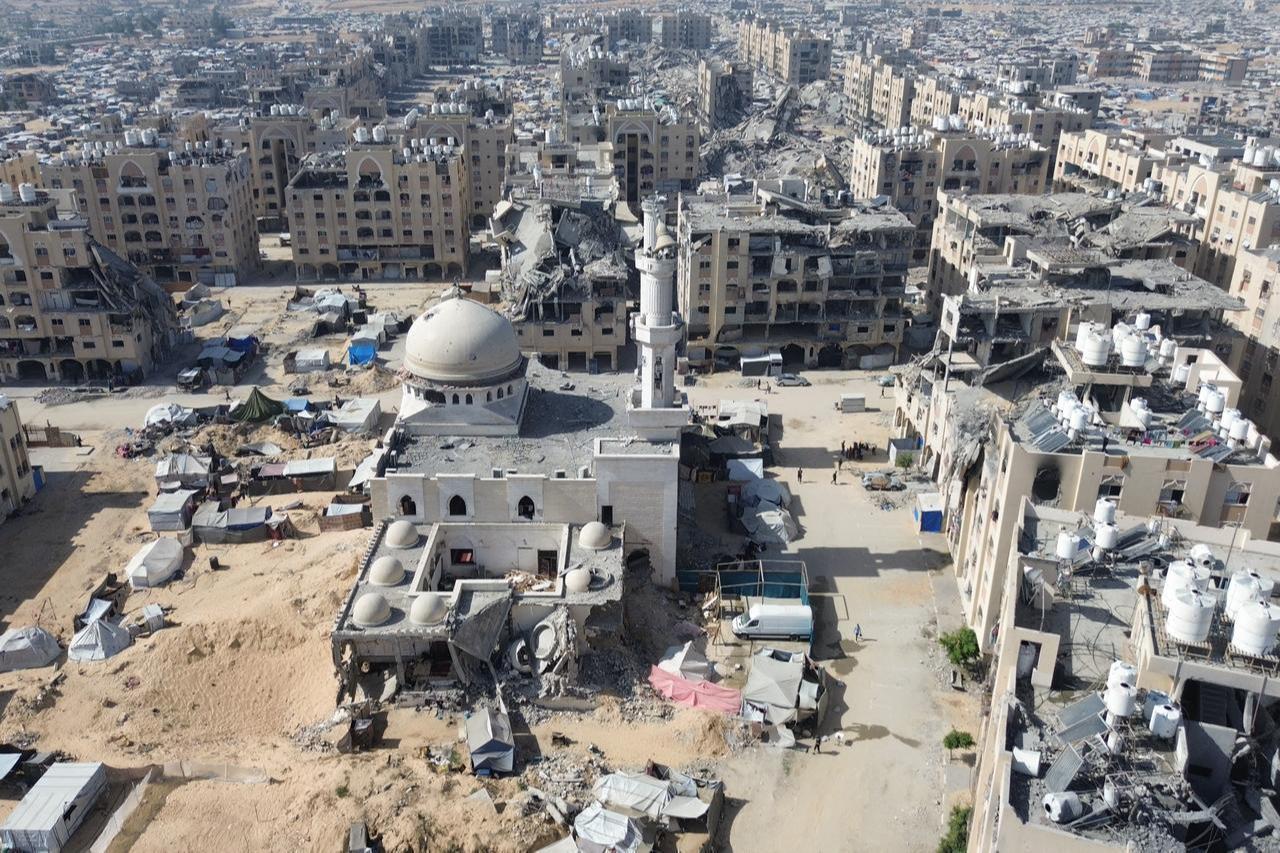

The Trump-backed framework institutionalized through UN Security Council Resolution 2803 represents the political corollary to Israel’s military strategy. While framed in the language of “stability,” “reconstruction,” and “post-conflict governance,” the plan effectively transfers Gaza’s political future to an externally imposed trusteeship regime led by the United States.
For a period of at least two years, core functions of sovereignty, governance, borders, security, reconstruction, and humanitarian access, are removed from Palestinian control and placed under an internationalized but U.S.-dominated authority.
This arrangement does not resolve the occupation; it internationalizes and depoliticizes it. The proposed “Peace Board,” chaired by Donald Trump, is endowed with expansive executive authority without mechanisms of accountability or meaningful Palestinian representation. Far from being a neutral transitional body, it operates as a supra-sovereign structure designed to manage Gaza as a controlled territory rather than a political entity with rights-bearing subjects.
Crucially, the plan reframes Palestinian self-determination as a conditional, deferred objective rather than an immediate right. Political agency is recast as a security risk, while resistance—armed or otherwise—is treated as the primary obstacle to peace.
This echoes classical mandate and trusteeship systems, where colonial powers justified prolonged control by declaring colonized populations “unready” for self-rule. The result is a neocolonial governance model that replaces direct occupation with administrative domination.
The Trump Plan must therefore be understood not as a post-war solution, but as a post-war management strategy. It seeks to stabilize the outcomes of Israel’s military campaign by embedding them within an international legal and institutional framework.
In doing so, it shifts the terrain of contestation from the battlefield to governance structures, while preserving the asymmetry of power that defines the occupation.
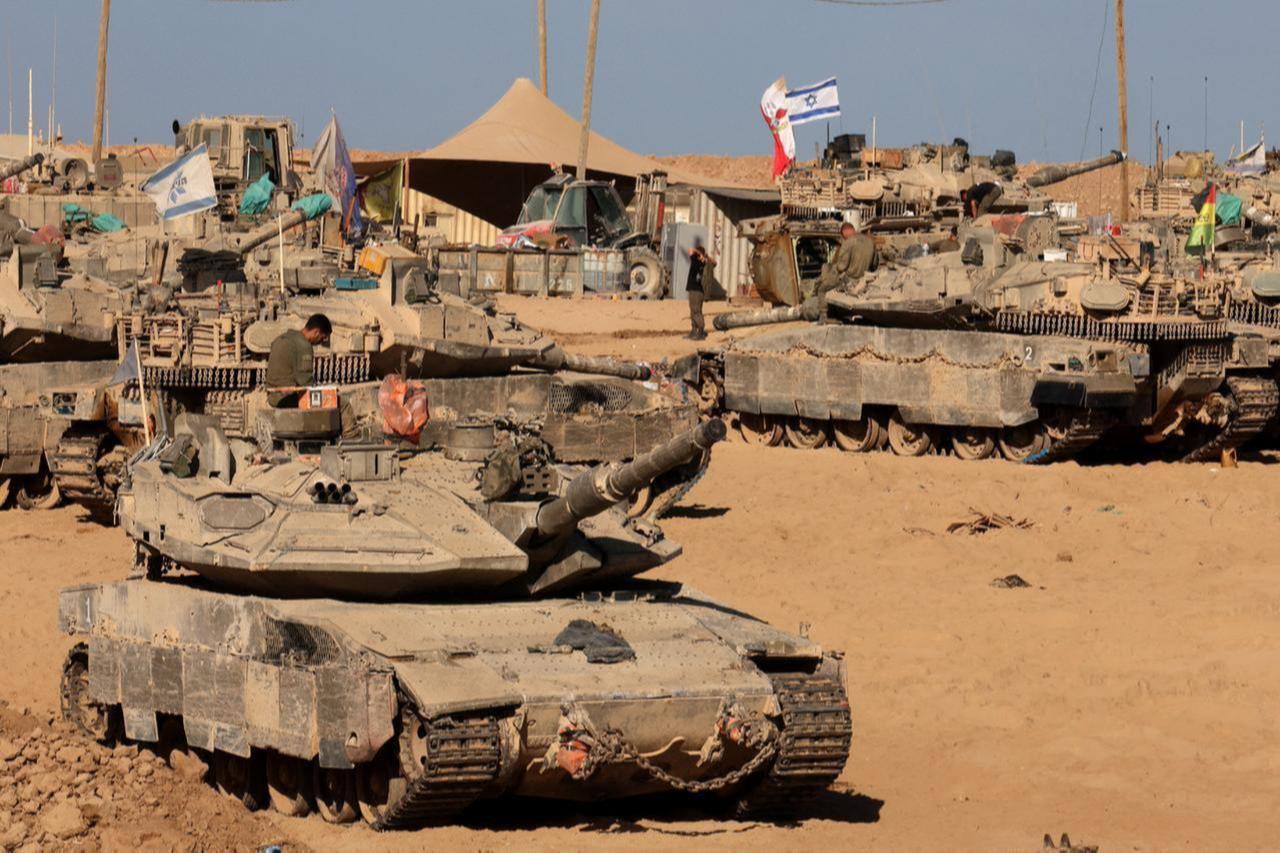
Perhaps the most revealing dimension of this new phase is the structural logic underpinning it. The emergence of the so-called “yellow line” in mid-October 2025 exemplifies how ceasefire arrangements have been used to redraw Gaza’s internal geography.
This militarized boundary, initially presented as a temporary security measure, has functioned in practice as a de facto border dividing Gaza into zones of differential control.
East of the yellow line, Israel has exercised exclusive military authority, forcibly displacing civilians and designating the area as a “dangerous combat zone.” Any Palestinian presence is treated as a legitimate target, effectively rendering the zone uninhabitable. West of the line, where Hamas retains nominal administrative control, Israeli attacks on civilian infrastructure have continued, ensuring that no area can be considered genuinely safe.
Many investigations reveal that the yellow line is deliberately ambiguous and can be moved. Israeli military maps diverge from realities on the ground, with “yellow blocks” extending up to 940 meters beyond the officially indicated line.
This ambiguity is not accidental; it produces constant uncertainty and fear, expanding Israel’s effective control through lethal enforcement rather than formal annexation. The result is a creeping territorial expansion that avoids the political costs of explicit border changes while achieving the same outcome.
Ongoing demolitions, land clearing, and the construction of new military infrastructure east of the line further reinforce this spatial strategy. Roads, berms, and forward operating bases are being built atop the rubble of destroyed Palestinian homes, signaling an intention to establish a long-term military presence. Simultaneously, US-backed “reconstruction” plans reclassify these Israeli-controlled areas as “green zones,” while relegating densely populated Palestinian areas to “red zones” left in ruin.
Such practices amount to forced ghettoization. Population movement is coerced through access to aid, security screening, and spatial restriction, funneling civilians into controlled enclaves that resemble detention spaces more than cities. In this context, reconstruction becomes a tool of demographic engineering rather than recovery, selectively restoring areas that align with the new territorial order.
Seen together, Israel’s non-compliance with the ceasefire and the Trump Plan’s governance architecture reveal a coherent strategy. The ceasefire is not failing; it is functioning as intended within a broader project of control. Violence has not ended; it has been redistributed across time, space, and institutional forms. High-visibility bombardment has given way to lower-intensity but more permanent mechanisms of domination.
The introduction of private military companies under the guise of humanitarian and logistical support further entrenches this model. By outsourcing security to US-based contractors, Washington avoids direct military deployment while retaining operational influence.
This privatization of force creates legal grey zones, reduces accountability, and normalizes a form of occupation that is less visible but no less coercive. Gaza, under this model, becomes neither fully occupied nor sovereign—a “managed territory” governed through a complex system of external controls.
What emerges is a post-ceasefire reality in which occupation persists through administration, mapping, aid control, and security outsourcing. The language of peace and reconstruction masks a systematic effort to freeze Gaza in a condition of political suspension. Sovereignty is neither restored nor explicitly denied; it is indefinitely postponed.
Therefore, there has never been a ceasefire that Israel has fully complied with. Consequently, Israel’s repeated breaches of the Gaza ceasefire should not be viewed as isolated incidents. They are signals of a deeper transformation in the mode of domination.
The Trump Plan, far from challenging this trajectory, provides it with institutional form and international cover.
Together, they mark a shift from overt military occupation to a hybrid regime of spatial control, external trusteeship, and managed dependency. In this configuration, Gaza is no longer simply a site of war.
It is a laboratory for post-war control without resolution, where violence is embedded in governance and humanitarianism is weaponized as policy. The occupation has not ended; it has changed its shape.
And in that change lies its greatest danger: permanence without visibility, domination without accountability, and a peace process that stabilizes injustice rather than dismantling it.


 Set as preferred source
 Set as preferred source


 7 min read