Newsletters


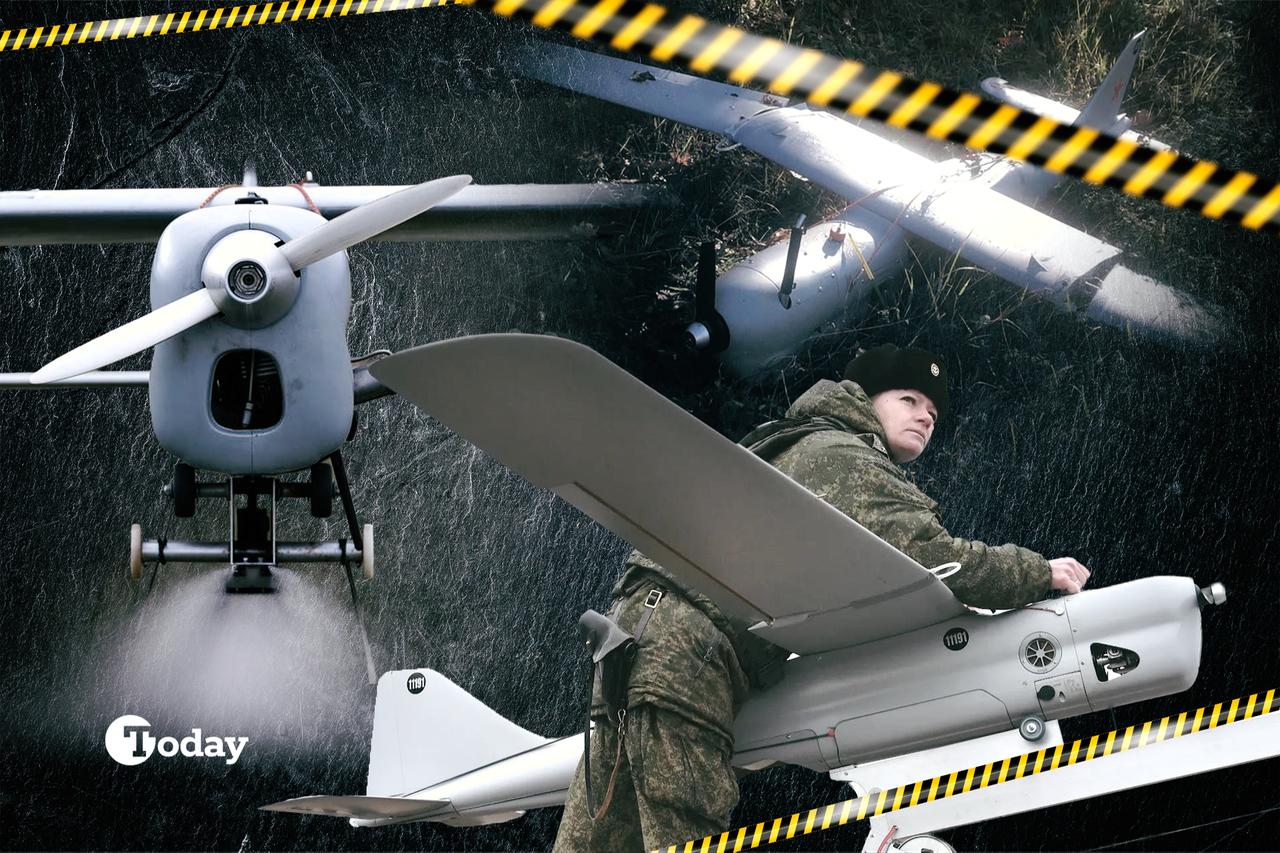


Three separate drone incidents violated Turkish airspace in the second week of December, causing considerable public concern and reigniting debates on air defense capabilities as well as the trajectory of the war unfolding to Türkiye’s north.
The first incident occurred on the night of Dec. 15. According to a statement by the Turkish Ministry of National Defense, a drone of unknown origin entered Turkish airspace from the Black Sea. Following detection and interception by F-16 fighter jets, which presumably scrambled from Merzifon 5th Main Jet Base, the drone was shot down with an AIM-9X Sidewinder air-to-air missile. The decision to engage was reportedly taken after assessing that the target was at a safe distance from populated areas. The wreckage is believed to have crashed somewhere between the districts of Cankiri and Elmadag.
The Defense Ministry stated that search efforts are ongoing, as the debris is thought to be scattered across a wide and rugged area. While the drone’s type has not been officially confirmed, it is widely speculated to have been a Geran-2 loitering munition, a Russian-produced variant of Iran’s Shahed-136. Following the incident, Ankara issued warnings to both Russia and Ukraine, underscoring the risks of escalation and calling for restraint.
Shortly thereafter, residents of Cubuklubala village in Kocaeli discovered a drone that had crash-landed in a field. Bearing red star markings on its wings, the platform was identified as a Russian-made Orlan-10, a system widely used by the Russian military for tactical reconnaissance and target-acquisition missions.
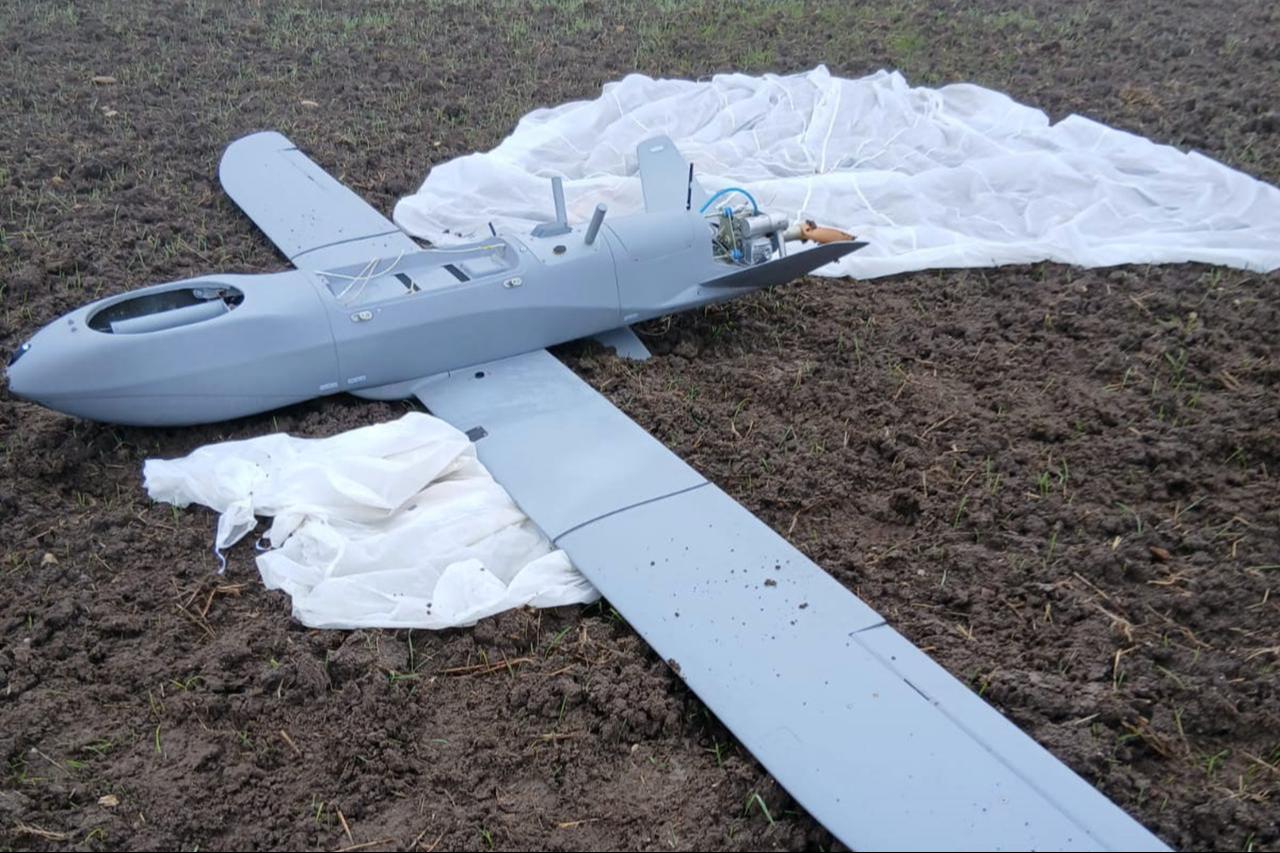
The following day, yet another drone was found: This time in the Manyas district of Balikesir. The platform was identified as a Merlin-VR, also of Russian origin, capable of conducting reconnaissance missions lasting over 10 hours and covering distances of up to 600 kilometres (372.82 miles). The Defense Ministry later clarified that the wreckage had likely been on the ground for several days before being discovered.
Two of the three drones appear to have conducted emergency landings using onboard parachutes. Yet all three incidents share a particularly unsettling commonality. Each came down in proximity to strategically sensitive locations: near Roketsan and MKEK facilities, close to the Golcuk Naval Base and TUPRAS refineries, and in the vicinity of the Balikesir and Bandirma main jet bases.
Taken together, these incidents point to more than isolated airspace violations or technical malfunctions. They raise uncomfortable questions about escalation dynamics, intent versus accident, and the growing spillover effects of the Russia–Ukraine war into the wider Black Sea and Anatolian security environment. More importantly, they highlight how low-cost, expendable aerial systems can generate disproportionate strategic and political effects, forcing states to make rapid, high-stakes decisions even in the absence of clear attribution.

The war in Ukraine has witnessed the use of drones by both sides on an unprecedented scale. Both Russia and Ukraine have mobilised their industrial capacities to the fullest extent to design and produce a wide variety of unmanned aerial systems, with first-person view (FPV) platforms emerging as a particular focus. New drone types and incremental variants appear at a rapid pace, resulting in an exceptionally compressed innovation cycle. This dynamic has significantly complicated efforts to monitor developments in the drone domain, as well as to reliably identify and classify emerging systems.
Drones, especially those involved in recent incidents, pose a distinct challenge to air defense networks. Most operate at relatively low speeds and have small radar cross-sections when compared to fighter aircraft, helicopters, or cruise missiles. As a result, they often fall below the detection, identification, and tracking thresholds of legacy early-warning and target-acquisition radars. In cases of airspace intrusion, visual identification is frequently required, typically through direct observation by fighter pilots during interception. To enable such engagements, persistent and accurate tracking of the target is essential—yet precisely this capability is strained by small, slow, and low-flying platforms.
Complicating matters further is the possibility of “false flag” scenarios. Either party to the conflict may conduct operations designed to appear as if they were carried out by the other, with the aim of triggering a crisis or deliberately escalating tensions. The inherent difficulty of attribution in drone incidents also creates opportunities for third parties that may seek to exploit ambiguity for their own strategic purposes.
The purpose of this article is not to determine the precise origin of the three drones that violated Turkish airspace. Rather, it is to highlight the operational and strategic challenges that such platforms pose to air defense systems: Challenges that, if left unaddressed, carry implications well beyond the tactical level.
These incidents, therefore, serve as a timely reminder that the drone threat is no longer confined to active battlefields but has become a broader strategic problem, one that forces states to reassess air defense concepts, escalation management, and decision-making under conditions of uncertainty.
The drone incursions into Turkish airspace should not be treated as isolated anomalies or mere by-products of a distant war. Rather, they reflect a broader shift in the character of airspace security in Türkiye’s immediate neighbourhood: low-cost unmanned systems are now capable of generating strategic effects disproportionate to their size, cost, and technical sophistication.
For air-defense planners and national decision-makers, the central question is no longer simply whether such targets can be intercepted, but whether they can be detected early enough, tracked persistently, and identified with sufficient confidence to support timely rules-of-engagement decisions. Türkiye’s Celik Kubbe (Steel Dome) multilayered air-defense architecture offers a credible capability against such threats, particularly through its diverse mix of sensors and interceptors, including directed-energy weapons. Yet the decisive challenge lies in the rapid and precise execution of the command-and-control chain.
This challenge is further complicated by the growing “burden of response,” which is increasingly political and strategic rather than purely technical. Decisions to intercept or engage must balance public safety, attribution uncertainty, and escalation risk, often under conditions of incomplete or ambiguous information.
The risk of escalation in the Black Sea is rising not because either belligerent necessarily seeks direct confrontation with Türkiye, but because the air and maritime domains have become densely contested and increasingly shaped by unmanned systems, surface, aerial, and now underwater. Ukraine’s claimed underwater-drone strike against a Russian submarine at Novorossiysk, which Moscow has denied, illustrates how rapidly the maritime dimension of the conflict is evolving and how easily such incidents can generate pressure for retaliation, signalling, or pre-emption. At the same time, Russia’s continued strikes on Ukrainian port infrastructure and Ukraine’s attacks on Russian tankers are placing sustained stress on the Black Sea littoral, with immediate spillover risks for commercial shipping and regional stability.
Should attacks on shipping, ports, or associated logistics nodes intensify, Türkiye may face mounting pressure to adopt more assertive protective measures, which may increase the risk of friction with one or both belligerents. In this context, drone incursions may be interpreted as efforts to test Türkiye’s reflexes, response thresholds, military-technical preparedness, or political positioning. Reinforcing early warning and interception capabilities, while necessary, can therefore only partially address the challenge. What ultimately matters is the ability to combine effective crisis management with credible deterrence in order to prevent tactical ambiguity from hardening into strategic escalation.


 Set as preferred source
 Set as preferred source



 4 min read