Newsletters


The Eastern Mediterranean has become one of the regions where the anarchic structure of the international system has manifested itself most clearly in the first quarter of the 21st century. The struggle for dominance over energy resources among regional actors has transcended economic interests and become an integral part of states' quest for “ontological security”.
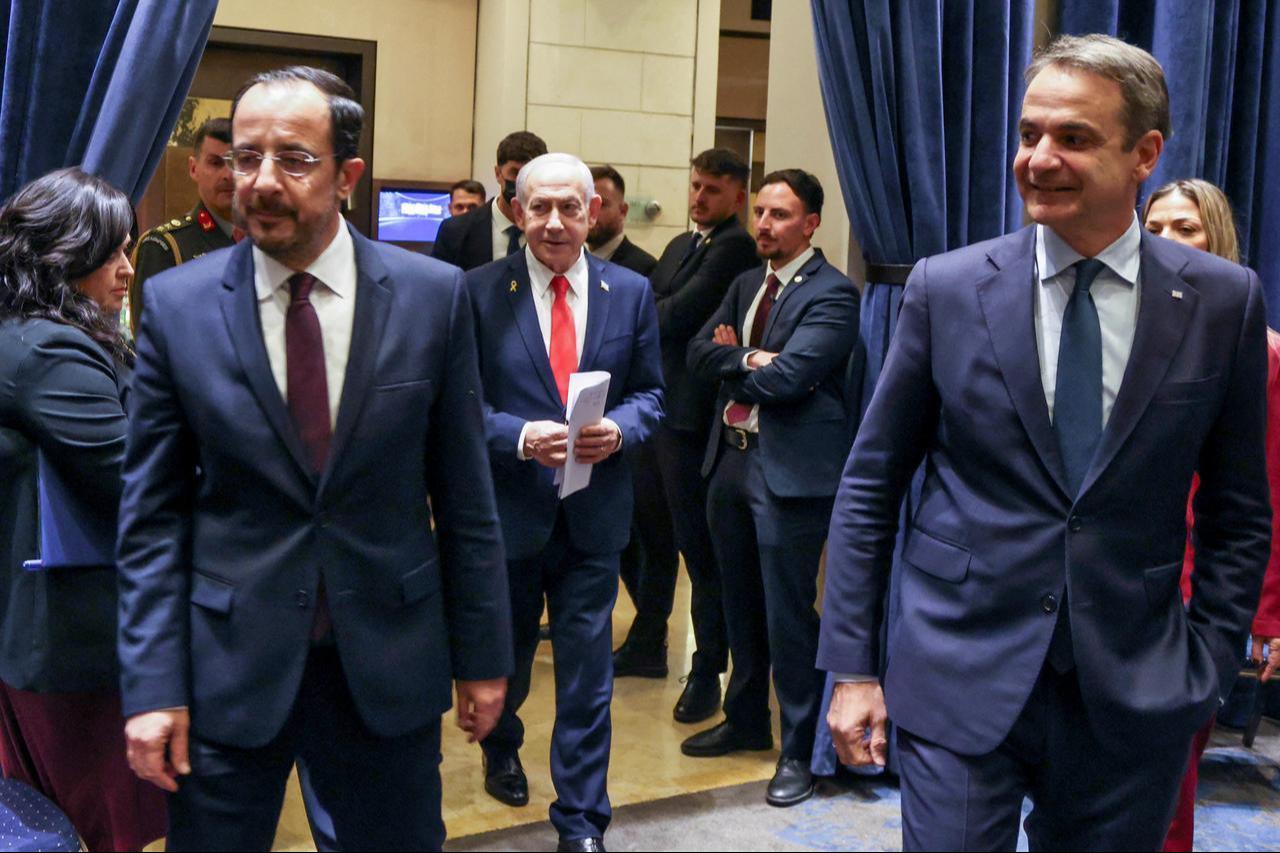
The 10th Tripartite Summit held in Tel Aviv between Israel, Greece, and the Greek Cypriot administration of Southern Cyprus (GCASC) demonstrates that this process has moved to a higher level.
This tripartite structure pursues a “re-containment” strategy centred on “defense and security” against Türkiye's vision of maritime jurisdiction areas, as embodied in Türkiye's “Blue Homeland” doctrine. The fundamental motivation behind this alliance is to prevent Türkiye's leap from regional power status to "a global actor" by restricting its room for manoeuvre in the Eastern Mediterranean.
Netanyahu's rhetoric, directly targeting Ankara with the statement that “those who dream of empire should forget it,” is less a rational foreign policy declaration and more an ideological challenge and a reflex to preserve the regional status quo. However, this reflex deepens the security dilemma in the region and makes an arms race inevitable.
The geopolitical fault lines in the Eastern Mediterranean have, in recent years, gone beyond classic resource competition, trapping the region in a spiral of “securitization”. The most concrete and perhaps most dangerous manifestation of this spiral is the shift in cooperation between Israel, Greece and the Greek Cyprus from the stage of political rhetoric to a phase of sophisticated military capability transfer and defense integration. This process should be interpreted as the militarization of the status quo in the region and defined as an attempt to erect a “technological and doctrinal barrier” against Türkiye's sovereignty rights in the maritime jurisdiction areas it has consolidated under its “Blue Homeland” doctrine.
The “Iron Dome” diplomacy at the heart of this new defense architecture is more than just an arms sales contract; it is a strategic move aimed at asymmetrically reshaping the military balance in the region to Türkiye's disadvantage.
Israel's decision to supply this system to Greek Cyprus and its negotiations with Greece on similar defence projects constitute an “active defence” shield against Ankara's superiority in UAVs/UCAVs and missile capabilities in the region.
From a technical perspective, the deployment of the Iron Dome to the island and the Aegean line aims to restrict Türkiye's operational flexibility and minimise the Turkish air force and navy's ability to “transfer forces” in times of tension. This situation creates a typical “security dilemma” in which defense spending evolves into an arms race; the steps taken by the parties to increase their security are dragging the region into total instability.
In addition, the “regional NATO” model, which has begun to be voiced loudly by the tripartite group of actors, is an adaptation of the collective defense concept to the Eastern Mediterranean. This model establishes a mutual defense commitment, meaning any military action against one party would be considered an attack on all alliance members.
In theory, this is a strategy to narrow Ankara's room for manoeuvre by transforming Türkiye's bilateral issues (such as the armament of the Aegean islands or continental shelf disputes) into a risk of multilateral conflict. This structural integration is not merely theoretical; it is supported by joint exercises, intelligence-sharing protocols, and interoperability efforts.
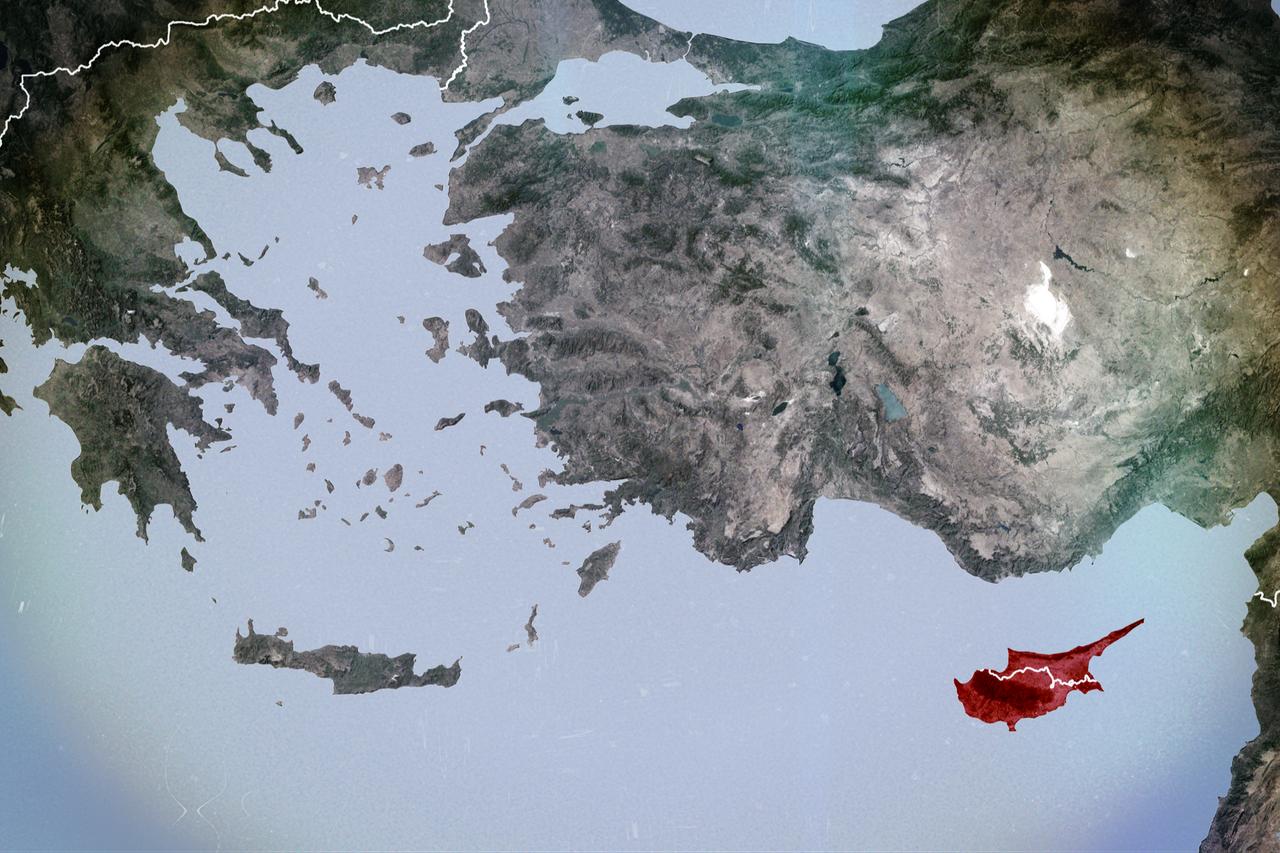
The most critical geographical outcome of the militarization process we have been discussing is the new role assumed by the island of Cyprus. The designation of Cyprus as an “aircraft carrier” in Israel's strategic documents and media confirms that the island is positioned as an “advanced outpost” rather than a sovereign territory. This approach is a geostrategic bulwark against Türkiye's maritime dominance and sea denial capabilities in the Mediterranean.

For Israel, Cyprus serves as a logistical stopover in the event of a potential regional conflict, a buffer zone providing airspace depth, and an observation tower from which it can monitor the movements of the Turkish navy in real time. This situation fundamentally undermines the parameters for resolving the Cyprus issue, transforming the island from a home where two communities can live in peace into a military chessboard for global and regional powers.
Finally, it is evident that this military tutelage is being consolidated through civilian-looking infrastructure projects. The planned “Maritime Cyber Security Centre of Excellence,” scheduled to become operational in 2026, and the planned joint naval force to protect energy transmission lines are proof that elements of "hybrid warfare" have become permanently established in the region.
This military and technological surveillance network, established under the pretext of energy security, is in fact the military protection of economic resources in the Eastern Mediterranean. Any energy equation that excludes Türkiye is being protected by this militarized structure, thus replacing diplomatic channels with a race for military deterrence.
From Ankara's perspective, this situation is not limited to a foreign policy issue; it is a national security priority that necessitates the development of a multidimensional, proactive and asymmetric response aimed at protecting the geopolitical existence enshrined in the “Blue Homeland”. The militarization of the status quo to such an extent weakens hopes for peace in the region, while once again reminding the international community of the vital importance of Türkiye's role as a game changer and spoiler in the region.
The Eastern Mediterranean has become a battleground for the sharing of energy resources in today's global geopolitics. Initiatives such as the Western-backed India-Middle East-Europe Economic Corridor (IMEC) and the “Great Maritime Link Project” supporting this corridor are revisionist encirclement devices that go far beyond being technical transport projects, aiming to subject Türkiye to historical and geographical exclusion.
Ankara is redefining the rules of the game by developing an asymmetric response to the status quo encirclement initiative that is not limited to the military sphere but also encompasses the geo-economic and diplomatic planes. Türkiye's multi-layered defence and attack doctrine consolidates its maritime sovereignty boundaries with the “Blue Homeland” on the one hand, while cementing its geographical destiny as a global logistics hub with the “Development Road” and “Middle Corridor” projects on the other.
Comprehensive exercises such as “Blue Homeland-2025,” which form the military aspect of this struggle, and the deployment of domestic/national frigates such as TCG Istanbul, have transformed Türkiye's maritime “deterrence” from mere rhetoric into a concrete “force projection” capability.
The technological superiority and operational depth achieved by the Turkish navy asymmetrically neutralize the A2/AD (Anti-Access/Area Denial) capabilities that rivals in the Eastern Mediterranean are attempting to establish. Ankara is responding to actors attempting to bypass it via IMEC with the Development Corridor project, a rational and viable alternative.
This route, which connects the Persian Gulf directly to Europe via Türkiye, offers a much more stable “trade bridge” for global trade, considering the geopolitical risks and high-cost transfer processes faced by IMEC. This development positions Türkiye as a central “pivot state” and makes it imperative that all actors in the international system take this reality into account as a realpolitik fact.
In the current geopolitical equation, the Cyprus issue goes far beyond a simple territorial dispute and serves as the strategic key to the Eastern Mediterranean. The “Federal United Cyprus” model, repeatedly emphasised by the tripartite alliance of Israel, Greece and GCASC, is in fact a diplomatic engineering initiative aimed at eliminating Türkiye's maritime jurisdiction and the sovereignty rights of the Turkish Republic of Northern Cyprus.
The determination of Ankara and Nicosia for a “two-state solution” is the strongest strategic response to this revisionist move. It is clear that a federal solution would open up Türkiye's guarantor rights and military presence in Cyprus to debate, thereby undermining the most critical bastion of the Blue Homeland doctrine. Türkiye's uncompromising stance on this point is the clearest guarantee that the energy and security equation in the region cannot be established without Türkiye.
On the other hand, it is impossible to consider this tension line in the Eastern Mediterranean independently of Türkiye's effectiveness in Syria and its maritime strategy stretching from Libya to Somalia. Türkiye's dismantling of the terrorist corridor in northern Syria and its Maritime Jurisdiction Delimitation Agreement with Libya have already undermined the strategic depth of the blockade that the Israel-Greece-GCASC axis is attempting to establish.
The anti-Türkiye alliance that this tripartite structure is attempting to establish can only have tactical significance in limited crisis scenarios; however, it has very little chance of establishing lasting hegemony in the face of Türkiye's comprehensive geostrategy, which it has developed as a regional power centre. This alliance, which is attempting to build a security wall against Türkiye by taking advantage of the conjunctural winds created by the Trump administration's regional peace plans and the Abraham Accords, must face the realities on the ground.
Consequently, although the Eastern Mediterranean geopolitics is being pushed towards a “zero-sum game” scenario, Türkiye's asymmetric and proactive foreign policy is thwarting these attempts to encircle it. Türkiye's technological breakthroughs in the defence industry, its goal of becoming a hub for energy, and its firm stance on Cyprus will continue to dash the dreams of those who envision an “Eastern Mediterranean without Türkiye” against the wall of realpolitik. Regional stability can only be achieved through a model that recognizes Türkiye's legitimate rights and includes Ankara in the equation as a “balancing factor”.


 Set as preferred source
 Set as preferred source


 2 min read

 1 min read