Newsletters


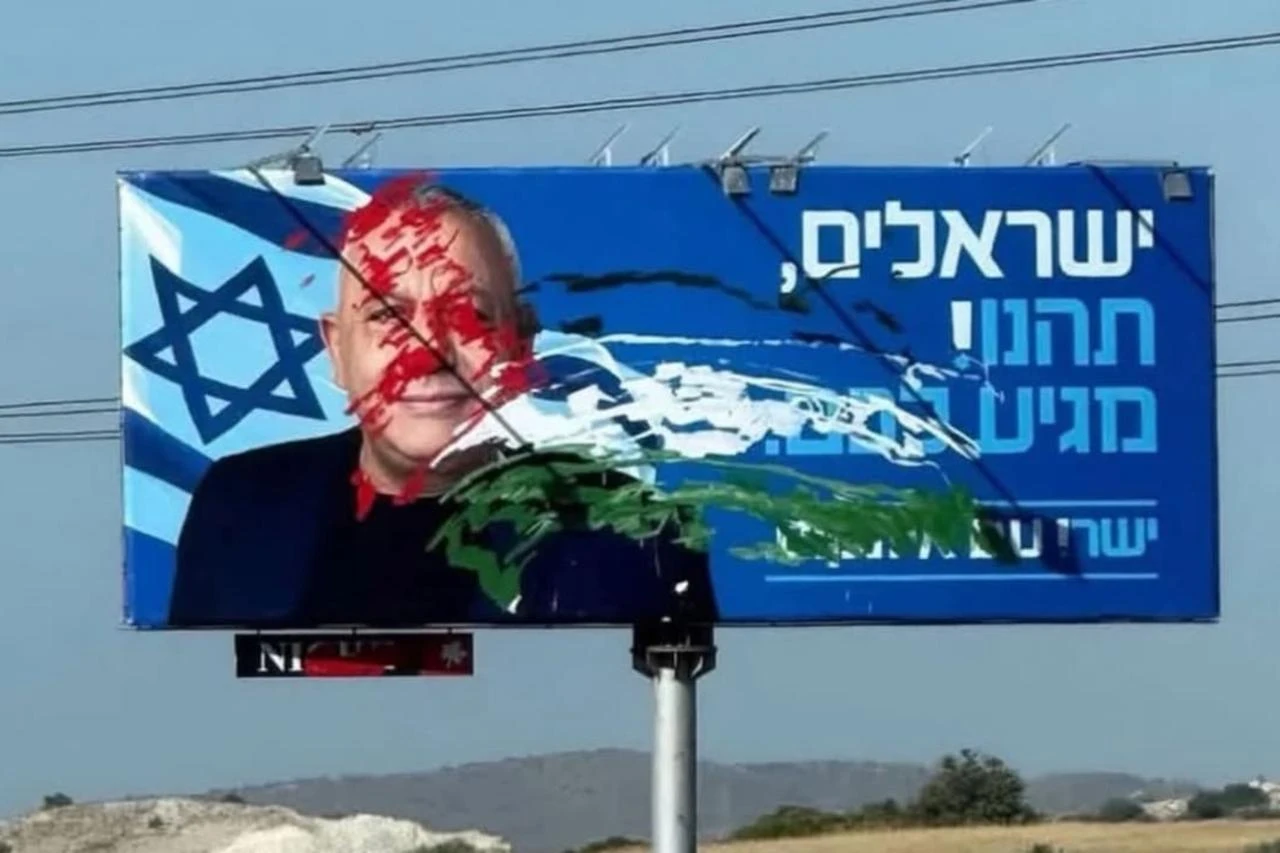


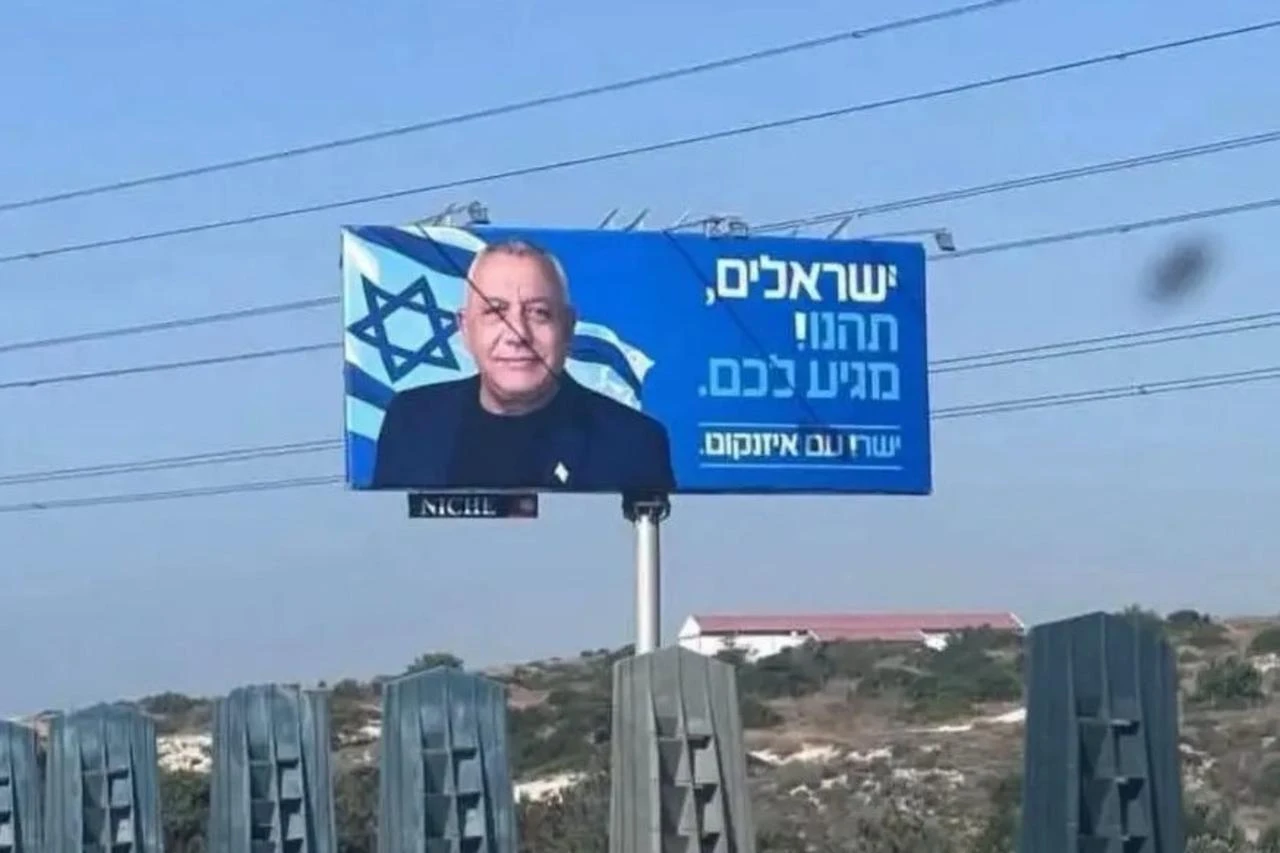
Massive billboards appearing around Larnaca Airport highlighted the Greek Cypriot Administration's fragile sovereignty.
Banners belonging to former Israeli Chief of Staff and Yashar Party leader Gadi Eisenkot's prime ministerial campaign target Israeli voters vacationing on the island ahead of Israel's general elections on Oct. 27, 2026.
One banner greets arriving passengers with the message "Israelis, enjoy! You deserve it," while a second banner along the departure route reads "Come back and win," a strategy that Eisenkot's campaign headquarters has officially confirmed.
The billboards may look like ordinary election advertisements. Still, the matter raises a far deeper question: is the Greek Cypriot administration effectively turning its own territory into another state's political backyard?
At the center of the backlash in the Greek Cypriot community is independent Member of the European Parliament Fidias Panayiotou.
Panayiotou described the development as "particularly concerning" in a video shared on social media and proposed regulation that would ban foreign countries' election campaigns in the Greek Cypriot community.
According to Panayiotou, this campaign proves that foreign political strategists consider the concentration of Israeli residents in the Greek Cypriot south significant enough to justify overseas campaign spending. He warned that this could drag Cyprus into a "political or geostrategic disadvantage" down the line.
The real scandal, however, lies in the admission made by local authorities.
The Greek Cypriot Ministry of Interior acknowledged it has no legal framework to regulate foreign political advertisements and referred the matter to the country's Advertising Regulation Authority (Caro).
Caro, for its part, stated that commercial billboard content remains entirely at the discretion of private landowners and advertising firms, provided general rules are followed.
This means a foreign country's prime ministerial candidate can run a campaign in the south of the island without running into any permit or oversight mechanism.
This so-called sovereign administration cannot even control what is displayed around its own airport, which points to nothing short of institutional collapse.
This situation did not emerge by accident.
For years, the growing footprint of Israeli capital, real estate purchases and companies in coastal cities such as Larnaca and Limassol has been fueling unease among the Greek Cypriot public.
Footage shared by Panayiotou also shows Hebrew-language real estate advertisements spreading across the island.
The pattern between economic influence and political visibility has taken on a systematic character.
That Eisenkot's campaign team has the logistical and financial capacity to organize Israeli voters even abroad is, on its own, hardly surprising.
What stands out is that the Greek Cypriot administration has essentially rolled out the red carpet for that capacity on its own territory.
This shows that the southern part of the island has effectively become an open field for Israeli electoral politics.
Rather than asserting the will to control its own territory, the Greek Cypriot administration is effectively handing the candidate over to Israel.

The scene in Larnaca is, in fact, not a new story for the Greek Cypriot administration.
From 2007 to 2020, the Greek Cypriot south ran the Cyprus Investment Programme, selling citizenship to foreign investors.
Under the program, roughly 7300 people were granted passports, and close to €8 billion flowed into the real estate sector.
The system collapsed in 2020 after a documentary filmed with a hidden camera by Al Jazeera.
The footage showed the parliament speaker and a member of parliament guiding a fictional investor, presented as having a criminal record, on how to obtain citizenship.
Following the scandal, the program was canceled, 222 people had their citizenship revoked, and the European Commission opened an infringement investigation against the Greek Cypriot administration.
The investigation dragged on for five years until the law underpinning the program was fully repealed, and it was only formally closed in March 2026.
This history makes the billboard crisis in Larnaca far from an isolated exception.
The Greek Cypriot administration has developed a characteristic pattern of behavior.
When foreign capital or foreign political actors are involved, oversight mechanisms fail to activate, responsibility gets passed between bureaucratic bodies, and political will does not step in.
The golden passport scandal escalated into a crisis that forced the parliament speaker to resign.
In the current billboard affair, however, the opposition has not offered any serious response, and the debate has remained confined to one independent MP's individual initiative.
The common thread is a reflex embedded in the island's institutional memory: overseeing foreign money or foreign influence is simply not treated as its job.
Just as real estate brokers and law firms went unsupervised in the sale of citizenship, advertising firms and landowners are now left in a similar vacuum when it comes to election billboards.
This recurring pattern in the Greek Cypriot administration has become almost a habit embedded in the south's governing culture.
For an administration this weak to claim full sovereignty over regional matters is rather laughable.
The Greek Cypriot administration has long since surrendered its sovereignty to foreign capital circles, and its decisions will increasingly be shaped by Israeli politicians.


 Set as preferred source
 Set as preferred source


 1 min read
 1 min read