Newsletters




Two weeks ago, European leaders convened at Alden Biesen Castle in Belgium for an informal meeting focused on the European common market, regulatory reform, and the future of strained transatlantic relations, along with their implications for the European security architecture.
Since the 1948 Brussels Treaty, the EU has both confidently and out of necessity largely relied on United States security guarantees, limiting the development of an autonomous and coherent defense regime capable of strengthening its own strategic capacity.
Although European defense integration was debated throughout the 1990s, it was not until the Lisbon Treaty entered into force in 2009 that the Common Security and Defense Policy assumed clearer institutional form, accompanied by the establishment of the European External Action Service to coordinate and project the EU’s external action.
Although certain steps were taken toward constructing a more autonomous and institutionalized foreign policy under the primacy of the EU acquis, the entrenchment of a genuinely functional and common policy framework did not materialize, as the project remained largely neglected until the first term of the Trump administration exposed the structural vulnerabilities inherent in the EU’s security dependence.
Alongside deteriorating relations with the United States, the war in Ukraine revived long-suppressed distrust and strategic anxieties that had remained dormant since the end of the Cold War.
These developments generated an urgent imperative to construct a common European defense framework, including a coordinated debt instrument for defense financing and a harmonized regime for arms control and compliance regulation.

A belated plan of action is now being recalculated with the Alden Biesen summit, raising the fundamental question of whether Europe possesses the institutional cohesion, military capacity, and political will necessary to defend itself without U.S. assistance.
The summit’s main agenda focused on European competitiveness regulations, with leaders acknowledging their direct effect on the European security architecture.
The 2024 Draghi report shows that escalating security threats have laid bare the European Union’s structural defense dependencies and the constrained strategic options that render it susceptible to external pressure. To reverse this trajectory, first, the EU must secure the foundations of its autonomy, before turning to questions of competitiveness, while ensuring that it can safeguard and advance its economic interests independently.
Together with fiscal policies, direct action is required as European defense and military expenditure surpasses 290 billion euros, with annual spending steadily increasing. Yet, these levels are widely viewed as inadequate to deter or counter emerging adversaries effectively in an increasingly uncertain strategic environment.
The European Defence Fund (EDP) aims to empower intra-EU security alignment along with setting the grounds for concrete collaborations to reduce fragmentations. EDP reports show that the absence of effective cooperation among member states in the security and defense domain is estimated to generate inefficiencies amounting to between €25 billion and €100 billion annually.
 2 min read
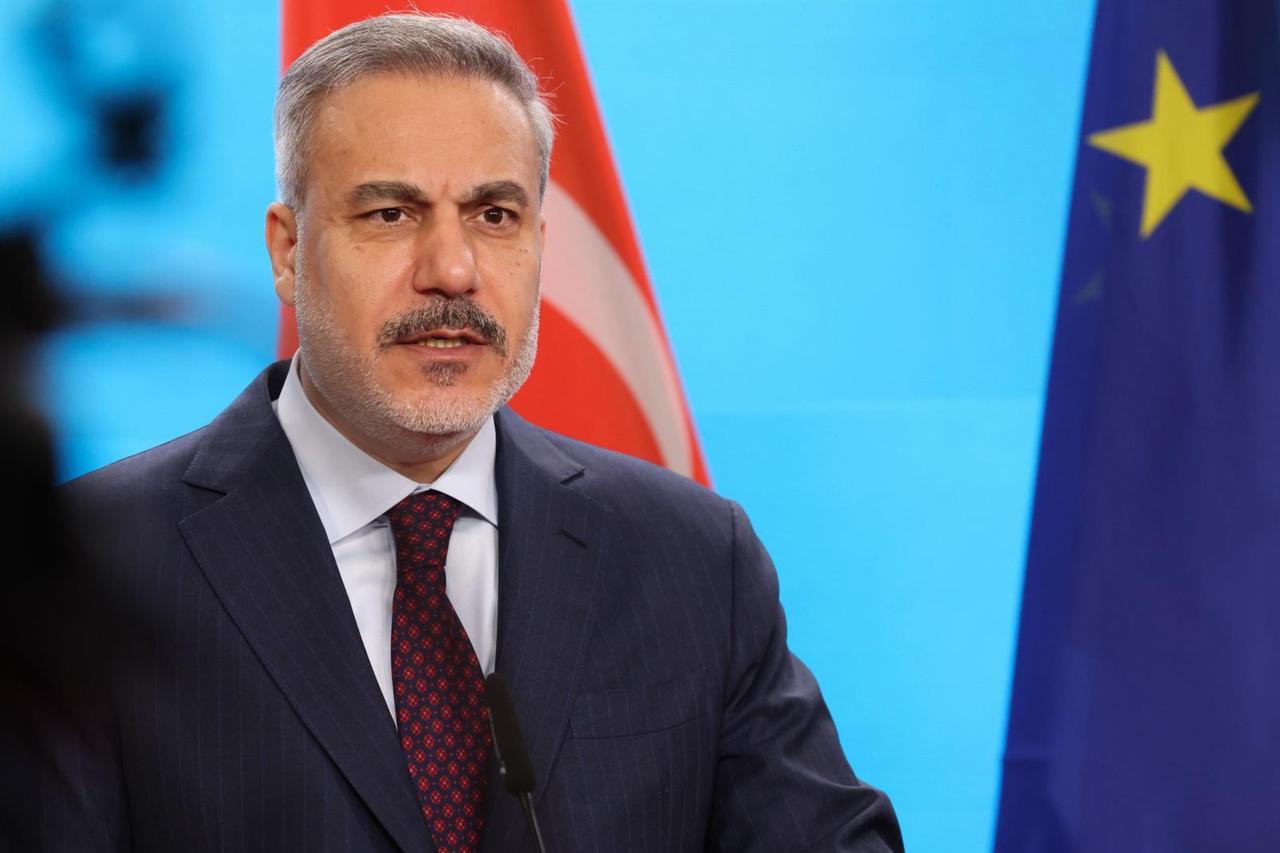
With a strategic realignment of the Common Security and Foreign Policy underway, the European Union and Türkiye face a pivotal moment that calls for more than rhetorical engagement—it requires structural alignment.
The shift is no longer theoretical but tangible, unfolding not in communiqués but on training grounds and factory floors. Most visibly this was witnessed during NATO’s Exercise Steadfast Dart, the first major drill of 2026 conducted under the leadership of Allied Joint Force Command Brunssum.
Türkiye deployed a mechanized brigade and the TCG Anadolu naval platform to Germany, committing roughly 2,000 personnel in an operation that conveyed numerical strength, and simultaneously signaled interoperability, logistical depth, and the growing confidence of a defense-industrial base capable of sustaining expeditionary deployments. All this, at a moment when alliance cohesion is once again being tested by geopolitical strain.
Meanwhile operational visibility has been accompanied by industrial alignment: the Baykar–Leonardo partnership, announced in March 2025 and formalized through the 50:50 Italy-based joint venture LBA Systems, marks a deliberate move toward cross-European integration in unmanned systems.
Shared production and pooled technology are increasingly treated as strategic necessities rather than optional collaboration in a rapidly expanding European defense market. Leonardo forecasts the European market for such technologies will approach $100 billion over the coming decade, underscoring that the collaboration is anchored in both strategic and commercial logic.
Institutional finance is shifting as well. The EU’s Security Action for Europe (SAFE) financial instrument now makes up to €150 billion in loans available under the broader ReArm Europe Plan/Readiness 2030 framework, which the Commission estimates could unlock more than €800 billion in defense spending.
SAFE procurement rules stipulate that no more than 35% of component costs may originate outside the EU, EEA-EFTA, or Ukraine, yet the framework has been discussed in ways that leave room for cooperation with candidate countries such as Türkiye in common procurement structures.
Political rhetoric reflects this strategic shift as German officials have described Türkiye as a key pillar of the European security architecture, while NATO leadership has emphasized that Türkiye commands the alliance’s second-largest army and is projected to spend 2.33% of GDP on defense in 2025.
Taken together, these steps suggest that Türkiye is progressively no longer perceived as an external add-on, but as a functional contributor to Europe’s emerging defense-industrial and capability architecture, particularly in drones, C4ISTAR systems, artificial intelligence, and electronic warfare.
These developments signal a structural calculus: Europe’s debate has shifted from rhetoric about autonomy to the practical demands of financing, industrial coordination, and operational coherence.
Credibility now depends on alignment and scale. Within this framework, reassessing the EU–Türkiye defense relationship is a strategic consideration rather than a symbolic gesture.
As Europe reshapes its security architecture, its effectiveness will rest not only on spending levels but on its ability to integrate capable partners into a coherent and resilient system.


 Set as preferred source
 Set as preferred source



 1 min read