Newsletters




The last time an American president called on Allies for support, and they collectively backed the United States, was after the Sept. 11 attacks in 2001. NATO’s Article 5 was invoked for the first time in history following the terrorist attacks. Subsequently, the U.S. Allies launched an operation against the Taliban regime in Afghanistan, which had sheltered al-Qaeda and its leader, Osama bin Laden, and invaded the country.
The mission in Afghanistan was later taken over by NATO’s International Security Assistance Force (ISAF) and subsequently reorganized as the Resolute Support Mission, continuing until the final withdrawal of the U.S. and NATO forces in 2021.
At the time of the 9/11 attacks, French President Jacques Chirac said, “We are all Americans”; U.K. Prime Minister Tony Blair said Britain stood "shoulder to shoulder" with the American people; and German Chancellor Gerhard Schroder presented Germany’s “unlimited solidarity” to the U.S. president.
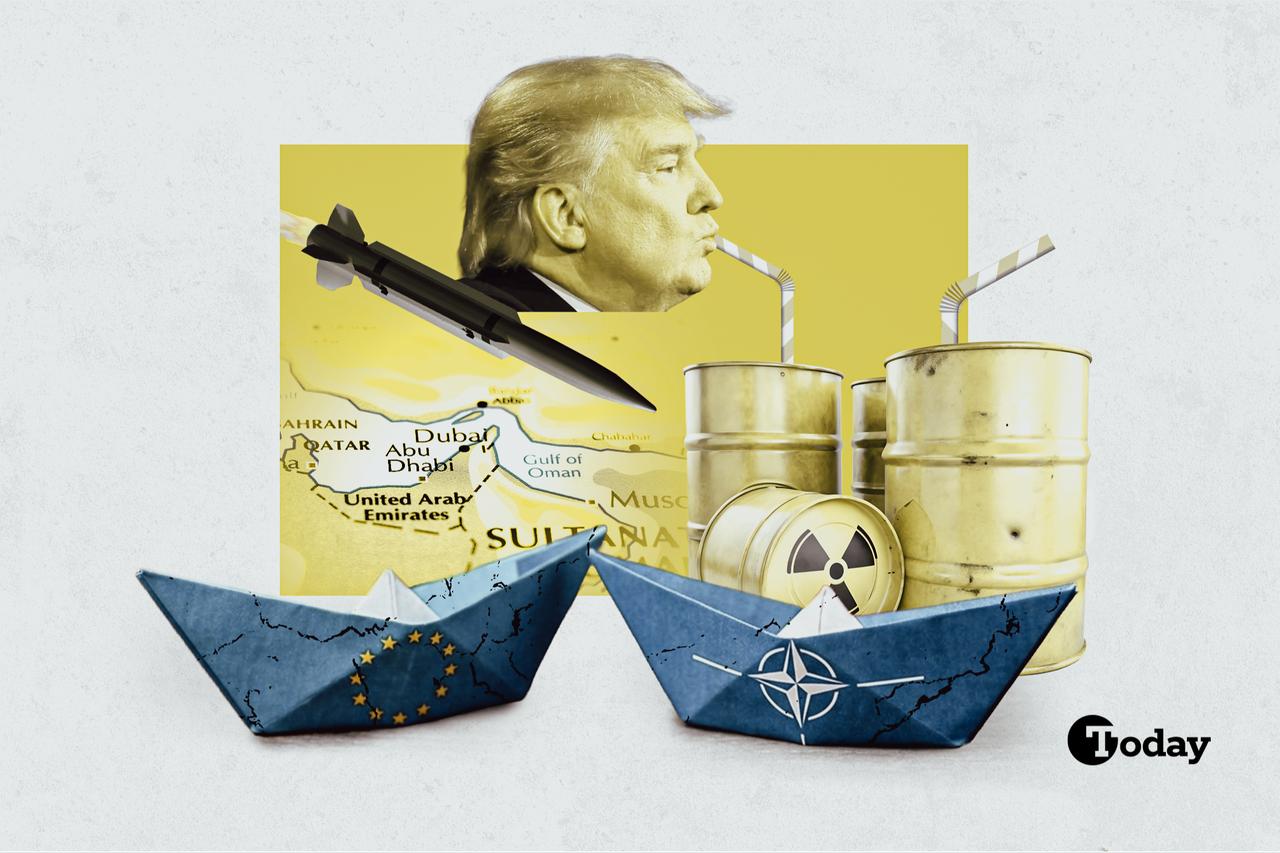
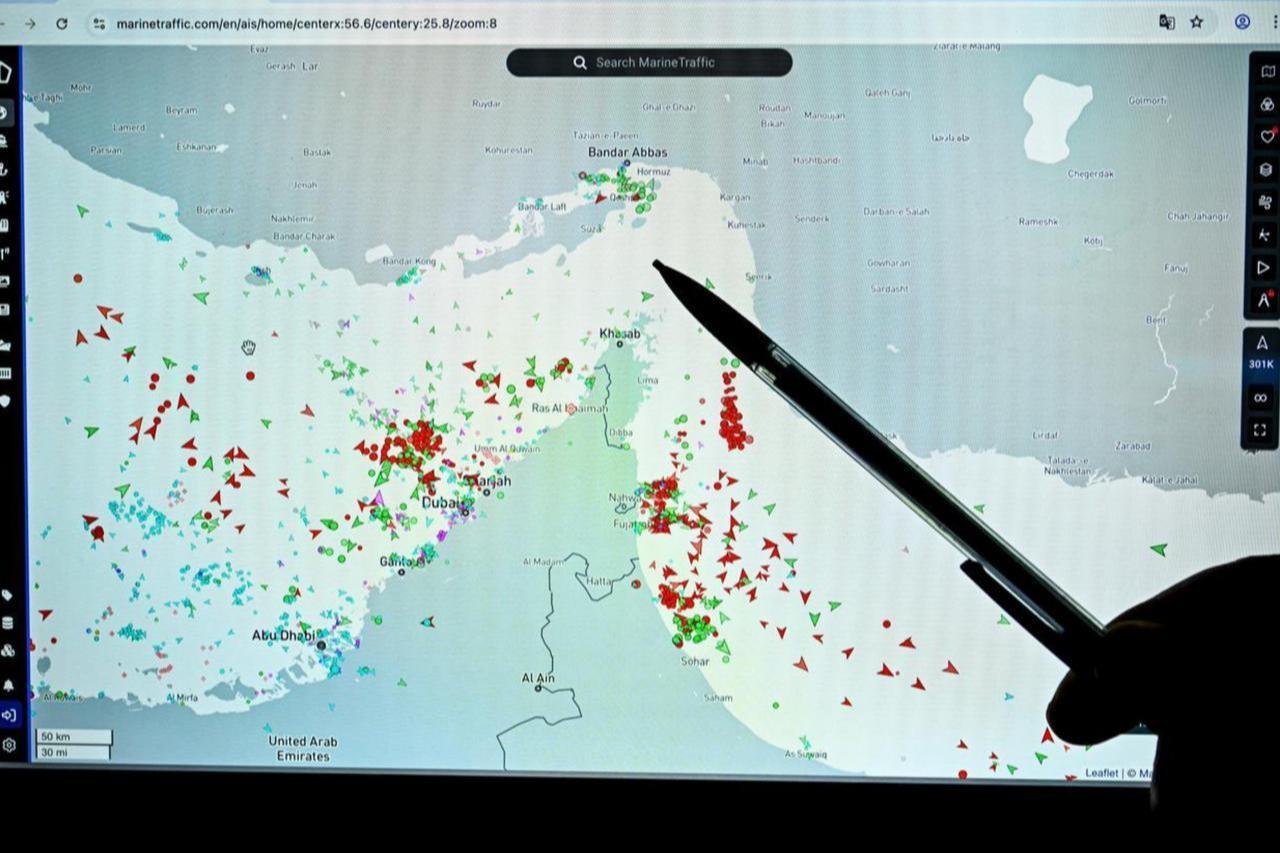
Such European support for the U.S. has fallen far behind. After the U.S.-Israeli war on Iran, launched on Feb. 28, led to the closure of the Strait of Hormuz, global energy trade stalled and oil prices climbed. Consequently, President Donald Trump called on allied countries that rely on the Strait, as well as NATO, to form a naval police force to secure the waterway and control passage. However, neither NATO nor individual European countries were willing to do so.
Leaders of France, the United Kingdom, and Germany each opposed the move, emphasizing that this was not their war and that they had not been consulted beforehand. While U.K. Prime Minister Keir Starmer announced that his country would not be drawn into a broader Middle East war, German Chancellor Friedrich Merz reminded that NATO is a defensive alliance. EU High Representative Kaja Kallas stated that “Europe is not part of this war” and underlined the lack of clarity regarding the war’s political objectives. French President Emmanuel Macron described France’s position as defensive and added that he had not heard anyone in Brussels expressing willingness to enter the conflict—“quite the opposite.” Italian Prime Minister Giorgia Meloni stated, “We are not at war, and we are not entering the war.”
President Trump described allies as “cowards” and NATO without the United States as a “paper tiger,” warning that this would “not be forgotten” and that it would be “very bad for the future of NATO” if allies did not act to secure the Strait.
In response, on March 19, several European countries—including the U.K., France, Germany, the Netherlands, and Italy, along with partners such as Canada and Japan—signed a joint statement condemning Iran’s attacks on commercial vessels in the Gulf, on civilian infrastructure including oil and gas installations, and the blocking of the Strait of Hormuz. The statement emphasized the signatories’ readiness to contribute to appropriate efforts to ensure safe passage through the Strait. However, Merz stressed that this would only be possible once the fighting had ended.
So far, European involvement has remained defensive. Following a drone strike on the British base at Akrotiri in Cyprus, France, Italy, Spain and the Netherlands sent warships to the Eastern Mediterranean; Greece deployed both naval and air assets; and France, the U.K., and Italy deployed air defense systems to the island. The EU naval mission EUNAVFOR Operation Aspides—tasked with protecting freedom of navigation and global trade in the Red Sea—was also extended.
Shortly after Trump’s statement, the United Kingdom expanded the use of its bases under the framework of collective self-defense. The move built upon previous permissions for anti-missile operations, now specifically authorizing U.S. strikes on Iranian targets threatening ships in the Strait of Hormuz.
These developments may go down in history as one of the most significant ruptures in transatlantic relations in recent times. The divide over supporting the United States in the Iran war differs from past disagreements: apart from the U.K. opening its airbases, nearly all European countries, along with the EU and NATO as institutions, refused to support the war.
Since Trump’s return to the presidency in 2025, transatlantic relations have been in crisis. Although tensions over the Ukraine war brought relations close to rupture, pragmatic policies by allies prevented a breakdown; mechanisms such as joint procurement and transfers of U.S. military equipment by NATO Allies to Ukraine were implemented. While the EU was not directly at the negotiating table with the U.S. in peace talks, it was able to communicate its positions.
In response to Trump’s strong criticism of NATO, allies committed to increasing defense spending to 5% of their gross domestic product (GDP), moving toward more equitable burden-sharing with the U.S. Meanwhile, U.S. trade wars and tariffs pushed European countries to seek new partnerships and markets. The Trump administration’s renewed attempt to acquire Greenland, an autonomous territory of Denmark, sparked diplomatic tension with Denmark and concern among European allies.
However, all of these crises stemmed from changes in the U.S. administration’s policies on existing issues. The situation in the Strait of Hormuz is different: the United States is at war and is directly asking its allies for support.

The closest historical parallel to such a transatlantic split is the Iraq War. In that instance, the U.K., Poland, and Spain supported the U.S., while France, Germany and Belgium opposed the war. During debates at the U.N. Security Council over Iraq, the U.S. and U.K. argued that the existence of weapons of mass destruction justified intervention, while France and Germany strongly opposed it, insisting that inspections should continue and that no intervention should occur without a U.N. resolution. Ultimately, the U.S.-led coalition invaded Iraq without U.N. authorization. Italy and Germany limited their involvement to logistical support, including the use of airbases.
The invasion, initially justified as a preemptive war to eliminate weapons of mass destruction, was later widely considered unjustified, as such weapons were not found, leading many analysts to classify it as a preventive war.
Under Article 2(4) of the U.N. Charter, states are prohibited from using force against the territorial integrity or political independence of another state. Exceptions exist only in cases of self-defense (Article 51) in response to an armed attack or an imminent threat of one or when authorized by a U.N. Security Council resolution. The attack on Iran meets neither condition, since there was no imminent threat of an attack from Iran and no evidence that Iran was close to producing nuclear weapons, and therefore the strikes against Iran are not legitimate under international law.
Today, NATO, the EU, and most European countries have likely avoided involvement in the Iran war partly due to concerns about international law. However, while Spain described the U.S. and Israeli bombings of Iran as reckless and illegal and Germany refused to participate in a war without a U.N. mandate, most European nations have refrained from explicitly labeling the war as illegal or openly condemning the attacks.
Calling the war illegal does not mean endorsing Iran’s destabilizing actions in the region or the activities of its proxies in Iraq, Syria, Yemen and Libya.
While European countries emphasize the violation of international law in cases such as Ukraine or Greenland, they have been more cautious in invoking international law in relation to Iran. Tehran's recent strike on the U.S.-U.K. base at Diego Garcia, approximately 3,800-4,000 km away from Iran, suggests it may possess missile capabilities capable of reaching Western Europe, which could be interpreted as a warning to Europe to stay out of the conflict.
Europe is likely to maintain its distance from the war, but by retreating from its commitment to international law, it risks weakening its position in confronting violations by both the United States and Russia. Furthermore, this new major split in transatlantic relations could cause headaches for Europeans in the period ahead.


 Set as preferred source
 Set as preferred source


 7 min read