Newsletters




As one year of Trump’s second presidential term comes to an end, the international community, especially Europe, is trying to adjust to the unprecedented political rhetoric and actions coming from Washington, as well as to the ongoing erosion of the transatlantic relationship. Most recently, Trump’s statement that the U.S. could seize Greenland, a NATO territory, by force if necessary, underscores that NATO must now be prepared not only for external threats but also for those that may emerge from within. NATO is likely to spend the next three years in survival mode, as Europe finally confronts a reality it has long postponed. Europe is now preparing for a future in which its security and defense will no longer rest on the United States, but will instead become Europe’s own responsibility.
The NATO Hague Summit held last June, its summit declaration, and President Donald Trump’s stance on Ukraine were important markers of this trajectory. Following Russia’s full-scale invasion of Ukraine in February 2022, the Madrid Summit and NATO’s 2022 Strategic Concept defined Russia for the first time as “the most significant and direct threat to Allies’ security,” a formulation that was preserved in all subsequent NATO summit communiqués.
However, at the 2025 Hague Summit, due to the Trump factor, the Russian threat was mentioned only in the following terms: “the long-term threat posed by Russia to Euro-Atlantic security.” Moreover, while it had been acknowledged after the 2008 Bucharest Summit that Ukraine would one day become a NATO member, and while the 2023 Vilnius Summit established the NATO-Ukraine Council to enhance coordination on Ukraine’s security and defense and to further pave the way for its NATO membership, support for Ukraine at the Hague Summit was expressed only in the form of country-based sovereign commitments, and NATO membership was not mentioned at all.
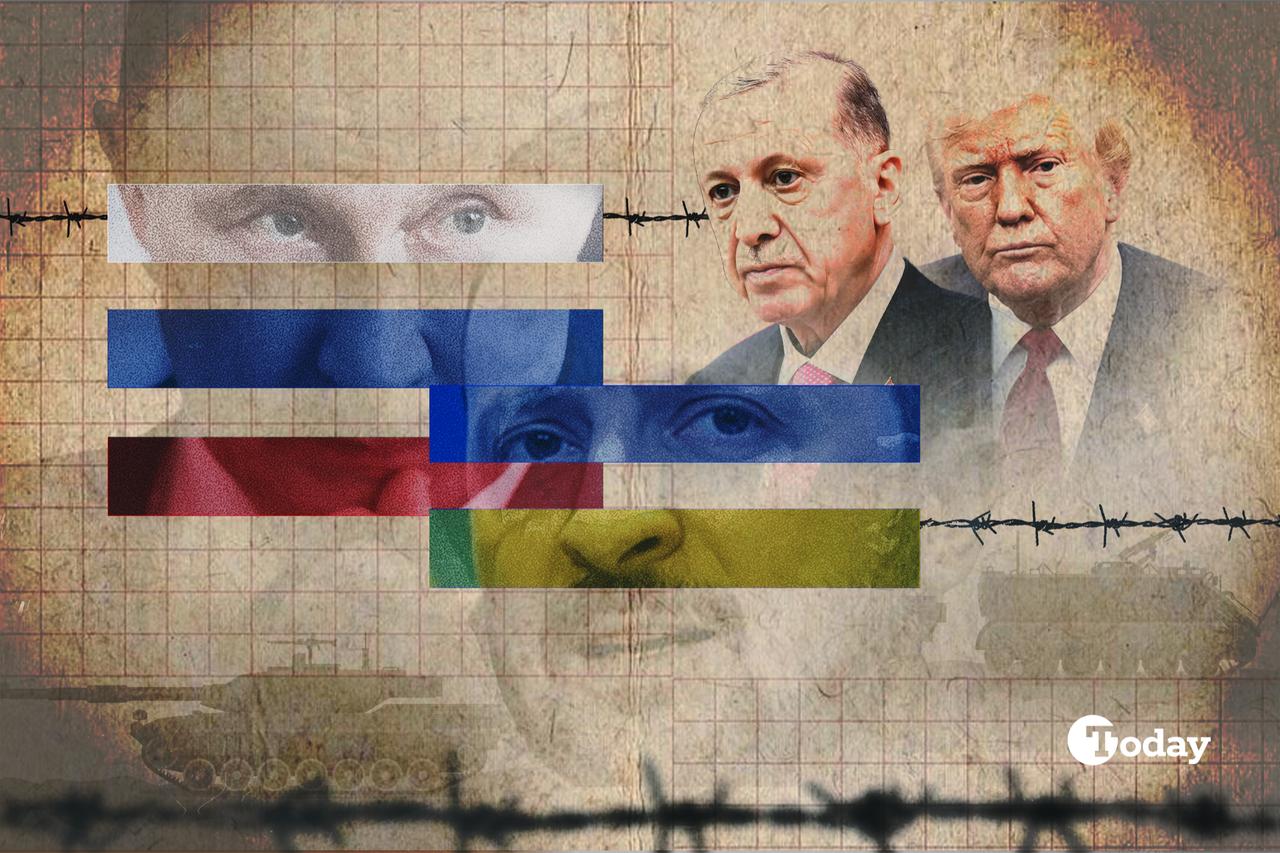
Given U.S. mediation in Russia–Ukraine peace talks and the various peace plans proposed, Ukraine’s renunciation of NATO membership emerged as both one of Russia’s core conditions and a key element of the peace plan presented to Kyiv by the American side.
In order to issue a communique that the United States could sign, the Hague Summit produced one of the shortest summit declarations in NATO’s history. Its greatest “achievement” was the consensus within NATO, at the request of American allies, to share the burden more equally. Allies agreed to spend at least 3.5% of their gross domestic product (GDP) annually on core defense needs by 2035, and up to 1.5% of GDP annually on protecting critical infrastructure, securing networks, improving civil preparedness and resilience, and boosting innovation.

The U.S. perception of Russia, NATO, and European security, reiterated at the NATO summit and later confirmed during the Russia–Ukraine peace negotiations, was laid out in bold terms in the U.S. National Security Strategy published in December 2025. The document, which demonstrates America’s intention to shift its priorities and resources toward the Western Hemisphere and the Indo-Pacific, effectively declares Europe’s decline.
It emphasizes that Europe, described as suffering from a crisis of self-confidence, exhibits this lack of confidence most clearly in its relations with Russia. Unlike previous National Security Strategies, it is stated that Europe—not the United States—views Russia as an existential threat. The rise of far-right parties in Europe is presented as a source of hope.
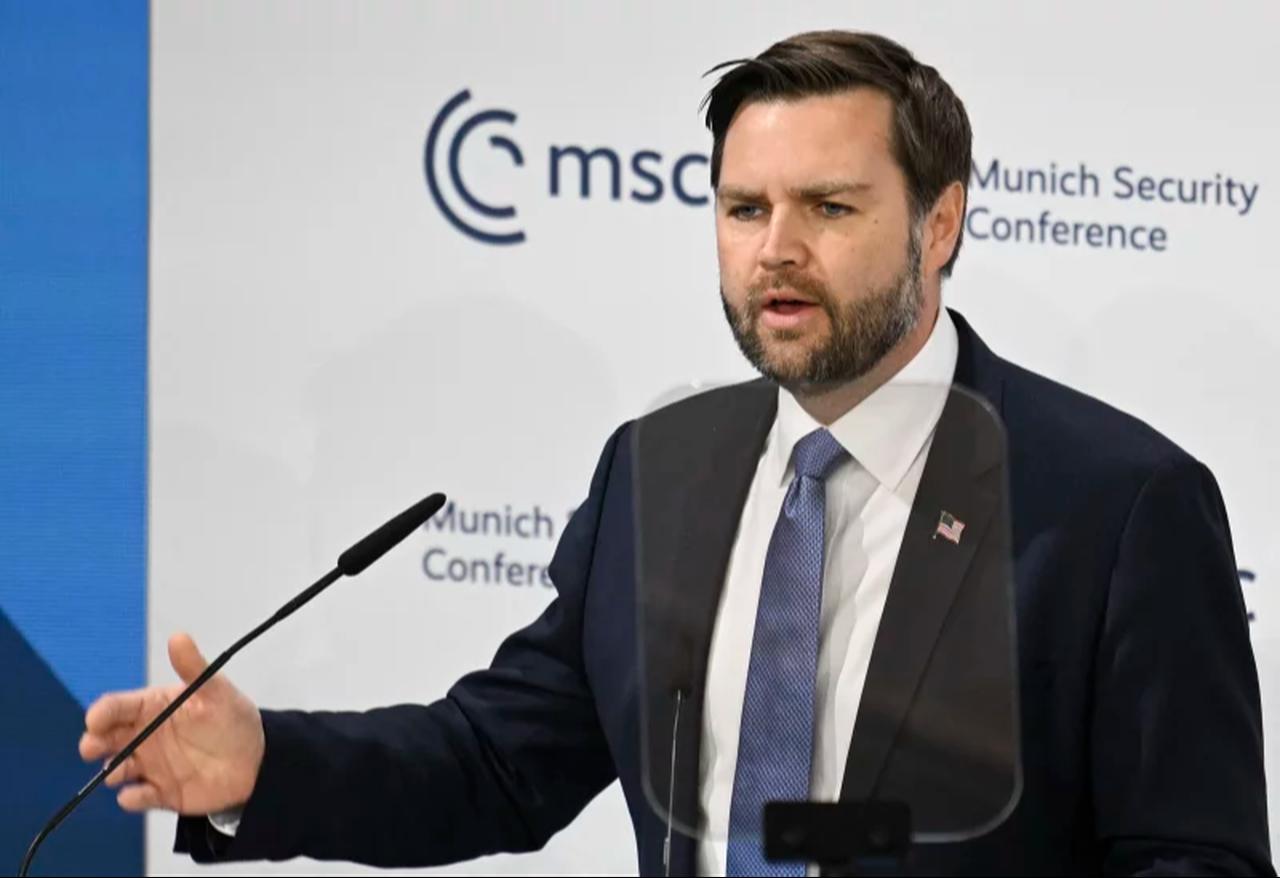
In fact, at last year’s Munich Security Conference, Vice President J.D. Vance had already signaled this approach toward Europe, arguing that the main threat facing Europe does not come from Russia but from an internal retreat from its own values, citing loose immigration policies and limits on free speech as examples. Measures taken against far-right parties under the banner of combating hate speech are viewed by the U.S. administration as anti-democratic and contrary to free speech.
When examining U.S. core objectives on Europe, several priorities stand out: helping Europe—seen not as an ally but as a burden—get back on its feet and become capable of providing for its own defense; turning Europe into a market that offers trade-advantageous opportunities for U.S. products, as evidenced by the trade wars initiated by Trump; and halting NATO enlargement.
Trump not only disparages NATO, the cornerstone of transatlantic relations, but also attacks the principles on which the alliance is founded. His ambitions regarding Greenland, a territory belonging to NATO member Denmark—including rhetoric about acquiring the island by force or economic pressure—undermine the unity of the alliance and the very principle of collective security. Denmark’s prime minister has already stated that any attempt to seize Greenland militarily would mean the end of NATO. In other words, we are no longer discussing the principle that an attack on one ally is an attack on all, but rather the possibility of one ally attacking another militarily.
In response to this rhetoric, France, Germany, the United Kingdom, Poland, Italy, and Spain issued a joint statement supporting Denmark and emphasizing the importance of “sovereignty, territorial integrity, and the inviolability of borders.” NATO itself relies on these same principles of the U.N. Charter when defending Ukraine against Russia.
Finally, in an interview with The New York Times, Trump described support for Ukraine as assistance to Europe and portrayed NATO as an organization that does not truly serve U.S. interests and consumes enormous resources. He stated:
“You know, a lot of people don’t think NATO is to our benefit. We’re out there fighting with Russia, stopping Ukraine from being decimated (…). It’s thousands of miles away. We have a big ocean in between us. We’re helping Europe, but we spend a tremendous amount of money on NATO.”
Under the Trump administration, the nature of NATO–EU cooperation has also changed. The United States now wants financial compensation both for security guarantees and for arms supplied through NATO. In Trump’s proposed peace plan for Russia and Ukraine, the U.S. demanded a share of frozen Russian assets in return for security guarantees. In his New York Times interview, Trump also spoke with great satisfaction about selling weapons to be delivered to Ukraine through NATO and being paid for them.
Given the changing U.S. stance since the first Trump administration, the European Union has engaged in debates on strategic autonomy. Finally, during Trump’s second term, the EU has taken a series of initiatives aimed at quickly assuming greater responsibility for its own defense. The European Commission’s ReArm Europe Plan / Readiness 2030, which seeks to mobilize over €800 billion ($930.82 billion) for defense and aims to strengthen EU defense capabilities as well as support Ukraine, is likely to include investments in the European defense industry through multiannual contracts and joint procurement projects. The European Commission established a loan instrument (SAFE) worth €150 billion for European countries to buy air defense systems, drones and “strategic enablers” from European producers.
While Canada, signing a Security and Defense Partnership, became the first non-European country formally joining the SAFE, Norway, as part of the European Economic Area (EEA) and of the European Free Trade Association (EFTA), as well as a signatory of a Security and Defense Partnership with the EU, is eligible for these funds as well. This leaves non-European NATO members U.K. and Türkiye, outside. The U.K. held negotiations to join SAFE by the end of 2025, but disagreements over Britain's financial contribution prevented the country from participating.
While Türkiye became part of the Ukraine Defense Contact Group as well as of the Coalition of the Willing, the country can’t join joint procurement projects due to the political vetoes of member states. Türkiye’s high operational experience, as well as cost-effective and rapid production capacity, could greatly help Europe’s plans. The Turkish defense industry could address Europe’s capability needs in areas such as UAV/UCAV systems, armored vehicles, munitions, and naval platforms, as well as maintenance and repair.
Türkiye is already selling weapons to EU member NATO countries such as Poland, Croatia, Romania, Spain, Italy, and Germany and is participating in joint defense projects with some of them. To realize the potential of European-Turkish cooperation in ensuring European security, Türkiye needs to be integrated into defense cooperation with the EU. The EU should develop alternative mechanisms to bypass veto blockages by member states and thereby open the way for cooperation with Türkiye.


 Set as preferred source
 Set as preferred source


 2 min read
 1 min read