Newsletters


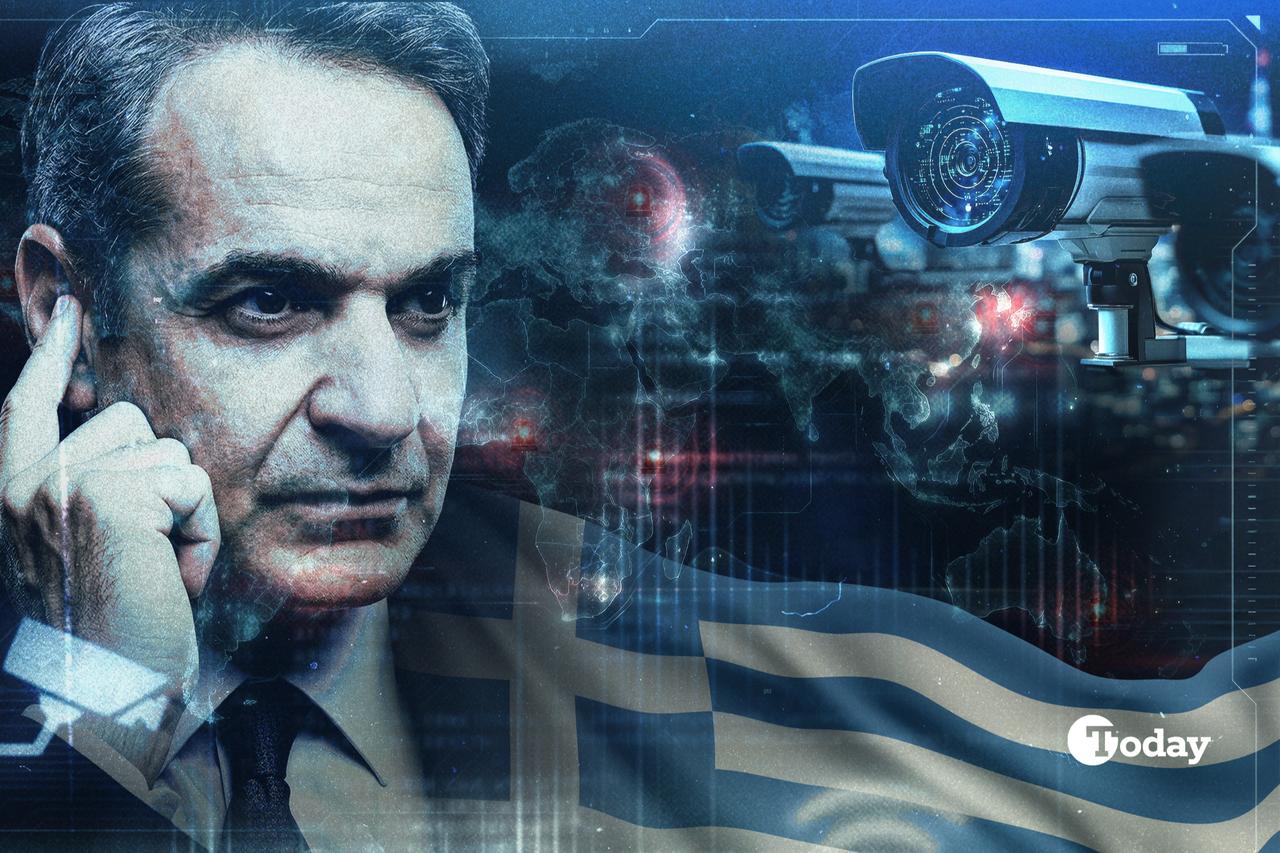


The allegation that a government is using spyware to monitor its own citizens, opposition leaders, journalists, and even those sitting in ministerial posts would cause a political earthquake in any country.
In Greece, however, this quake has been rumbling on for four years. It surges, subsides slightly, and then shakes the ground once more with a new aftershock.
Dubbed the “Greek Watergate,” the Predator scandal has become a mirror reflecting the fragility of European democracy, the chasm between power and oversight mechanisms, and how a surveillance state can be quietly constructed in the digital age.
This case, which directly concerns the security and privacy rights of millions of European citizens, entered a new phase with the heavy prison sentences handed down by the Athens court in February 2026.
In March 2026, the end of Israeli spyware boss Tal Dilian’s silence demonstrated that the matter was far from closed but was, in fact, continuing to deepen.

The roots of the Predator scandal lie in an institutional decision taken in 2019, following the Kyriakos Mitsotakis government’s rise to power.
As soon as he took office, Mitsotakis placed the Greek National Intelligence Service (Ethniki Ypiresia Pliroforion/EYP) directly under his own office. The rationale for this decision, as framed in the political discourse of the time, was to make the intelligence structure “more effective and coordinated.”
However, this arrangement elevated the prime minister’s control over intelligence to an unprecedented level: the EYP had ceased to be an independent body within the Greek state and had effectively become an instrument of the head of government.
Behind this institutional transformation lay the company Intellexa and its flagship product, Predator.
Intellexa, founded by former Israeli intelligence officer Tal Dilian, had launched the Predator software on the European market in collaboration with the Greece-based firm Krikel.
Predator was particularly notable for its “zero-click” attack capability; simply sending a malicious link to the target was sufficient.
Whether the link was clicked or not, the software would install itself on the target’s phone; it provided access to every piece of data on the device, from messages and emails to the camera, location, microphone, and contact list.
This went far beyond traditional phone tapping; it was almost a comprehensive surveillance tool.
The scandal broke in the public eye in 2022. Traces of Predator were detected on financial journalist Thanasis Koukakis's phone.
The subsequent revelation took on a far more political dimension: it emerged that Nikos Androulakis, leader of the main opposition party PASOK and a member of the European Parliament, had also been targeted by the same software.
The fact that a Member of the European Parliament was being monitored using spyware linked to the government of a European country took the issue out of the realm of national politics and placed it directly on Brussels’ agenda.
As the investigations progressed, the scale of the operation became apparent. Alongside opposition politicians, journalists, businesspeople, high-ranking military officers, and even serving ministers were on the target list.
It emerged that at least 87-90 individuals had been monitored, as reported in the public domain; however, the actual figure is estimated to be much higher.
The investigations brought to light an extremely disturbing correlation: it was found that individuals legally wiretapped by the EYP were also being monitored by Predator during the same period. This overlap fundamentally undermined the narrative of an “independent operation by private actors.”
The Mitsotakis government, meanwhile, maintained a consistent line of defense throughout the scandal: Predator was linked not to the state but to “private individuals or firms”; the prime minister was unaware of these operations; and there was no involvement whatsoever from state institutions.
While the government linked the EYP’s lawful surveillance activities to legitimate security grounds, it chose not to acknowledge the Predator’s involvement.
Maintaining this line of defense was only possible through the silence of key figures.
In 2022, EYP President Panagiotis Kontoleon resigned. Shortly afterward, Grigoris Dimitriadis, who was both an adviser to Mitsotakis and his nephew, stepped down.
The government narrowly survived a vote of confidence. But the matter was not truly closed; investigations continued, a European Parliament committee conducted hearings, and international human rights organizations, led by Amnesty International, continued to monitor the case closely.
It is important to emphasize at this point that the Predator scandal went beyond being merely a political crisis. What is at stake is the systematic exploitation of a state tradition and a lack of accountability.
The subordination of the EYP to the Prime Minister’s Office created an institutional framework for potential operations targeting the political opposition. The Predator, meanwhile, became an extremely powerful tool built upon this foundation, operating outside legal oversight.
The answers to the questions “Who authorized it, who compiled the target list, and who utilized these results?” have yet to be fully brought to light.
This case, which has been the subject of discussion in Greek courts, the corridors of the European Parliament, and the headlines of the international press for four years, reached a new turning point in February 2026.
The Athens Court handed down a historic ruling: Tal Dilian, his business partner Sara Hamou, Intellexa director Felix Bitzios, and Krikel owner Yiannis Lavranos were each sentenced to 126 years and 8 months in prison for the offenses of “breaching the confidentiality of telephone communications” and “unlawful acquisition of personal data.”
Although it is understood that, under Greek law, the actual prison terms will be capped at eight years and the sentences will be suspended pending appeal, the symbolic weight of the ruling is undeniable.
However, the real shock did not come from the court ruling but in March 2026.
Tal Dilian, who has been convicted, spoke to the Greek television channel MEGA and various international media outlets. His comments had the effect of a bombshell, completely upending the balance of the trial that had lasted for months:
“I will not be a scapegoat. We sold the Predator spyware only to governments and security forces. The states using the software know who set the targets.”
These few sentences brought down the defensive wall the Mitsotakis government had spent four years building.
If Predator was sold only to states and official law enforcement agencies, what does the government’s narrative about “private actors” mean?
If the target list is determined by the state that purchased the software, who compiled that list?
With whose approval were politicians, journalists, and soldiers targeted?
Dilian also added, “I remained silent during the trial, but I will no longer remain silent. This could be a cover-up.”
The fact that a defendant has come forward with allegations of a “cover-up” following his conviction, however valid this may be from a legal standpoint, has had an extremely damaging effect politically.
This is because Dilian’s statements are a clear warning of a major risk: if Intellexa’s clients were official state institutions and the operations were carried out with state approval, then the real culprits should not be those on trial in court but those who used them.
 1 min read
The Greek opposition, however, immediately exploited this development to their advantage.
PASOK leader Androulakis and representatives of other opposition parties once again brought Mitsotakis’s resignation to the forefront of the agenda. This demand, expected on the parliamentary floor, this time drew its weight from Dilian’s own words, which amounted to a confession.
The growing shadow of the scandal continued to envelop Brussels.
The court returned the case file to the prosecution, launching a new investigation into allegations of espionage and collusion with foreign states.
This indicates that the matter has moved beyond being a criminal case and has fully entered the realm of national security and international law.
While the European Parliament has described the scandal as “a dangerous precedent of the misuse of spyware in an EU member state," Amnesty International and other human rights organizations are continuing to press for accountability.
It remains unclear where the appeal process and new investigations will lead.
However, a few things are certain at this stage: Firstly, it is now undeniable that Predator is not merely a cybersecurity issue; at its core lies a crisis of democratic legitimacy.
Secondly, Dilian’s declaration that he “will not be a scapegoat” leaves the door to justice regarding the true perpetrators still ajar.
Thirdly, binding legal frameworks regarding how and to what extent such surveillance tools can be used by European states must be established urgently.
Perhaps the most critical point is this: when a government uses state institutions to monitor its opponents through both legal and illegal channels, and ultimately only those who sold the tools are prosecuted, this poses a fundamental test of what democracy can and cannot protect.
And this test is not limited to Greek democracy; it extends to the whole of Europe, which has been slow to regulate surveillance software…


 Set as preferred source
 Set as preferred source


 1 min read