Newsletters


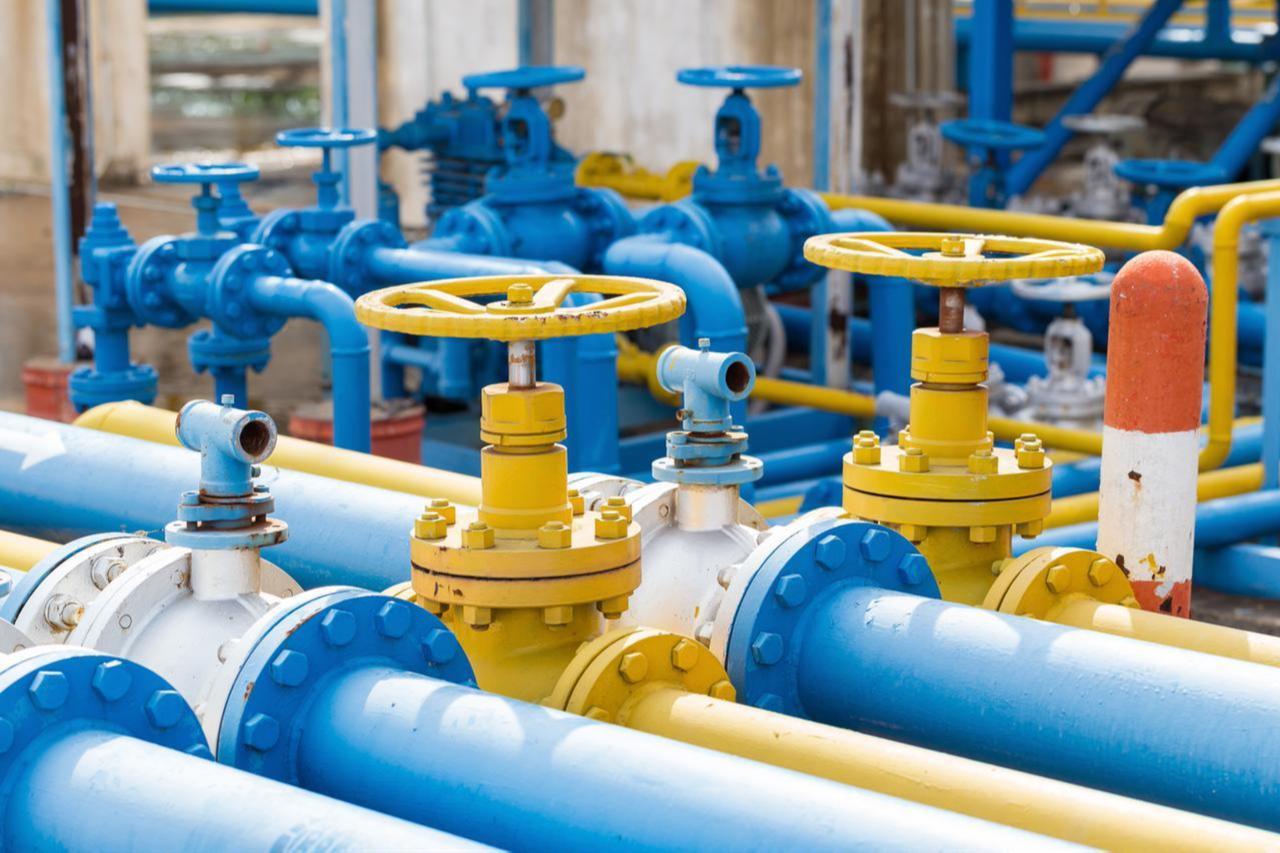


At the end of April, Bosnia and Herzegovina and Croatia signed a state-level interstate agreement in Dubrovnik on the Southern Gas Interconnection—a legal framework committing both sides to develop a pipeline linking their gas systems.
It is not a construction contract or a finalized financing deal. It is the political and legal architecture that allows the project to move forward.
For decades, Bosnia has relied almost entirely on a single route and a single supplier: Gazprom, with gas entering the country through Serbia along legacy infrastructure.
This model is efficient until it isn’t. It leaves the country exposed to price shocks, political pressure and supply disruptions.
More importantly, it limits Bosnia’s ability to act independently in an increasingly geopolitical energy landscape.
The Southern Gas Interconnection aims to transform this landscape by linking Bosnia to Croatia’s pipeline network. By connecting to the Krk LNG terminal, the project would grant Bosnia direct access to global LNG markets.
The agreement was signed alongside the Three Seas Initiative, a platform bringing together countries between the Baltic, Adriatic and Black seas.
Its purpose is straightforward: to build north–south infrastructure in energy, transport and digital sectors that reduces dependence on east–west routes historically tied to Russia.
In energy terms, that means LNG terminals, interconnectors and pipelines that allow gas to flow across the region, not just from a single source. Bosnia has, until now, remained largely outside that system.
This agreement is its entry point.
Both the European Union and the United States support the project. Both see it as essential to reducing Bosnia’s dependence on Russian gas and anchoring it within the Western energy system.
But alignment on goals does not mean alignment on method.


The project is increasingly being framed not merely as energy policy, but as a potential EU–U.S. clash over influence in the Balkans.
European officials have already issued a direct warning that the way the project is being structured could jeopardize Bosnia and Herzegovina’s EU membership ambitions, citing concerns over insufficient coordination with Brussels and legislation pushed forward without proper alignment with EU procedures.
At the same time, the involvement of AAFS Infrastructure and Energy, a U.S.-based private company, has become a focal point of controversy.
Reporting has highlighted several red flags, including the company’s recent creation in late 2025, its lack of a clear track record in major energy infrastructure projects, and leadership figures linked to the political circle of Donald Trump.
In Brussels, this has reinforced a growing perception that AAFS is not a neutral investor, but a politically connected actor shaping the direction of a strategically sensitive project.
Brussels has taken a more cautious position, emphasizing compliance with EU market rules, transparency in ownership and operation and the need to avoid parallel or politically driven systems within Bosnia’s already fragmented structure.
Washington, by contrast, has framed the project in more strategic terms. U.S. officials, including ambassadors in the region, have consistently stressed urgency—arguing that diversification and reduced dependence should not be delayed by institutional disputes.
Their message is simple: move forward.
This is not a transatlantic clash. But it does reflect two distinct philosophies: the EU prioritizes regulatory coherence and long-term integration and the U.S. prioritizes speed, security and geopolitical positioning.
For Bosnia, the challenge is not choosing between them but navigating both without losing its own direction.
And that is where the real problem lies. Bosnia’s political leadership broadly agrees on the need for diversification. But consensus ends where control begins.
Disputes over governance—particularly the role of BH-Gas and competing proposals to restructure the system—have repeatedly stalled progress.
On one side stands BH-Gas, the existing state-owned transmission operator that currently manages gas imports and infrastructure in the Federation of Bosnia and Herzegovina, and is backed largely by Bosniak political actors who argue the system should remain unified under a single operator.
On the other hand are political forces linked to HDZ BiH—the main Croat nationalist party in Bosnia and Herzegovina—which has been advocating for the creation of a new gas company, often envisioned to be based in Mostar, that would manage the new pipeline separately.
In essence, the dispute is not just about infrastructure, but about whether the country’s gas system should remain centralized or be restructured along political and territorial lines, with significant implications for control, revenue and long-term influence.
What should be a strategic project has become a proxy for deeper political divisions.
Bosnia does not need to choose sides. It needs to define its own interests—clearly and consistently—and then align external partnerships around them.
First, it needs energy stability: no country should depend on a single supplier. It needs Institutional clarity: one system, not competing structures. and most importantly, European integration: alignment with EU rules is essential for long-term progress.
Any partnerships should strengthen, not replace, domestic decision-making. None of these goals should be mutually exclusive.
The Southern Gas Interconnection is no longer just an infrastructure project.
It has become a window into a broader reality: the growing divergence between the European Union and the United States on how to shape the political and economic future of regions like the Western Balkans.
From disputes over energy governance and market rules to wider disagreements on industrial policy, strategic autonomy and the pace of enlargement, cracks in the transatlantic partnership are no longer theoretical—they are visible in practice.
Bosnia now finds itself at the intersection of those differences. But this is precisely why the country cannot afford to internalize them. The risk is not choosing the wrong partner.
It is allowing external agendas—however well-intentioned—to substitute for domestic decision-making. Neutrality, in this context, does not mean disengagement. It means clarity.
Clarity about what Bosnia needs: diversified energy, a coherent system, regulatory credibility and long-term stability.
Clarity about what it does not need: fragmented governance, politically driven infrastructure and decisions shaped elsewhere. The European Union can offer a framework.
The United States can offer momentum. But neither can define Bosnia’s priorities. That responsibility cannot be outsourced.
At a moment when others are increasingly divided, Bosnia’s greatest challenge and its only viable path forward is to act with unity and purpose.
Not as a battleground for competing approaches, but as a country capable of choosing its own direction. It can’t afford any other approach in a time of several geopolitical crises and rising energy prices.


 Set as preferred source
 Set as preferred source


 1 min read

 1 min read