Newsletters


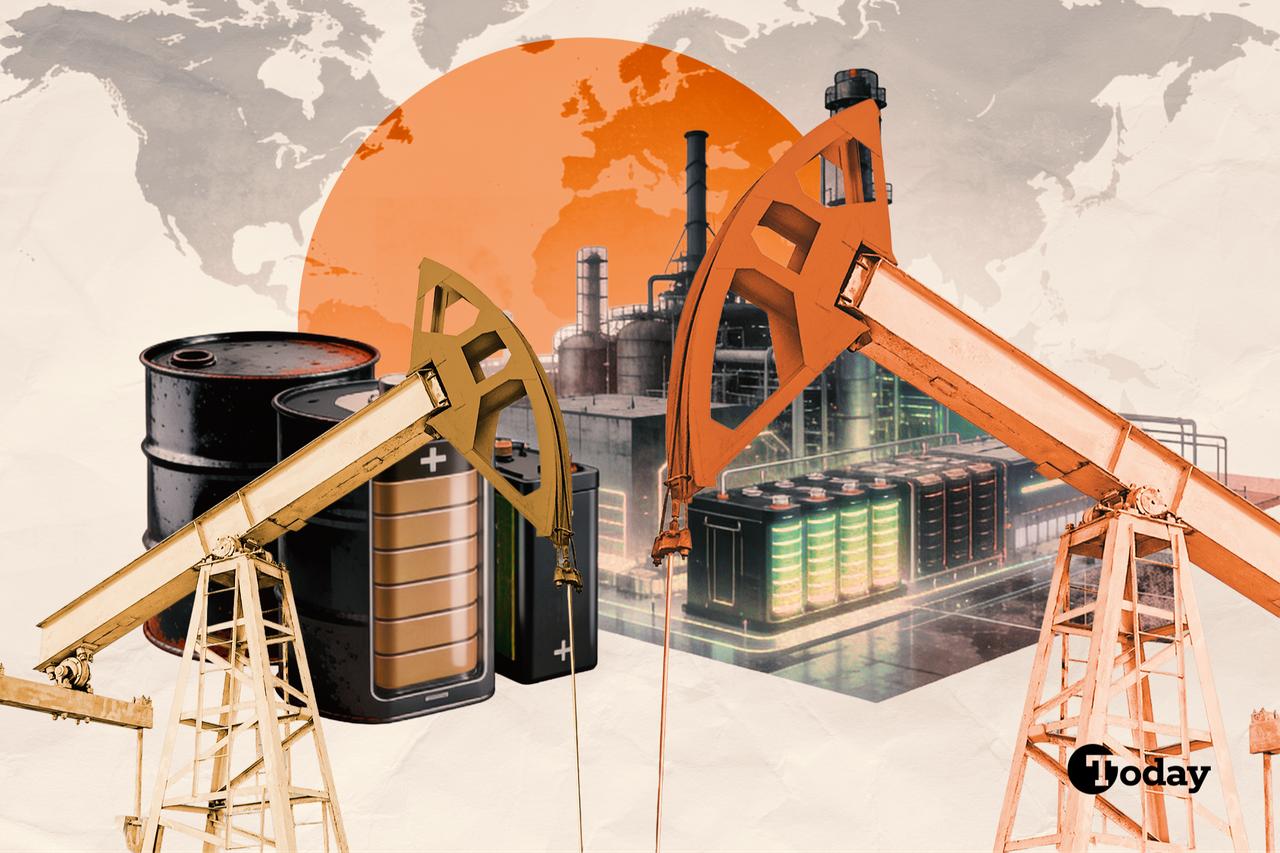


Saudi Arabia is simultaneously drilling one of the world's largest new gas fields, building a green hydrogen export terminal, buying stakes in electric vehicle companies, and developing its first nuclear reactors.
China, meanwhile, is manufacturing most of the world's solar panels and batteries while building nine in every 10 new coal plants on earth.
Most coverage presents these facts as contradictions or awkward overlaps. But they are better understood as strategies, and understanding them requires throwing out the story most often told about the energy transition.
The question is not which fuel wins, let alone which is more moral, but who sits between the raw material and the end product to collect the rent.
That distinction matters because extraction is fungible, while refining, processing, and conversion are where the margin concentrates. The energy transition does not change that logic. It just reissues the title deeds.
Energy systems do not die on cue. They accumulate instead, like geological strata, with each new layer resting on the old.
Coal never abolished its predecessors, and oil never abolished coal. Today, electrification is not abolishing hydrocarbons but arriving through them, via the dense machinery of a world that is still carbon-centric, no matter how pious the language smothered over it.
As Rob West of Thunder Said Energy observes, the transition is best understood as “an extended period where many new energy technologies all appear and gain share at the same time, with very little evidence of one energy source suddenly replacing another.”
The real strategic prize, then, is not purity but arbitrage.
The clever state is not asking which energy source is morally superior. It is asking which one it can sell for more than it paid. The ideal is simple: burn cheap at home; sell dear abroad.
That move, however, is bound by physics, which is stubborn. Batteries may transform cars and help stabilize grids, but some of the most consequential transport tasks remain resistant to electrification.
Energy expert and professor emeritus Vaclav Smil, warns me that there are still “no commercially available large container ships, jetliners, or large combines running on electricity, and no imminent prospect of mass adoption.”
These constraints are not a temporary embarrassment waiting to be engineered away. They are the load-bearing walls of the existing infrastructure and the political economy built around it.
Nowhere is the politics of that overlap clearer than in the Gulf.
The region's most ambitious states are not fleeing the fossil age out of shame or enlightenment but, as Adam Hanieh, professor of development studies at SOAS, notes, looking to “position themselves at the center of all energy systems, past and future.”
Saudi Arabia is the clearest example. Aramco burns gas at home to displace oil in power generation, a shift made necessary by the fact that Saudi power plants previously consumed 1 million barrels of oil per day. The Jafurah gas field, a development costing over $100 billion, is explicitly designed to end that waste, freeing the barrel for export.
The same logic drives its investments in what nominally replaces oil. The Public Investment Fund has poured $9 billion into the EV value chain, now controls over 60% of Lucid Group, injected a further $550 million into it in early 2026, and helped create EV brand Ceer. Hydrocarbon revenue, in other words, is financing the infrastructure that may one day export what replaces it.
Collectively, the Gulf's five sovereign wealth funds deployed over $110 billion in 2025 across technology, infrastructure, clean energy, and entertainment. This sum exceeds Germany's entire public investment budget and is a signal of how comprehensively hydrocarbon rents are being converted into positions across every sector that might matter next.
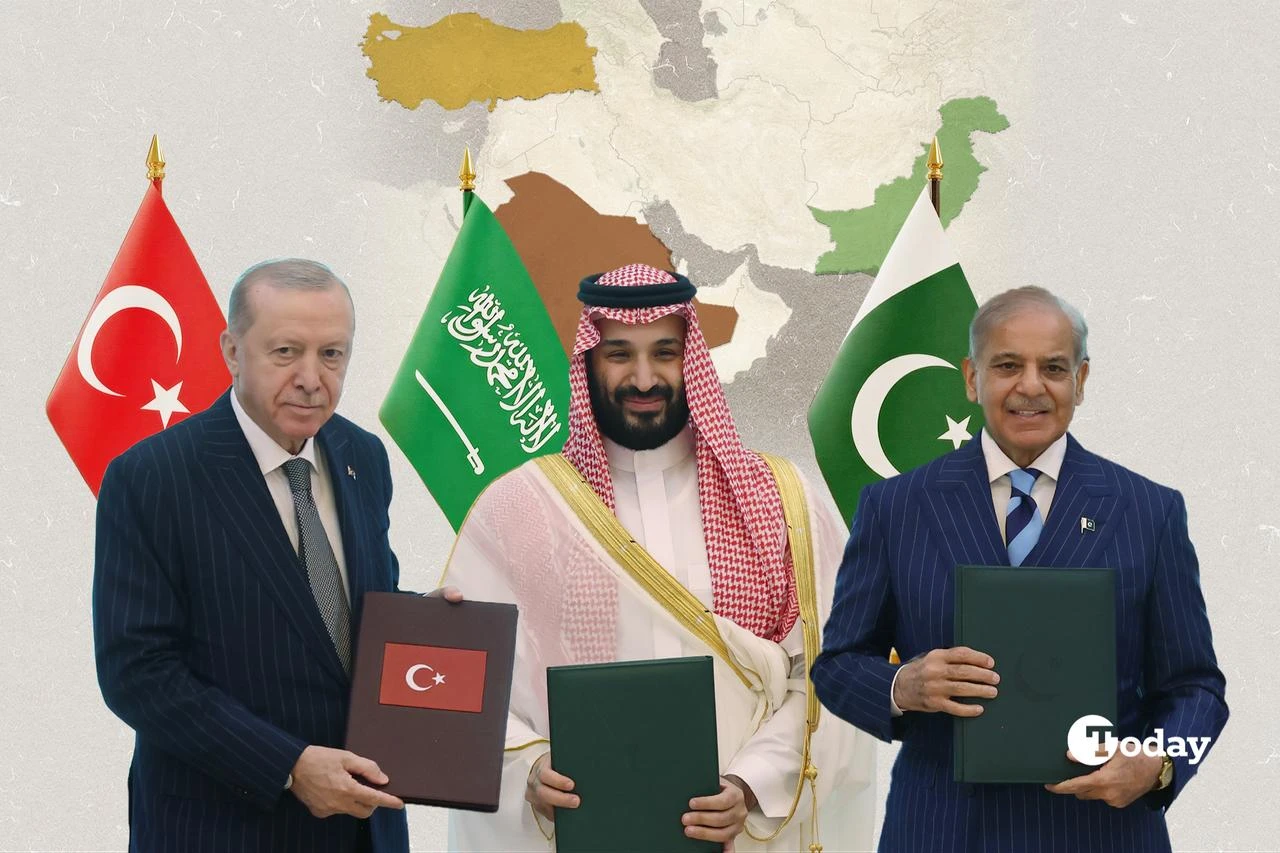
Türkiye illustrates how far the logic can stretch. It is a NATO member that refused to sanction Russia, an EU candidate that routes Russian gas to EU member states, and a buyer of Russian nuclear technology that simultaneously sells armed drones to Ukraine.
Ankara has made a sustained strategic choice to sit at the intersection of every major conflict in the region. TurkStream, now the only pipeline corridor through which Russia can still reach EU members, runs through Turkish territory. The transit fees are the least of it.
China has pursued the same logic from the other end of the chain, and for longer.
The key to understanding it is a distinction that Michal Meidan of the Oxford Institute for Energy Studies draws: “China's clean-tech manufacturing relies in part on coal for electricity production,” she told me, “and requires chemical precursors that use oil and gas as feedstocks.” The clean products are sold abroad while the coal and the precursors stay home.
For Meidan, the strategic advantage lies not in escaping this overlap but in exploiting it. The redundancies it creates serve as shock absorbers in a crisis, while the deeper prize is owning the conversion layer where raw material becomes a usable product.
The numbers show how completely it has succeeded. The IEA confirms that China is the dominant refiner for 19 of 20 critical minerals, with an average 70% market share. It also holds 70% of global battery manufacturing capacity, 85% of anode materials, and 75% of all battery production.
Then came the reminder that dominance is not theoretical. In October 2025, Beijing announced sweeping export controls on 12 of the 17 rare earth elements, synthetic graphite, high-performance lithium-ion batteries, and cathode precursors.
The mine is a commodity anyone can dig, while the refinery requires decades of investment, proprietary chemistry, and industrial scale that only one country has bothered to build seriously.
A handful of smaller players, including Australia, the U.S., and a few others, prevent it from being a full monopoly, making oligopoly the more accurate word, and not a comforting one.
Russia is the warning, even if the Iran war has temporarily obscured it. By February 2026, Western sanctions appeared to be finally working, with oil export revenues falling to their lowest level since the invasion of Ukraine began.
Today, soaring prices and a U.S. sanctions waiver have handed Moscow a temporary windfall. Yet structurally, nothing has changed. Russia remains dependent on whatever price Beijing or New Delhi decide to pay, subject to disruptions it cannot control and discounts it cannot refuse.
On “Power of Siberia 2,” the pipeline Moscow is counting on to replace its lost European gas revenues, Beijing has yet to agree on a price, a volume, or a contract. The terms it demands are close to Russia's own subsidised domestic rates.
Armed with hydrocarbons, nuclear capability, strategic depth, and mineral wealth, Russia had every ingredient for dominance, yet it built no tollbooth. So while the Iran war may have filled the war chest temporarily, the pipeline terms remain Beijing's to set.
The world is not moving tidily from one class of states to another. It is entering a long, dirty overlap in which old and new energy systems coexist, feed one another, and create spreads to be exploited.
Some states will learn to sit at the fulcrum, consuming the cheaper energy, exporting the dearer one, and converting the rents into influence over both worlds. Others won’t.
Ultimately, the future belongs neither to pure petrostates nor electrostates. It is the preserve of those cold enough to understand that in energy politics, as in finance, real power is not found in choosing a side, but in owning the toll road between them.


 Set as preferred source
 Set as preferred source


 5 min read