Newsletters





"We have made history in this country." Ulrich Siegmund, the 35-year-old Alternative for Germany (AfD) lead candidate, didn't mince words on the night of September 6, 2026—and for once, a politician's boast held up.
With 43.8% of the vote—more than twice its result five years earlier—the AfD came closer to governing a German state than any far-right party has since the Second World War.
The result sent shockwaves through German politics, with Chancellor Friedrich Merz acknowledging that his party was "shaken to its core" and that German politics could no longer continue with "business as usual."
Beyond Germany's borders, international reactions underscored the result's global resonance. Right-wing figures praised the outcome, with Elon Musk posting "Gut gemacht!" (well done), former U.S. ambassador Richard Grenell hailing it as a "huge win," and former Hungarian Prime Minister Viktor Orban calling it "a huge night for Germany and Europe."
Conversely, European leaders sounded the alarm. Polish Prime Minister Donald Tusk, Spanish Prime Minister Pedro Sanchez, and French officials described the victory as a grave threat to European unity, warning against the global spread of populism.
The AfD's success in Saxony-Anhalt reveals a striking paradox. The party achieved its breakthrough through aggressive anti-immigration rhetoric in a state with low foreign demographics.
By framing immigration as a direct threat to local culture, security, and social stability, the party managed to shift voter focus from demographic reality to perceived threat.
More broadly, historians and security experts have expressed concern about this momentum, particularly in light of Germany's historical experience with far-right politics.
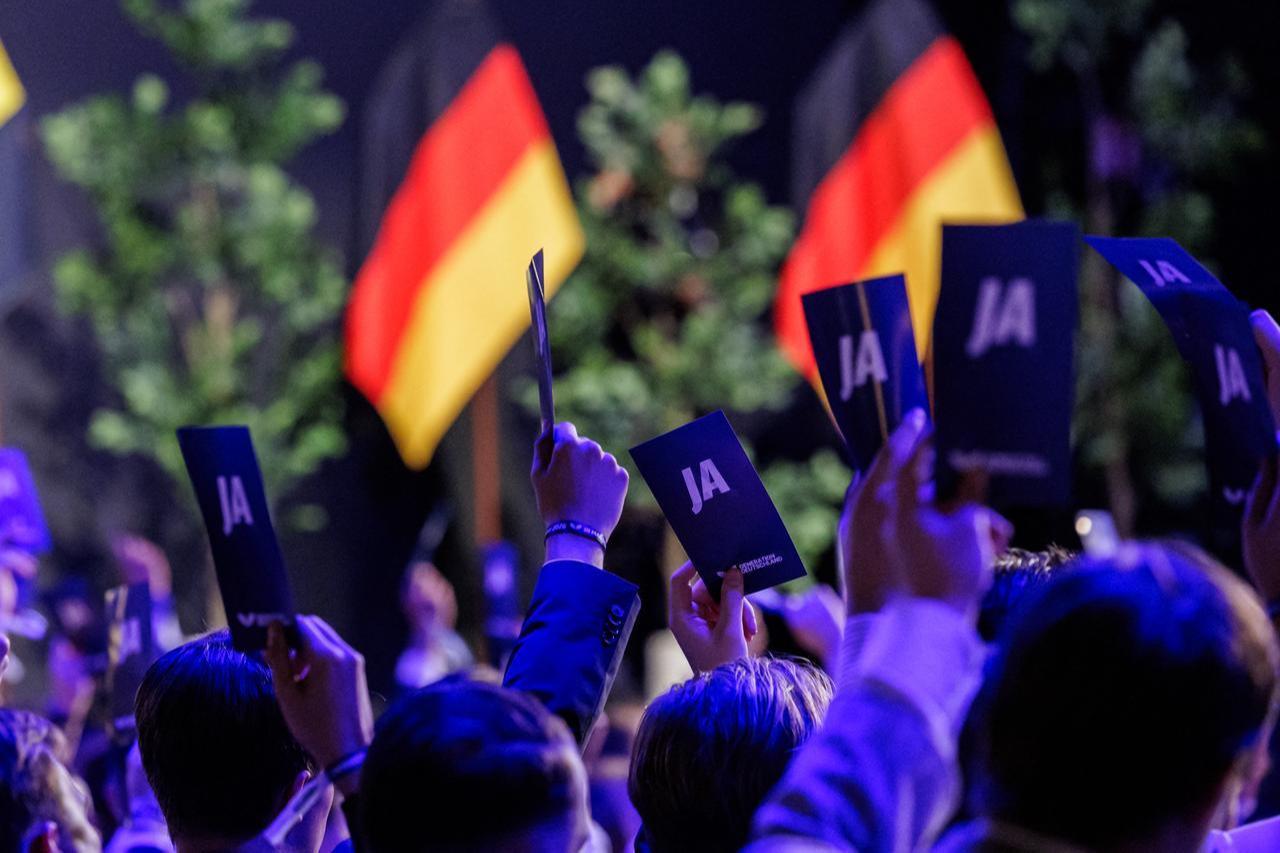

Turning this electoral momentum into executive power remains a structural challenge. The AfD holds 39 of the Landtag's 83 seats, three short of the 42 needed for a majority. The margin is narrow enough to sharpen the question rather than settle it.
The party carried 38 of the state's 41 constituencies and still cannot govern. To do so, it needs a partner, and it currently stands alone. With the state's domestic intelligence agency classifying the local branch as "confirmed far-right extremist," every other party maintains a strict refusal to cooperate. The CDU, which lost 25 seats to the AfD, has been the most explicit.
Compromise from within is equally doubtful. Lead candidate, Ulrich Siegmund, will not dilute his platform or lead an unstable minority government. A partnership with the BSW is also off the table; their economic views remain incompatible despite shared anti-establishment rhetoric.
Consequently, the AfD is the state's dominant force, yet completely locked out of office, a status some members accept as they wait for an outright majority.
However, being locked out of cabinet seats has not stopped the party from shaping governance. The outcome in Magdeburg, the capital of Saxony-Anhalt, marks a major change in German political debate. Remigration, mass deportations, and border closures were extreme positions a decade ago. Four in ten voters have now backed a party that openly campaigns for them. Other parties have come under growing pressure to respond.
Mainstream parties still maintain a formal firewall (Brandmauer) against coalitions with the AfD. Yet, the distance between their policies has become harder to maintain. It became clear in January 2025, when Merz, then still in opposition, pushed a migration motion through the Bundestag by four votes. The AfD provided the votes needed for a majority.
It was the first time in the party’s history that it had helped create a parliamentary majority. The decision led to protests across Germany, with many people criticizing Merz for relying on AfD votes. The vote showed that the Brandmauer could remain in place as a rule against coalition while becoming less clear in practice.
After entering government, Merz continued with stricter migration policies. His first migration law suspended family reunification for people with subsidiary protection. His Interior Ministry also began turning asylum seekers back at the border.
Mainstream parties had previously rejected this approach because of concerns over its compatibility with EU law. The European Commission later opened infringement proceedings. Deportation flights to Syria and Afghanistan also resumed. These measures had all been demands of the AfD before they became government policy.
The March 2026 citizenship vote shows the mechanism most clearly. The previous autumn, Parliament had ended the three-year path to naturalization introduced in 2024 and restored the five-year minimum—a restriction the AfD had long campaigned for, now passed under the government's own signature. When the party brought its own citizenship bill months later, Parliament rejected it by a wide margin.
The AfD's Gottfried Curio told the CDU benches that his party was merely restating the CDU's own position. Self-serving, but the sequence gave him something to stand on. The proposal fails when it carries the AfD's name, while a version of its content is already law under someone else's.
It will soon be clear whether Magdeburg was just a regional event or the start of a bigger national change. Two more states will vote on September 20, and the results should be revealing. If the AfD does well in rural Mecklenburg-Vorpommern but not in Berlin, it suggests that this is a regional protest driven by post-unification issues, with the national political boundaries still holding.
However, if the party also gains ground in Berlin, a wealthy and multicultural city, regional and demographic explanations matter less, pointing to a broader shift in what German voters are willing to support.
More revealing still is the fact that mainstream parties cannot offer voters an alternative to the AfD's agenda when they have already adopted much of it. They can keep the party out of the cabinet and still deliver its policies, as they have since Merz took office in May 2025.


 Set as preferred source
 Set as preferred source


 1 min read
 1 min read