Newsletters


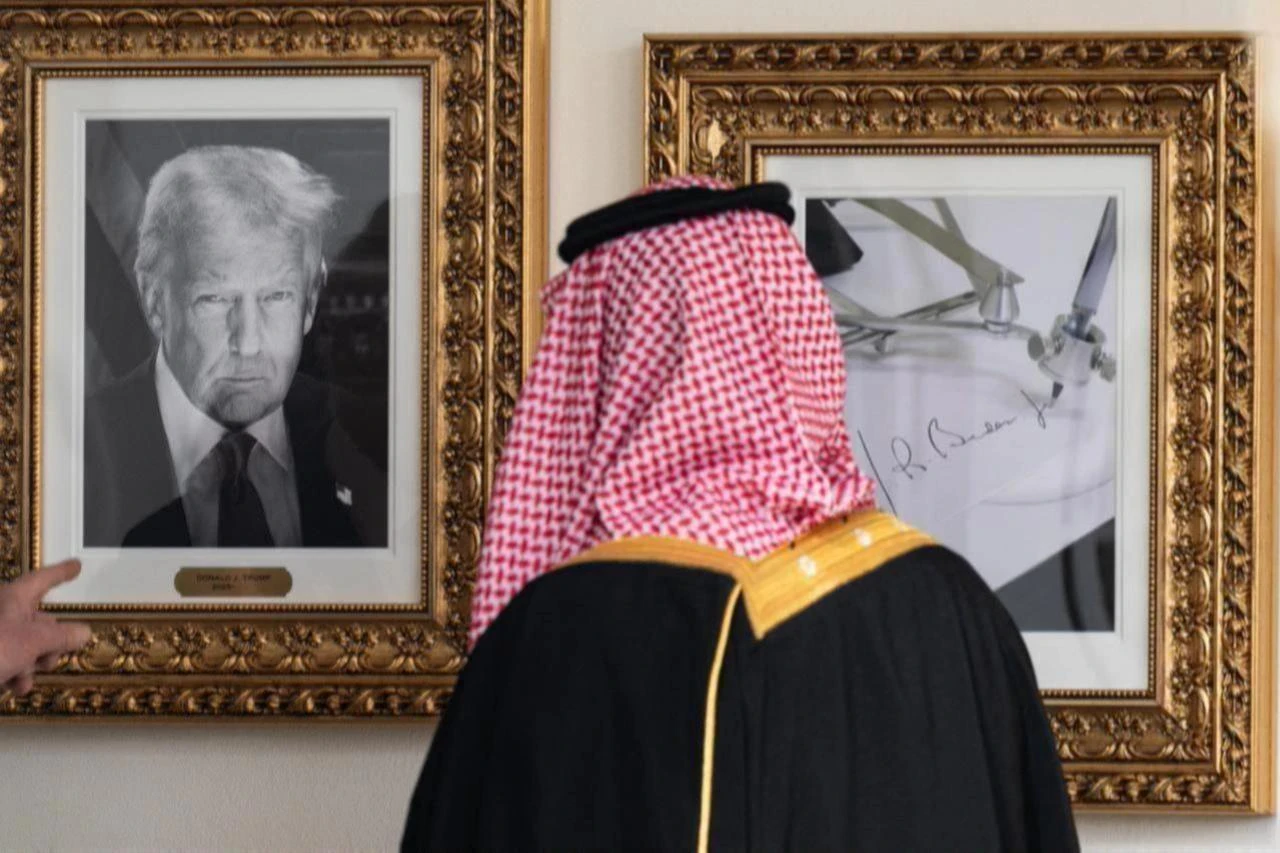


Imagine building your own oil refinery just because you need to fill up your car. That's roughly the economic logic behind Saudi Arabia's insistence on enriching its own uranium—and it's the comparison Ali Alkis, a Junior Associate Fellow at the NATO Defense College and a Nuclear Threat Initiative Emerging Nuclear Security Leader, uses to describe Riyadh's approach to Türkiye Today.
The issue came to the forefront last week after news broke of the U.S.-Saudi civil nuclear cooperation agreement. The deal has drawn criticism because it would allow Saudi Arabia to produce, rather than import, nuclear fuel for its power plants while reportedly lacking safeguards to prevent the reprocessing of spent nuclear fuel.
Critics—including some U.S. lawmakers, analysts, and Israeli opposition figures—argue that uranium enrichment and spent fuel reprocessing could eventually enable weapons production, while increasing regional proliferation risks and fueling a nuclear arms race.
Saudi Arabia has been negotiating with the United States since 2012 to develop a civilian nuclear energy program using U.S. technology. The Kingdom aims to diversify its economy and energy mix while freeing more oil for export.
The two sides came closest to an agreement during the Biden administration, but U.S. opposition to domestic uranium enrichment proved a major obstacle.
At the time, the proposed deal formed part of a broader framework that included U.S. security guarantees for Saudi Arabia and Saudi recognition of Israel. The current agreement, however, reportedly relaxes the U.S. position on uranium enrichment and no longer requires Saudi recognition of Israel.
The proposed U.S.-Saudi 123 Agreement typically contains nine non-proliferation provisions, such as restrictions on uranium enrichment, plutonium reprocessing, and the retransfer of nuclear material without prior approval.
However, it applies only to U.S.-origin nuclear material and does not restrict the enrichment or reprocessing of material obtained elsewhere. U.S. officials also said abilateral nuclear safeguards arrangement accompanies the agreement.
Even so, it falls well short of the non-proliferation "gold standard" established by the 2019 U.S.-UAE agreement, under which the UAE renounced domestic fuel-cycle capabilities and signed an IAEA Additional Protocol (AP), allowing expanded inspections.
Alkis notes that Saudi Arabia is a party to the Nuclear Non-Proliferation Treaty (NPT) and has a Comprehensive Safeguards Agreement (CSA) with the IAEA, but has yet to adopt the IAEA's Model AP.
Without the AP, the IAEA's strengthened safeguards regime will not apply to Saudi Arabia. The AP is the IAEA's primary tool for detecting undeclared nuclear activities and has long been a U.S. condition for nuclear cooperation.
However, Washington reportedly plans to supplement the standard safeguards agreement with additional measures, including a separate arrangement allowing the IAEA to inspect U.S.-affiliated facilities. "If not the AP, this is a great solution," Alkis says.
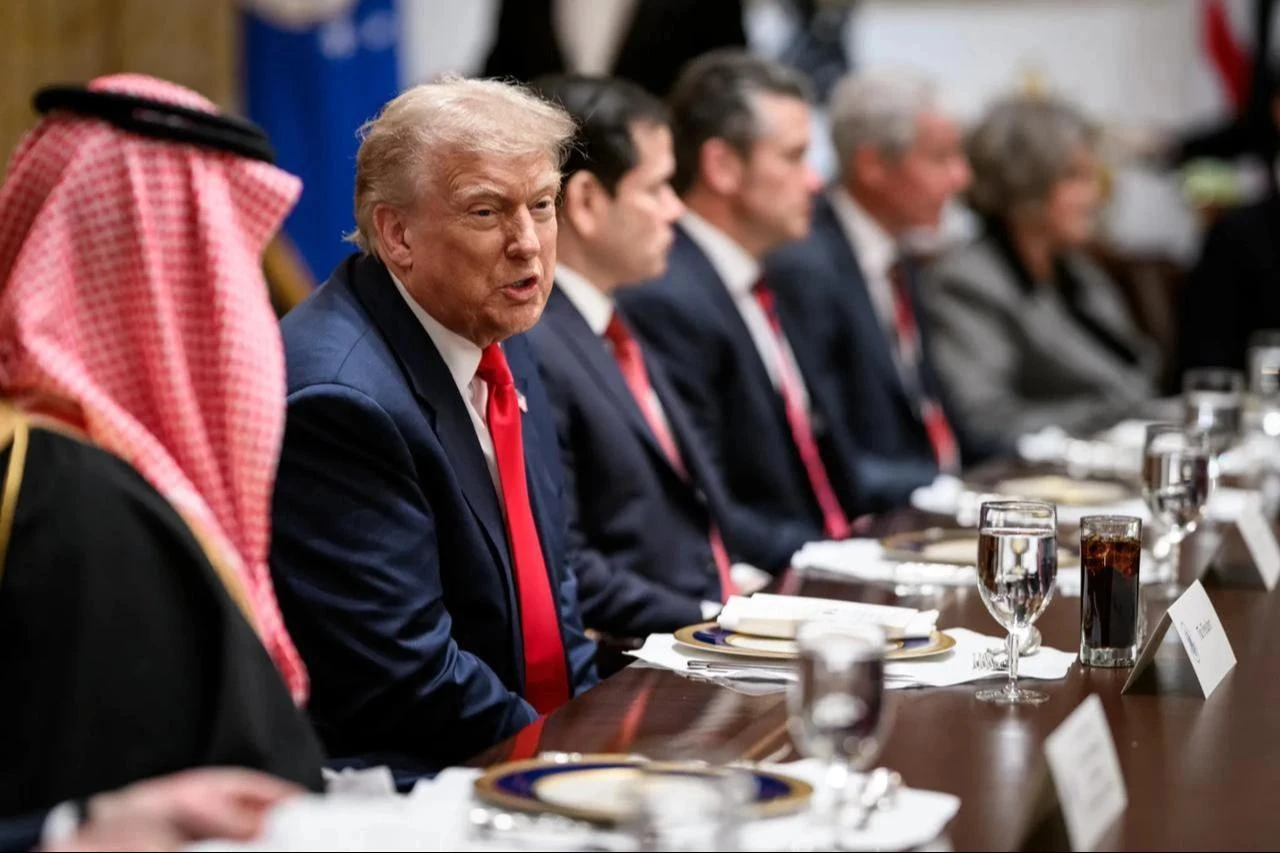

Opposition to the spread of uranium enrichment and plutonium reprocessing capabilities (the "fuel cycle") has long been a cornerstone of U.S. non-proliferation policy.
Yet, at a time when Iran's stockpile of 440 kilograms of uranium enriched to 60% remains a key issue in U.S.-Iran negotiations, Crown Prince Mohammed bin Salman has vowed that Saudi Arabia would pursue nuclear weapons if Iran did, and other regional states have voiced similar positions, why has Washington departed from its longstanding policy of denying enrichment and fuel cycle technology to states that do not already possess it?
Under the U.S.-Saudi civil nuclear agreement, uranium enrichment on Saudi soil could be allowed after a two-year joint study to assess commercial feasibility.
Because enrichment is costly and raises significant proliferation and security concerns, Alkis argues it is difficult to justify for purely civilian purposes.
While Saudi Arabia's uranium reserves make its interest understandable, he says the lack of advanced domestic nuclear facilities capable of using enriched fuel is "where things get blurry."
Washington is also aware that uranium enrichment in Saudi Arabia is not commercially viable. However, ruling it out entirely could have jeopardized the deal, as domestic enrichment and U.S. technology transfer have long been among Riyadh's core demands under the Obama, Trump, and Biden administrations.
By tying any enrichment facility to a two-year feasibility review, the United States has bought time while securing the agreement.
Insisting that Saudi Arabia permanently renounce fuel cycle capabilities under the non-proliferation "gold standard" could instead derail the deal, reduce U.S. influence over the Kingdom's nuclear program, and push Riyadh toward less restrictive suppliers.
Another factor behind the timing of the agreement may be Saudi Arabia's reported talks with Russia and China on similar nuclear cooperation. The deal secures a leading role for U.S. companies in the Kingdom's civilian nuclear program while excluding foreign competitors for the next decade.
Secretary of State Marco Rubio echoed this logic, arguing that U.S. participation is preferable to that of countries whose programs would be harder to keep exclusively civilian.
Even with strong safeguards, U.S. support for a Saudi enrichment facility would weaken the global non-proliferation regime.
Alkis argues that while Saudi Arabia may seek enrichment for peaceful purposes, granting it that capability could encourage other states to follow suit, stretching the IAEA's already limited verification capacity. “We can’t have multiple states with enrichment capabilities and assume all will be peaceful as we have already enough fuel,” he says.
U.S. backing would also make it harder to reject similar requests from allies such as South Korea and the UAE or to discourage other suppliers from offering enrichment technology to boost reactor sales.
Although allowing Saudi enrichment may be a tactical concession and its implementation remains uncertain, if Congress approves the agreement and, after the two-year review, Washington proceeds with an enrichment facility despite the absence of Saudi-Israeli normalization, it should prioritize minimizing proliferation risks.
One proposed solution is a facility operated exclusively by U.S. personnel, subject to safeguards exceeding the IAEA AP, and protected against Saudi takeover through measures such as a U.S. military presence or emergency shutdown mechanisms.
Whether Riyadh would accept such conditions remains unclear. In any case, reactors take roughly a decade to become operational, leaving ample time for U.S. policy to change.


 Set as preferred source
 Set as preferred source


 1 min read

 1 min read