Newsletters




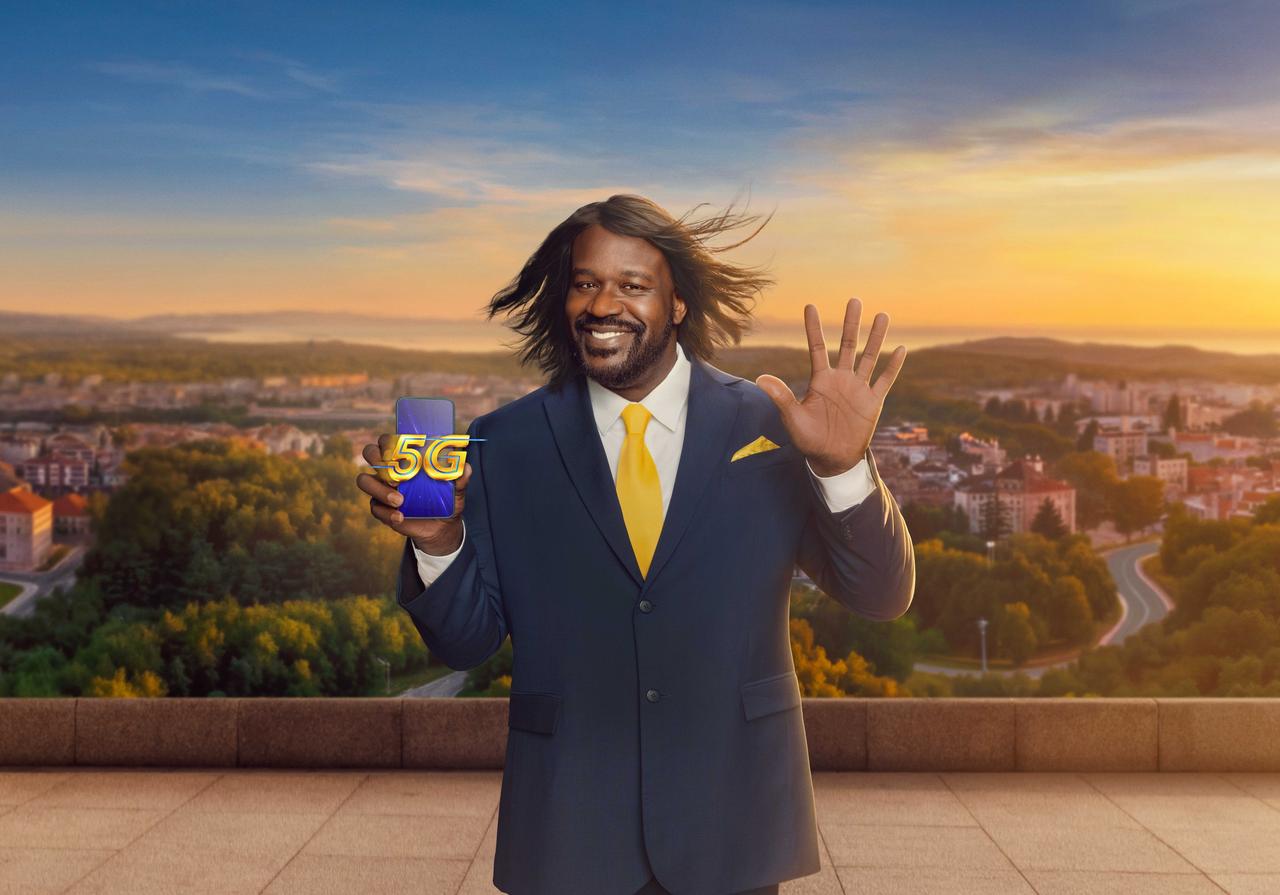
5G isn’t just arriving in Türkiye; it’s staging a takeover.
In an era where infrastructure announcements usually vanish into the white noise of progress, this development carries a different, sharper texture. It is a technological leap, certainly, but it’s also a high-stakes cultural performance.
At the center of this development is an unexpected figure: Shaquille O’Neal.
At first glance, the campaign is a clever, high-gloss production that expertly weaves a global icon into the fabric of Turkish tradition.
But look past the polish and a sharper strategy emerges. This isn’t just a telecom rollout; it’s a calculated positioning move, designed to redefine how the country competes on the world stage.

5G is often described in technical terms by speed, latency, and bandwidth. While those metrics are important, they do not tell the full story. In today's world, it is evident that connectivity is not merely infrastructural; it is a signal of readiness and ambition; a sign of belonging in a high-speed, real-time global economy.
Today, connectivity is not simply about speed; it is about credibility as well.
It sits at the intersection of everything that matters nowadays, such as economic productivity, digital services, innovation ecosystems, and even governance. Only a country that delivers fast, reliable and real-time infrastructure signals is able to support startups, attract investments, enable new industries and operate at the pace of global markets. In that sense, connectivity becomes tangible proof.
Countries are no longer competing solely on what they build. They are competing on how what they build is perceived, and perception, increasingly, is shaped through narrative.
The fact that O’Neal was chosen for this campaign is also significant. That he was selected owing to his popularity is the simplest explanation. He represents something more strategic: an instant global legibility. He is cross-generational. People from different age groups know him.
He is culturally fluid and immediately recognizable across markets. Shaq has a following in every country and every culture. He resonates with a large segment of the population, including businesspeople, investors, young people, and even children. Moreover, he's likeable. He is a successful athlete, which makes him a reputable person. In other words, he's someone whose word can be trusted.
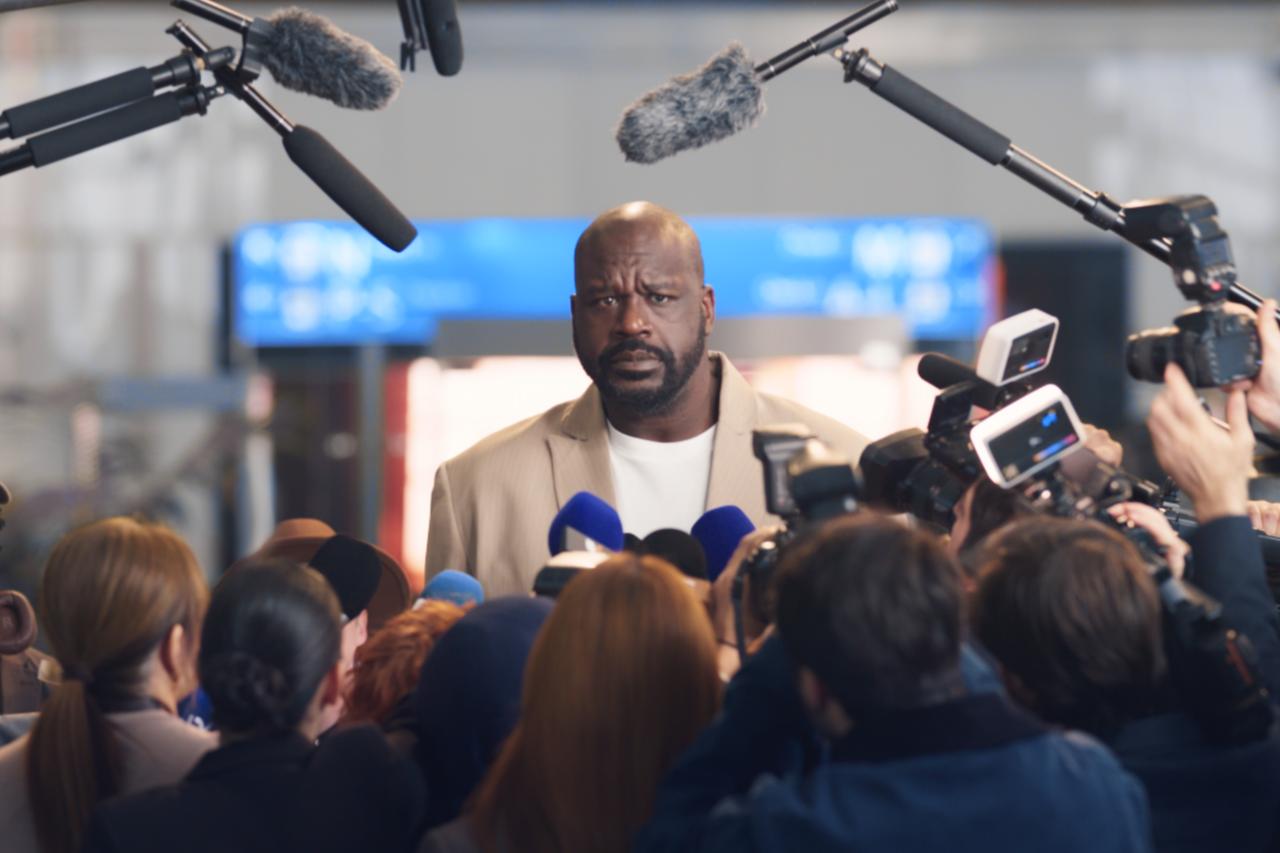
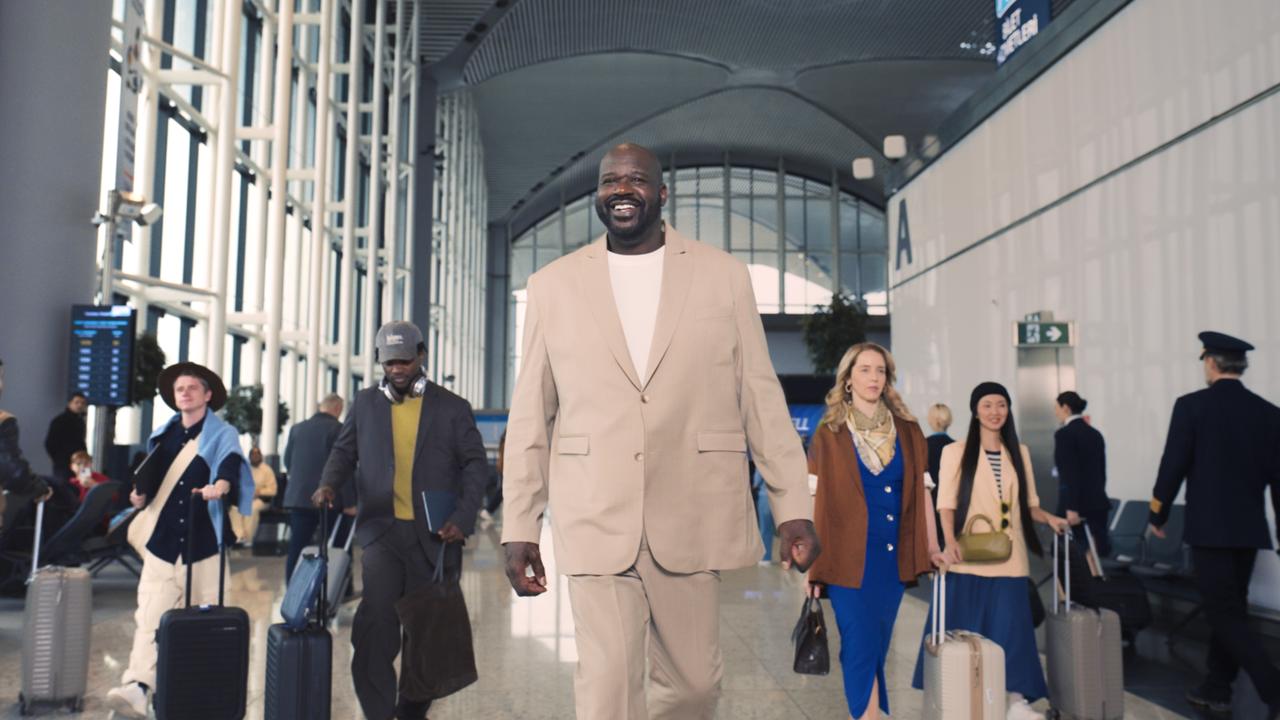
The commercial shows Shaq walking through Istanbul Airport. It captures the surprise of those who see him there, and their happiness in greeting him. The reason for Shaq's visit to Türkiye for the Turkcell commercial is kept a secret in the advertisement, with the basketball player telling journalists that he came to "get a hair transplant." Following this explanation, Shaq, who actually had to get a hair transplant, appears humorously throughout the commercial.
The hair-transplant tactic in the commercial is critical because it serves three purposes at once. First of all, it acknowledges a globally recognized reality. Türkiye is now the preferred country for people to have hair transplants. This widely accepted phenomenon has a lighter side too, which, in this case, is resonating well on social media. Secondly, humor is used as a bridge in the commercial. Lastly, it reframes a niche sector into a shared cultural reference point. Hair transplantation is a joke that works without needing any translation.
His presence in the commercial does something critical. It lowers the cognitive barrier for global audiences. Without really putting it into words, it says this is not a "local story, it is a global story, and you are invited into it.”
The real sophistication of the campaign is not in choosing a global face. It is in what that face is made to navigate. Shaq was chosen precisely for this reason.
The campaign achieves something rare and difficult, as the commercial includes both Turkish and English. After the climax, Shaq starts speaking Turkish.
When we look at what the story is about, there is a subtle reference to Türkiye’s globally recognized hair transplant industry. This is actually where the story gets a nice bit of humor.
The scene featuring Shaq dancing halay, a Turkish traditional dance, is an instance that incorporates traditional motifs while also conveying messages at the same time: an international celebrity is honoring our culture by participating in one of Türkiye's folk dances. He is drinking Turkish tea, which is practically a symbol of Türkiye, that too in a traditional cup, not an American mug.
Perhaps the most sophisticated layer of this campaign is its dual address. It conveys messages to both local and global audiences. For the local audience, the commercial involves familiarity, recognition, and cultural pride. For the global audiences, it offers clarity and accessibility. And it brings both together on one common ground: humor.
This balance is notoriously difficult. If it’s too local, the message does not travel. When it’s too global, it loses its soul. Here, the campaign attempts both and emerges successful.
Beyond narrative, there is a more fundamental question. What does 5G actually do for people? How will 5G technology affect our lives?
Infrastructure, on its own, is invisible. Its value emerges only when it transforms experience. How cities move, how services respond, how culture is produced and consumed, how people connect in real time—all of this is affected by 5G technology. This is where the real opportunity lies: what 5G allows people to do, feel, and become!
Türkiye’s next move will not be measured by coverage maps. It will be measured by the experiences it enables and the stories those experiences generate via 5G.
For years, Türkiye has invested in physical and cultural infrastructure. Making these investments was crucial given the rapid urbanization and population growth that was taking place. Aviation networks that connect continents, logistics systems that move goods at scale, and cultural exports that travel across screens were made. 5G marks a new layer in that evolution. More than a technological advancement, as a narrative device.
This commercial is a way of saying we are fast and connected, and we understand how to speak in a global language without losing our own.
What makes this moment interesting is not the 5G technology itself. It is actually the choreography around it. A global icon comfortable in a local joke, a shared traditional dance, and a cup of tea. From a broader perspective, these are small gestures forming a collective signal about how Türkiye chooses to be seen.
Minister of Transport and Infrastructure Abdulkadir Uraloglu stated that investments in the sector have been accelerated due to the launch of 5G on April 1, saying, "As of the end of last year, the total investment amount in the electronic communications sector increased by 54% compared to the previous year, reaching over ₺145.2 billion."
"With 5G, which Türkiye gradually launched in all 81 provinces as of April 1, 2026, approximately 21 million subscribers were introduced to this technology from day one. Within 10 days, approximately 8 million more new 5G subscribers were added, bringing the total to over 29 million. Considering that the number of 5G-compatible devices in our country is approximately 32 million, we have already achieved an impressive penetration rate of over 90% with our subscriber count exceeding 29 million," Uraloglu said.
There is another quieter layer to this strategy that extends beyond the campaign itself and into the everyday interface of the user. On 5G-enabled phones in Türkiye, the space where the operator’s name typically appears has been temporarily replaced with playful, campaign-linked phrases. It looks like a small intervention, almost easy to miss, yet it is strategically precise.
Even after the official launch moment has passed, the narrative continues, embedded not in billboards or big screens, but in the infrastructure people interact with dozens of times a day. This is where the presence of Shaquille O’Neal evolves from a campaign asset into a ‘mnemonic’ device.
The effect is subtle, yet powerful. This way, the campaign is no longer something you watch, it becomes something you live with.
In a world that is increasingly fragmented politically, culturally, and digitally, Türkiye is making a different kind of play. It is not choosing sides, not confining into a single place, but building connections and placing itself in this ecosystem.
5G is not the story. What 5G enables is the story.
The real game begins in the aftermath of 5G.


 Set as preferred source
 Set as preferred source


 1 min read
 1 min read