Newsletters


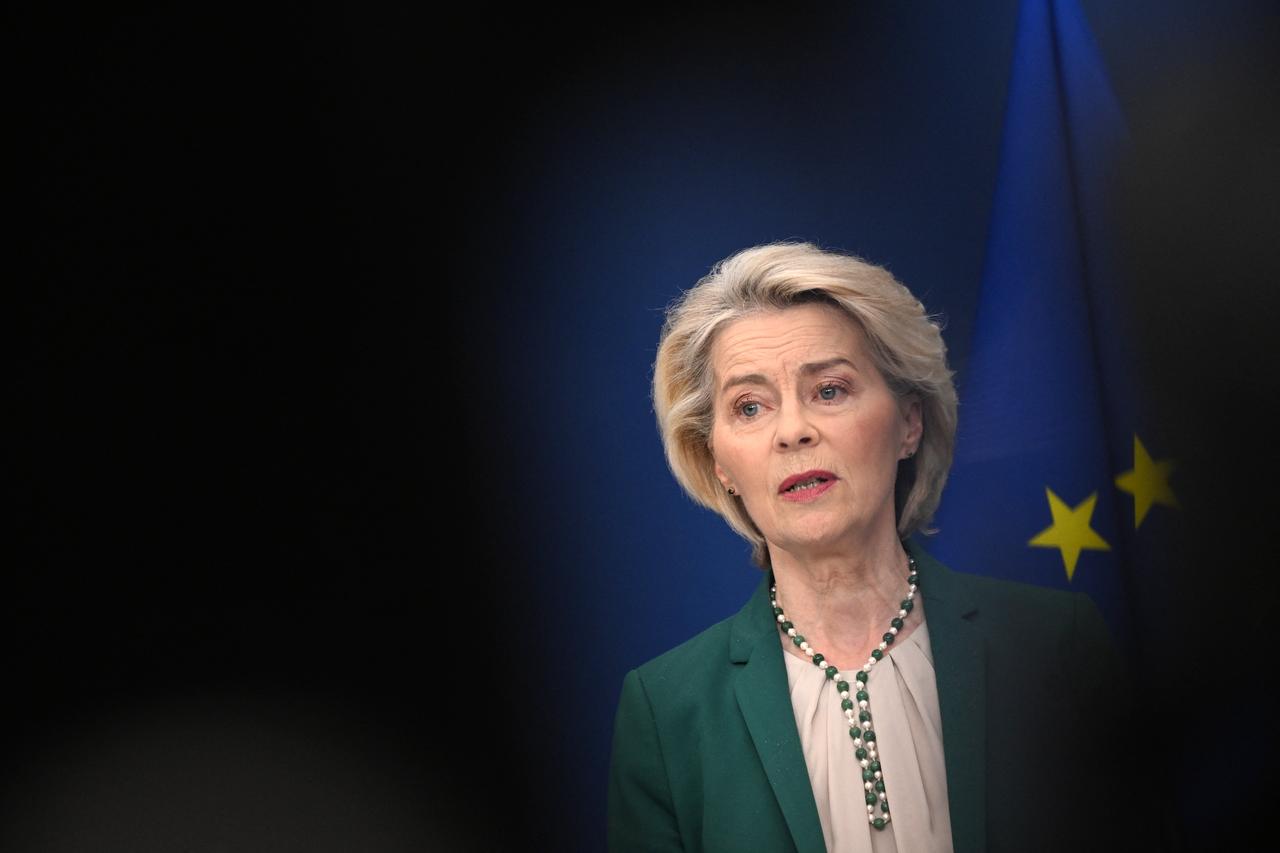


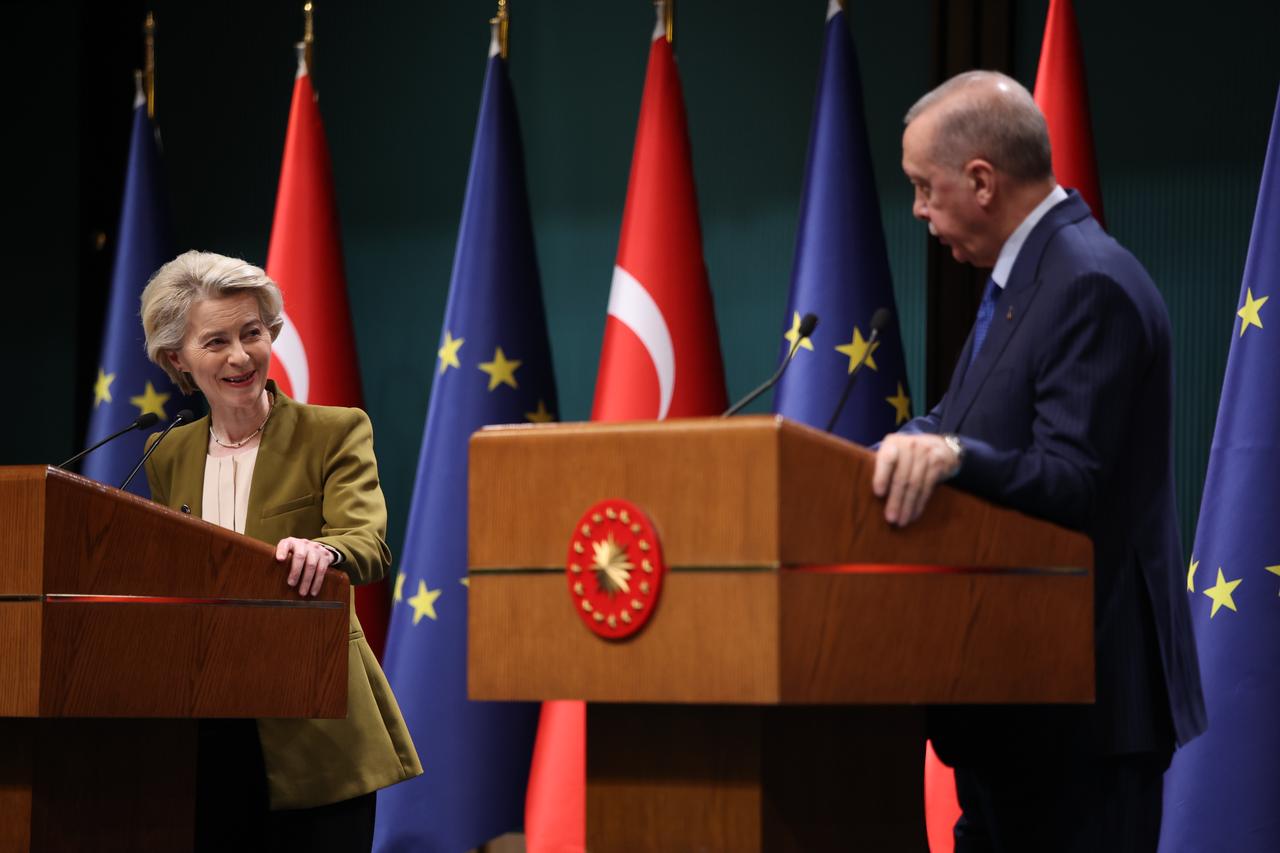
Ursula von der Leyen, the President of the EU Commission, and her recent remarks on Türkiye, which the Commission's spokespersons have swiftly tried to repackage, amend, and add additional context to, in many ways, are a Freudian slip.
Von der Leyen’s comments are not surprising and actually reveal what many Turks have felt for decades: an animosity by the EU towards Türkiye’s potential EU membership, Türkiye perceived as a threat rather than an ally, be it due to Türkiye's civilisational grandeur or its majority Muslim population.
However, times have changed, and the EU needs to understand that the post-1945 order is collapsing, or to some, it has already; new power centres are emerging, and we are living through a ‘middle power moment.’
The EU previously had the United States to fall back on and looked towards Washington, D.C., for guidance on foreign policy and defence matters.
Allowing EU states to focus on the expansion of social welfare programs and other like initiatives, while under a US security umbrella. However, since Trump's re-election, his unpredictability, almost anti-EU, anti-NATO stances, along with threats to invade Greenland and the rash opening of conflicts, have negatively impacted European economies, and the United States is increasingly viewed as an unreliable partner.
The world order led by the United States is unravelling beneath our eyes. The centres of gravity are changing, and institutional multilateralism is fraying. But clearly, some, such as Ursula, never got the memo.
The EU is not in the political, financial, or defence position it once was. Leading EU industries, which used to be a stable source of economic development in core EU member states like Germany, such as car manufacturing, have taken hard hits in recent years, relying on foreign markets like China’s to remain profitable.
Meanwhile, despite claims of wanting to increase defence spending in light of new global threats and changing security dynamics, simply increasing spending will not solve Europe’s growth problem, as the results are not instantaneous and take decades to develop. For a multitude of reasons, from the increased costs of actually manufacturing in Europe, leading to more expensive military hardware when warfare is changing, and high-tech weaponry is being destroyed by a $20,000 drone, to China’s dominance of rare earth elements vital to the EU’s defence industry.
Therefore, due to these alterations in the world order, the EU is currently seeking new trading partners, investment sources, new markets to expand into, and defence partners to ensure its safety, as the US is increasingly withdrawing from that role. But one way not to go about it is to refer to an increasingly crucial geopolitical partner on your doorstep as being in a malign camp alongside Russia and China; posing Ankara as a threat does not win the EU any favours.
Rather, the EU should seek ways to engage with Turkiye, expand EU services in Turkiye, allow Ankara to become further integrated into the EU’s security architecture, offering locations for EU manufacturing expansion, and grow stronger together.
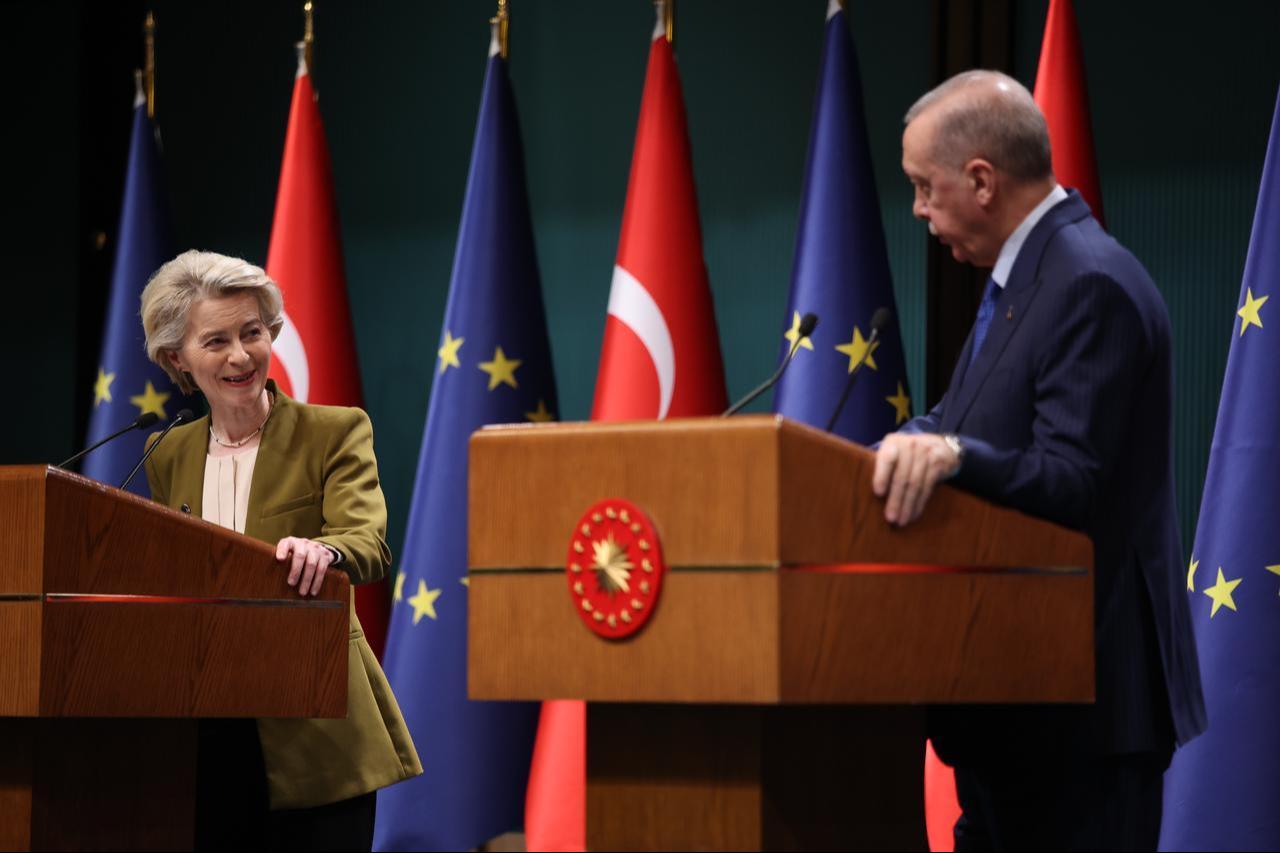

Ankara is a prime EU trade partner in many respects. Firstly, Türkiye was the EU’s fifth-largest trade partner in 2024, representing 4.2% of the EU’s total trade in goods with the world. In 2024, 41% of Türkiye’s exported goods were destined for the EU, while 32.1% of Türkiye’s imported goods originated from the EU. Additionally, total trade in services between the EU and Türkiye is expanding, totalling €38 billion in 2023. These areas can be expanded with further economic initiatives and integration.
Beyond bilateral trade, Türkiye can play a vital role geopolitically and geostrategically for the EU. The country’s vital geography makes it a natural corridor not only for goods but also for the vital energy the EU is in dire need of. Particularly since the halting of Russian gas, which has led to a major hit to energy prices. The closure of the Strait of Hormuz and the Ras Laffan LNG production plant, which exported 7% to over 14% of the EU’s LNG as of early 2026, led the IEA chief to warn of the “biggest energy security threat in history”. Now, the EU is dependent on US LNG, a situation the EU is cautious about. Türkiye, however, can offer a solution through the Middle Corridor, connecting the EU with gas supplies from Turkmenistan and Azerbaijan, and even EU Commissioner Marta Kos referred to it as a “game changer.”
Geostrategically, Türkiye has served as a bulwark against Soviet and Russian expansion and influence throughout the past 70 years; hence, it has been a vital NATO ally for decades. As the US is becoming increasingly unpredictable and a potential US withdrawal from NATO is consistently suggested by the Trump administration, Türkiye, the state with NATO’s second-largest military force and an expanding indigenous defence industry, could increase its leadership role within the alliance. Not to replace the US as the security guarantor, but rather to make NATO a more equitable alliance with security responsibilities equally shared amongst allies, with further integration into each other's defence architecture.
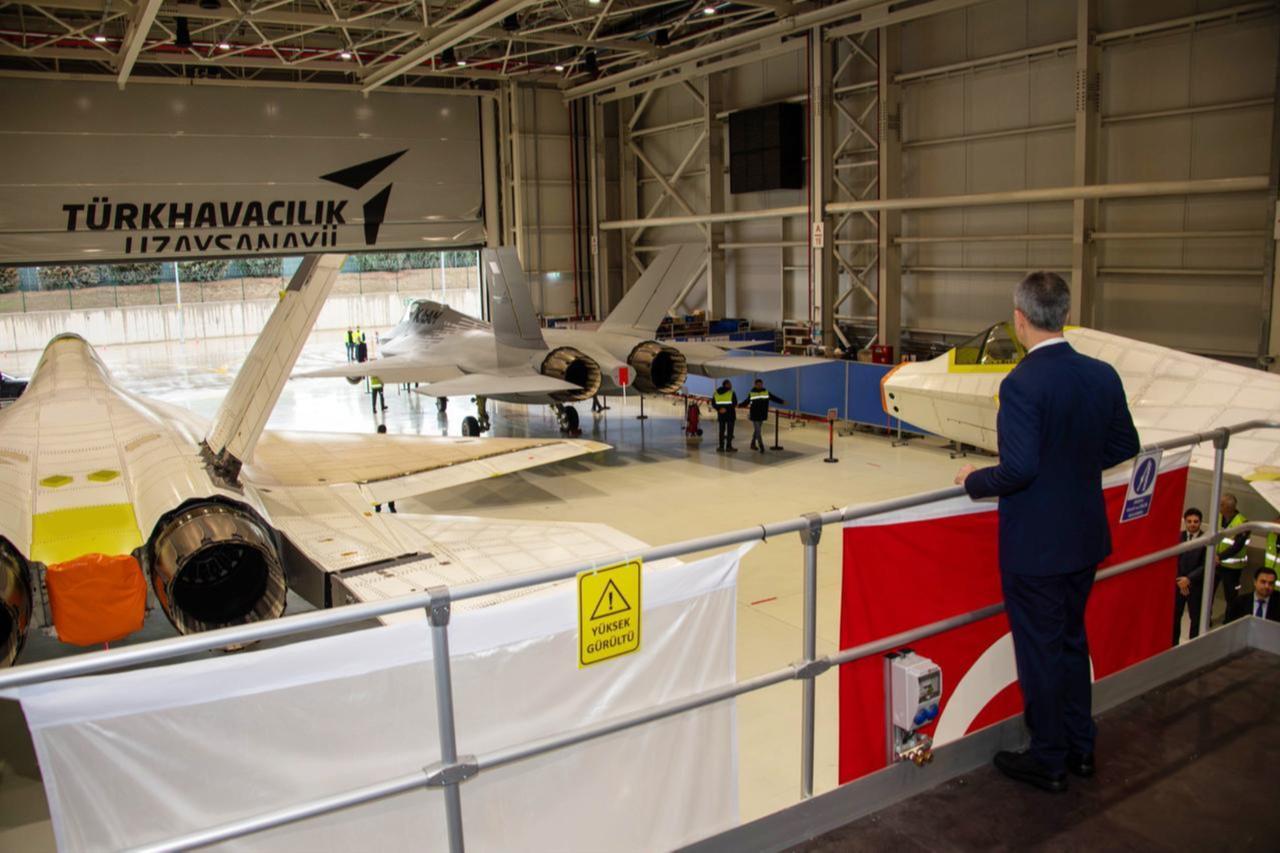
Türkiye’s world-leading defence industry, which went from an 80% reliance on foreign imports to 70% domestic production in two decades, could also greatly benefit the EU and even strengthen Türkiye-EU relations. But this, it appears, has not been truly realised as Türkiye was excluded from the EU’s Security Action for Europe (SAFE) defence loan scheme, despite Canada, a non-European NATO ally, joining. This is largely due to the EU facing obstacles from its members, Greece and Cyprus, over unresolved political issues, but this will come at the EU's expense and highlights limited strategic foresight.
Moreover, Türkiye’s historical and cultural connections to the Balkans have enabled Ankara to act as a stabilising and mediating factor in the region, and this has expanded to include the peace negotiations for the Russian-Ukrainian War, as well as international forums such as the Antalya Diplomacy Forum, promoting diplomacy. Türkiye, therefore, has become a key partner in conflict mediation, peacekeeping, and diplomacy.
Additionally, Türkiye is a key EU partner in migration management, with the country preventing over 100,000 illegal immigrants from crossing its borders and the Turkish coast guard intercepting 55,000 illegal migrants en route to the EU in 2024. Considering that many core EU member states, such as Germany and France, domestic political conversations revolve around illegal immigration, being a divisive and central political issue, maintaining and advancing bilateral relations with Turkiye, a vital partner in migration management, is essential.
Lastly, not to mention, Türkiye’s rare earth elements that need significant assistance in securing a technology partner to extract and process these reserves, with the EU’s increasing investments in this technology to end dependency on China, offer an opportunity for both the EU and Türkiye to advance their shared interests in developing Türkiye’s rare earths. Ankara, however, would only be willing to commit if the technological know-how was also shared with them during the process.
Therefore, the geopolitical necessity of Türkiye to the EU is not understated. Instead of lumping Türkiye into the same camp as Russia, Ursula should be thinking of ways to strengthen bilateral relations with Ankara, promote policy alignment on key strategic issues, and better integrate the Turkish defence industry and manufacturing might into Europe’s defence industry and economy.
 1 min read
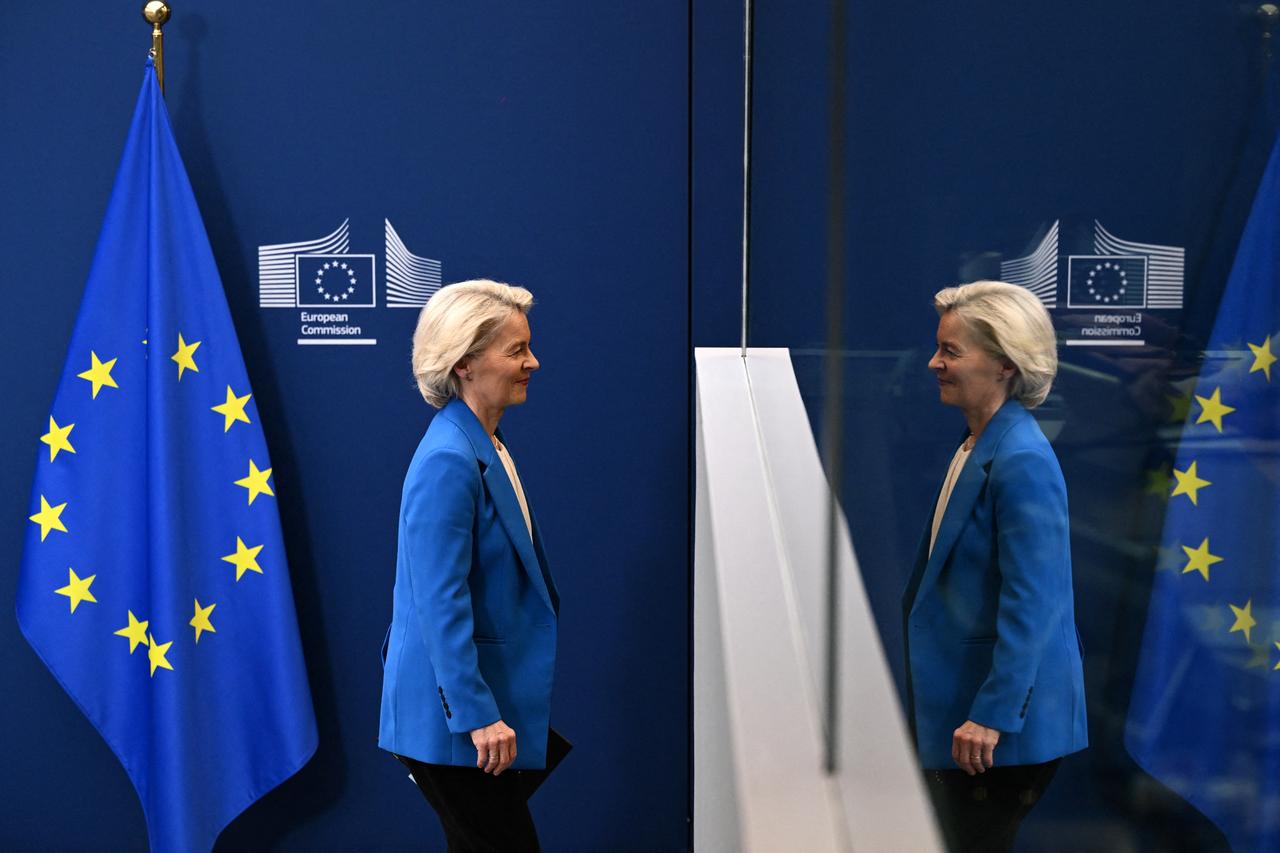
This is precisely why the EU promptly sought to address Ursula’s remarks and reaffirm the EU’s friendship with Türkiye. Timothy Ash, an associate fellow in the Russia and Eurasia programme at Chatham House, told Anadolu, "Frankly, I think this is an extraordinary statement," and referred to Türkiye as a “loyal ally of Europe.”
As in past, not much thought would have been given to Ursula’s comments, and not much commotion would have been made. Neither would Ursula even place Türkiye in the same brackets as superpowers such as China or Russia. But now, it's different. Türkiye’s geopolitical clout is being recognised.
This is a positive signal of change. Let us see how it unfolds and if more EU member states and politicians will affirm the vital role Turkiye can offer the EU.


 Set as preferred source
 Set as preferred source


 1 min read