Newsletters




My recent travels for business meetings in Brussels and Riyadh—two cities with very different geographies—revealed a striking commonality: a shared perception of Türkiye that often contradicts the domestic narrative.
At home, Turkish foreign policy is usually filtered through political polarization. Abroad, Türkiye is read more practically: which suppliers can still deliver, which builders can still build, which governments can still sit at the same table when the global system fragments.
The Turkish intellectual establishment has romanticized Türkiye with a “bridge” metaphor: “a bridge between the East and the West,” “a bridge between the civilizations.”
Yet, Türkiye’s main asset today is the optionality it provides to states, companies, and supply chains. Türkiye’s value rises every time a strait becomes unsafe, a supplier becomes politically risky, or a government collapses. Türkiye offers backup capacity in a world that increasingly needs backups.
Türkiye offers this optionality in two layers.
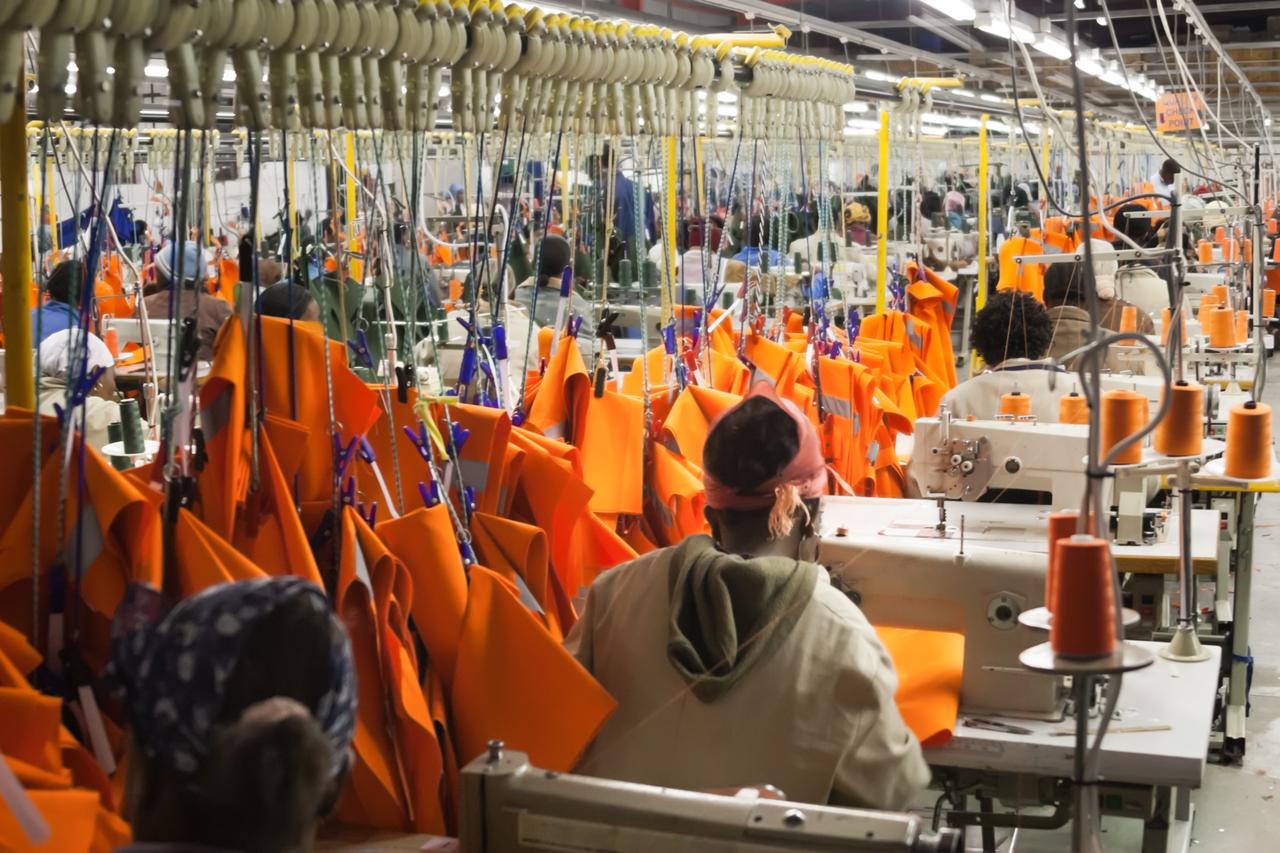
The first layer is industrial. Türkiye is not a single-commodity, single-sector or single-route economy. Its export base stretches across automotive, machinery, textiles, chemicals, appliances, steel, electronics and defense.
A country that sells a single commodity holds leverage when that resource is scarce, yet remains fragile the moment the cycle turns. In contrast, a country with a broad industrial base offers a different, more resilient kind of value.
Optionality is not only about what a country exports today. It is about how many adjacent moves it can plausibly make tomorrow. For example, the World Bank's World Development Report 2024 identified Türkiye as the emerging economy with the second-strongest manufacturing base for climate technologies, after China.
In a world increasingly overexposed to Chinese green-tech supply chains, that industrial adjacency is becoming a form of strategic insurance.
Türkiye is not Germany or Japan. It should not pretend to be. But it is also not a narrow economy dependent on a single product, port, buyer, or geopolitical sponsor. That middle position is precisely the point. In a fragmented world, middle powers with diversified capabilities become more useful.
 1 min read
The second layer is operational. There are many examples of Turkish entrepreneurship and flexibility, but nowadays, Africa is a good example.
Türkiye has many competitors in Africa; China still has the greater financial power. The Gulf has much larger pools of strategic capital. Russia has hard security leverage. Europe retains institutional prestige and regulatory weight.
Türkiye’s edge is different: execution in imperfect environments.
European actors often arrive with rigid institutional conditions. Chinese firms bring scale but frequently close project ecosystems. Gulf actors bring strategic capital but fewer broad-based private operators. Russia brings security but limited commercial capability.
Turkish firms sit in the middle: commercially hungry, institutionally flexible, and used to working where rules are incomplete.
Brussels and Riyadh are useful because they reveal the same Türkiye from two different angles. For Brussels, Türkiye’s advantage is reducing dependency: shorter supply chains, industrial redundancy, and a manufacturing base close enough to Europe to matter.
For Riyadh, Türkiye is about converting capital into execution: construction, defense, health, tourism, logistics and services.
In other words, Europe looks at Türkiye as a hedge. The Gulf looks at Türkiye as an operator. Both views offer a far more precise reading of the country's current role than the outdated "bridge" metaphor ever could.
Of course, none of these arguments implies that Türkiye is guaranteed to win. It has its own institutional weaknesses, financing constraints and political volatility.
Yet, Türkiye has learned to operate inside imperfection. In the new fragmented global economy, this is an important strategic capability. It is also a better way to read Türkiye’s place in the new geography of trade and power.
The Gulf can finance. Egypt can absorb labor-intensive production. Pakistan can provide security weight. Central Asia can diversify routes. Türkiye’s distinctive offer is operational: an industrial base plus firms that know how to work when institutions are incomplete.
Türkiye is not the whole story. But it is a useful laboratory for understanding how middle powers behave when the old operating system of globalization starts to fail. This is the wider logic this column will return to.
As the global system fragments, middle powers matter because each absorbs a risk the center no longer covers.
Türkiye matters not because it sits between worlds, but because it can still work when the worlds stop connecting smoothly.


 Set as preferred source
 Set as preferred source



 1 min read