Newsletters




If you think football's power is purely symbolic, try organizing a get-together for 10 friends sometime. You'll spend three weeks trading messages across four group chats before someone cancels the morning of.
Now consider that on any given weekend, tens of thousands of people show up on their own initiative, paying for the privilege to watch a local league match in England, a year-end playoff in North Africa, or a secondary cup fixture in Türkiye.
The FIFA World Cup is that impulse, magnified to the scale of five billion viewers and 104 matches across three countries.
That claim matters more than it sounds, because the conversation about what sports can actually do in the policy space has been trapped for years inside a framing that lobotomizes it.
The term is "soft power," and it is one of the most damaging characterizations in the foreign policy lexicon.
Label something soft, and you've already told the appropriations committee it's a garnish—nice if there's money left over and expendable if there isn't.
The global sports economy runs somewhere between $2.6 and $2.7 trillion, with the United States accounting for roughly 40% of it on its own.
American leagues—the NFL, the NBA, and MLB—now reach more people in more languages than any other instrument of American influence. That shouldn’t sound soft, especially when it's an economic power with a broadcast rights deal attached.
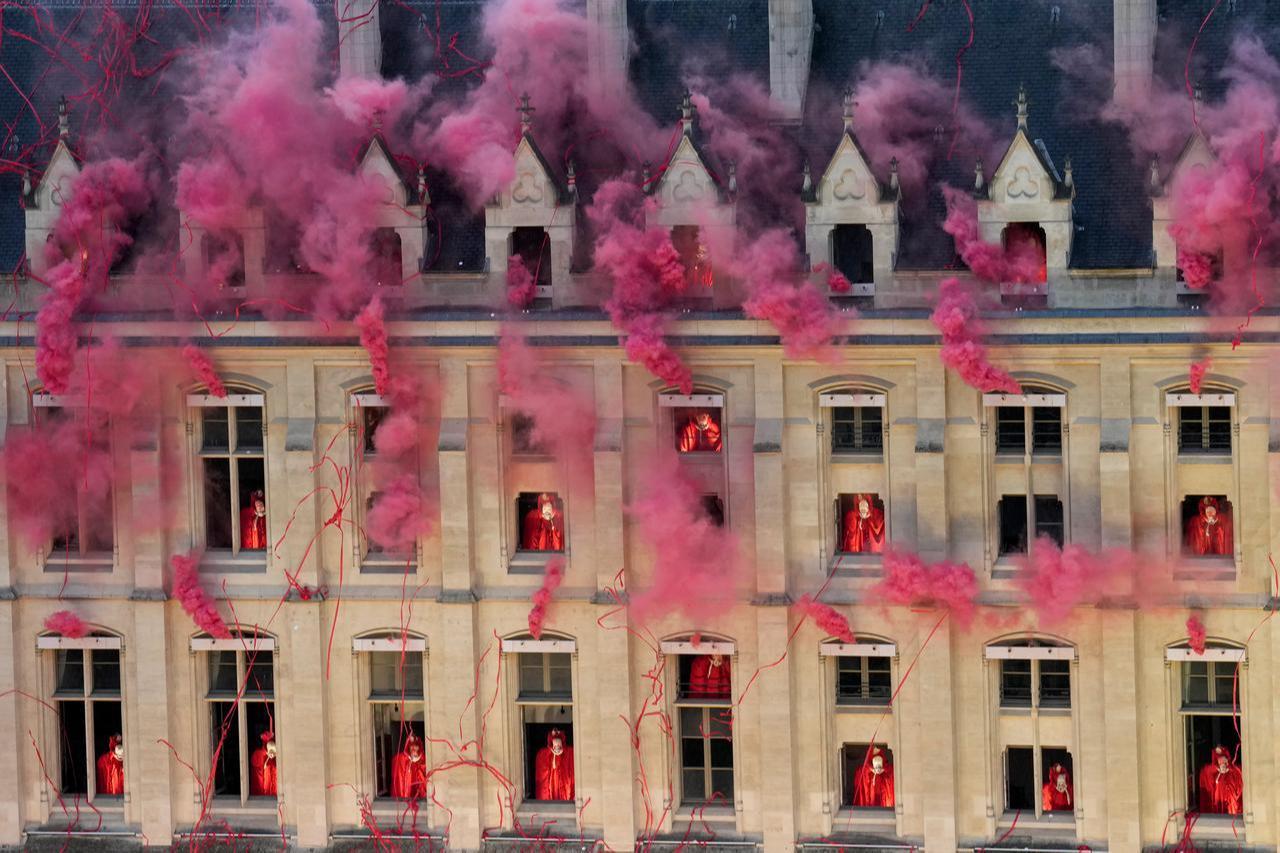

"The opening ceremony was a disgrace, actually," then-U.S. presidential candidate Donald Trump said regarding the Olympics held in Paris in 2024.
But the competitors have figured this out with considerably more rigor.
France treated the 2024 Paris Olympics as an explicit projection of national identity, an ideological stance, and an economic infrastructure event; on the eve of the opening ceremony, President Macron and IOC President Thomas Bach convened roughly 120 heads of state at the Carrousel du Louvre, producing the largest summit of its kind ever held alongside an Olympic Games.
The Saudis have been methodically restructuring their international image through sport for years, from LIV Golf to securing the 2034 FIFA Men's World Cup, having watched Qatar use the 2022 tournament as the capstone of a decade-long national repositioning.
Australia commissioned a study on its own sports diplomacy program and found a seven-to-one return on investment, not through immediate ticket sales or fully booked hotels, but in lasting trade relationships and accumulated influence.
These countries have ministries of sport, and they have written long-term strategies with dedicated personnel.
The United States, which essentially invented modern professional sport and exports it to every continent, has none of those posts available at the federal level. JT Batson, CEO and Secretary General of the U.S. Soccer Federation, also serves as the supervisor for the operations of the tournament.
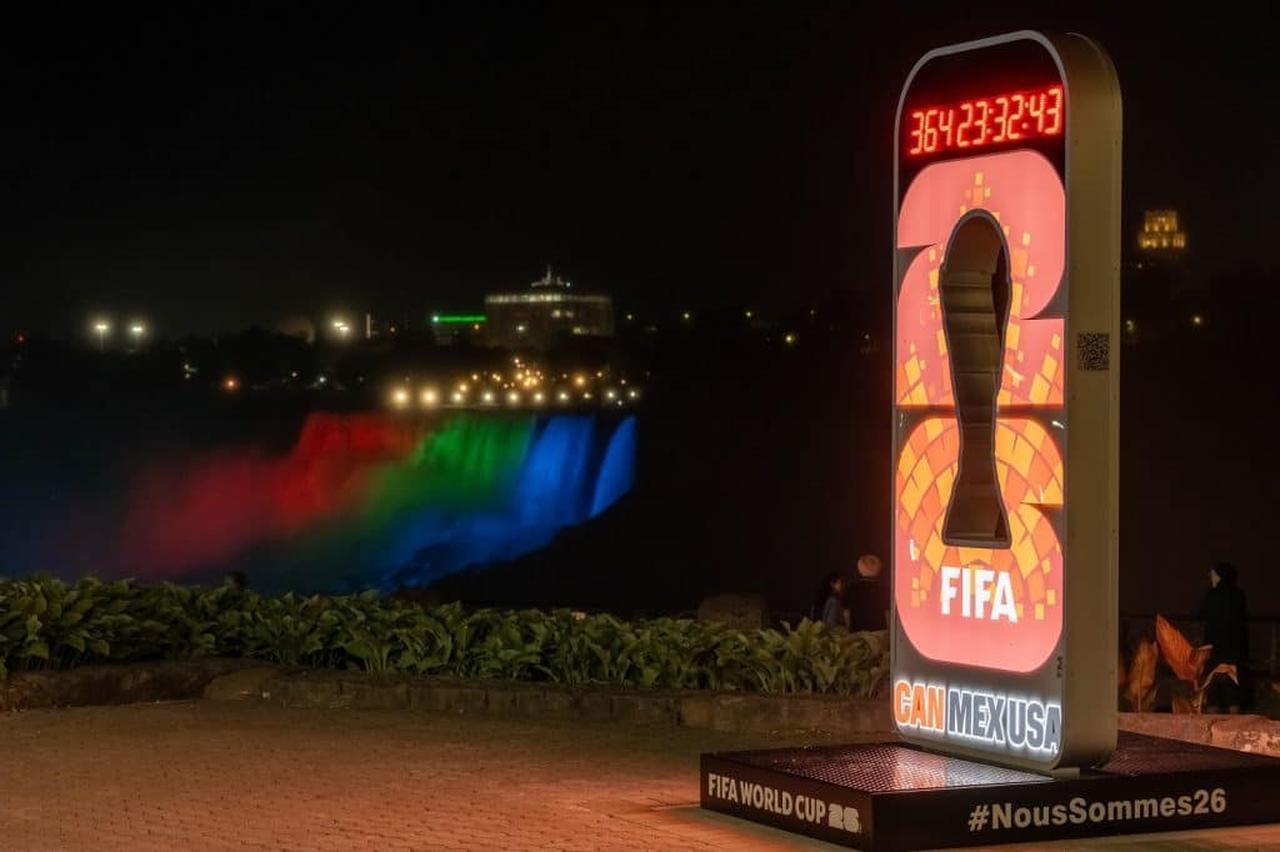
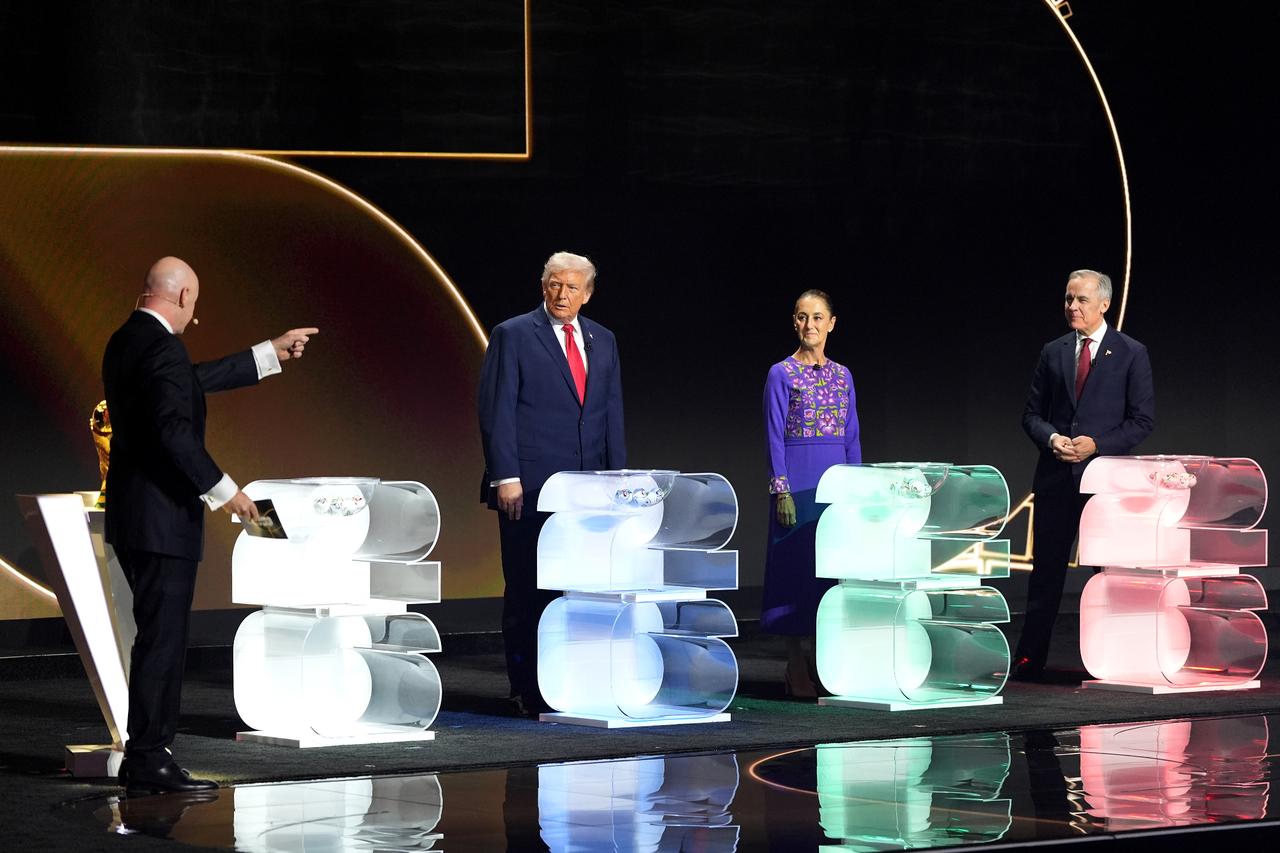
The clearest illustration of what sports can do for diplomacy—and what the U.S. is leaving on the table—happened on Dec. 5 at the Kennedy Center in Washington.
The occasion was the draw for the 2026 World Cup, and President Trump, Canadian Prime Minister Mark Carney, and Mexican President Claudia Sheinbaum stood together onstage for it.
After the draw, the three of them went into a private room, no staff present, and spent 45 minutes talking about the relationship between their three countries. It was the first in-person meeting between Trump and Sheinbaum.
It was the first private conversation between Trump and Carney since U.S.-Canada trade talks had collapsed the previous October. The setting that produced that conversation was a "soccer" draw.
This is the underappreciated mechanic of sports diplomacy: the event creates a politically neutral occasion that allows leaders to approach subjects—fentanyl, trade architecture, and sovereignty—that might otherwise calcify into formal confrontation before anyone gets near a table.
The sport provides the excuse; the diplomacy follows. And with the World Cup running its entire course while the July 1st USMCA review begins, every match, every delegation arrival, and every VIP corridor encounter becomes a potential moment in a negotiation that the region needs to get right.
The 1994 comparison carries weight here. That World Cup was hosted solely in the United States, the same year NAFTA entered into force.
The 2026 edition is genuinely trilateral—opening match in Mexico City, final in New Jersey—and the integration it symbolizes is considerably more complex than the trade agreement it coincides with.
Since 1994, North America has become commercially fused and culturally inseparable in ways that no tariff schedule fully captures.
There is, however, a cautionary story embedded in this summer's geopolitical backdrop, and it involves a baseball game.
Last fall, the Toronto Blue Jays met the Los Angeles Dodgers in the World Series.
The viewership outside the United States was, by most measures, the largest for any major league sporting event in history—Canadians watched their team, Japanese fans followed Shohei Ohtani, and the whole hemisphere briefly pointed at the same broadcast.
Ontario Premier Doug Ford chose that moment to run a political advertisement: an old Ronald Reagan speech about why trade barriers were bad for the American economy, repurposed and aired during the World Series in the United States.
Trump objected publicly, Reagan's estate was invoked, and the nascent U.S.-Canada trade talks disintegrated. Those talks collapsed indirectly because of decisions made around a sporting event.
The largest bilateral sports audience of the year became the platform for a political grenade. The medium that was supposed to connect became the delivery mechanism for a rupture.
The fault lines heading into this summer are real. Security cooperation between the U.S. and Mexico is fraught, with the specter of sovereignty violations hanging over any operational coordination.
Shortly before this piece was written, the United States announced it was suspending the Permanent Joint Board on Defense with Canada—a bilateral security institution that has existed since 1940.
The concept of North America itself, the shared framework that made a genuinely trilateral World Cup possible, is under pressure from forces that benefit from treating the relationship as transactional rather than structural.
And then there is the particular variable of this specific American president: a showman who loves large audiences, which could mean a grand deal signed at midfield, or it could mean the moment evaporates entirely while attention migrates elsewhere.
Both outcomes are genuinely plausible, and that ambiguity, more than any structural failing, is what makes this summer so difficult to forecast.
What this summer requires—and what the U.S. still conspicuously lacks—is institutional connective tissue.
The gap is straightforward: the United States is the only G7 nation without a dedicated federal office for sports diplomacy.
American sports leagues expand internationally and build global commercial empires with essentially no federal backing.
Government agencies engage in major events tournament by tournament rather than as part of a decade-long strategy.
The White House Task Force on FIFA 26 has done serious coordination work under difficult circumstances, and the bipartisan American Decade of Sports Act, now introduced in both the House and Senate, represents genuine legislative intent rather than a symbolic gesture. But awareness is not architecture.
These days, demands from experts and industry professionals are growing louder—and more specific: the appointment of a senior federal coordinator for commercial sports diplomacy empowered to bring together the State Department, Homeland Security, Commerce Department and the White House, with a mandate to craft a written national strategy similar to those already adopted by Australia, France, Japan and Ireland.
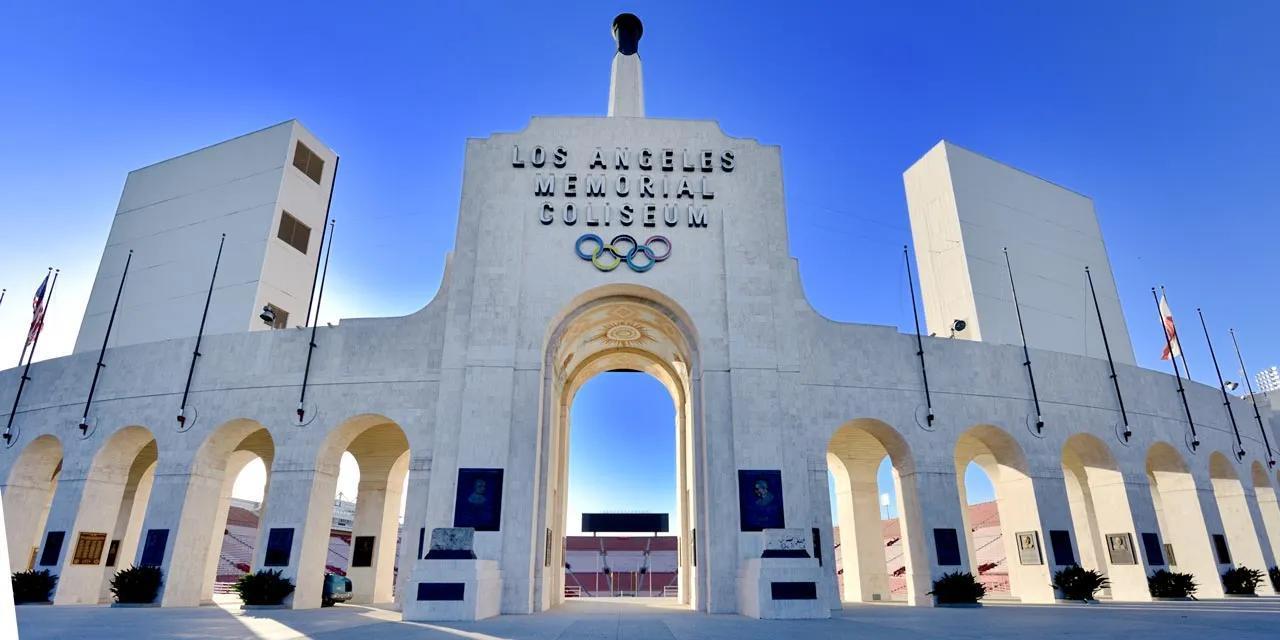
The call is ultimately for a single office, document, or official tasked with connecting the dots across what is, by any historical measure, an extraordinary concentration of global sporting events: the 2026 World Cup, the 2028 Los Angeles Olympics, the Rugby World Cups in 2031 and 2033, a likely return of the Women’s World Cup in 2031, and the 2034 Winter Games. No country has ever had a runway quite like this.
The fans don't need a strategy document to find themselves in the same stadium.
But translating that convergence into something durable—trade relationships, security frameworks, the lasting architecture of North American integration—requires someone in the federal government whose actual job is to make that happen.
The sport starts in weeks. The question is whether the structure catches up before the final whistle.


 Set as preferred source
 Set as preferred source


 1 min read
 1 min read