Newsletters




The U.S.-Israeli war against Iran created a new regional security dynamic that directly affected the Arab Gulf states. Unlike the 12-day war, Iran did not limit its response to Israel; it demonstrated its capacity to pressure the Gulf monarchies.
Saudi Arabia stands at the center of this new equation. Riyadh has therefore been forced to reassess two strategic files at once: normalization with Israel and the future of Vision 2030.
The Kingdom is trying to contain uncertainty, but the fractures in the regional security architecture and the limits of its economic capacity have made recalibration unavoidable.
Iran’s direct targeting of Saudi Arabia created a serious geopolitical test for Riyadh. The Saudi-Iranian normalization process, launched under Chinese mediation in March 2023, has lost much of its functionality in the current conflict environment.
That agreement was not merely an attempt to repair relations with Tehran. It formed part of Saudi Arabia’s broader effort to compensate for the limits of the U.S. security umbrella.
The 2019 attacks on Saudi oil facilities, followed by Washington’s reluctance to directly defend Riyadh, had already created a major rupture in Saudi security perceptions. Riyadh, therefore, sought to reduce tensions with Iran while using the China card to increase its bargaining power with Washington. The latest war exposed the limits of that balancing strategy.
This does not mean that diplomatic channels with Tehran have disappeared. But the fragility of confidence-building mechanisms is now clear. For Riyadh, Iran is no longer only a potential threat; it is now perceived as an active and direct security risk.
This will increase the importance of Gulf defense coordination, early warning systems, and renewed security arrangements with the United States. Saudi Arabia is likely to demand advanced weapons systems, support for a civilian nuclear program, and more explicit security guarantees from Washington.
In return for allowing U.S. bases and a regional military presence, Riyadh will want more concrete commitments against external threats such as Iran. The Kingdom is therefore unlikely to break with the United States. It will instead try to move the relationship onto a more binding and guarantee-based footing.
The postwar regional order remains uncertain. It is still unclear what level of control Iran will retain over the Strait of Hormuz, or whether the Houthis in Yemen will again disrupt the Red Sea and Bab al-Mandab trade route.
These issues will remain structural vulnerabilities on Riyadh’s long-term risk map. The targeting of Gulf countries is not only the result of direct tension with Iran; it is connected to their military relationships with the United States and their willingness to host American bases.
This has generated a rare common anger in the Gulf toward both Iran and the United States, while public resentment toward Israel has intensified. Yet, the Gulf states rarely act as a single bloc. After the war, each country will make different security, diplomatic, and economic calculations.

One of the clearest areas of divergence will be relations with Israel. Saudi Arabia does not treat normalization with Israel as separate from the Palestinian question.
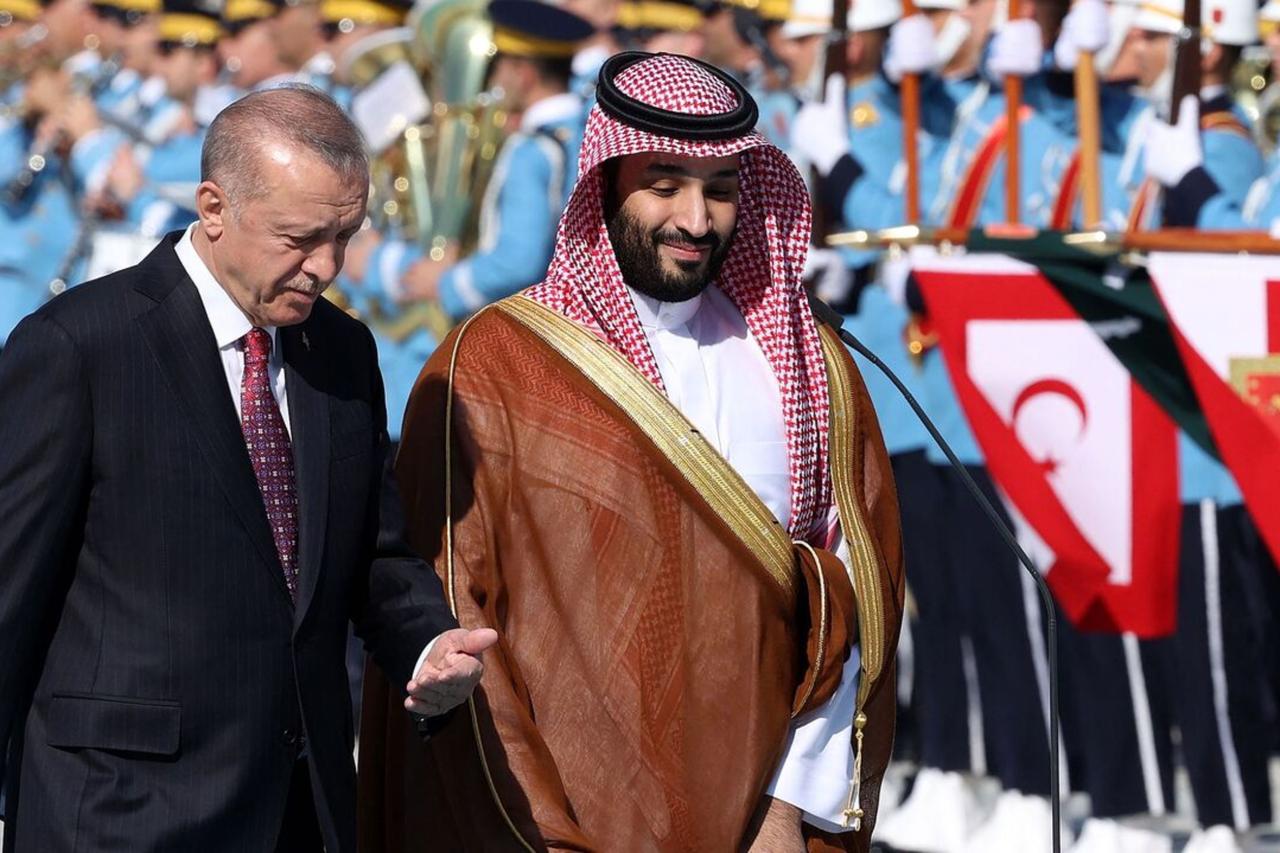
Riyadh’s position is that normalization cannot move forward unless Israel accepts a credible road map for a Palestinian state. Before the war with Iran, the Saudi approach was more optimistic but still conditional. In his September 2023 interview with Fox News, Crown Prince Mohammed bin Salman said normalization talks with Israel were moving forward: “Every day we get closer.”
Yet he emphasized that “for us, the Palestinian issue is very important. We need to solve that part.” His expectation that an agreement should “ease the life of the Palestinians” showed that Riyadh viewed normalization not merely as a bilateral diplomatic step, but as part of a wider regional order.
The war has made it more difficult to sustain this conditional optimism. Israel’s role in the conflict and its regional policies have increased the political cost of normalization for Riyadh. The real issue is not simply whether Saudi Arabia will establish diplomatic relations with Israel.
The question is how such a move can be managed alongside the Palestinian question, Saudi public opinion, Arab legitimacy, security bargaining with Washington, and Vision 2030’s need for regional stability.
Moving closer to Washington against Iran may be seen inside Saudi Arabia as a reasonable security choice. But appearing too close to Washington while the United States strongly supports Israeli policies is politically more delicate. Riyadh will therefore likely follow a more selective and conditional engagement strategy.
At the Gulf level, differences may become more visible. The United Arab Emirates has institutionalized relations with Israel since the Abraham Accords of 2020 and has largely separated the Palestinian question from its economic and security ties with Israel. Even after Oct. 7, 2023, this line did not fundamentally change.
The war with Iran hardened Abu Dhabi’s security calculations, especially after Iran targeted the UAE with missiles and drones. Still, the UAE is unlikely to abandon its relationship with Israel. A shared Iranian threat may therefore not be enough to close the gap between Saudi and Emirati approaches to Israel.
The security crisis intersects directly with Vision 2030. For the Kingdom, Vision 2030 was not only a transition plan for a post-oil economy; it represented a project of social transformation and the construction of a new Saudi Arabia.
Yet from the beginning, the vision faced one major constraint: the gap between financial capacity and the scale of ambition. A state with an annual budget of roughly $300 billion could not easily finance futuristic mega-projects worth trillions of dollars in the short term.
Foreign direct investment remained below expectations. The target of $100 billion in annual investment by 2030 has not been reached; 2025 figures stood at around $35.5 billion.
The Public Investment Fund had to rely more heavily on domestic capital. Saudi debt rose from roughly 12% of gross domestic product (GDP) to 32% over the past decade. The war did not create these pressures. It accelerated a reassessment of an economic model already under strain.
The war with Iran, which began on Feb. 28, made these pressures more visible. Its short-term cost exceeded $10 billion. The closure of the Strait of Hormuz significantly reduced oil exports. Drones and missiles directed toward the capital damaged Saudi Arabia’s image as a safe investment haven.
Some foreign companies temporarily suspended operations, and capital flows became more cautious. For Riyadh, the deeper problem is that Vision 2030 depends on regional stability.
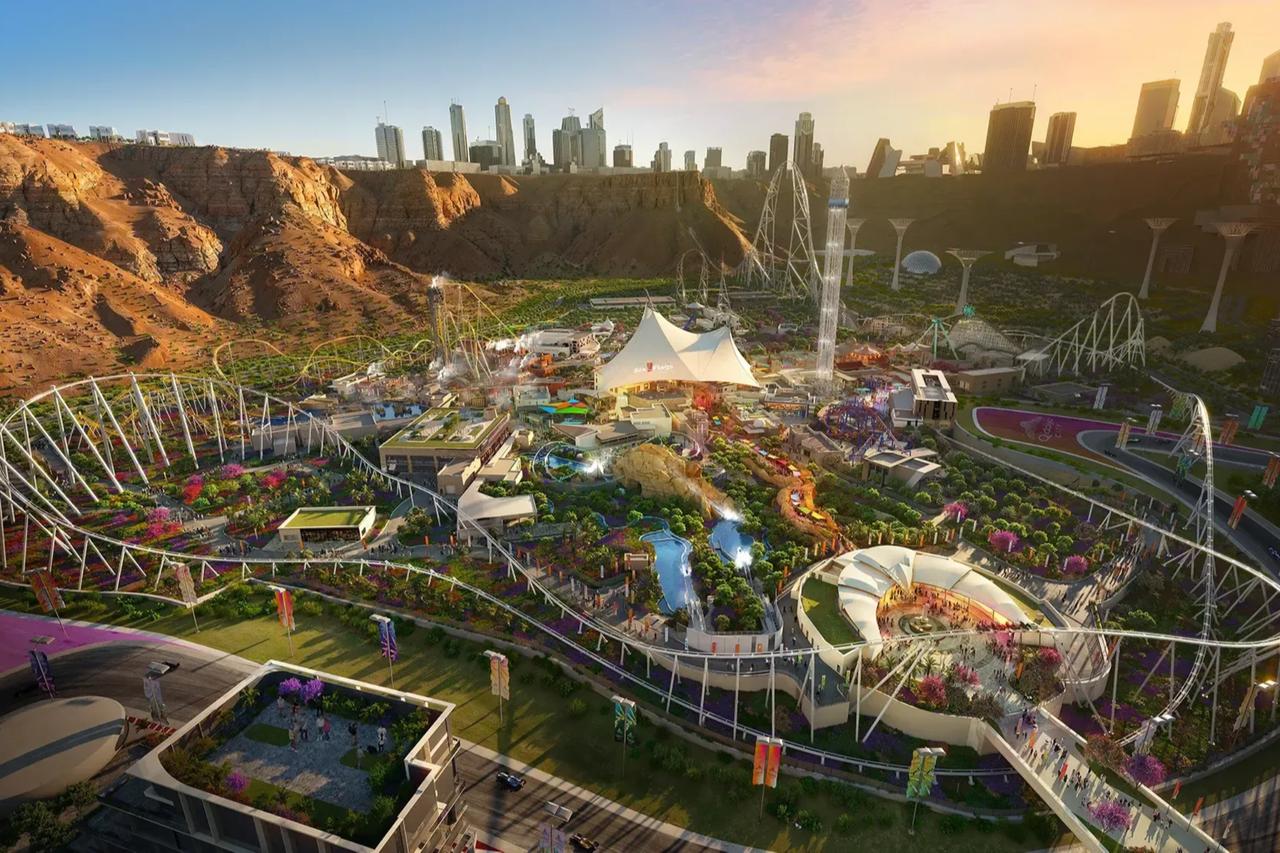
The Kingdom wants to attract investment, expand tourism, grow entertainment and services, bring global companies to Riyadh, and institutionalize the non-oil economy. Israeli policies that fuel regional tension and Iranian military pressure on the Gulf both complicate this goal.
Under these conditions, Saudi Arabia is moving from high-cost symbolic mega-projects toward a more selective, phased, and financially manageable model. Some projects associated with the Crown Prince’s personal vision are being reassessed.
Construction of The Line, the 170-kilometer horizontal city within NEOM, has come close to a halt. Riyadh’s $50 billion New Murabba project and the $4 billion luxury Sindalah Island project have also faced construction and financing pressures.
It remains unclear which projects will be fully canceled or how far the Public Investment Fund cuts will go. But the overall direction is clear: Riyadh is not abandoning Vision 2030; it is reordering priorities.
Despite these pressures, Saudi Arabia’s domestic transformation appears more resilient. Women’s labor force participation exceeded targets. Non-oil sectors now account for more than half of GDP.
More concrete, domestically oriented projects such as the Riyadh Metro and the local entertainment sector continue to function. For this reason, it is more accurate to say that Vision 2030 is changing in scope and priorities rather than failing outright.
The war with Iran exposed three core tensions facing Saudi Arabia: the need for the U.S. security umbrella and its limits; the strategic value of normalization with Israel and the political weight of the Palestinian question; and the gap between Vision 2030’s ambitions and financial-geopolitical realities.
Riyadh must manage all three at once. The coming period will therefore be marked less by rupture than by controlled adjustment. Vision 2030 still retains part of its global showcase character, but it is evolving into a more inward-looking, selective, and gradual modernization program.


 Set as preferred source
 Set as preferred source


 1 min read
 1 min read