Newsletters


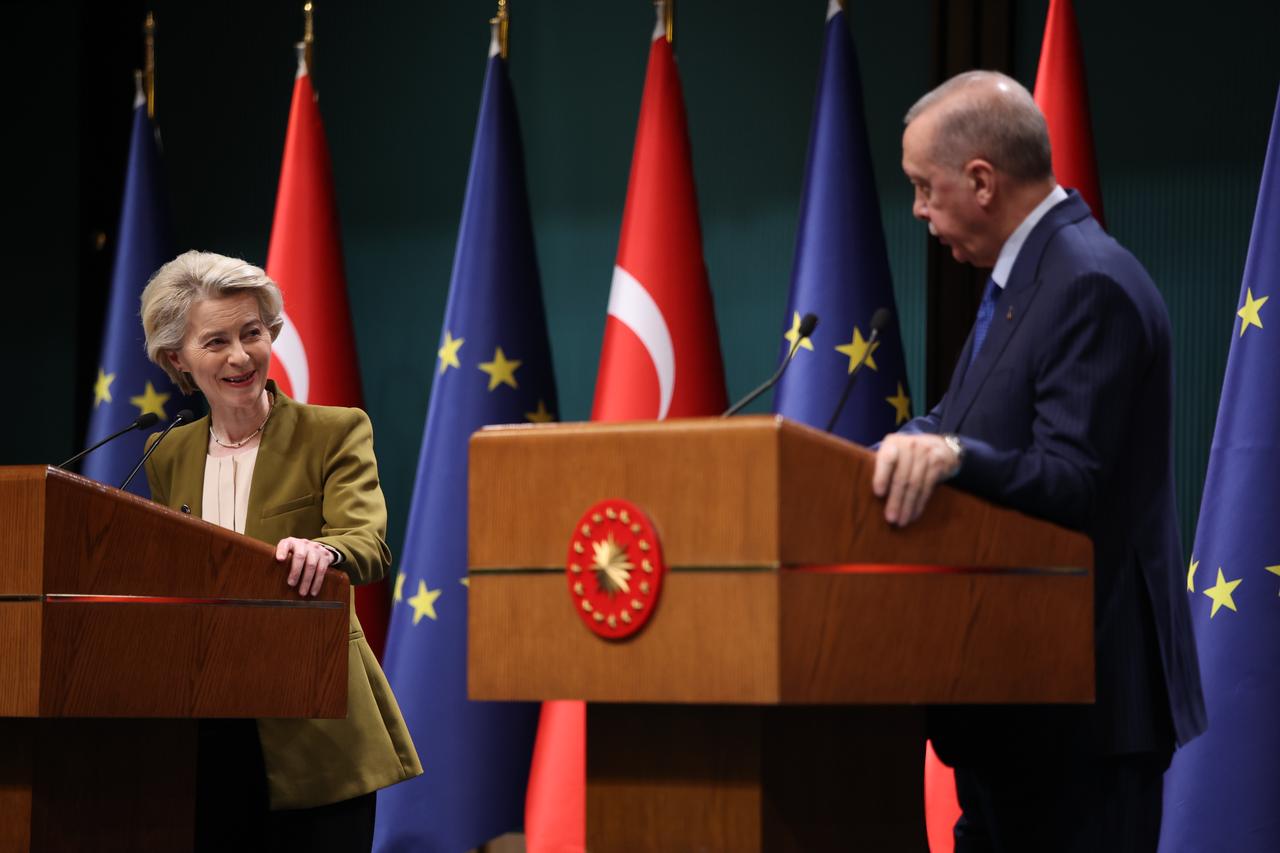


Europe’s relationship with Türkiye has rarely been stable, but it has rarely been this revealing.
As crises mount and geopolitical pressures intensify, the European Union is redefining how it engages with its external partners.
In the process, President of the European Commission Ursula von der Leyen’s rhetoric toward Türkiye has become a window into a broader shift: from values-driven engagement to strategic pragmatism and now to an actor to watch.
As von der Leyen entered her second term in 2024, the European Commission faced a more challenging phase in its governance, one that had also begun to reshape its approach toward Türkiye.
Marked by a growing centralization of authority and a more overtly populist tone, her leadership increasingly embraced a “Europe first” discourse.
This shift has been accompanied by a more assertive, executive-driven style of policymaking, particularly in areas shaped by crisis and geopolitical urgency. As criticism of “presidentialization” and “techno-populism” mounts, recent trade developments have further stoked a wider sense of discontent across the Union, dynamics that have, in turn, influenced how the EU recalibrates its ties with external partners.
Burdened by the unresolved fallout of the COVID-19 crisis and an unrelenting war in Ukraine, she began her second term with a weaker, more fragmented coalition, conditions that have pushed her toward a more populist and centralized mode of governance.
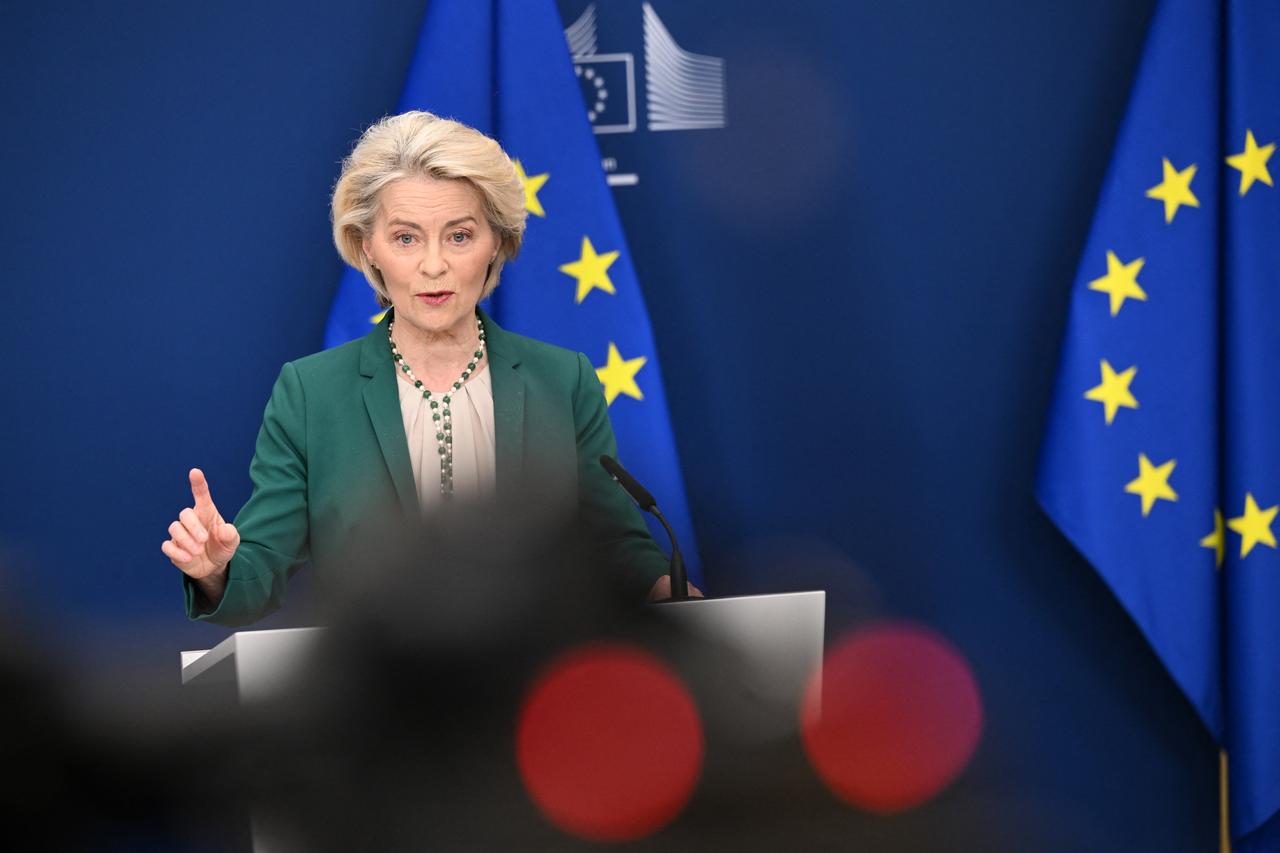

Yet, her pragmatic, if exclusionary, approach toward Türkiye has endured. In 2020, von der Leyen described the country as an “important neighbor,” a phrase that quietly underscored the limits of a relationship that had, in effect, stalled.
A year later, following her meeting with Türkiye's President Recep Tayyip Erdogan, she spoke of “a new momentum” in EU-Türkiye relations, while continuing to frame cooperation primarily through economic interdependence.
As this back-and-forth engagement persisted, neither visa liberalization nor the modernization of the Customs Union saw meaningful progress. At the same time, points of contestation, most notably the disputes in the Eastern Mediterranean, remained a central priority for EU policymakers.
This persistent gap between rhetorical engagement and policy delivery reinforced a pattern in which dialogue advanced, but structural constraints on the relationship remained firmly in place.
By 2024, a new approach toward Türkiye had begun to emerge. As regional conflicts deepened and security concerns moved to the forefront, Türkiye was recast as an indispensable actor for regional stability and a “key partner” in confronting shared challenges.
This shift, however, did not signal a broader normalization of relations but rather a recalibration driven by strategic necessity. Cooperation expanded in selective areas while longstanding political constraints remained firmly in place, reinforcing the fundamentally transactional nature of the relationship.
In practice, this translated into a more compartmentalized framework, in which cooperation advanced on migration management, energy security, and regional diplomacy, while issues such as rule of law, accession, and institutional integration remained effectively sidelined.
The EU’s advancing trade agenda—including the politically agreed-upon Mercosur deal and ongoing negotiations with India—alongside unresolved questions over Türkiye’s role in European security and industrial frameworks, has complicated prospects for normalization.
Consequently, these developments have fueled growing suspicion in Ankara.
Alongside economic setbacks, security cooperation has also encountered significant constraints, as Türkiye has been largely sidelined from emerging EU defense-financing mechanisms such as SAFE, excluding it from a funding envelope of up to €150 billion. This reflects not only technical criteria but also enduring political contestations, particularly with Greece.
In this sense, what appears in Brussels as diversification is increasingly read in Ankara as exclusion. In a parallel development, von der Leyen’s latest remarks at an event organized by the German newspaper Die Zeit, in which she appeared to group Türkiye alongside China and Russia, further reignited these concerns.
As EU lawmakers swiftly distanced themselves from her remarks, the European Parliament’s Türkiye rapporteur, Nacho Sanchez Amor, along with Charles Michel, moved to defend Türkiye as a key partner.
But what ultimately remains unresolved is not simply the tone of von der Leyen’s rhetoric but the coherence of the European Union’s broader approach toward Türkiye.
With the Union's increasing reliance on Türkiye as a strategic partner, the persistence of an ambivalent and at times exclusionary posture risks undermining its own objectives.
For this framework to remain sustainable, European leaders must also avoid the instrumentalization of anti-Türkiye rhetoric in domestic political discourse, which risks deepening mistrust and weakening an already fragile partnership.
Ultimately, they must redefine the nature of the relationship itself.


 Set as preferred source
 Set as preferred source


 7 min read