Newsletters


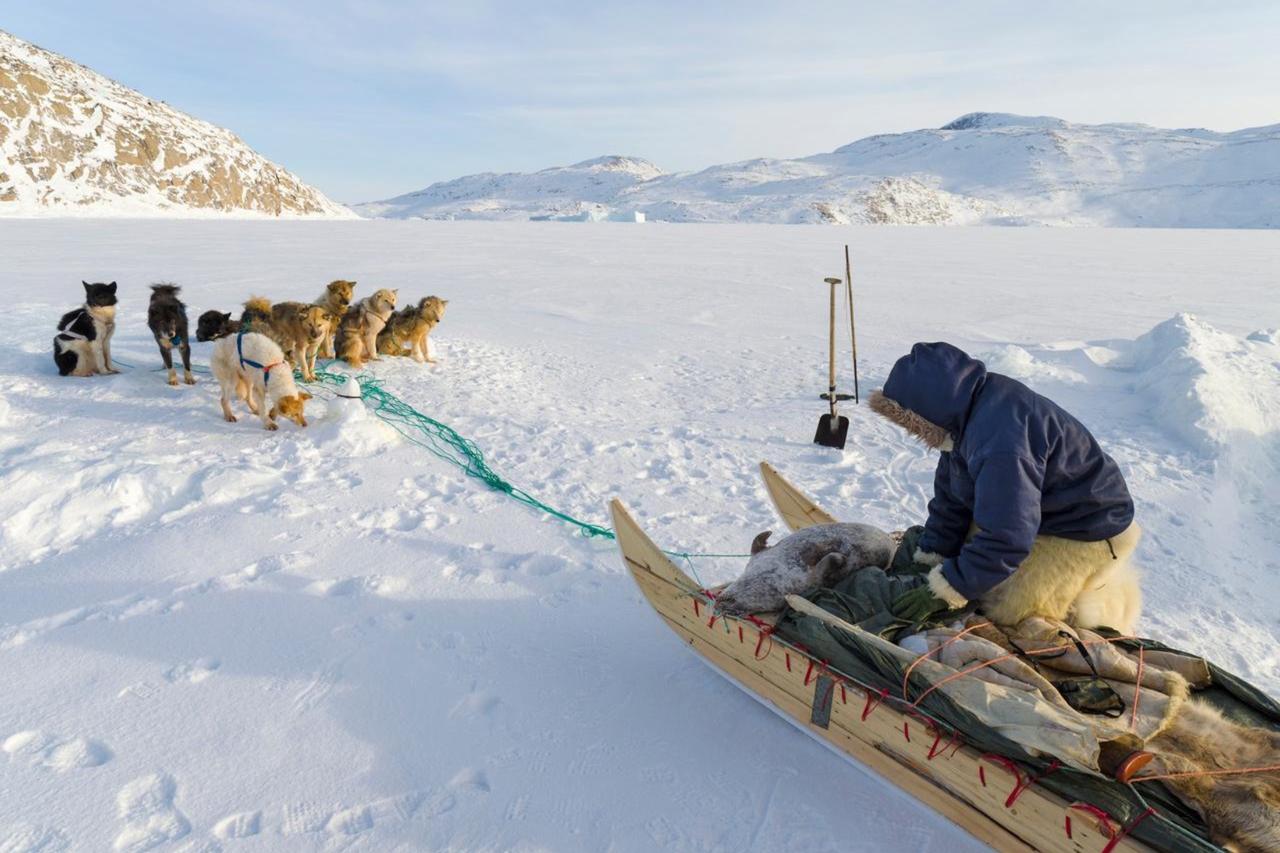


The capture of Venezuelan President Nicolas Maduro and his transfer to the United States has once again brought the issue of Greenland’s annexation by the U.S. back onto the agenda. During Donald Trump’s first presidential term, Republicans in the U.S. House of Representatives even sought support for a bill authorizing a potential purchase of the island.
Greenland ceased to be a Danish colony in 1953. Home rule came into effect in 1979, and with the 2009 Greenland Self-Government Act, Greenland gained the right to declare independence from Denmark through a referendum. As a semi-autonomous territory within the Kingdom of Denmark, Greenland’s citizenship issues, monetary policy, and foreign affairs, including defense, remain under Denmark’s authority. Since President Trump’s first term, support for independence has strengthened, and relations between Greenland and Denmark have been negatively affected.
This week, President Trump reiterated U.S. ambitions regarding the island, stating that the United States needs Greenland for national security reasons and warning about Russian and Chinese vessels operating nearby. While Trump refused to rule out the use of military force to seize the North Atlantic island, White House Deputy Chief of Staff for Policy Stephen Miller later stated that military force would not be necessary to acquire it. Of course, we are talking about European territory belonging to Denmark, a NATO ally, and seizing it by military force would amount to the United States violating international law and the national sovereignty of an ally. Even discussing such scenarios creates a highly dangerous international context, encouraging other revisionist claims which could be tested by those with the power to do so. Nevertheless, the island is of great importance both for the United States in the context of great power competition and for NATO’s security in the Arctic.
In June 2025, the Trump administration signaled that Greenland would become part of emerging great power competition in the Arctic by transferring responsibility for the island from U.S. European Command to U.S. Northern Command.
Greenland’s strategic location between Russia and North America is crucial. The most direct trajectory of a traditional Russian intercontinental ballistic missile targeting the United States would pass over Greenland and the North Pole. Because of this strategic importance, the United States and Denmark have long maintained close defense cooperation centered on the Pituffik Space Base in northwestern Greenland. The radar systems there feed directly into U.S. homeland defense through early warning and missile tracking. The island is also becoming an increasingly important hub for satellite control, space monitoring, and secure communications.
Another dimension of Greenland’s strategic importance is its key position in monitoring the so-called Greenland–Iceland–United Kingdom (GIUK) gap, through which Russia’s Northern Fleet accesses the Atlantic.
Finally, the island’s importance in terms of economic security lies in its critical raw materials. Greenland has 39 of the 50 minerals critical to U.S. national security and economic stability, including rare earth elements that are important for the United States to diversify its sources in order to prevent their weaponization by China.
For all these reasons, the United States aims to prevent Russia and China from establishing a presence on the island and in its surrounding waters.


Russia, which has the largest territory in the Arctic, also has the most developed military presence among the Arctic nations, and continues to invest there, upgrading Soviet-era installations in the Arctic. Sweden and Finland’s accessions to NATO have also put Russia’s Northern Fleet naval forces at risk, as the U.S. can now rapidly deploy missiles from Norway and Finland that could reach Russia’s Northern Fleet based on the Kola Peninsula, which hosts nuclear-powered, nuclear-armed ballistic missile submarines, in a very short time. NATO’s expansion in the Arctic has been perceived by Russia as a clear threat. In September 2024, Russian Foreign Minister Sergey Lavrov expressed his country’s commitment to defending its interests in the Arctic through both diplomatic and military means. In March 2025, Putin also stressed that geopolitical competition and the fight for positions in this region are escalating.
In its 2024 Arctic Strategy, the Pentagon warned about growing Chinese and Russian activities and cooperation in the Arctic. The Arctic accounts for over 80% of Russia’s natural gas output and nearly 20% of its oil production, and Russia is increasingly looking to China both to finance the extraction of these resources and to purchase them. China, as a self-declared “near-Arctic state” aiming to become “a great polar power,” is seeking long-term influence in the region. Arctic security cooperation is increasing through Sino-Russian joint military exercises and patrols at sea and in the air. Beyond security cooperation, in November 2024, China and Russia convened the inaugural session of the Arctic Waterway Subcommittee to deepen collaboration on shipping development, navigational safety, and polar shipbuilding technologies.
Following President Trump’s latest statement, both Greenland’s Prime Minister Jens-Frederik Nielsen and Denmark’s Prime Minister Mette Frederiksen strongly reiterated their opposition to a U.S. seizure of the island, with Frederiksen warning that this would bring collective security to a halt, arguing that “if the U.S. chooses to attack another NATO country militarily, everything stops, including NATO and thus the security that has been provided since the end of World War II.”
Similarly, European leaders voiced support for Greenland, emphasizing that the island belongs to its people and reiterating their commitment to Arctic security as a key priority for Europe and its importance for international and transatlantic security. Following Finland and Sweden’s accession to NATO, Arctic defense has gained greater prominence in NATO’s defense plans, and significant military exercises have been conducted in the region over the past two years. In 2024, NORDIC RESPONSE24 focused on high-intensity, multi-domain operations under Arctic conditions in northern Norway, Finland, and Sweden. In the same year, NATO launched the NORTHLINK program, supported by 13 Allies, to explore the development of a multinational Arctic satellite communications network against Russia.
Last year, Denmark committed $6.58 billion to strengthen its military capabilities in the Arctic. In October 2025, Denmark organized a large-scale combat exercise in Greenland to demonstrate its defensive capacity against Russia and China. The main objective was to show Washington that Denmark is capable of defending Greenland at sea, on land, and in the air. However, it is clear that these efforts were not sufficient to change the U.S. administration’s position.
Yet addressing the United States’ legitimate concerns does not require annexing Greenland. Existing bilateral agreements and NATO already provide the necessary framework to achieve these goals. Even military or economic coercion by Washington would create tensions within NATO. At this stage, pushing Greenland toward independence would also leave the island more vulnerable to Russian and Chinese influence. Europe’s arguments based on international law find little resonance in Washington. The way to persuade the United States is to ensure a permanent European military presence in Greenland—one capable of monitoring the GIUK gap, protecting critical and space infrastructure, and preventing further Russian and Chinese encroachment into the Arctic region.


 Set as preferred source
 Set as preferred source


 1 min read

 1 min read