Newsletters




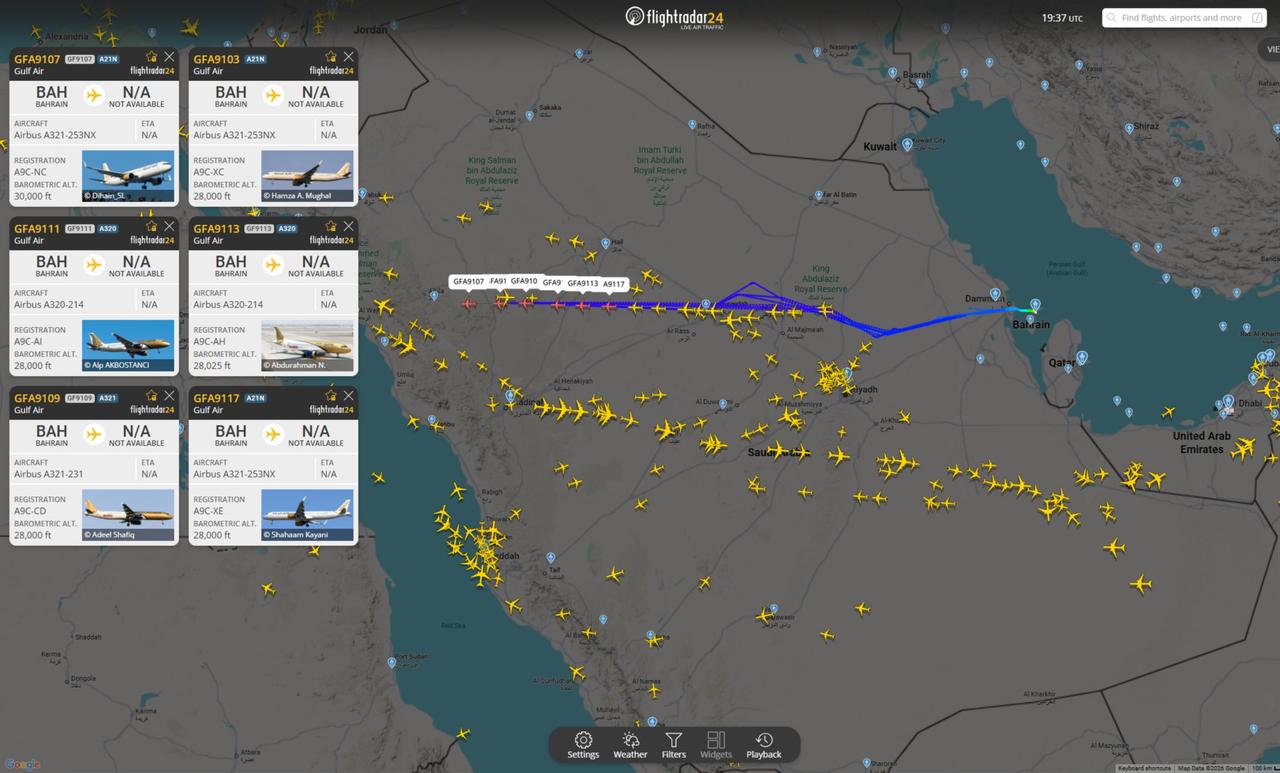
Flight-tracking data on Tueday night showed civilian and commercial aircraft streaming out of Bahrain in rapid succession, while the skies over eastern Saudi Arabia, Qatar, and Bahrain sat almost completely empty. Flights headed for Dammam, Saudi Arabia, were being diverted and turned away.
The radar screens told the story of a region whose aviation network had effectively collapsed.
Bahrain International Airport confirmed that all flight operations were suspended, with services to resume only once the kingdom's Civil Aviation Affairs declares the airspace safe to reopen. The shutdown is part of a cascading series of closures now stretching across much of the Middle East, entering a second week with no clear timeline for resolution.
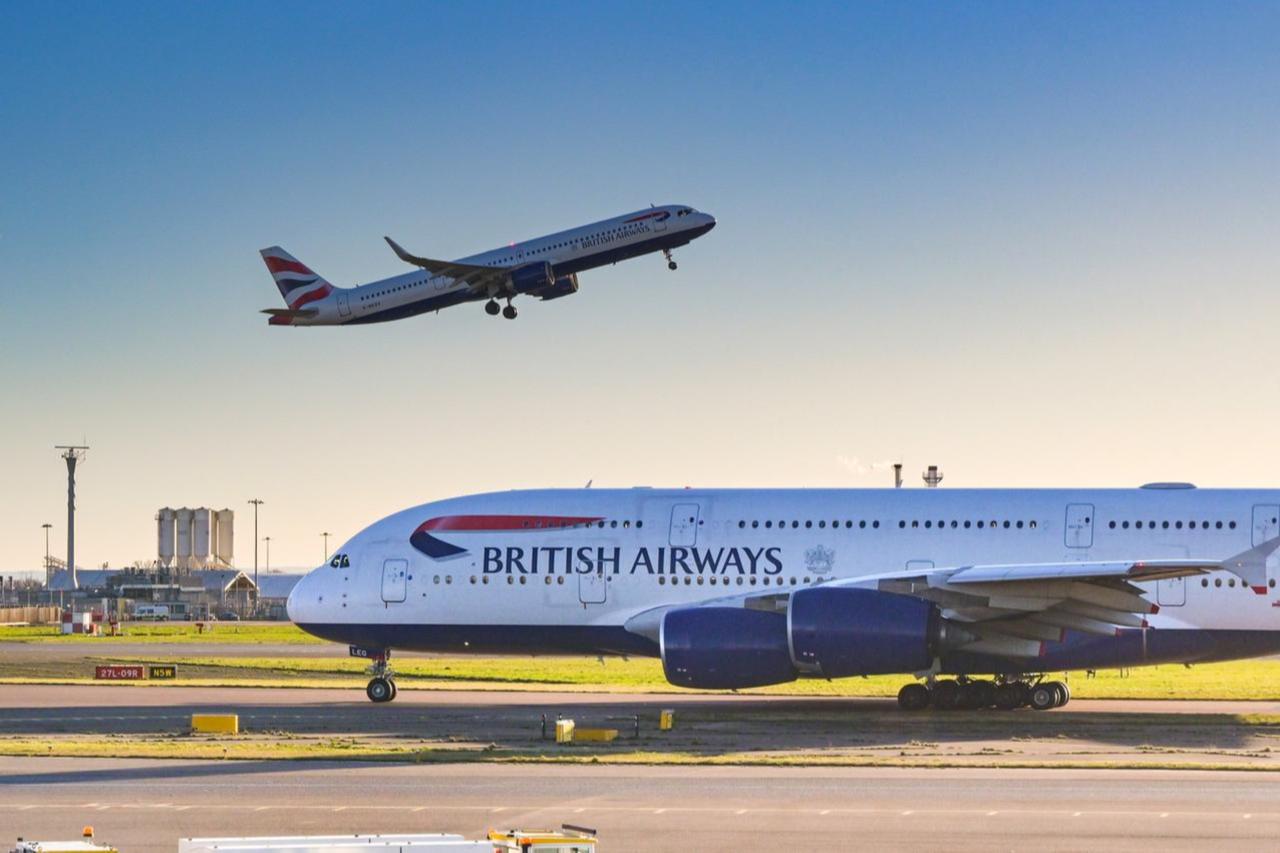
The evacuation of Bahrain's skies came on the same day British Airways announced it had cancelled all flights to and from Amman, Bahrain, Doha, Dubai, and Tel Aviv for the remainder of March, and suspended its Abu Dhabi route until later this year, citing persistent airspace instability. The airline said it was keeping the situation under constant review and offered affected passengers rebooking or refund options.

As of March 10, the airspace closures formed a near-continuous band across the region. Bahrain, Kuwait, and Iraq were under total closure. Iran's airspace was officially shut but with limited exceptions granted by its civil aviation authority. Israel required prior permission for any civilian flight.
Qatar activated emergency security control protocols, allowing only a handful of authorized departures, with 16 Qatar Airways flights expected to leave Doha on March 10. Saudi Arabia maintained a partial closure affecting the areas bordering Iraq and the Persian Gulf, while the UAE operated through restricted emergency corridors permitting up to 48 aircraft movements per hour, far below normal capacity.
Jordan's airspace remained open, but authorities advised inbound aircraft to carry extra fuel to account for potential delays.
The European Union Aviation Safety Agency extended its Conflict Zone Information Bulletin through March 11, advising all operators to avoid the airspace of Iran, Iraq, Israel, Jordan, Lebanon, Bahrain, Kuwait, Qatar, the UAE, Oman, and Saudi Arabia due to risks from missiles, air defense systems, and interception activity.
France, Germany, and the UK issued their own parallel directives prohibiting or strongly discouraging their carriers from entering the affected zones.
Gulf Air, Bahrain's national carrier, confirmed that all inbound, outbound, and overflight operations were suspended indefinitely. Because its sole hub sits in Bahrain, the airline has no ability to reroute around the restriction. In a stopgap measure, Gulf Air operated a special flight from Dammam to Karachi on March 10, providing a connection for stranded passengers with confirmed bookings.
Qatar Airways began running limited repatriation services from Doha after temporary flight corridors were authorized, with departures on March 10 to London, Istanbul, Mumbai, Delhi, Manila, and several other cities. The airline stressed these were emergency evacuations, not a resumption of scheduled commercial operations, and warned passengers not to travel to the airport without a confirmed ticket.
British Airways said it was running repatriation flights from Muscat to London Heathrow on March 11 and 12 for customers with existing bookings, but noted those services would then pause due to reduced demand. The airline set up a dedicated phone line for affected customers and cautioned travelers not to go to airports without confirmation.
Turkish Airlines cancelled flights to and from Bahrain, Dammam, Riyadh, Iran, Iraq, Jordan, Kuwait, Lebanon, Oman, Qatar, Syria, and the UAE. Wizz Air suspended all flights to Israel, Dubai, Abu Dhabi, and Amman through March 15. Air France extended its Dubai and Riyadh suspensions through March 10, and its Tel Aviv and Beirut cancellations through March 11. KLM halted flights across the Gulf and suspended Tel Aviv service for the remainder of its winter season. Saudia extended its own suspension of flights to Amman, Kuwait, Abu Dhabi, Doha, and Bahrain.
Oman Air said it had operated nearly 80 additional flights over the preceding week and helped more than 97,000 passengers reach home, as Muscat emerged as the region's primary transit lifeline.


 Set as preferred source
 Set as preferred source


 1 min read


 1 min read