Newsletters


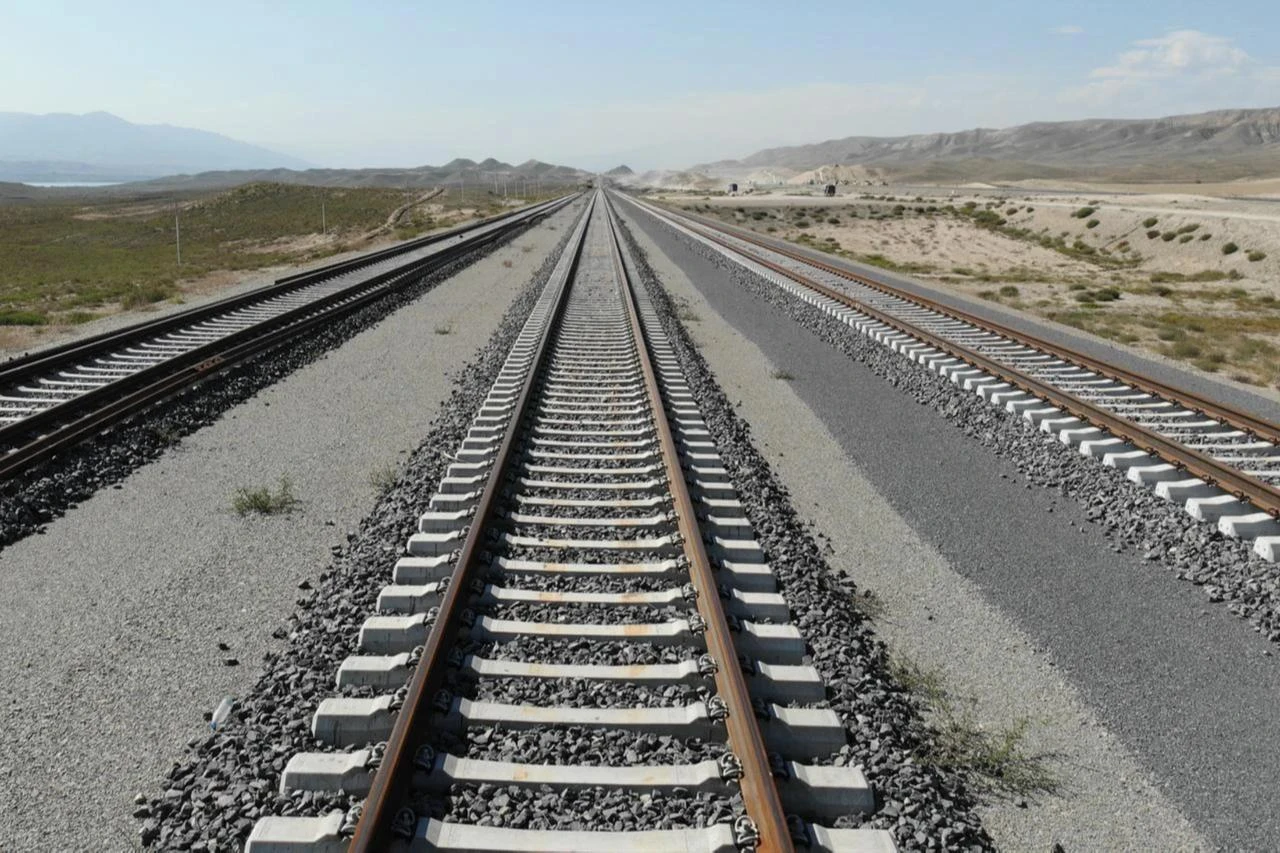


Azerbaijani President Ilham Aliyev said the planned Zangezur Corridor connecting mainland Azerbaijan to its Nakhchivan exclave will extend well beyond a railway and highway, incorporating fiber optic cables and electricity lines, with oil and gas pipelines possible in the future if needed.
"This project will not consist only of a railway and road connection," Aliyev said. "Fiber optic cable, then electricity lines, and in the future oil and natural gas pipelines if necessary, can also pass through here. Therefore, we are looking at the Zangezur Corridor today from a broader perspective."
Aliyev made the remarks in an interview with Azerbaijani State Television (AZTV), discussing the corridor's opening and ongoing infrastructure work in the region.
The Zangezur Corridor is envisioned to link mainland Azerbaijan with the Nakhchivan Autonomous Republic, an Azerbaijani exclave bordered by Armenia, Iran and Türkiye. Aliyev said connecting the two had long been a national goal. "Uniting the main part of Azerbaijan with Nakhchivan, its inseparable part, has been our desire for many years," he said. "We have now come very close to our goal."
Aliyev recalled that the trilateral declaration signed after the end of the Second Karabakh War included a provision on a corridor linking mainland Azerbaijan to Nakhchivan, but said Armenia took no practical steps toward opening it in the five years that followed the war's conclusion.
He said the matter was resolved at a summit held in Washington on August 8, 2025, adding that implementation of the project, named TRIPP, has now begun.
Aliyev said Azerbaijan began rebuilding both rail and road links toward Nakhchivan immediately after the Second Karabakh War, and that work in that direction continues. He said the railway on the Azerbaijani side is expected to reach the Armenian border next year, and that because the Armenian section is not yet ready, Azerbaijan has not needed to accelerate construction on its own side further.
The president said Azerbaijan aims to transport at least 15 million tons of cargo through the Zangezur Corridor. He noted that the corridor was initially approached primarily as a transport route, but that the project's scope is now being considered within a wider framework.
Aliyev said a project is ready to lay electricity lines from mainland Azerbaijan to Nakhchivan across Armenian territory. He said a large transformer station has been built in Jabrayil, a district retaken by Azerbaijan during the 2020 war, designed to transmit high volumes of electrical energy.
He said the locations for electricity pylons on Armenian territory have been identified following surveys carried out by Azerbaijani experts, and that Azerbaijan expects Armenia to take steps on the matter as well.
"Armenia may see this as necessary for itself first and foremost," Aliyev said. "Because today their primary energy source is a nuclear power plant. Its operation is not in their hands. Secondly, this plant is old and is a source of danger for the entire region. The plant will need to be shut down sooner or later."
 1 min read
Aliyev said Azerbaijan and Türkiye have raised concerns about the plant, an apparent reference to Armenia's Metsamor nuclear power station, at various international platforms, and argued that Armenia could face serious energy problems if the facility's operations were to end.
He said Azerbaijan's energy lines connect to Russia, Iran and Georgia, and through Georgia to Türkiye. "An energy corridor stretching from Armenian territory to Nakhchivan, and from there to Türkiye and Europe, could help sustain Armenia's energy system in the event of a crisis," he said.
Aliyev said the planned energy connection would be an integral part of the Zangezur Corridor.


 Set as preferred source
 Set as preferred source


 1 min read