Newsletters


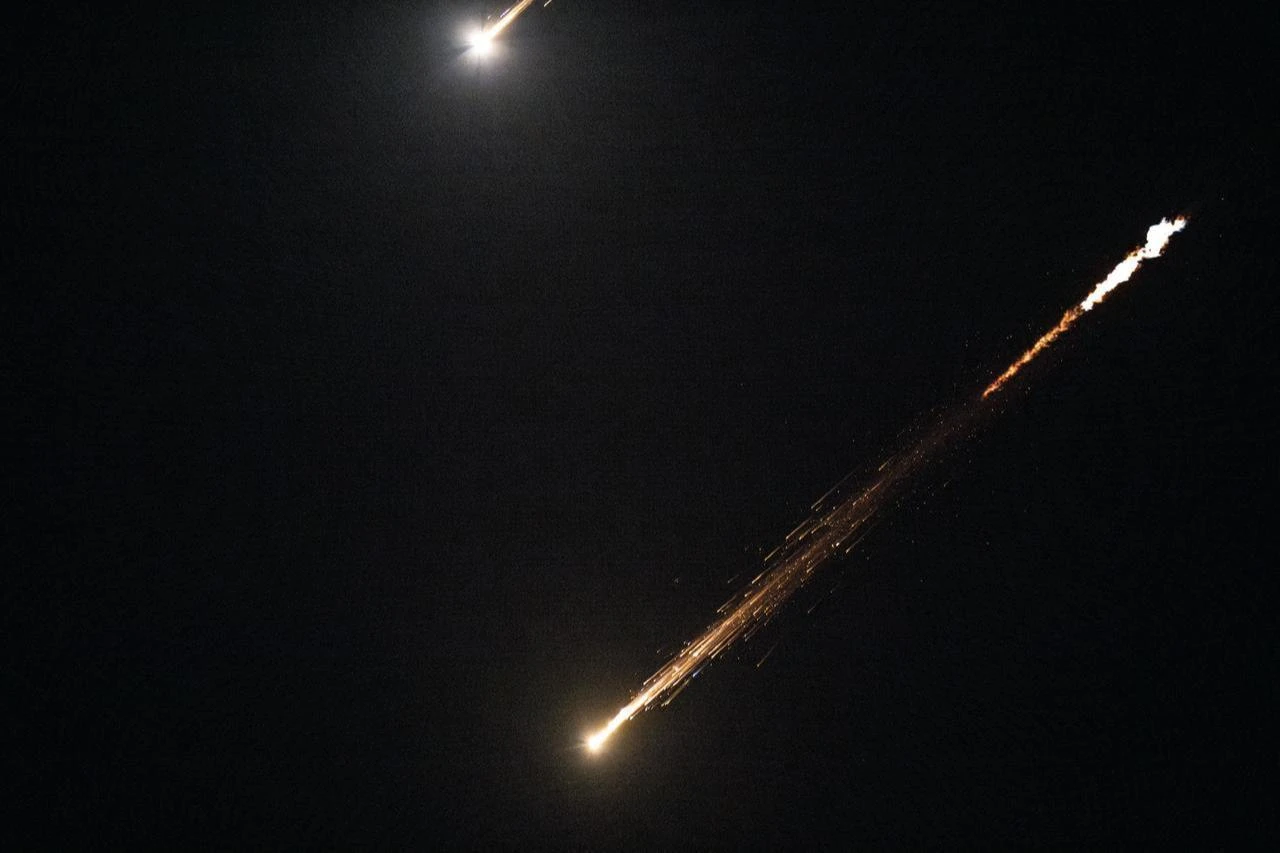
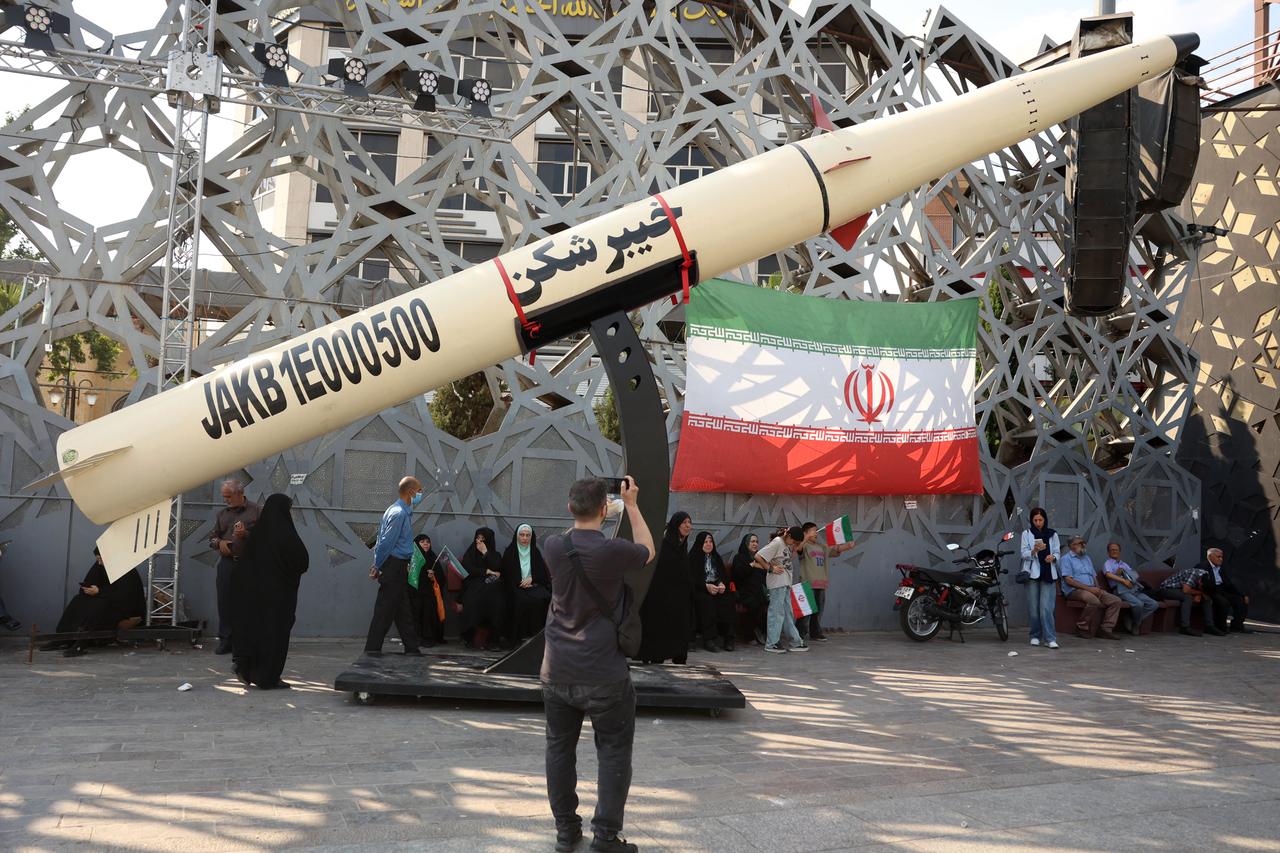
Iran fired seven ballistic missiles toward Bahrain and Kuwait early Saturday, in the second such attack on both Gulf states within three days.
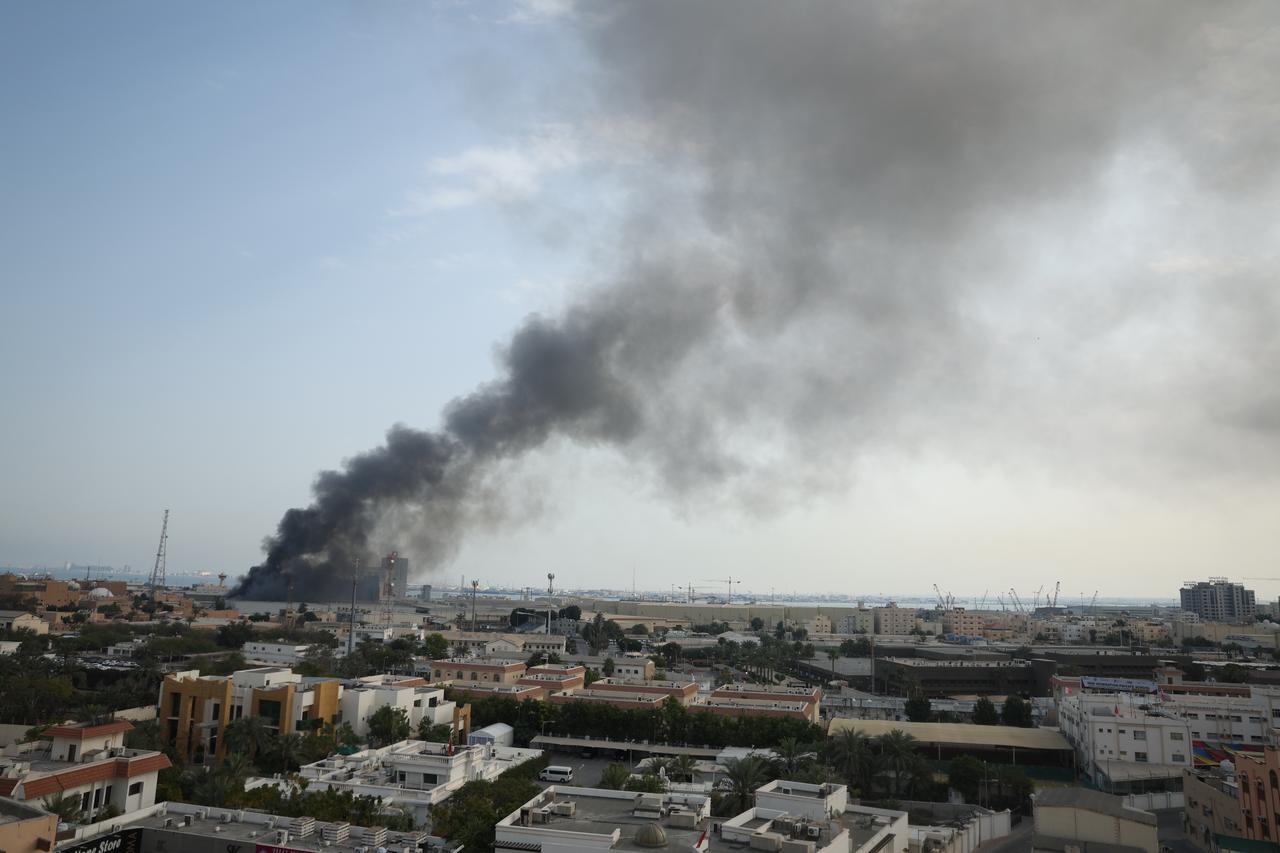
Bahrain's air defenses intercepted three missiles and several drones, and Kuwait temporarily closed its airspace.
Saudi Arabia condemned the strikes as Pakistan's interior minister flew to Tehran to carry new mediation proposals.
Bahrain's General Command announced that its air defense systems intercepted and destroyed three missiles and several drones launched by Iran against civilians in the kingdom.
U.S. Central Command (CENTCOM) said Iran launched seven ballistic missiles in total toward Kuwait and Bahrain, with six being intercepted, and one did not reach its target.
"Iran continues its systematic aggression through its heinous missile and drone attacks targeting civilians in the Kingdom of Bahrain," Bahrain's Defense Force said in a statement.
It called the deliberate targeting of civilians and private property "a flagrant violation of international humanitarian law" and confirmed that all weapons and units were at the highest levels of readiness.
Residents in Bahrain were told to head to the nearest safe place as sirens sounded overnight. An Agence France-Presse (AFP) journalist in Manama heard three explosions as air-raid sirens were activated.
In Kuwait, repeated blasts were heard near the country's international airport, which had been struck on Wednesday in a prior Iranian attack that killed one person.
"We woke up to a huge explosion. The explosions were very loud," an Egyptian mother of two told AFP, adding, "My children were terrified, and I couldn't calm them down."

Bahrain's Foreign Ministry condemned the strikes as "a flagrant violation of the sovereignty of the two countries" and accused Iran of violating U.N. Security Council Resolution 2817 (2026), which condemned Iranian attacks and attempts to close the Strait of Hormuz or disrupt international maritime navigation.
Manama urged Tehran to immediately halt the "unjustified" attacks, fully reopen the Strait of Hormuz without restrictions, disclose the locations of naval mines and facilitate the safe departure of over 20,000 stranded sailors from the region.
The ministry warned that Bahrain's patience "does not signify weakness" and that the defense of its sovereignty was a red line.
Kuwait's Foreign Ministry called the attack a "brazen assault" showing "utter indifference to the direct threat they pose to the lives of citizens and residents."
It said the strikes represented "a dangerous escalation that drives the region towards further tension and turmoil."
Kuwait said it retained "its full right to take all necessary measures to preserve its security and defend its territory."
Kuwait's airspace was temporarily closed as a precautionary measure, and 11 flights operated by Kuwait Airways and Jazeera Airways were diverted to nearby airports. Air traffic resumed at 6:15 a.m. local time following confirmation of stability, Kuwait's Civil Aviation Directorate said.
Saudi Arabia's Ministry of Foreign Affairs issued a statement dated June 6 condemning the attacks in the strongest terms.
"The Ministry of Foreign Affairs renews the Kingdom of Saudi Arabia's condemnation and strongest denunciation of the brutal Iranian aggressions and flagrant violations of the sovereignty of the sisterly Kingdom of Bahrain and the sisterly State of Kuwait, which constitute a threat to regional and international security," the statement read.
Riyadh said Iran's "continuous aggressions" represented further escalation, pushing the region toward tension and instability and reaffirmed full support for all measures Bahrain and Kuwait take to preserve their sovereignty and security.
Pakistan's Interior Minister Mohsin Naqvi traveled to Iran on Saturday to discuss "some new proposals" to break the ongoing diplomatic deadlock and reach a temporary deal between Washington and Tehran, Pakistani sources told Türkiye's state-run Anadolu Agency (AA).
The visit follows a meeting between Naqvi and his Iranian counterpart, Eskandar Momeni, on Friday in Bishkek, on the sidelines of a Shanghai Cooperation Organization interior ministers' meeting. Naqvi will also discuss reviving a second round of talks between the parties to end the conflict.
Iran's semi-official Mehr News Agency confirmed the visit. Iran's adviser to Supreme Leader Mojtaba Khamenei, Mohsen Rezaei, told CNN on Friday that "the negotiations are at a deadlock and Trump must break this deadlock," calling for the release of $24 billion in frozen Iranian assets.
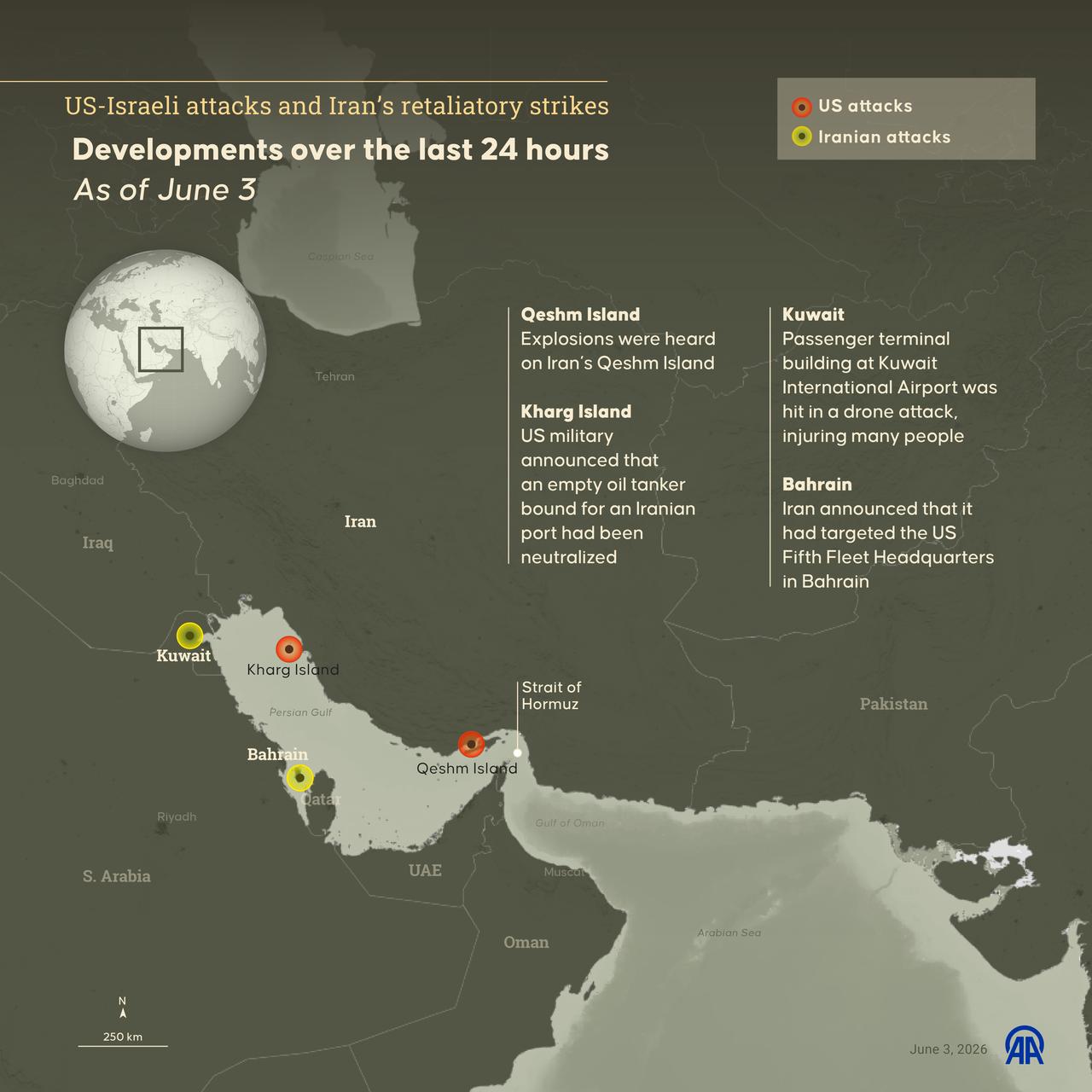
Earlier, Iran's Islamic Revolutionary Guard Corps (IRGC) said it had launched missile strikes against what it described as "enemy bases" in Kuwait and Bahrain following US drone attacks on Iranian territory.
According to Iran's semi-official Tasnim News Agency, the IRGC Aerospace Force targeted Ali al-Salem Air Base in Kuwait and facilities associated with the US Navy's Fifth Fleet in Bahrain using ballistic missiles.
The IRGC said the operation was carried out in response to US drone strikes on a telecommunications tower on Qeshm Island and another facility in Sirik in southern Iran.
The IRGC warned that any further attacks against Iran could trigger a broader response beyond what it described as limited retaliatory strikes.
It also renewed threats to close the Strait of Hormuz to oil and gas shipments entirely, raising concerns about global energy supplies and regional stability.
The Strait of Hormuz is one of the world's most important maritime energy routes, handling a significant share of global oil and liquefied natural gas exports.
Regional tensions have escalated after the U.S. and Israel launched airstrikes on Iran in late February, triggering a cycle of retaliatory attacks that widened instability across the region.
Iran, in retaliation, subsequently launched strikes against Israel and targeted countries hosting U.S. military bases, while also disrupting shipping through the Strait of Hormuz, a critical route for global energy supplies.
A ceasefire later took effect, though diplomatic efforts to secure a broader agreement have continued.


 Set as preferred source
 Set as preferred source


 1 min read
 1 min read