Newsletters





Israel is preparing for talks with the Trump administration on a new 10-year security deal that would prioritize joint military projects over direct cash grants as Israeli leaders signal plans to reduce dependence on American financial aid, the Financial Times (FT) reported Tuesday.
Gil Pinchas, speaking to the Financial Times before stepping down as chief financial adviser to Israel's military and defense ministry, said Israel would seek to prioritize joint military and defense projects over cash handouts in talks expected in the coming weeks.
"The partnership is more important than just the net financial issue in this context ... there are a lot of things that are equal to money," Pinchas said, adding, "The view of this needs to be wider."
Pinchas said pure financial support—or "free money"—worth $3.3 billion per year, which Israel can use to purchase U.S. weapons, was "one component of the MoU that could decrease gradually."
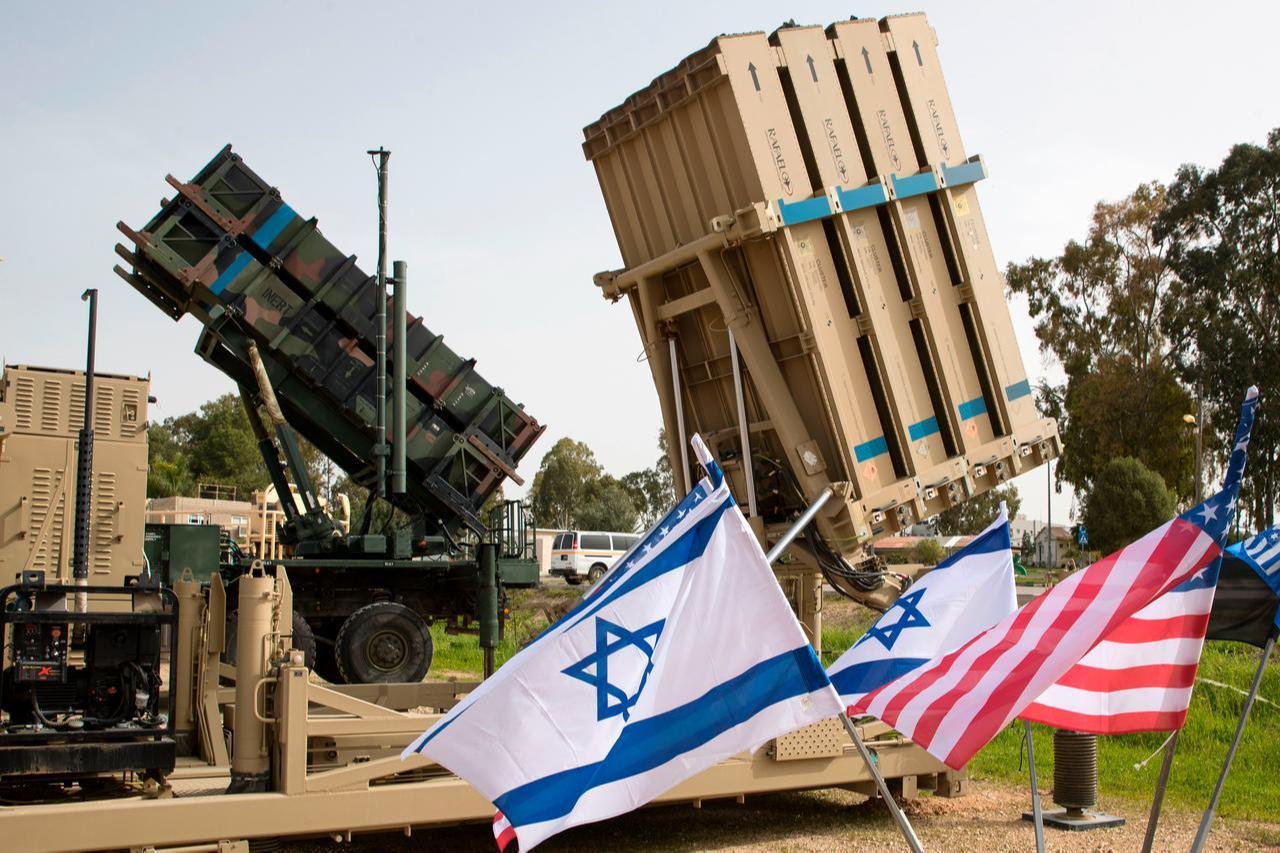

In 2016, the U.S. and Israeli governments signed a 10-year memorandum of understanding (MoU) through September 2028 that provides $38 billion in military aid, including $33 billion in grants to purchase military equipment and $5 billion for missile defense systems.
The MoU includes $500 million annually earmarked for joint projects such as the Iron Dome and David's Sling air-defense systems that protect against rockets, drones, and missiles.
Israeli Prime Minister Benjamin Netanyahu said earlier this month he hoped to "taper off" Israeli dependence on U.S. military aid in the next decade.
"In my visit to President Trump, I said we deeply appreciate the military aid that America has given us over the years. But we too have come of age, we've developed incredible capacities and our economy will soon, within a decade, reach $1 trillion. So I want to taper off the military aid within the next 10 years," Netanyahu told The Economist in an interview.
Pinchas said Israel would seek to discuss current and future joint development projects for military systems that could continue on an ad hoc basis, rather than as part of a new decade-long deal agreed in advance.
"You put money and they put money and you both win," he said, adding that, "We need to see what the American side says."

Pinchas referred to U.S. air defense systems and fighter jets deployed across the Middle East to defend Israel from Iranian missiles and drones, as well as U.S.
B-2 bombers that dropped bombs on Iranian nuclear sites last June during "Operation Midnight Hammer", as examples of American aid beyond the MoU worth "many billions more."
The administration of former President Joe Biden provided $8.7 billion in additional funding on top of the annual MoU and direct military support, including to refill stockpiles of air-to-ground munitions used in Gaza and elsewhere.
As chief financial officer in the Israeli defense establishment for the past five years, Pinchas and his team of 400 economists tracked all military spending.
"The system doesn't move without money," Pinchas said, noting the $190 million he released on the day of the Hamas attack for transportation costs and mobilization of 226,000 reservists.
The first month of war cost $400 million per day as the Israeli military increased arms stockpiles from a dozen countries and launched a ground invasion of Gaza. The daily average cost ultimately decreased to $232 million, totaling $70 billion in direct war costs and $112 billion in total economic costs, according to official figures.
The 12-day war between Israel and Iran last June alone cost Israel approximately $6 billion, half of which went to armaments and air defense interceptor missiles.
The "Grim Beeper" intelligence operation in 2024, in which Israel detonated thousands of exploding pagers targeting Hezbollah, cost $300 million over years, including components and work by Israeli officers and agents, Pinchas said.

The future of U.S. support remains uncertain, with U.S. President Donald Trump skeptical of foreign aid in general and both progressives in the Democratic Party and far-right Republicans increasingly critical of Israel.
Senator Lindsey Graham, a Republican, said earlier this month that with Israel "apparently" wanting to change the U.S. aid system, he would seek to "dramatically expedite" the timetable to do so.


 Set as preferred source
 Set as preferred source


 1 min read

 1 min read