Newsletters


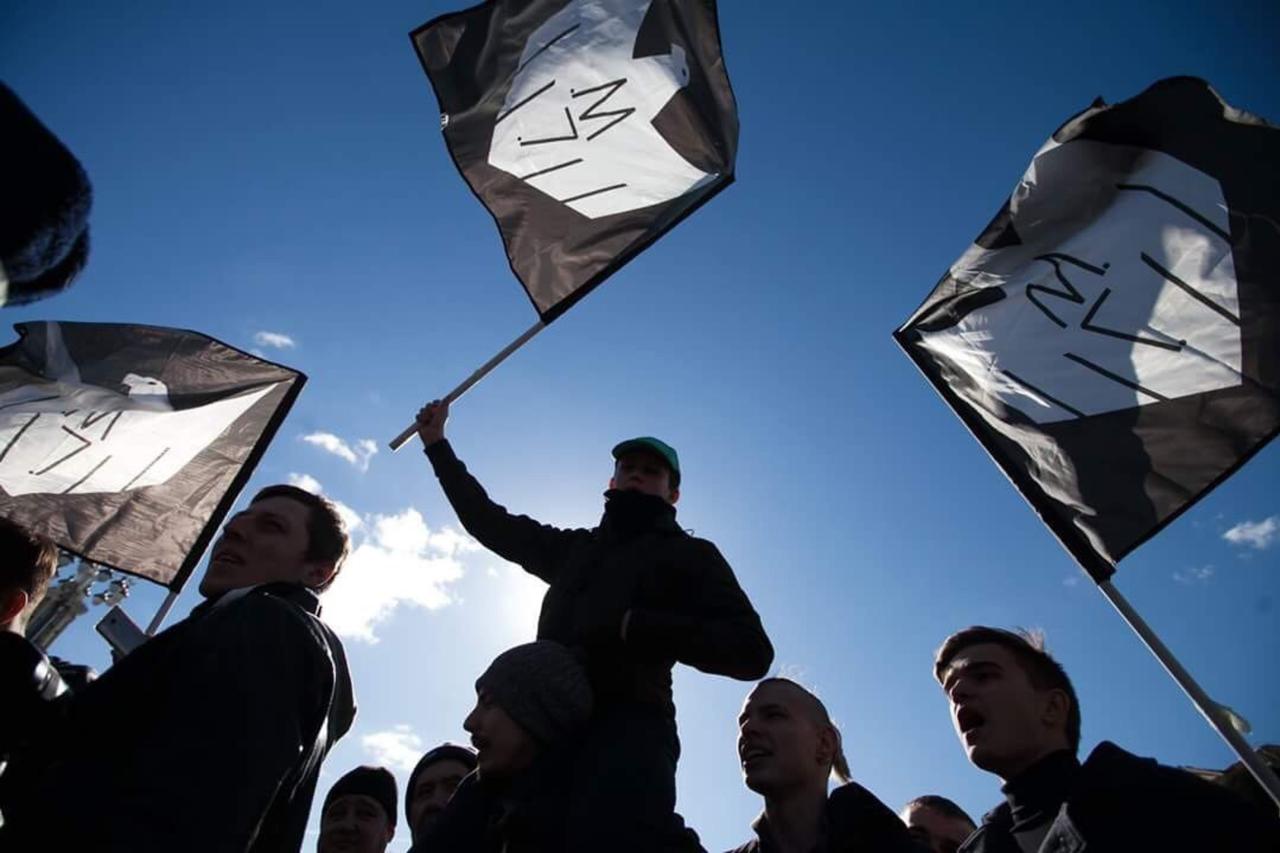


Italian, French and Bulgarian fighter jets were scrambled Thursday as about 20 commercial flights across Europe were hit by a third consecutive day of hoax bomb alerts. Threats sent to airports in Sofia and Rome carried the signature of “the fighters of the Male State,” according to messages seen by AFP.
No explosives were found, and three flights were diverted before landing safely. The hoaxes particularly targeted low-cost carriers and flights to or from Bulgaria, the Czech Republic and Italy. No claim of responsibility was made for all of the flights.
The movement was founded in 2016 by Vladislav Pozdnyakov, a blogger and fitness trainer. According to a 2024 analysis by Anna Kruglova for the International Centre for Counter-Terrorism, he first wanted a platform for jokes about relationships, mainly to make money.
It grew into a semi-political ideology he called “national patriarchy,” which holds that women should raise children, keep house and obey their husbands.
Kruglova writes that the ideology rests on nationalism and white supremacy. It rejects multiculturalism and opposes relationships between Russian women and non-white men, which it claims “spoils the genetic purity” of the nation.
It treats LGBTQ+ people and feminists as a European “disease.” The investigative group Bellingcat has also documented antisemitic content.
Unlike many online misogynist communities, the movement had an emblem, a black eagle with the letters MG, and regional branches whose members met offline.
Kruglova says it differs from “incel” communities, which the group itself has called “pathetic.” Pozdnyakov unsuccessfully sought to collaborate with the Liberal Democratic Party of Russia in parliament.
The group gained notoriety after the 2018 World Cup in Russia, when its Telegram channel posted photos and videos of women suspected of relationships with foreigners.
That led to online and offline harassment.
Pozdnyakov received a suspended two-year sentence that year for inciting hatred against women, which was later overturned.
In 2021, it campaigned against a Russian grocery chain over an advertisement featuring a same-sex family, which left the country, and against two restaurant chains over advertisements featuring Black models, using fake delivery orders.
One chain, Tanuki, called on authorities to designate the group, and a Russian court declared it an extremist organization in October 2021.
Pozdnyakov left Russia, reportedly through Georgia, and is believed to be in Europe.
The group continued online as the Male Legion and, after Russia’s 2022 invasion, shifted from attacks on women to supporting the war in Ukraine.
Kruglova describes its content as extremely violent and racist, including Nazi rhetoric such as “final solution of the Ukrainian question.”
Once critical of the Kremlin for not being nationalist enough, it now backs the government. She writes that it does not recruit fighters and that it is believed Pozdnyakov has or had links to Russian security services, which have not been confirmed.
Lou Osborn, founder of Inpact, a nongovernmental group that monitors clandestine Russian activities, told AFP the group uses Nazi symbolism and has “thousands of members.” She said that “today we don’t know to what extent they are connected to those in power.” The reporting reviewed describes no earlier threats against aviation by the movement.
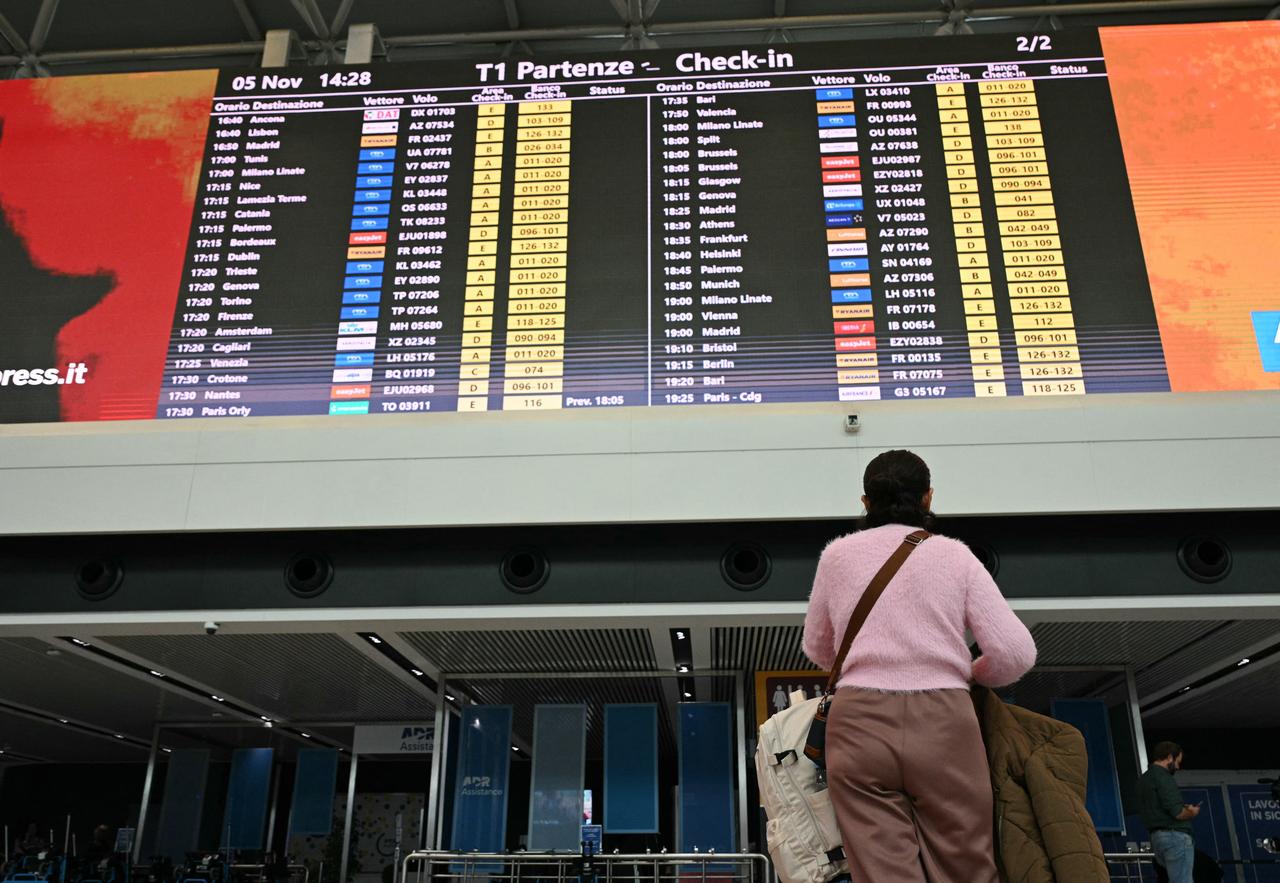

At least five flights received an air force escort after threats. Bulgaria’s air force escorted three Ryanair planes headed for Sofia from Madrid, Copenhagen and London. An interior ministry spokesperson said all three were inspected and no explosives were found. The London flight was diverted to Plovdiv Airport.
French fighters accompanied an Aer Lingus flight from Dublin to Rome, which landed at the Evreux military base, about 100 kilometers west of Paris.
The prime minister’s office said the pilot “did not cooperate as expected,” prompting an order to intercept the aircraft. Evreux prosecutor Remi Coutin said the pilot had “allegedly refused” to land at the base, “preferring a civilian airport.” A Wizz Air flight from Milan to Warsaw was rerouted to Vienna.
Most targeted flights landed at their original destinations. They included four planes bound for Prague, two in Copenhagen, and flights to Brussels and Bucharest. Copenhagen police said there “has never been any danger” to passengers or airport staff. Eurocontrol said 25,072 flights were scheduled across Europe on Thursday, so the threats touched a small share of air traffic.
A message sent to multiple email addresses for Sofia airport said “explosive devices” had been placed on three Ryanair flights headed for Bulgaria. It accused recipients of being “accomplices in a criminal conspiracy” and said the senders wanted to “annihilate” them.
The message said the explosion would occur in 60 minutes and warned that “your skies will turn red.” It also told recipients their “feminist regime will remember it forever,” and was signed by “the fighters of the Male State.”
Il Corriere della Sera published the same text, but with warnings directed at two flights headed for Rome. It had been sent to ADR, the company that manages Rome’s airports, and a company source confirmed the report to AFP.
EU Transport Commissioner Apostolos Tzitzikostas wrote on X that it was “too early to draw conclusions on whether the reported incidents are linked.” European authorities say hybrid attacks, meaning sabotage and disruption short of open conflict, have risen and have sometimes been linked to Russia or Iran.
The Thursday threats followed alerts against 10 flights on Tuesday, which closed one Warsaw airport and led Italian jets to deploy. On Monday, a Wizz Air flight from London Luton to Sofia was diverted to Budapest.


 Set as preferred source
 Set as preferred source


 1 min read


 1 min read