Newsletters


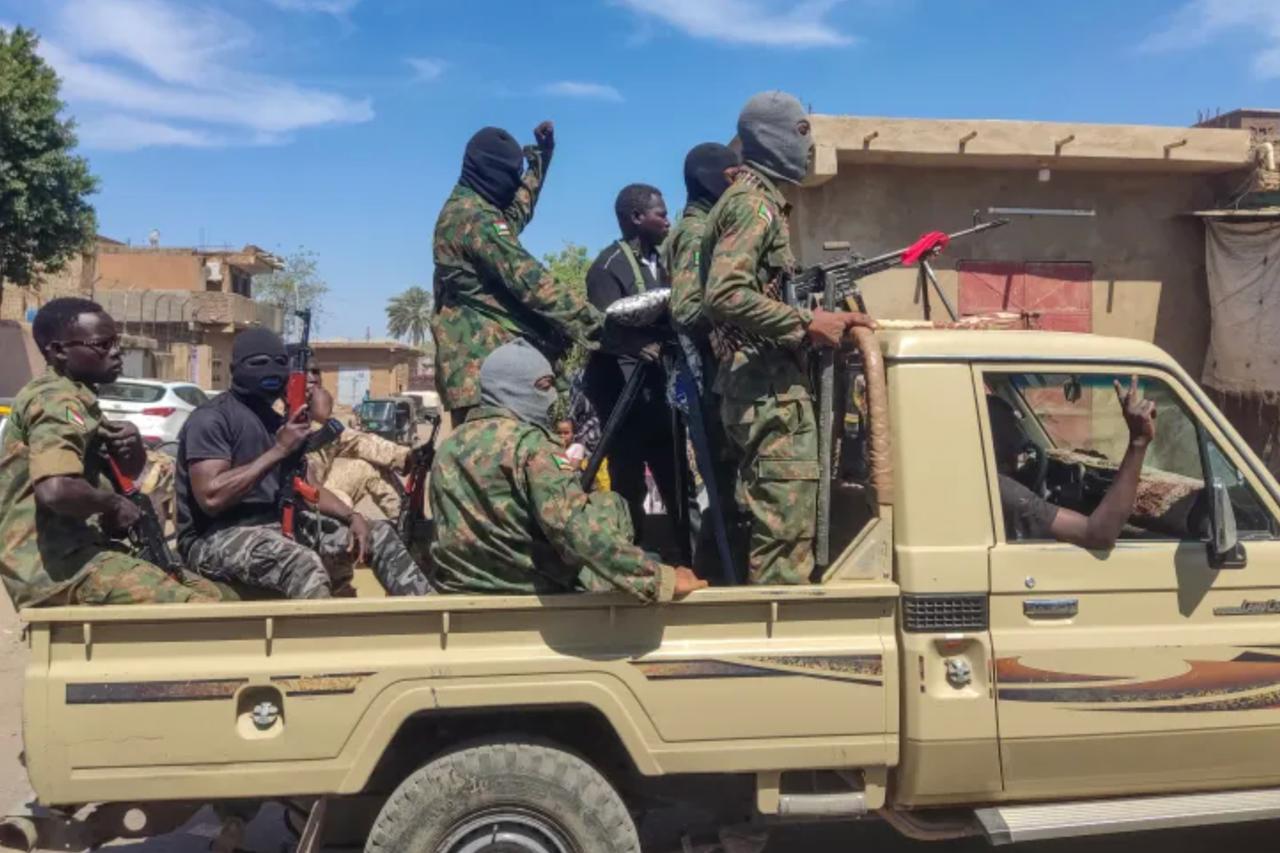


Britain imposed sanctions Friday on four senior leaders of the Rapid Support Forces (RSF), including the militia’s deputy commander, Abdel Rahim Hamdan Dagalo, over alleged “acts of violence” against civilians in Sudan, a move welcomed by Darfur Gov. Minni Arko Minawi.
In a statement, the British government said Dagalo, along with three other commanders, is accused of deliberately targeting civilians in el-Fasher, the capital of North Darfur state in western Sudan, committing acts of violence based on ethnicity and religion, and being involved in attacks on medical and humanitarian workers.
The British sanctions include asset freezes and travel bans on the four commanders.
On Oct. 26, the Rapid Support Forces seized el-Fasher and carried out massacres against civilians, according to local and international organizations and eyewitnesses.
Amid those atrocities, RSF commander Mohamed Hamdan Dagalo, known as Hemedti, acknowledged what he described as mere “excesses” committed by his forces in El Fasher, claiming that investigative committees had been formed.
Britain also accuses RSF leaders of committing “systematic rape, ransom kidnappings and arbitrary detentions,” according to the statement.
Those sanctioned include Abdel Rahim Dagalo, the force’s second in command; Jedo Hamdan, the RSF commander in North Darfur; Al Fateh Abdullah Idris, known as Abu Lulu; and RSF field commander Al Tijani Ibrahim Moussa, known as Al Zeer Salem.
Darfur Gov. Arko Minawi welcomed the British sanctions, saying in a post on his Facebook account that the United Kingdom’s move to impose sanctions on a number of Rapid Support Forces militia leaders represents an important step toward holding accountable those responsible for the crimes and violations witnessed in Sudan during the recent period.
He added: “However, these measures remain incomplete unless they reach the head of the leadership and the militia’s top commander, Mohamed Hamdan Dagalo, known as Hemedti, as the key decision-maker and the direct orchestrator of the system of violence that has exhausted civilians and threatened the country’s unity and stability.”
Of the country’s 18 states, the Rapid Support Forces control the five Darfur states in the west, except for parts of North Darfur that remain under army control.
The army, in turn, maintains dominance over most of the remaining 13 states, including the capital, Khartoum.
Sudan’s humanitarian suffering continues to worsen as a result of the ongoing war between the army and the Rapid Support Forces since April 2023, triggered by disputes over the unification of the military establishment. The conflict has killed tens of thousands of people and displaced 13 million.


 Set as preferred source
 Set as preferred source


 1 min read