Newsletters


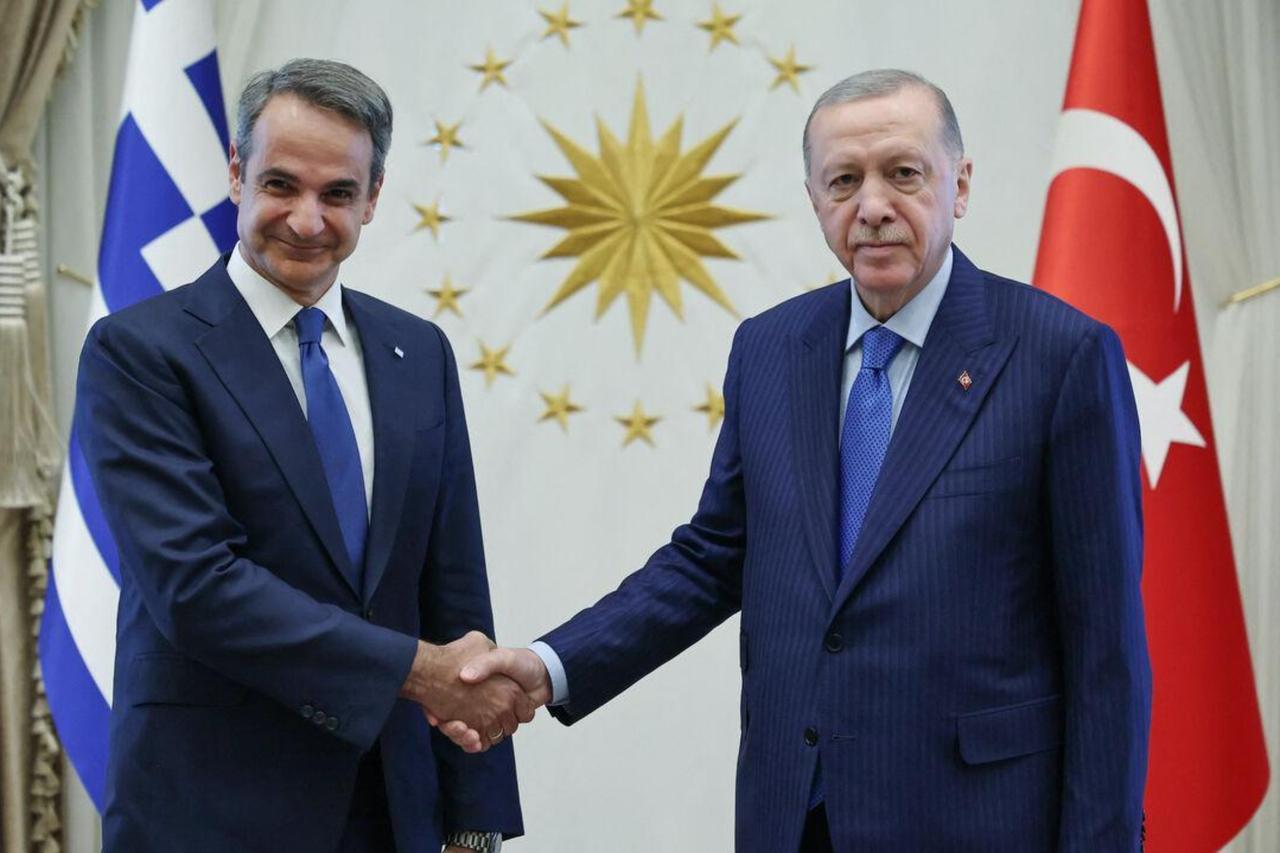


Greek Prime Minister Kyriakos Mitsotakis is set to arrive in Ankara on Feb. 11 for talks with President Recep Tayyip Erdogan and a session of the Greece–Türkiye High Level Cooperation Council (HLCC), with expectations already tempered on both sides.
As previously reported by Türkiye Today, officials indicate that long-standing disputes will remain unresolved during this round of meetings, with attention shifting toward practical cooperation and maintaining open communication channels rather than pursuing final-status solutions.
Areas such as trade, environmental coordination, and migration management are expected to take precedence over core sovereignty disputes in the Aegean and the Eastern Mediterranean.
Against that backdrop, Greek media coverage reveals how Athens is interpreting the summit, with tones ranging from structural caution to guarded procedural optimism.
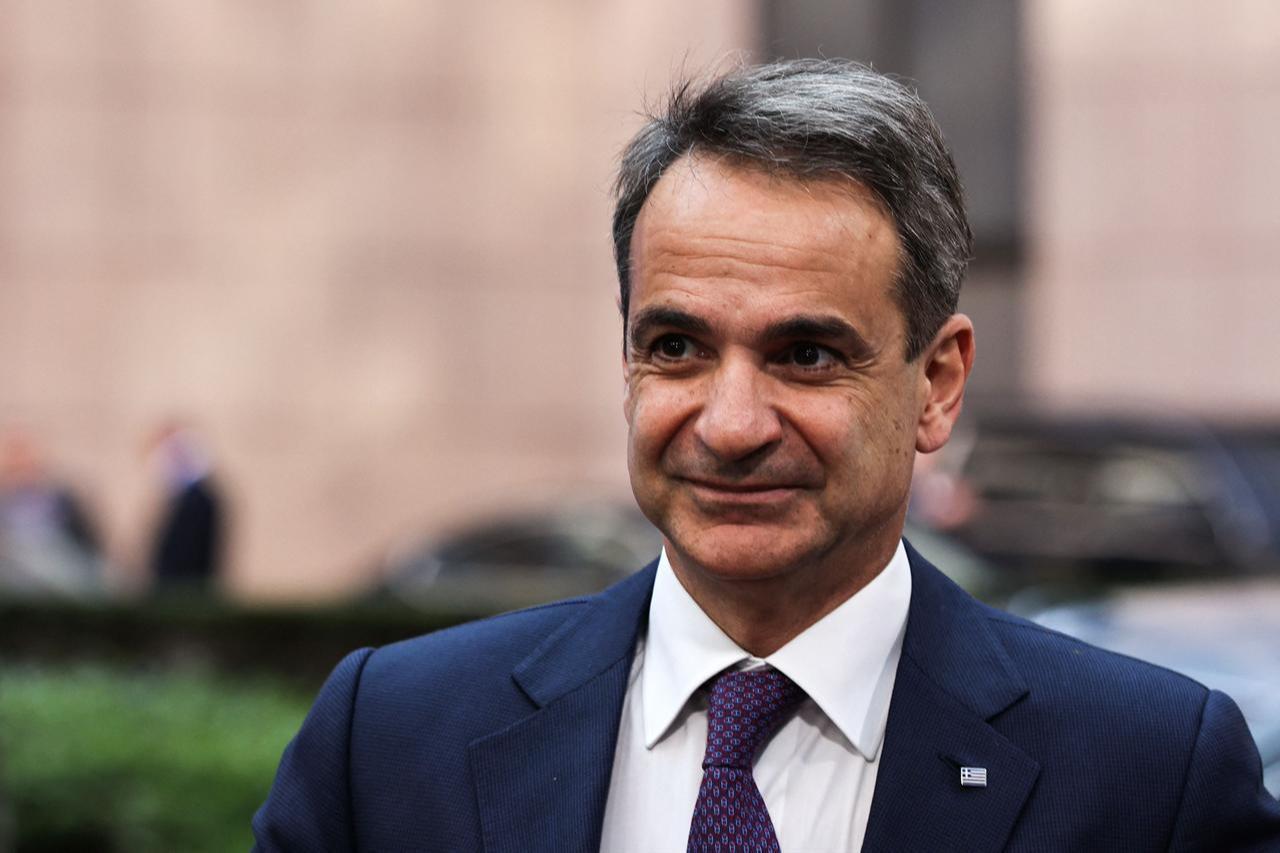

Greek daily To Vima argues that the meeting unfolds under what it describes as “contradictory conditions created, on the one hand, by the need to preserve a relatively mild climate and, on the other, by the growing tension caused by the return of Türkiye’s revisionist agenda.”
While both sides seek to preserve the relatively calm climate that has characterized bilateral relations in recent years, Ankara’s renewed rhetoric on the demilitarization of Aegean islands and accusations that Greek policy is shaped by domestic political considerations reintroduce structural friction.
The report focuses on what it describes as Athens’ central concern: maintaining dialogue without allowing the agenda to expand beyond its preferred legal framework.
Even if technical agreements are signed, the deeper question remains whether Türkiye will isolate maritime delimitation as a distinct issue or continue linking it to broader political demands.
The analysis suggests that the risk is not simply stagnation but a gradual agenda expansion, where topics previously rejected by Athens reappear as implicit negotiating categories.
In this reading, the summit is less about resolving disputes than about controlling the perimeter of discussion.
Greek newspaper Kathimerini adopts a similar but sharper tone. It describes the run-up to the meeting as marked by “arrhythmias” (irregularities in the heartbeat), pointing to what it calls “last-minute irregularities indicative of a lack of trust in the relationship.”
The article highlights remarks made by Turkish Foreign Minister Hakan Fidan that appeared to differentiate between actors inside the Greek government.
It also notes that Athens chose not to escalate rhetorically, instead reiterating its commitment to international law and good neighborly relations.
For Kathimerini, this episode reinforces a broader conclusion: the relationship functions, but without deep trust.
Tactical public messaging remains part of the diplomatic environment, even during periods described as stable.
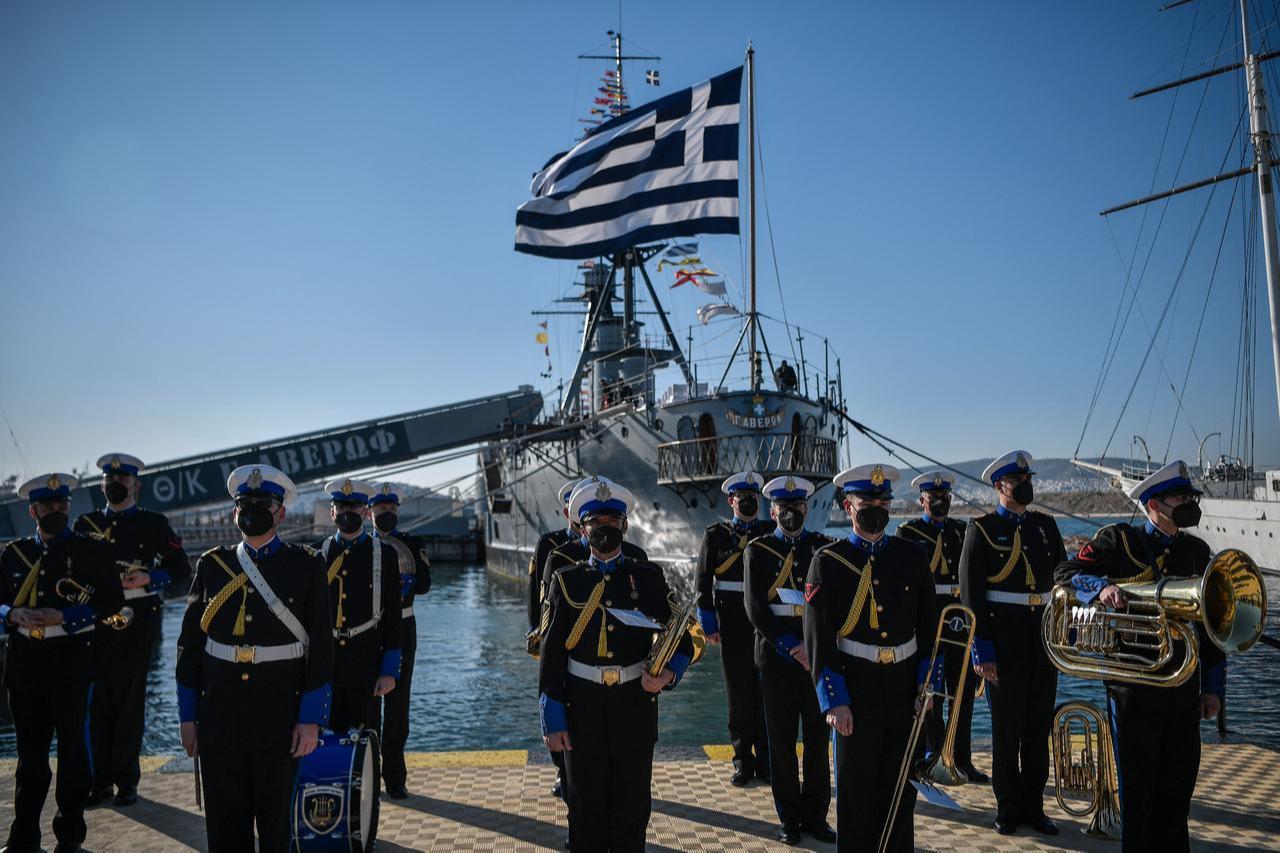
In contrast, Greek outlet Real.gr reports the meeting primarily through the lens of government sources.
The outlet stresses “the maintenance and strengthening of open communication channels and the consolidation of a functional relationship with Türkiye,” framing the summit as an effort to preserve recent gains.
The report states that, despite the absence of convergence on maritime delimitation, the relative calm of the past two and a half years has produced tangible results.
These include fewer airspace incidents, closer cooperation on migration flows, visa facilitation for Turkish citizens and their families on 12 Aegean islands, and deeper bilateral trade.
The article frames the summit as a mechanism for sustaining these gains. Dialogue is presented as a stabilizing tool rather than a vehicle for immediate dispute resolution.
Greek daily Proto Thema provides additional operational detail. The report outlines the structured format of the visit, including the leaders’ meeting at the Presidential Complex and parallel ministerial talks.
It notes that both sides aim to send a message that “we can talk even when we disagree, and that disagreement should not automatically lead to an escalation of tensions.”
The analysis focuses on specific agenda items. Athens is expected to raise issues related to Turkish NAVTEX notices and maritime spatial planning.
Ankara, for its part, is likely to express dissatisfaction over Greece’s strategic alignments and broader regional dynamics.
Importantly, the report highlights planned cooperation agreements in areas such as disaster response, technology, research, and trade. These are described as part of a “positive agenda” designed to anchor the relationship in practical outcomes, even as sovereignty disputes remain unresolved.
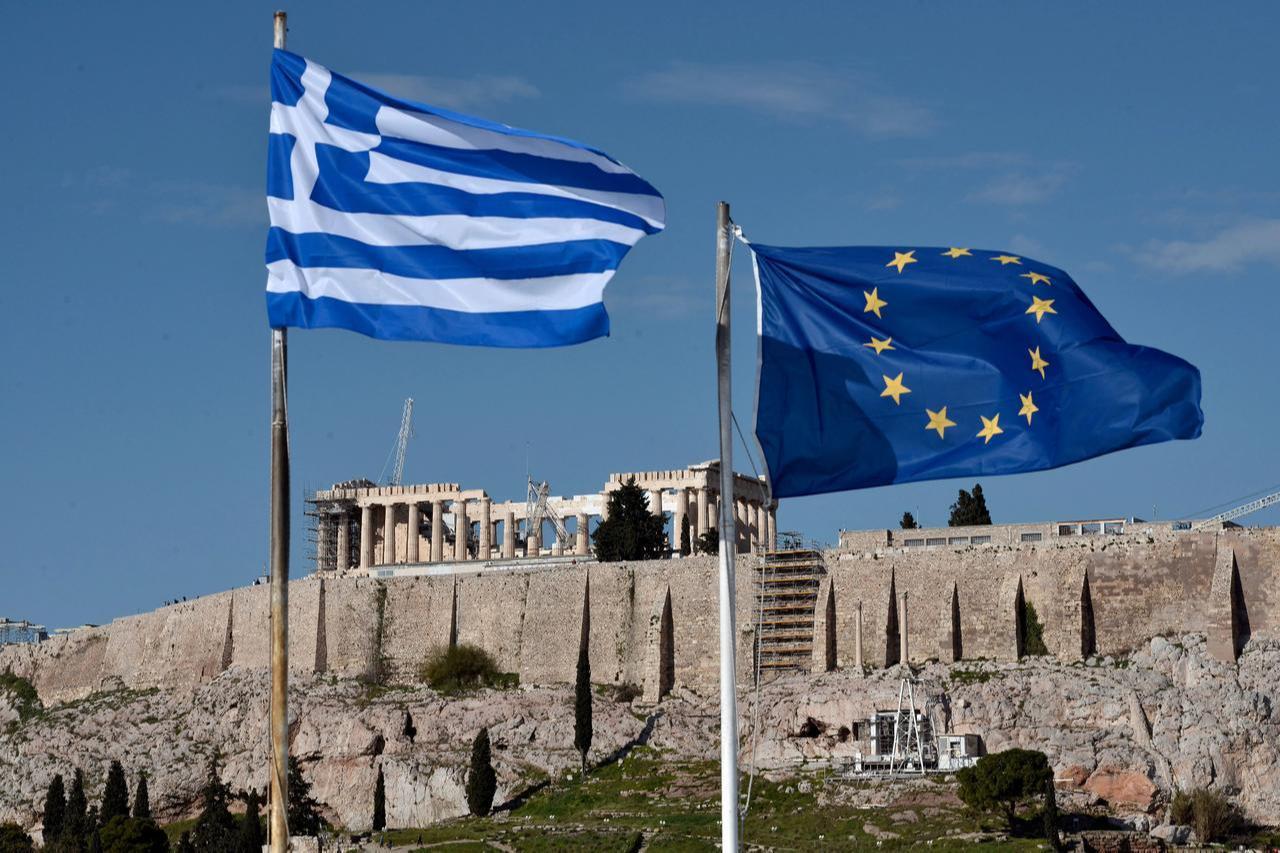
Greek outlet LiFO presents a softer interpretation.
Citing government sources, the article refers to “significant gains achieved over the past two and a half years,” including reduced airspace incidents and expanded economic ties.
The primary focus is on maintaining calm and protecting incremental progress.
The report emphasizes that Athens recognizes only one dispute suitable for potential legal adjudication: the delimitation of the continental shelf and EEZ in the Aegean and Eastern Mediterranean. Dialogue is welcomed, but within a tightly defined legal frame.
In this telling, cautious optimism is procedural rather than emotional. Stability itself is treated as an achievement, particularly in a volatile regional environment.
Finally, Greek digital platform Newsit places the summit within a longer historical cycle.
The analysis describes high-level meetings as “sometimes a restart of dialogue and at other times a mechanism for crisis management,” suggesting that the Ankara encounter fits into an established diplomatic pattern.
The report recalls past encounters in London, Istanbul, Athens, Ankara, and New York, including moments of postponement and diplomatic friction.
The narrative suggests that such meetings often function less as turning points and more as tools for managing tension.
In this broader view, the Ankara summit is neither a rupture nor a reset. It is another iteration in a relationship that oscillates between structured dialogue and controlled rivalry.
Taken together, Greek media expectations converge on a sober assessment. No major breakthrough is anticipated.
Core disputes in the Aegean and Eastern Mediterranean remain deeply entrenched. Yet neither side appears willing to allow those disagreements to escalate into open confrontation.
For Athens, the priority is to maintain stability while guarding against agenda expansion.
For Ankara, the emphasis remains on sustaining dialogue and advancing practical cooperation without conceding political ground.


 Set as preferred source
 Set as preferred source


 5 min read