Newsletters





A Chinese tanker under U.S. sanctions has crossed the Strait of Hormuz on Tuesday, becoming the first vessel known to exit the Gulf since Washington moved to enforce a naval blockade in the region.
Shipping data showed that Rich Starry, a medium-range tanker, was carrying about 250,000 barrels of methanol as it moved through the strait. Both the vessel and its owner company are under U.S. sanctions over trade linked to Iran, and the ship operates with a Chinese crew.
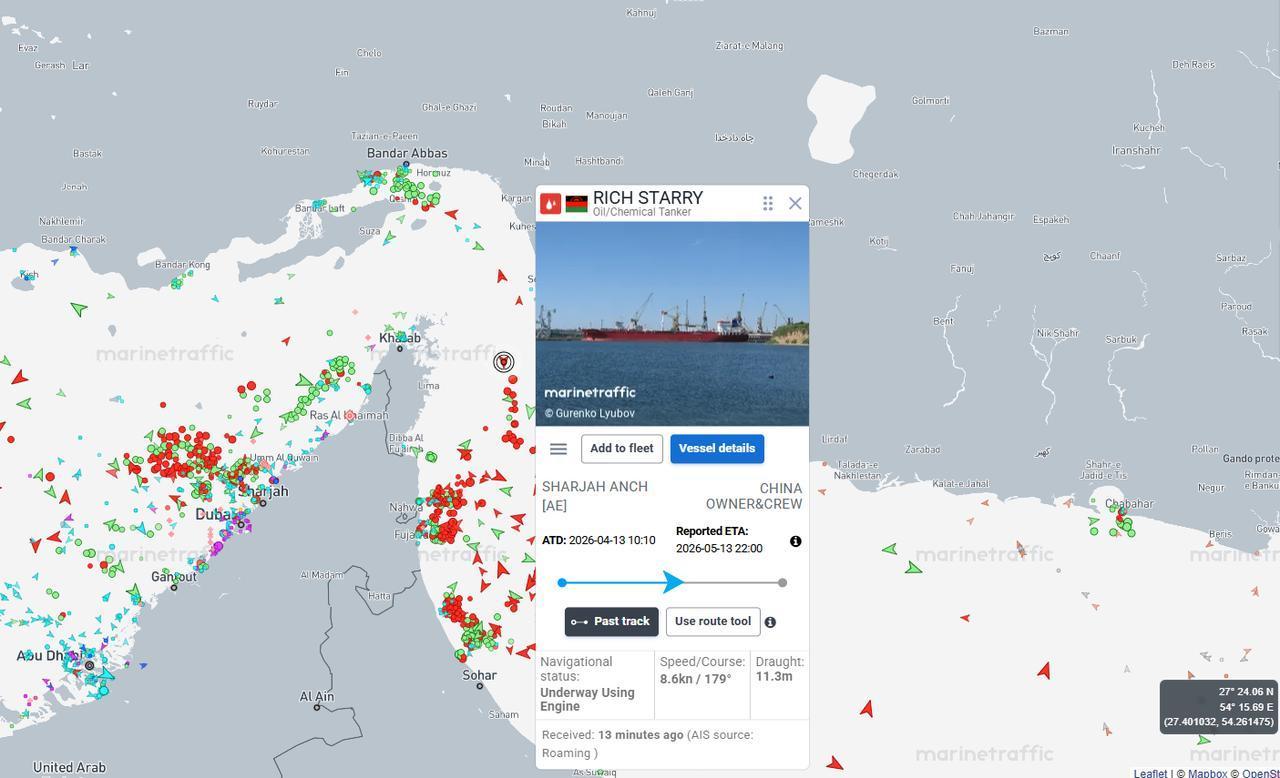

The cargo was loaded at Hamriyah port in the United Arab Emirates, according to vessel tracking data.
A second tanker, Murlikishan, also under U.S. sanctions, entered the strait on the same day. Unlike the Rich Starry, it was not carrying cargo and is expected to load fuel oil in Iraq on April 16.
The vessel, previously known as MKA, has a record of transporting both Russian and Iranian oil, Reuters suggested.
U.S. sanctions on vessels are typically imposed by the Office of Foreign Assets Control under the U.S. Department of the Treasury. They target ships involved in activities such as transporting Iranian or Russian oil in violation of restrictions.
Once sanctioned, a vessel is effectively cut off from the global financial system, meaning it cannot use U.S. banks, insurance, or dollar-based transactions. Sanctions can also extend to shipowners, operators, and insurers, making it difficult for the vessel to access ports, secure coverage, or conduct international trade.

Iran has sharply restricted access to the Strait of Hormuz since the outbreak of war with U.S.-backed Israeli forces on Feb. 28. The chokepoint handles roughly 20% of global oil flows, making any disruption immediately significant for energy markets.
Following failed negotiations in Islamabad, the United States escalated its response, rolling out a naval blockade targeting Iranian ports across the Arabian Gulf and Gulf of Oman.
U.S. Central Command indicated the measures would apply broadly, covering vessels entering or leaving Iranian ports without exception.


 Set as preferred source
 Set as preferred source


 1 min read

 1 min read