Newsletters


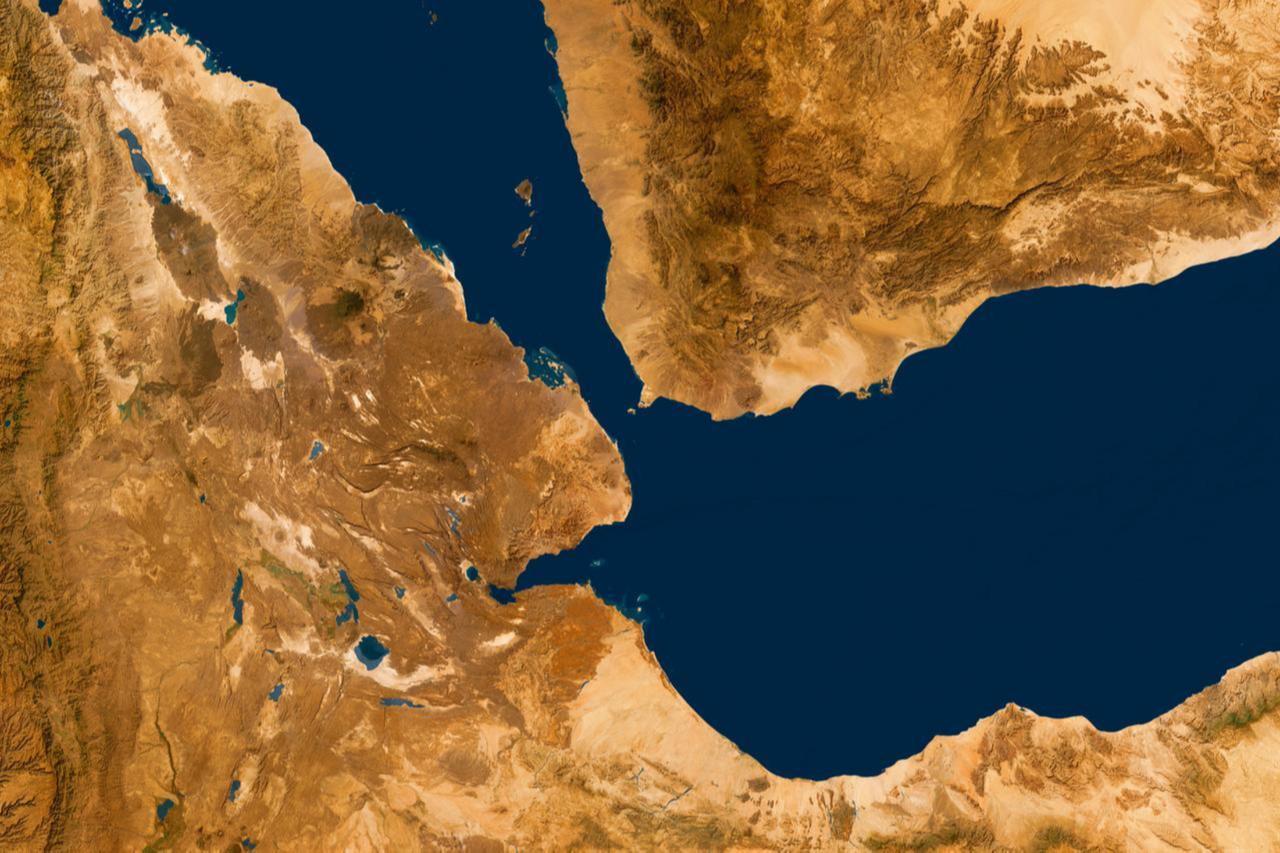


Egypt declared that it will not accept the inclusion of any party without Red Sea coastline in arrangements governing the waterway's security, as Foreign Minister Bedr Abdulati held talks in Cairo with Yemen's visiting Prime Minister and Foreign Minister Shai Muhsin al-Zindani.
The two officials co-chaired the ninth round of the Egypt-Yemen strategic dialogue in the capital, where discussions centered on security in the Red Sea and the Gulf of Aden.
Abdulati reaffirmed Egypt's support for Yemen's unity and territorial integrity and pledged continued backing for its internationally recognized government and state institutions.
Abdulati made clear that Egypt opposes any effort toward the "militarization and internationalization" of the Red Sea and the Gulf of Aden, and flatly rejects the involvement of non-littoral states in regional security arrangements.
He stressed that ensuring the safety of the strategic waterway is "exclusively the responsibility of Arab and African coastal states."
The two sides also agreed that Red Sea security should not be treated as a purely military and security matter, but must be addressed alongside its economic and development dimensions.
Abdulati called for the rapid activation of the mechanisms of the Council of Arab and African States Bordering the Red Sea and the Gulf of Aden, a body whose founding agreement was signed in 2020 by Saudi Arabia, Egypt, Jordan, Sudan, Yemen, Eritrea, Somalia, and Djibouti.
Abdulati's remarks follow a similar joint stance Egypt and Eritrea took roughly a week earlier, when both countries signaled their opposition to efforts by non-coastal actors to participate in regional security arrangements.
Egypt has also previously expressed opposition to Ethiopia's requests for access to the Red Sea and participation in regional security mechanisms. Addis Ababa, which lost its direct Red Sea coastline when Eritrea gained independence in 1993, has sought maritime access as a longstanding foreign policy goal.
The Egypt-Eritrea alignment reflects a broader pattern in which Cairo has reinforced political and military support to several Horn of Africa states while insisting that control over Red Sea access belongs solely to littoral nations.
Ethiopia's push to secure a foothold along the waterway has become a central fault line in regional geopolitics, intersecting with existing tensions between Addis Ababa and Cairo over the Grand Ethiopian Renaissance Dam on the Nile.
The Red Sea has emerged as one of the world's most contested maritime corridors in recent years. Houthi attacks on commercial shipping, launched beginning in late 2023 in connection with the war in Gaza, severely disrupted global trade routes and dealt a significant blow to Egypt's Suez Canal revenues.
The broader instability has intensified competition among regional and external powers for political, military, and commercial influence along both shores of the sea.
Against this backdrop, Egypt's insistence on a strictly littoral framework for governance is both a sovereignty argument and a strategic one, aimed at limiting the footprint of outside powers, including non-Arab states, in a region Cairo considers central to its national security.


 Set as preferred source
 Set as preferred source


 1 min read



 1 min read