Newsletters


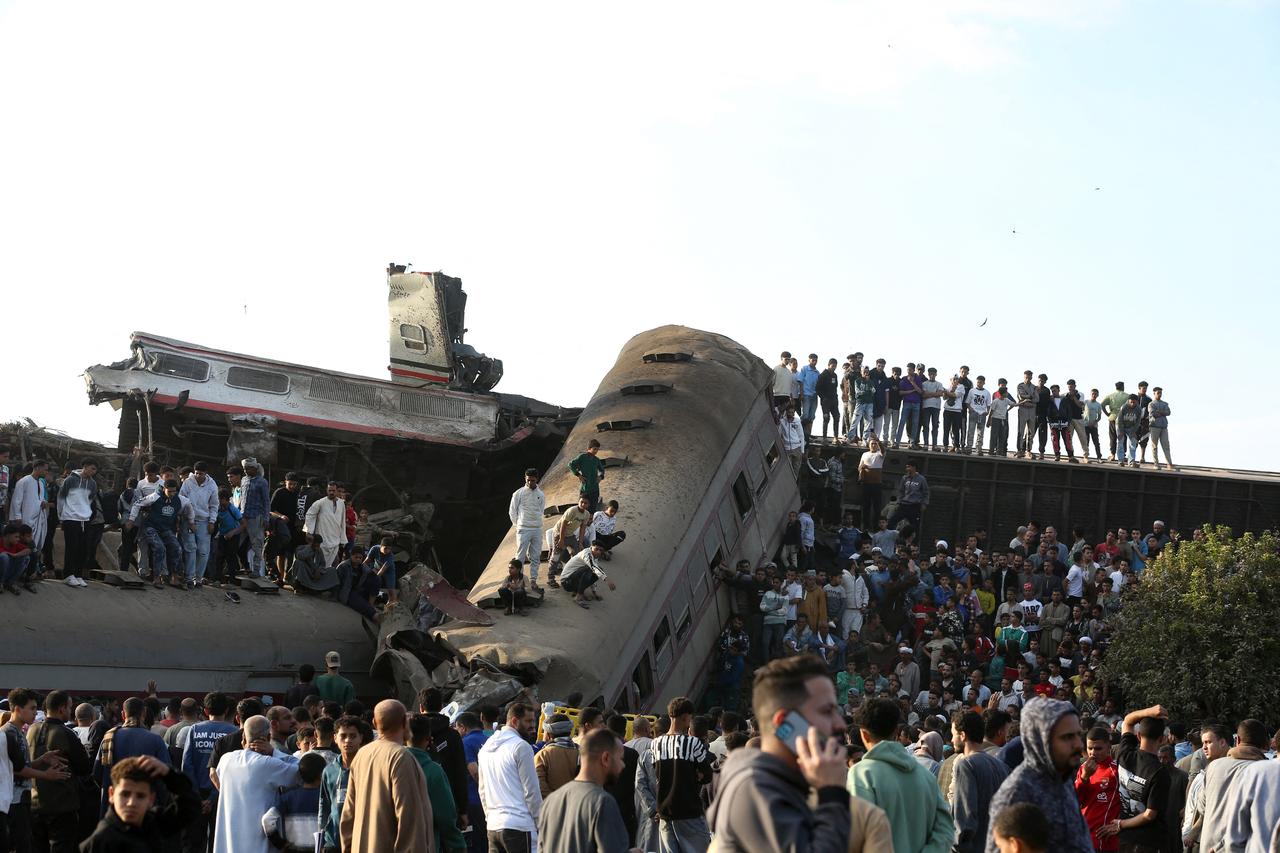


Two passenger trains collided south of the Egyptian capital on Sunday, derailing several carriages, killing seven people and injuring 112 others, authorities said.
Egypt’s railway authority said a train travelling from Giza to Fayoum crashed into the rear of another service heading south from Cairo to the city of Aswan. The crash occurred in Giza’s Al-Ayyat area. Authorities have opened an investigation into its cause.
The health ministry said the injured were being treated at hospitals around Giza. Their injuries ranged from bruises and abrasions to fractures of the limbs, pelvis and vertebrae, as well as head and facial lacerations and chest injuries. Forty-five patients had been discharged after treatment, and seven more were expected to be released later.
President Abdel Fattah al-Sisi said he was following the accident “with great concern.” He directed authorities to carry out an urgent investigation and to hold accountable anyone found to have been negligent.
Villagers, first responders and railway workers scrambled to reach passengers trapped inside overturned carriages, witnesses said.
Abdel Wahed Mohamed, 31, who was sitting at a nearby cafe, said the Aswan-bound train had stopped when the Fayoum-bound train struck it. He said the collision happened at about 1:30 p.m. and that six carriages overturned.
Ahmed Moussa, 25, said rescuers dug beneath one overturned carriage to reach trapped passengers. “There were people piled on top of each other inside,” he said, adding that he saw two women among the dead. Taha Abdel Tawab, 43, said he saw a young man leave the train carrying his dead father.
Reda Kamel Labib, a local witness, said one of the victims lived in the nearby village. He criticized rescue delays caused by inadequate transport infrastructure in the area.
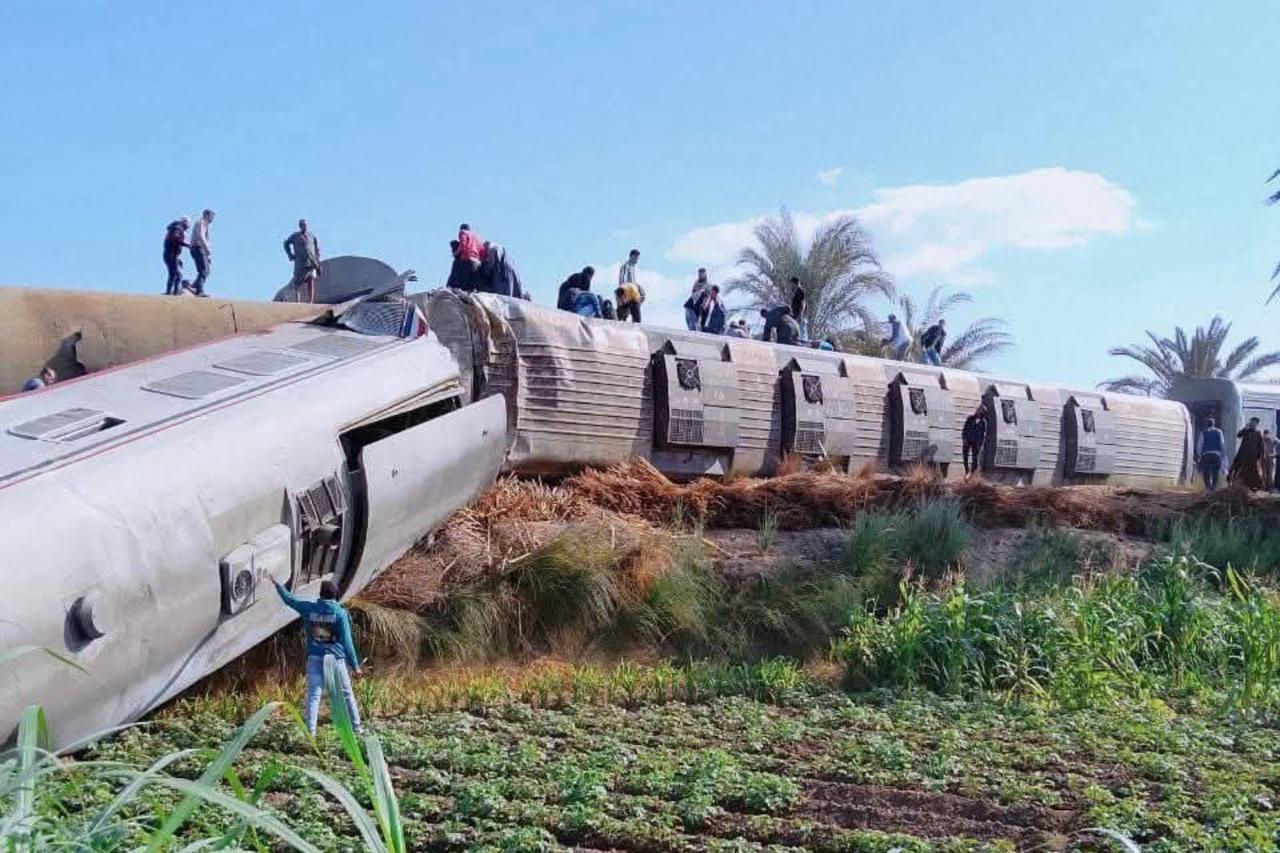
AFP journalists at the scene saw several passenger carriages strewn across the tracks and surrounding farmland. One lay on its side beside the railway embankment. Another had been torn open by the force of the impact, exposing twisted metal, shattered seats and passengers’ belongings.
Rescue workers used cranes and heavy machinery to right the overturned carriages while ambulances carried the injured to nearby hospitals. Villagers gathered around the cordoned-off wreckage as recovery operations continued into the evening. AFP images showed first responders and passersby helping lift one victim out of the wreckage in a black body bag.
Al-Ayyat was also the site of Egypt’s worst rail disaster. In 2002, more than 370 people were killed when a fire swept through a train carrying holiday travellers south of Cairo. Multiple train crashes in the same area in 2009 killed dozens.
Egypt’s 110 million people depend heavily on rail transport. The network, one of the largest in Africa, has suffered repeated deadly accidents. Egypt has spent billions of dollars over the past decade updating its transport infrastructure, including new highways and high-speed rail lines, but much of its ageing rail network has yet to be overhauled.


 Set as preferred source
 Set as preferred source


 1 min read
 1 min read