Newsletters


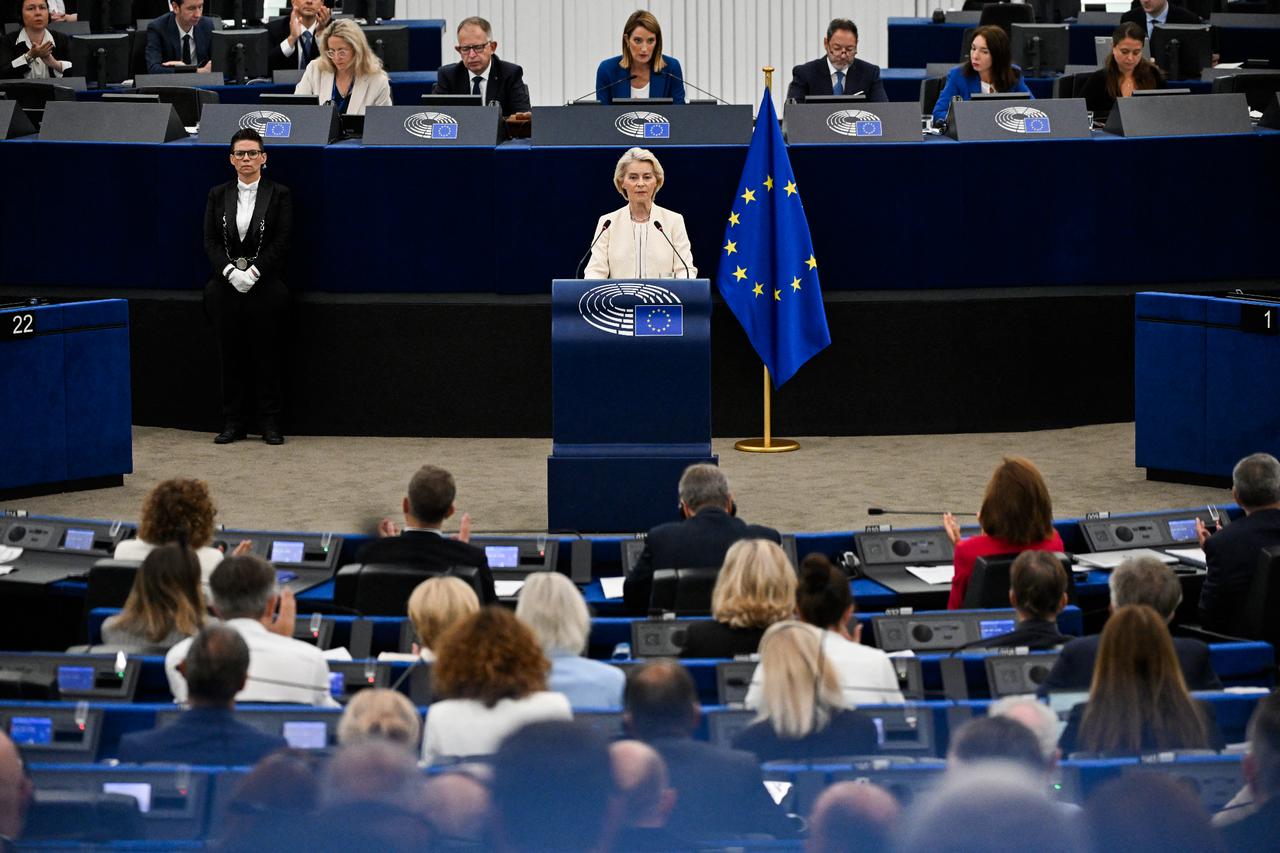


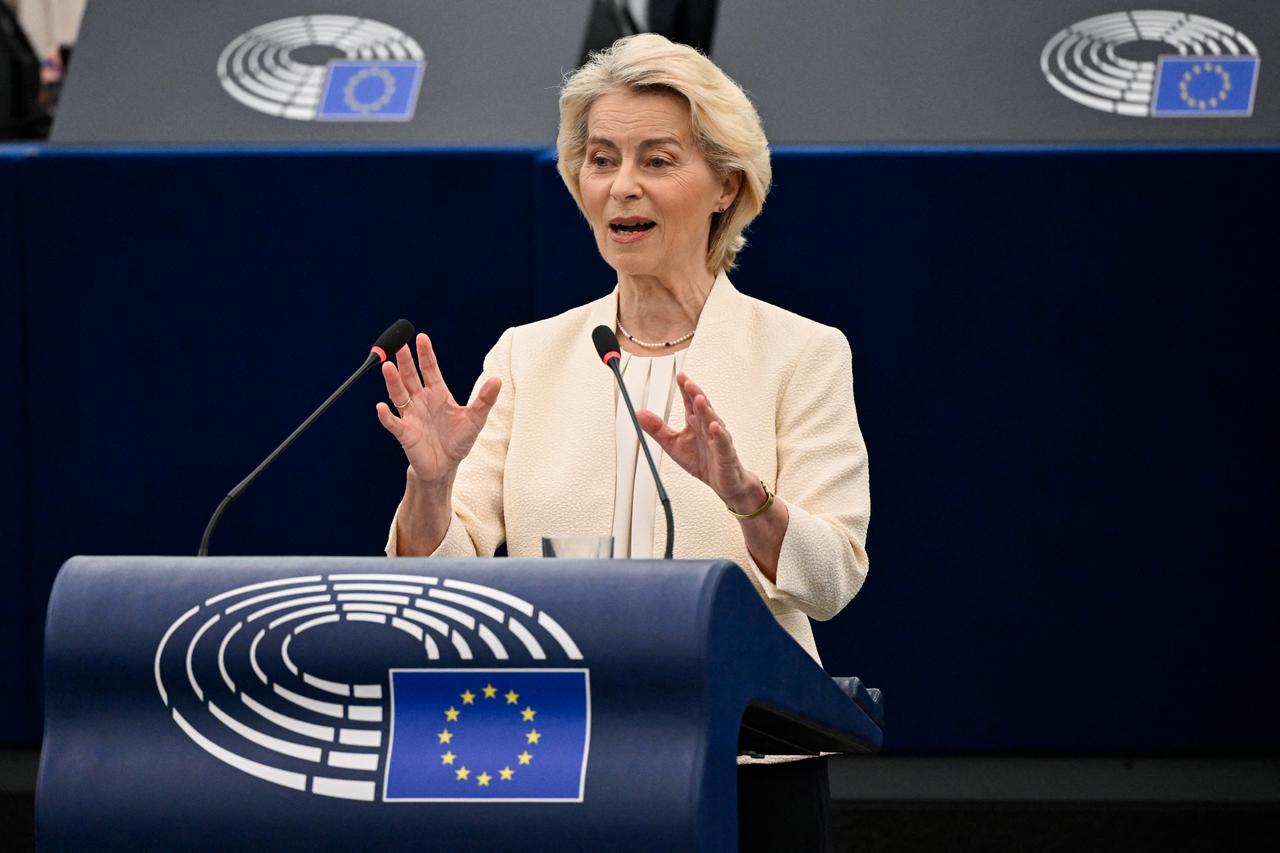
European Commission President Ursula von der Leyen on Wednesday proposed creating a “European Security Council” involving partners including the United Kingdom, Ukraine, Canada and Norway, while also outlining new EU plans on security, migration and Israel during her annual State of the Union address.
Von der Leyen said Europe needed a leaders’ format focused on continental security amid what the EU describes as Russian “hybrid attacks,” continued support for Ukraine and uncertainty over the U.S. role in NATO.
“For a long time, we have discussed a leaders' format focused on the security of our continent, with partners like Canada, Norway, Ukraine, the United Kingdom and others involved,” she said.
“This is even more urgent now, given the nature and scale of the risks at play.”
She gave no details on how the proposed council would operate or what powers it might have. Similar ideas have previously been promoted by French President Emmanuel Macron.
EU Defense Commissioner Andrius Kubilius said details of a new defense architecture would be set out in an upcoming security strategy. Norway welcomed EU initiatives to include it in security discussions.
Von der Leyen also proposed an EU “emergency security protocol” allowing member states to request urgent consultations in a crisis, similar to NATO’s Article 4.
She said Europe also needed a “counter-hybrid playbook” for incidents that fall below armed aggression but threaten national security.
Von der Leyen pledged the EU’s “strongest-ever support” for Ukraine through the coming winter, including humanitarian aid, power and heating supplies, and backed plans to jointly develop an affordable modular missile-defense system with Kyiv.
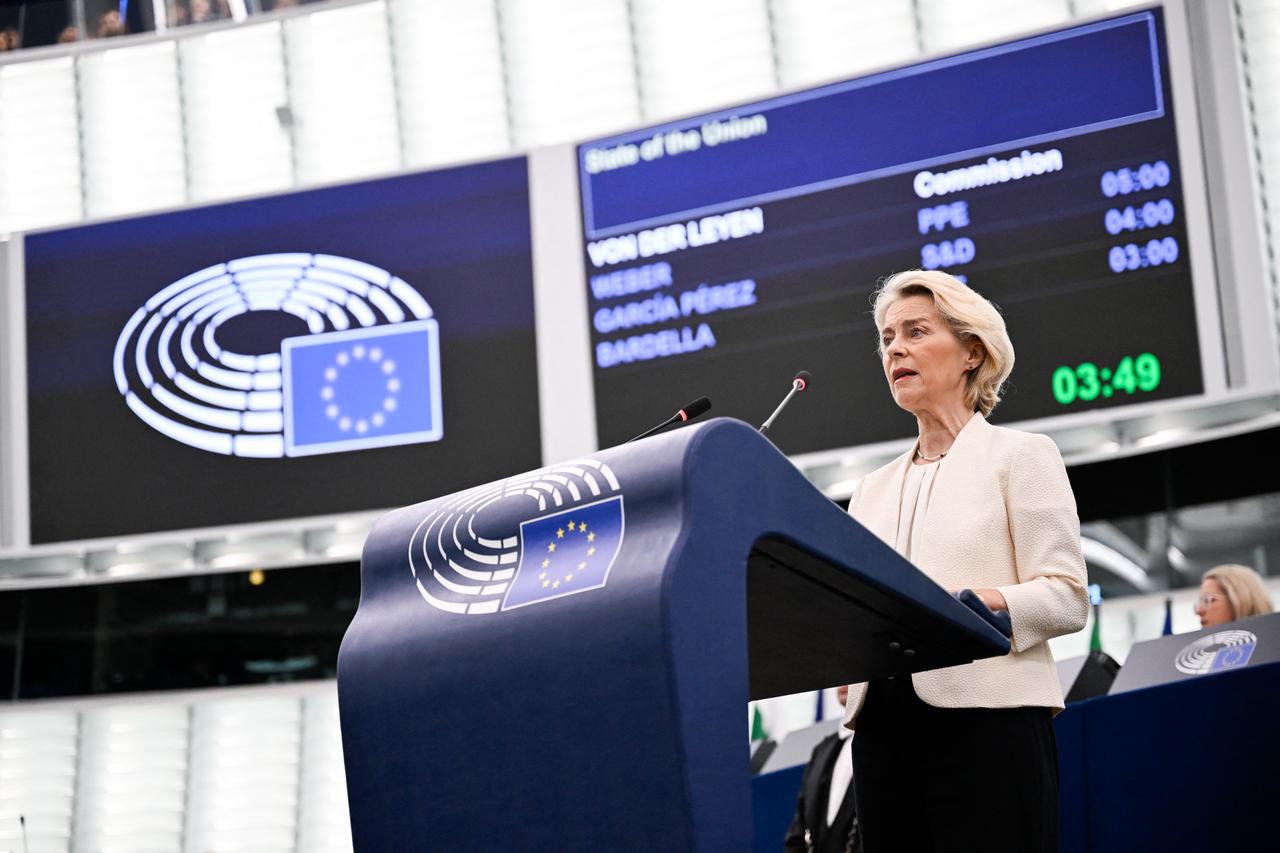

Von der Leyen also announced a European Emergency Response Framework for sudden mass migration movements, citing the deadly rush into Ceuta from Morocco in July.
She said irregular arrivals had fallen 55% over the past two years but that the Ceuta crisis showed additional emergency tools were needed.
The mechanism would operate under “strictly defined” criteria and allow temporary flexibility in standard procedures.
More than 70,000 migrants crossed into Ceuta on July 30 and 31, with scores killed, mostly by drowning. Most returned to Morocco within hours, while several thousand remained.
Von der Leyen pledged to strengthen Frontex, speed up deportations and improve early-warning systems with third countries.
Von der Leyen also defended the EU’s response to Israel, saying divisions among member states had prevented the bloc from securing the majority needed for stronger joint action.
She cited the “profound suffering in Gaza” and “unchecked settler violence” in the West Bank and called Israel’s decision to advance the E1 settlement project “unacceptable.”
“When Europe is divided, it cannot change the course of events,” she said, adding that keeping the two-state solution alive remained a European responsibility.
The Commission has faced criticism over the EU’s failure to suspend the EU-Israel Association Agreement, sanction Israeli officials or adopt an EU-wide ban on trade with illegal settlements.
Eight member states have instead chosen to act individually on settlement trade.


 Set as preferred source
 Set as preferred source


 1 min read
 1 min read