Newsletters


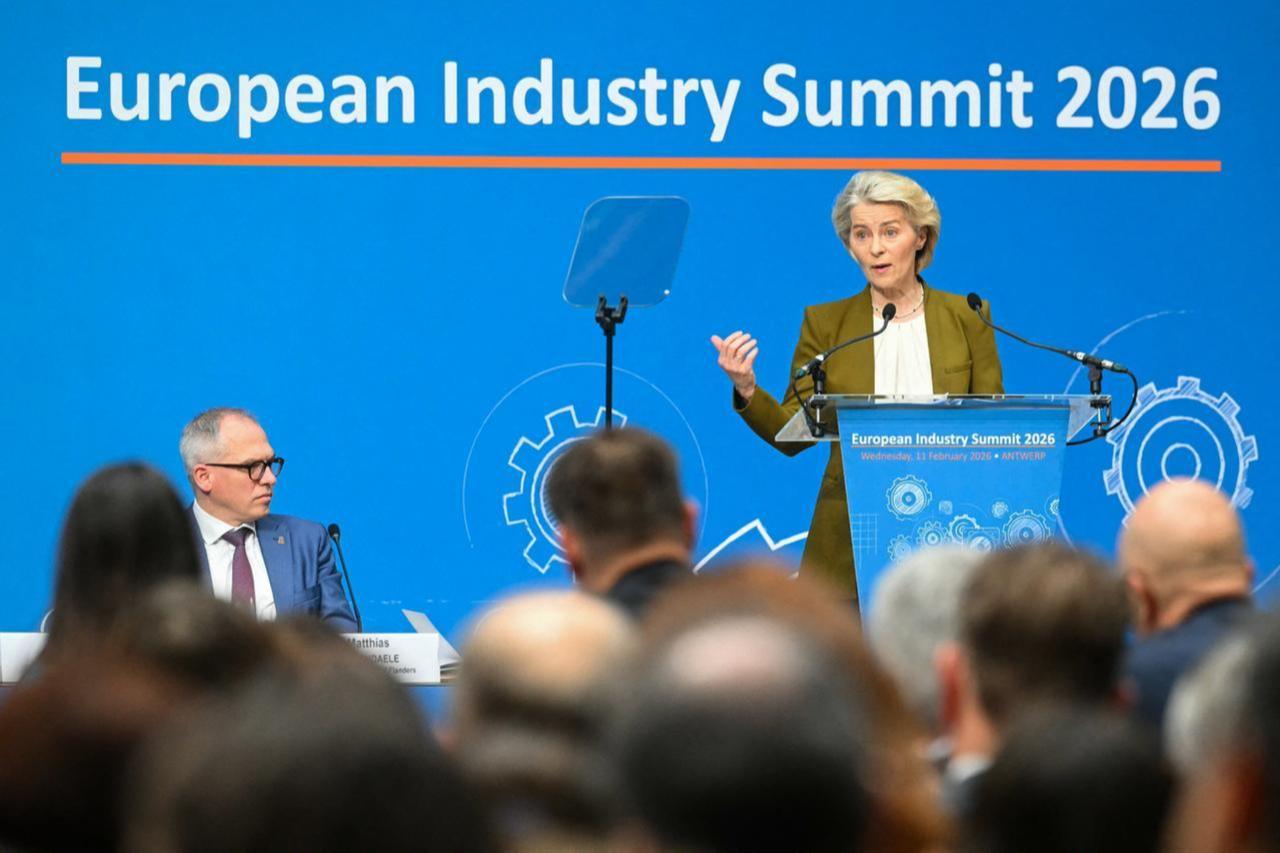


European Union leaders have endorsed an ambitious blueprint to deepen the bloc's single market under the banner "One Europe, One Market," setting a target of full implementation by the end of 2027 as the bloc seeks to close a widening competitiveness gap with the United States and China.
The agreement, reached at an informal retreat in Alden Biesen, Belgium, on Thursday, sets the stage for a detailed roadmap to be presented at the March EU Council summit, with European Commission President Ursula von der Leyen pledging clear timelines, targets and delivery deadlines.
"We want to be there at the end of 2027," von der Leyen said.
The single market, established in 1993 to allow the free movement of goods, services, capital and people across member states, has long been considered one of the EU's greatest achievements, but businesses continue to face fragmented regulations and administrative barriers that raise costs and discourage cross-border expansion.

At the heart of the plan is the creation of a voluntary legal framework known as the "28th regime," or "EU Inc," which would allow companies to incorporate digitally within 48 hours and operate across all 27 member states under one unified set of corporate rules.
European Council President Antonio Costa emphasized that the regime should be enacted as a regulation rather than a directive, a distinction that would make it directly applicable across the bloc and prevent member states from introducing divergent national interpretations during transposition.
The concept of a 28th regime has circulated in European policy circles for years. It would exist alongside, rather than replace, existing national legal frameworks, giving businesses the option to choose a pan-European structure without requiring harmonization of domestic laws.
Leaders also backed an acceleration of the EU's simplification agenda. Von der Leyen said 10 omnibus packages aimed at cutting administrative burdens are already underway, estimating the effort could save European companies 15 billion euros ($17 billion) a year.
The summit produced broad agreement that the bloc must channel significantly more investment into its economy to remain competitive. Leaders voiced strong support for fast-tracking the Savings and Investment Union, an initiative designed to deepen and integrate the EU's fragmented capital markets, with von der Leyen saying the first phase should be completed by June. She added that enhanced cooperation among willing member states remains an option if progress stalls.
The leaders also discussed revising EU merger guidelines to enable the emergence of so-called European champions, large-scale firms capable of competing globally in strategic industries. A draft of the revised guidelines is expected in April. Sectors singled out as priorities include defense, space, clean technology, quantum computing, artificial intelligence, telecommunications and payment systems.
The Commission additionally plans to introduce an Industrial Accelerator Act that would include a targeted "European preference" mechanism in selected sectors, a step that could mark a notable shift toward more interventionist industrial policy.
On energy, a persistent sore point as European electricity prices remain well above those of major competitors, leaders reaffirmed their commitment to the green transition as the long-term path to lower costs and greater strategic autonomy. They simultaneously called for pragmatic short-term measures to address high prices that continue to weigh on industry.
Costa struck a confident tone as the retreat concluded. "Let me be clear: in 2026, Europe will deliver," he said. "We did on defence last year, we will on competitiveness this year."


 Set as preferred source
 Set as preferred source


 1 min read

 1 min read