Newsletters





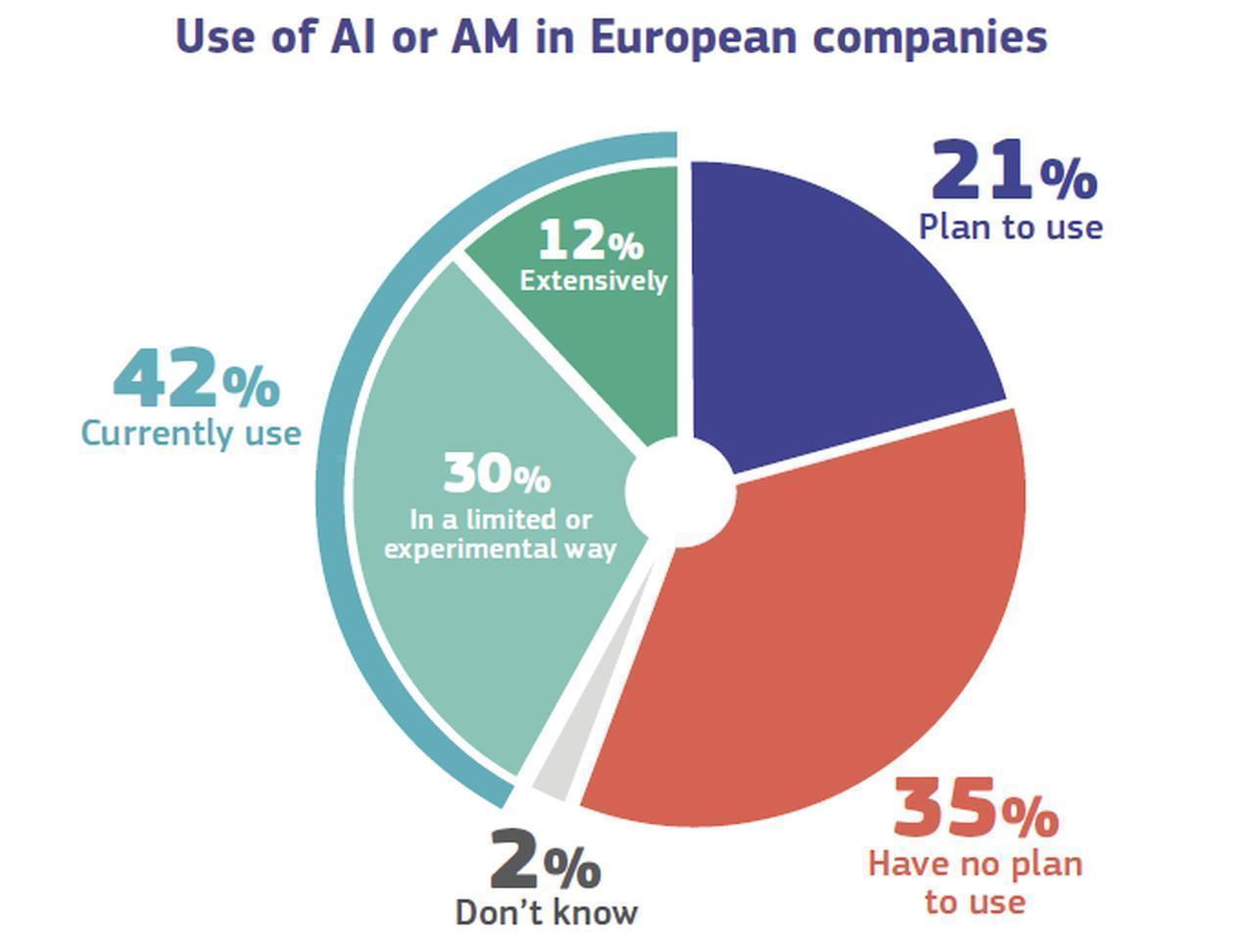
More and more European companies are using artificial intelligence (AI) and algorithmic management systems, with 42% of small and medium-sized enterprises and mid-cap companies surveyed already adopting the technologies, according to a Eurobarometer survey published on Wednesday.
The survey found that a further 21% of the companies plan to introduce AI and algorithmic management systems in the future, although most current applications remain limited or experimental.

AI and algorithmic management are primarily used in customer service and client relations, with 47% of surveyed companies reporting applications in this area.
Monitoring employee performance and productivity ranked as the second most common use, at 36%, followed by logistics, planning and staff scheduling at 30%.
Meanwhile, 61% of the companies said AI helps them make decisions, while 75% believe the technologies will improve job quality.
Despite the growing adoption of AI, human oversight remains widespread, with 90% of companies saying people make the final decisions.
Only 2% reported fully automated decision-making processes.
The survey also identified several obstacles to wider adoption, including high investment costs (50%), legal uncertainty (49%), and a lack of expertise (48%).
Nearly half of the surveyed companies (49%) said they do not trust AI or automated systems to make decisions concerning workforce and staff matters.
Debate over AI risks intensified after former Anthropic researcher Jacob Coxon resigned and posted on X. He said both OpenAI and Anthropic are “racing straight to self-improving superintelligence and gambling with our lives.”
Coxon also warned that AI systems will soon become superhuman, able to hack anything, transform any field overnight, and gain real power and resources.
He said the people building the technology earnestly believe it could kill everyone by the end of the decade, adding, “This is not a marketing stunt.” His post drew more than 100 million views within 24 hours, according to reports.
Leaders of the two most capable AI labs have urged the industry to slow down.
Anthropic CEO Dario Amodei called on firms and governments to “pace the frontier” in an essay published Sept. 12, 2026, while OpenAI has shelved GPT-6.1 Astra over safety concerns and, a day later, released the cheaper GPT-6.1 Sol. Yet doubts persist over whether those calls are genuine and enforceable.


 Set as preferred source
 Set as preferred source


 1 min read

 1 min read