Newsletters


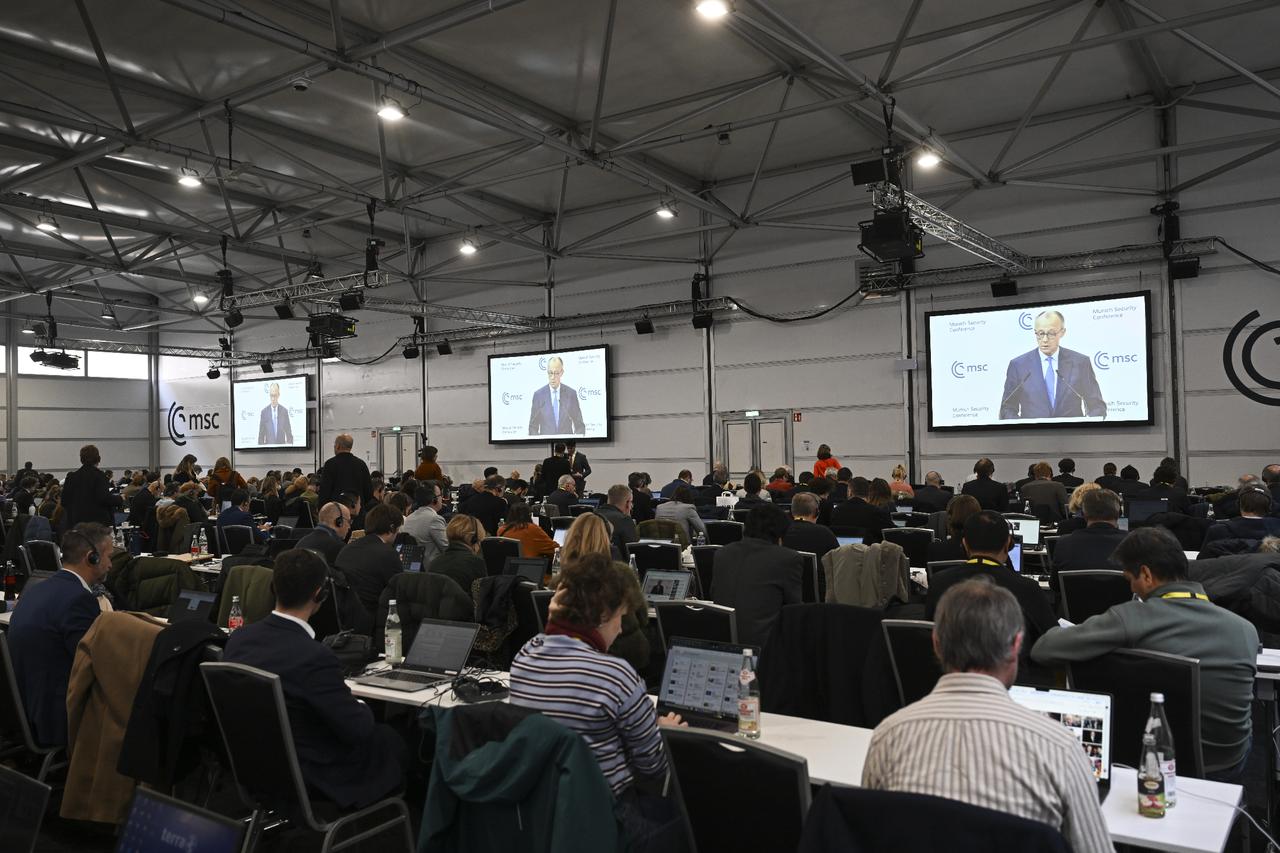


European Union High Representative for Foreign Affairs and Security Policy Kaja Kallas said on Friday the biggest shortcoming in the current world order is the lack of accountability.
Speaking at a panel titled “At Breaking Point: International Order Between Reform and Rupture” during the 62nd Munich Security Conference, Kallas questioned whether the old world order had truly collapsed, arguing that it was necessary first to examine why it had been built.
She stressed that the fundamental aim of the existing order was to prevent wars. “When we look at it now, we see the exact opposite. There are many wars,” she said.
Kallas noted that in the past, international crises had often led to advances in international law. “Now we need to look to the future and decide what kind of new world we want to build. The biggest deficiency in the current world order is accountability,” she said.
She underlined that while the principles of the United Nations Charter are strong, accountability mechanisms fail when those principles are violated.
“The UN does not reflect the current world,” she said, adding that this could also present an opportunity, as many countries still want a rules-based order.

Addressing why the EU is not part of the “Peace Council,” Kallas said it was not fully aligned with the relevant UN Security Council resolution, did not directly refer to Gaza and lacked a time limitation.
Kallas said the EU welcomes the U.S. desire to reform the global order, stressing that equality among states is essential in a multilateral system. “When reforms are made, it must be taken into account that all states are equal and that no one is above the law,” she said.
She emphasized that agreed international rules must carry consequences when violated, including for the most powerful countries.
Asked who should ensure accountability regarding Israel’s repeated violations of the ceasefire, Kallas said: “No one is above the law. If agreed international rules are violated, whoever it may be must be held accountable.”
Responding to comments by U.S. Permanent Representative to the UN Mike Waltz accusing Europe of inaction due to long-standing low defense spending, Kallas rejected the claim.
“I do not agree with the argument that we are doing nothing. If you look at development aid, you will see that Europe has the largest share,” she said.
Kallas argued that what distinguishes the U.S. from other superpowers is its allies. “When America goes to war, we go too and our people die. So to be a superpower, you need us,” she said.
She added that Europe is ready to fight for a rules-based order, noting that smaller countries in Europe need such a system.


 Set as preferred source
 Set as preferred source


 1 min read
 1 min read