Newsletters


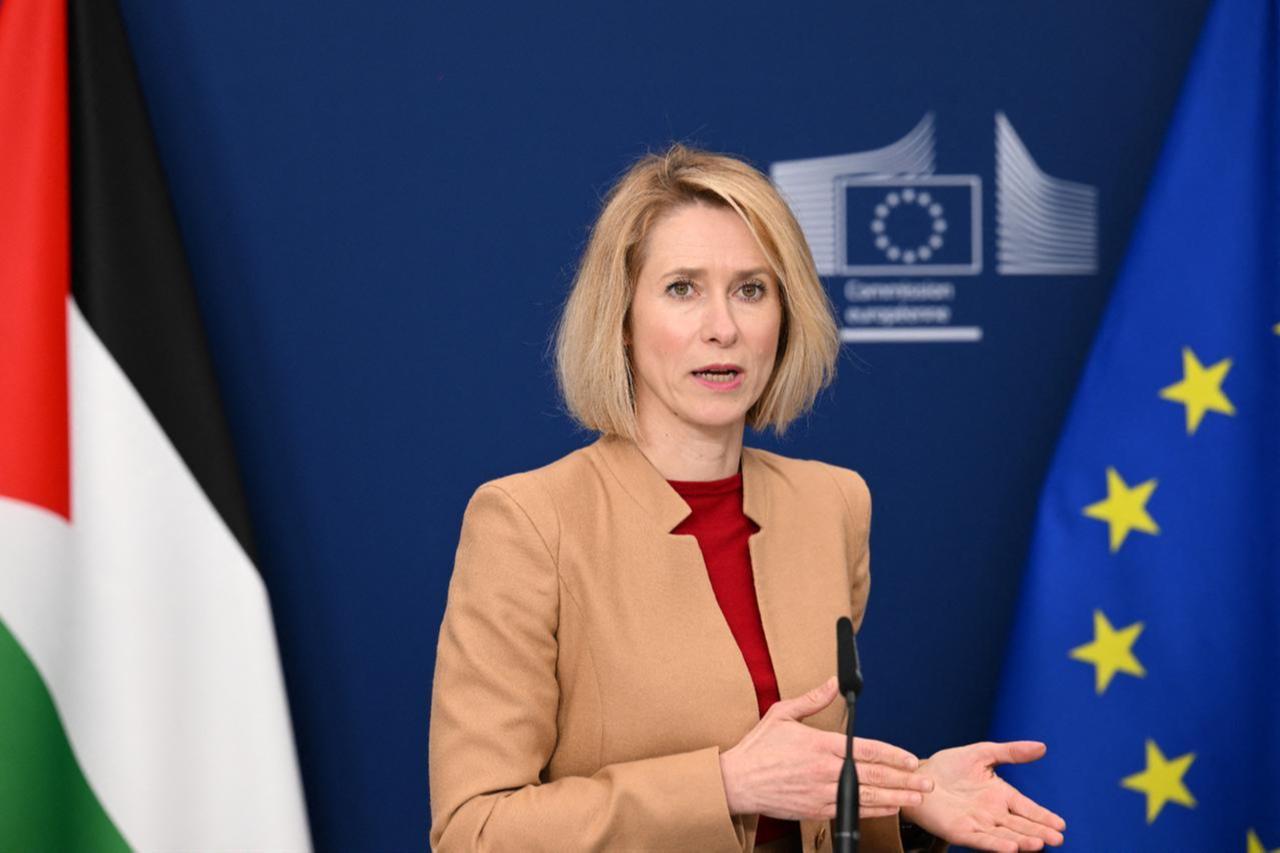


European Union foreign policy chief Kaja Kallas said she does not support creating a separate European army, arguing that EU member states already have national militaries and that parallel command structures could create confusion.
Kallas spoke at a news conference held during an informal meeting of EU defense ministers in the Greek Cypriot administration, which currently holds the bloc’s rotating presidency.
She said defense generally remains a national responsibility, while the EU is working to encourage member states to cooperate more closely.
“If member states are strong, then the European pillar within NATO is also strong,” Kallas said.


Kallas said each EU member state already maintains its own armed forces and noted that 23 EU countries are also members of NATO.
“Now, as to why I do not support an additional army, every member state already has an army,” she said.
“If you assign that army to NATO, and 23 member states are also NATO members, then you cannot use that army elsewhere.”
Kallas said member states could not create a parallel force alongside their existing national militaries and NATO commitments.
“You also cannot create a parallel, second army alongside it,” she said. “Therefore, it is very important not to create structures that could cause confusion.”
Her remarks emphasized strengthening cooperation among existing national forces rather than forming a separate military structure at the European level.
Kallas also referred to Article 42.7 of the Treaty on European Union, which requires member states to provide assistance if another member is the victim of armed aggression.
She said the provision is not equivalent to NATO’s Article 5 collective defense clause.
Kallas said EU officials were examining how Article 42.7 could be made operational when a member state requires assistance.
She added that the EU already has several tools available at the bloc level.
Those include crisis response teams dealing with hybrid attacks, Kallas said.


 Set as preferred source
 Set as preferred source


 1 min read

 1 min read