Newsletters




There’s a duality I carry that’s hard to explain to anyone who hasn’t lived through war. I was born in Bosnia and Herzegovina and became a refugee at 5, leaving Sarajevo on the last train out before Bosnian Serb forces sealed the city into what would become the longest siege in modern European history. My life was shaken to the core, but I still consider myself lucky. Thousands of my peers were killed by snipers, lost their families or siblings, torn apart by shells targeting schools, markets, and playgrounds.
In that war against my people, the United States was the ultimate guarantor, and until today it's seen as one of Bosnia’s main allies. Under President Bill Clinton, Washington pushed, pressured, and negotiated until a peace deal was forced into existence, one signed only months after the Srebrenica genocide, where 8,372 Bosnian Muslim men and boys were slaughtered in days. Dayton wasn’t perfect but it did stop the war. Its constitutional design froze Bosnia into entities and institutional paralysis that still haunt the country three decades later. But in the 1990s, U.S. leadership was slow but unmistakable: it was a stabilizing force determined not just to stop atrocities, but to prevent them from happening again.
Today, as I watch the U.S. navigate ceasefire talks between Ukraine and Russia, it is impossible to ignore how profoundly that role has changed. The latest U.S.-backed proposals, from a 30-day ceasefire to quiet acceptance of Russian control over occupied Ukrainian territory, look less like assertive peacemaking and more like crisis management designed to freeze the conflict rather than solve it.
Under Clinton, the U.S. wasn’t just a mediator in Bosnia; it was an enforcer. Diplomacy was paired with military pressure, broad allied coordination, and a readiness to deploy NATO troops to implement peace. Washington oversaw reconstruction, refugee return, war-crimes prosecution, and institution-building. It owned the process from negotiation to implementation.
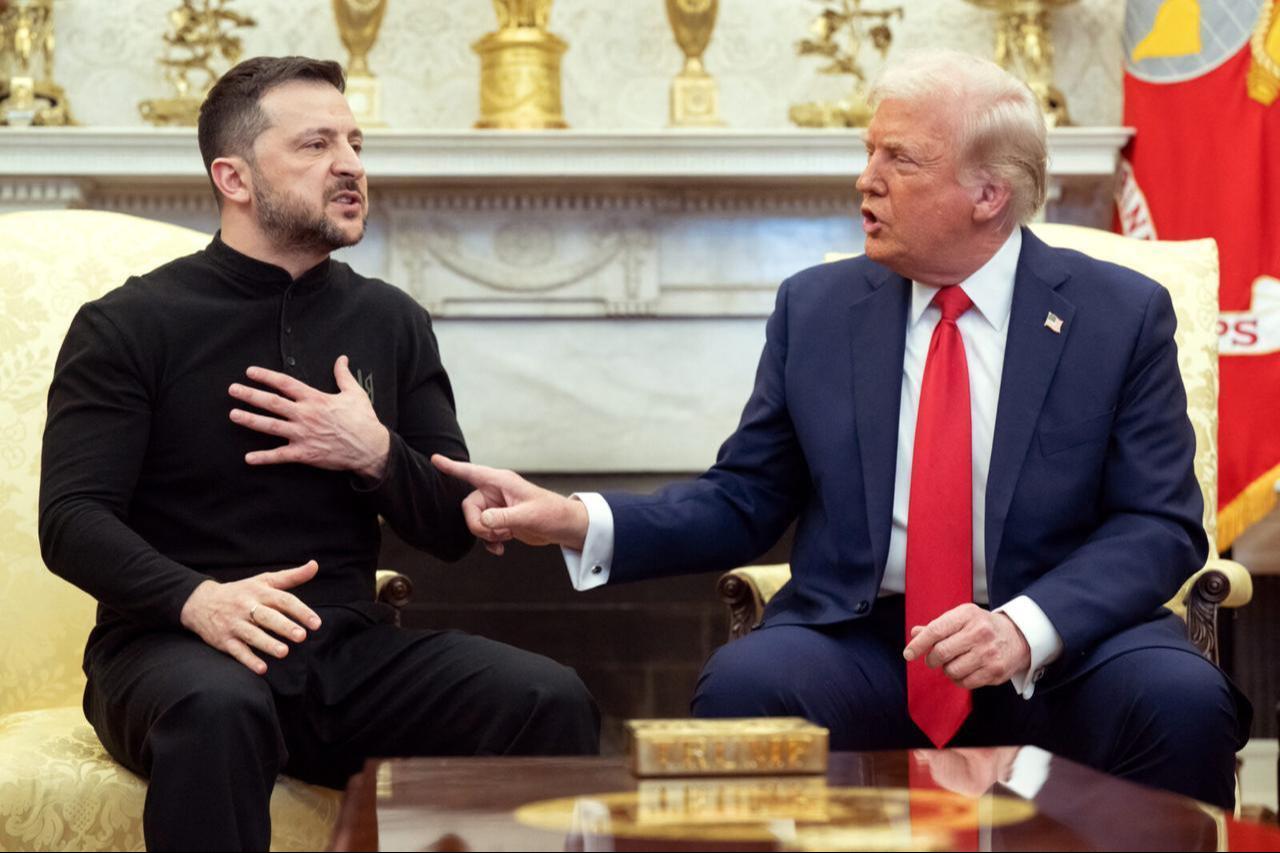

Under Donald Trump, the U.S. posture is fundamentally different. In the Balkans, many describe his approach to the region and Ukraine as “transactional”.
Washington has recast itself as a broker of high-stakes deals while stepping back from the responsibilities that once defined American peacemaking. Earlier this year, the administration said bluntly that the U.S. would “no longer act as mediator,” instructing Kyiv and Moscow to define the terms themselves, even as U.S. proposals signaled openness to territorial concessions at Ukraine’s expense. It’s a transactional approach, one that prioritizes speed over substance and optics over enforcement. Time will tell how this approach will impact the continent’s stability.
This isn’t just a change in tactics. It reflects a deeper shift in America’s global posture. Where the Clinton administration saw European stability as a core U.S. interest worth military and institutional investment, today’s Washington is leaning into negotiated trade-offs and geopolitical bargain-making. The emerging Ukraine plans, which float security restrictions on Kyiv and potential recognition of Russian gains, bear little resemblance to the comprehensive, enforcement-backed peace Dayton represented. The U.S., once the guarantor of lasting peace, risks becoming a broker of expedient compromise.
To understand why both Ukraine and the Balkans remain Europe’s most fragile frontiers, you have to look beyond battle maps and political rhetoric, to the communist legacies that shaped them. Both regions emerged from collapsing ideological empires, the Soviet Union and Yugoslavia, inheriting weak institutions, divided societies, and unresolved territorial questions. The end of communism unleashed grievances long contained by the authoritarian order, creating openings that Russia never hesitated to exploit.
Moscow’s strategy hasn’t changed in three decades. In Ukraine, Russia seeks strategic depth, leverage over NATO, industrial assets, and a permanent veto over Kyiv’s future. In the Western Balkans, it plays the same game: destabilise, divide, distract. Bosnia’s fractured constitutional system is vulnerable to manipulation. Serbia is kept in perpetual hedging mode. Montenegro and Kosovo face continuous pressure. Hybrid warfare, cyber, political, energy, have replaced tanks, but the logic is identical.
As long as the post-communist space remains unsettled, Russia remains indispensable.
Meanwhile, when it comes to Ukraine, the U.S.-led peace negotiations are stuck between Russia’s demands for territorial recognition and Ukraine’s refusal to legitimize occupation. As the U.S. attention is fractured by domestic politics, by Middle East crises, Ukraine is turning even more sharply toward Europe, but the EU is not united over Ukraine, and this can be costly.
Some member states push for maximum sanctions on Russia and robust military assistance to defend Kyiv’s territorial integrity, arguing that any compromise would reward aggression and set a dangerous precedent. Others, wary of economic blowback, energy dependency, and rising domestic unrest, advocate for negotiation and cautious engagement, even if it means tolerating territorial concessions. The EU’s inability to present a united front echoes the hesitations seen in the Balkans decades ago, a reminder that fragmented commitment can embolden aggressors and prolong conflict. Ukraine needs the U.S. and the lesson of Dayton, that peace requires guarantees, enforcement, and long-term political architecture, and that still hasn’t been fully absorbed.
Despite all its flaws, Dayton achieved something extraordinary: it kept Bosnia intact as a sovereign state. It ensured that, no matter how much pressure or meddling came from external powers, the territorial integrity of Bosnia could not be erased. That is the legacy worth defending, the idea that sovereignty matters, that borders cannot simply be bargained away, and that a nation’s existence is not up for negotiation.
If the United States truly wants to uphold the principles that once made it a guarantor of peace, it must ensure the same for Ukraine. Allowing territorial concessions under the guise of expedience would be a betrayal of the very lesson Dayton offers. Under a transactional approach like Trump’s, speed and optics are prioritized over substance and enforcement, putting Ukraine at risk of losing what Bosnia was fortunate enough to keep: the simple, unassailable right to exist as a sovereign nation. Dayton proved that with American leadership, even the most fractured societies can survive. Ukraine deserves nothing less.


 Set as preferred source
 Set as preferred source


 2 min read

 1 min read