Newsletters


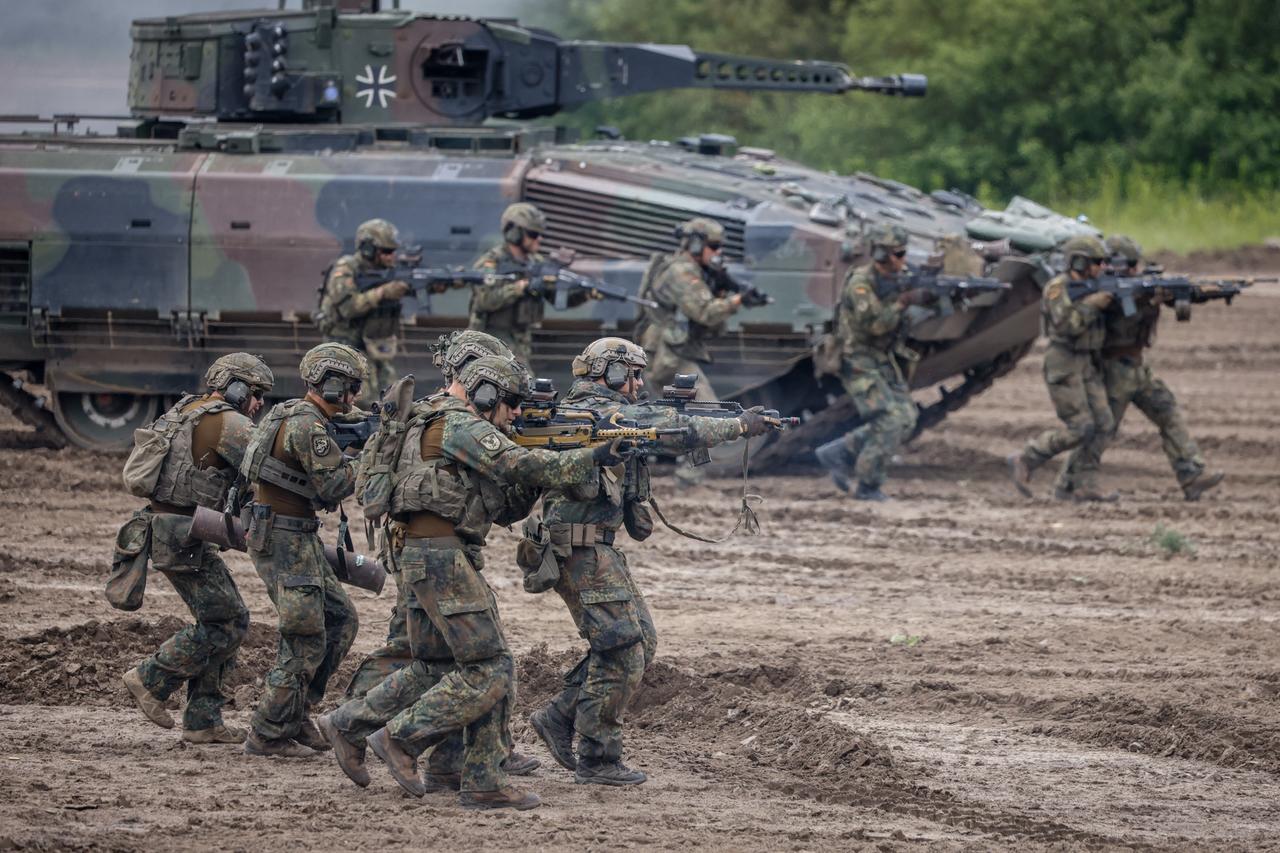


Germany will have to decide by July 2027 at the latest whether to reintroduce compulsory military service, after its voluntary recruitment drive produced only 530 new recruits despite contacting around 300,000 young people, a senior German lawmaker told Agence France-Presse (AFP).
Facing a growing threat from Russia and an unpredictable United States, Berlin is seeking to overhaul its armed forces and has committed to increasing troop strength to at least 260,000 soldiers, up from the current 185,000, by 2035.
The government introduced a new voluntary military service model in November, along with compulsory registration for 18-year-old men.
"If Germany cannot reach its targets through the voluntary system, we will have to return to conscription," said conservative MP Thomas Roewekamp, chairman of the German parliament's defense committee.
"We must take that decision by July 31 of next year," he added.
Germany's plans call for strengthening the Bundeswehr from roughly 185,000 active-duty troops to 260,000 by 2030, while roughly quadrupling the reserves to 200,000.
The Bundeswehr shrank dramatically after the Cold War as European countries cut defense budgets. In the 1980s, West Germany alone fielded a military of nearly 500,000 troops.
Roewekamp said the coming months will require a fundamental reckoning over whether voluntary recruitment can meet Germany's ambitious targets.
"In the first half of next year... we will need to have a very fundamental discussion about whether we can achieve the very ambitious growth requirements for active forces and reservists on a voluntary basis," he said.
"I still have serious doubts that we can," Roewekamp added.
He clarified that any reinstated conscription would not apply to all men turning 18 in a given year, an estimated 350,000 people.
Instead, the army would recruit only as many new soldiers as needed to meet annual targets.
"My great concern is the growth in the number of career and contracted soldiers — because they are the ones who fly the fighter jets, navigate the ships, operate the tanks and man the Patriot air defense systems," Roewekamp said.
Germany has seen several large demonstrations against compulsory military service in recent months.
Roewekamp said he could "understand that there is uncertainty on this issue," attributing it in part to a long silence on defense matters since conscription was suspended in 2011.
"We have not discussed questions of war and peace and the need for defense with the younger generation at all," he said, adding, "That is why I strongly advocate that we talk with this generation, not just about them."
He repeated a warning often cited by Berlin that Russia could be ready to attack a NATO country by 2029.
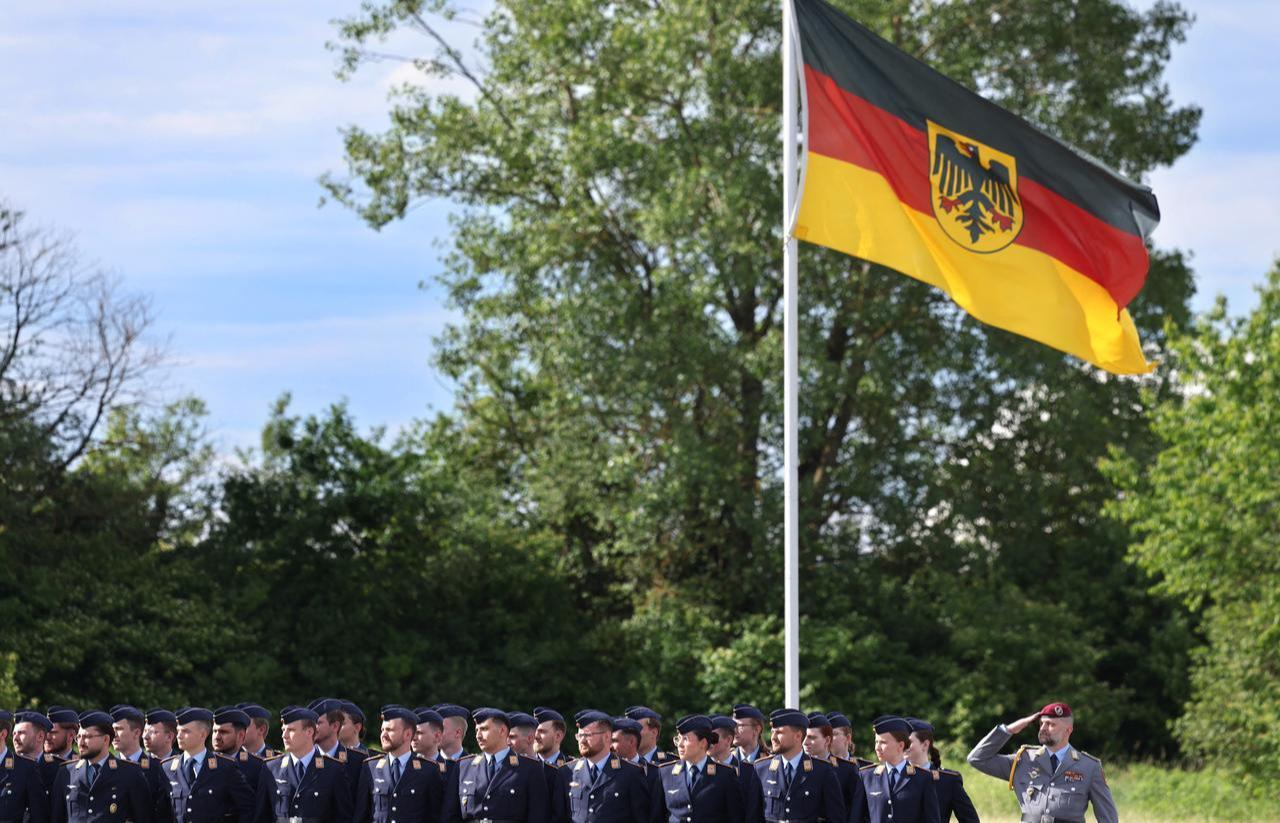

According to Roewekamp, Russian President Vladimir Putin has set his sights not only on Ukraine but on liberal Western democracy as a whole.
He said Europe urgently needs to rearm independently of the United States, partly due to Trump's plans to reduce troop levels in Europe, but also because Washington cannot reliably supply European armies amid repeated international crises.
Europe must develop its own military capabilities based on actual needs rather than industrial interests, he said, alluding to the collapsed FCAS fighter jet project, which fell apart over rivalry between Dassault and Airbus.
"In the past, this I freely admit, joint armaments projects were often heavily shaped by national industrial interests, including in Germany," Roewekamp said, adding, "But I believe that by now all those involved understand that national industrial interests are no longer the right answer."
Roewekamp said he hoped the July 7-8 NATO summit in Ankara would send a clear message to Putin, following a shift by Trump toward a tougher line on Moscow at a recent G7 summit in France.
"It is now absolutely crucial to once again express our determination to act together. Because I believe one of Putin's war aims is also to attack the unity of the NATO defense alliance," he said.

A separate provision of Germany's new military service law, which took effect in January, requires most young men to inform authorities before leaving the country for extended periods.
Germany's Defense Ministry confirmed to AFP that men aged 17 and older are "required to obtain prior approval" from the armed forces for foreign stays lasting longer than three months.
Approval will be granted as long as "no specific service as a soldier is expected during the period in question," a ministry spokesman said, adding that the rule's purpose is "to ensure a reliable and informative military service record in case of need."
The ministry said it is drafting exemptions and a streamlined approval process to "avoid unnecessary bureaucracy."
The provision drew widespread attention after a Frankfurter Rundschau report in April, with many questioning why it had not been publicly debated when the broader service law reforms were proposed.
Military service remains voluntary under the law, though all 18-year-old men are required to complete a questionnaire about their interest in military service and submit to medical checks if requested.
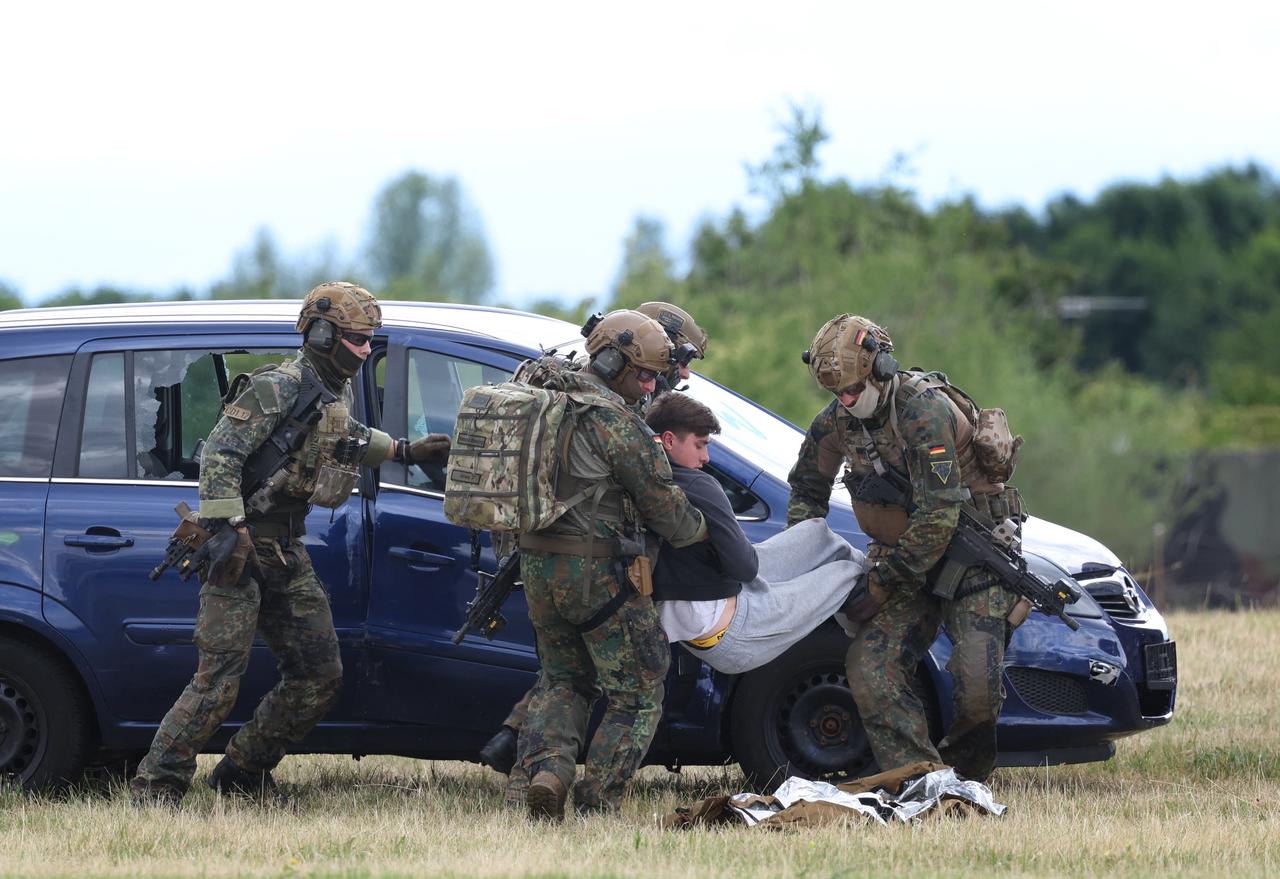
The push to expand Germany's military has drawn organized opposition from young people.
In March, about 3,000 students gathered at Berlin's Potsdamer Platz, with smaller demonstrations held nationwide as part of a "school strike" against the recruitment drive.
"I don't see why anyone should have to go to the front lines for politicians," said Alex Krzeszka, a 15-year-old student, at the Berlin rally, noting, "I don't see it as morally right, and I think war should never be the solution. Problems should be solved diplomatically."
Chancellor Friedrich Merz has vowed to turn the Bundeswehr into Europe's largest conventional army, initially relying on the voluntary recruitment push.
Protesters carried signs reading "We are not cannon fodder" and "Send Friedrich Merz to the front line!"
Leon Reinemann, a student who helped organize the strike in Koblenz, told broadcaster ntv that "reintroducing conscription is nothing other than rearmament," defending students' decision to skip classes by saying "a single day of absence from school is significantly less serious than six months in the barracks."
Leander Martinez, 16, said the Bundeswehr "should definitely advertise... but it absolutely shouldn't be compulsory."
Tillmann, a 19-year-old student, said: "I'm against conscription and against war propaganda... I think murdering someone is always wrong, even if the state says that someone should be murdered. There's nothing more important than human life."


 Set as preferred source
 Set as preferred source



 3 min read