Newsletters


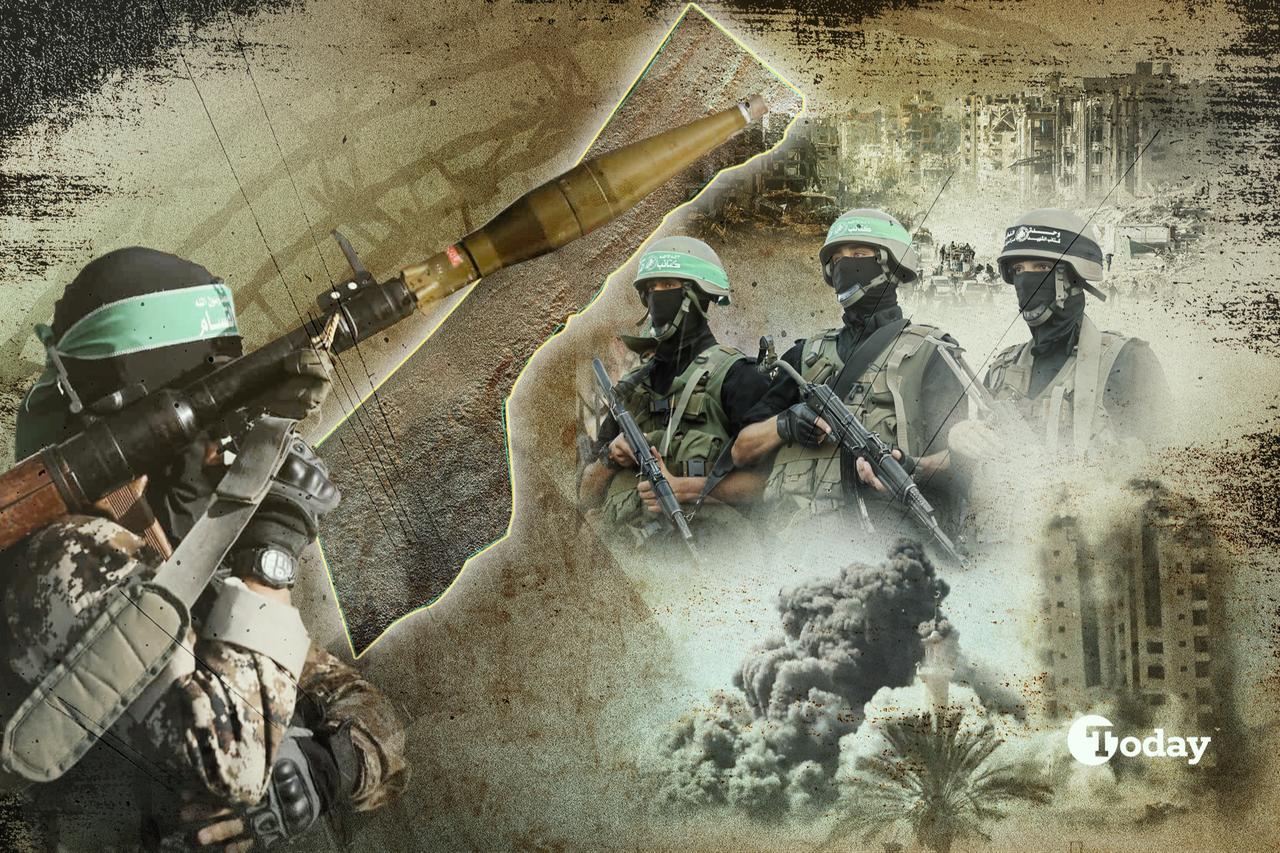


In response to the Oct. 7 Hamas attacks, Israel’s declaration of war marked the beginning of the Gaza war, which has turned into a genocide carried out by Israel against the people of Gaza. According to Palestinian authorities, as of October 2025, more than 67,000 people have been killed in the Gaza Strip, nearly one-third of them under the age of 18.
During the war, Hamas suffered severe losses, and Israel killed nearly all of the organization’s top leaders. The ceasefire and hostage-prisoner exchange agreement signed by Hamas and Israel in October continues to be undermined by Israeli attacks that violate the ceasefire. U.S. President Trump’s peace plan also became a U.N. Security Council resolution last month. This phase, the first in the plan, is highly delicate.
At this stage of the ceasefire and peace plan, the main issue is the disarmament of Hamas. The future of Gaza and the continuation of the plan largely depend on this. I talked with Alex Plitsas, a senior non-resident fellow at the Atlantic Council’s Middle East Programs and Director of the Counterterrorism Project, about the future not only of Gaza and Palestine but also of Hamas as an organization.

Plitsas, who previously served at the Pentagon as chief of sensitive activities in the Office of the Secretary of Defense for Special Operations & Combating Terror, has over two decades of experience in national security and defense and served in both Afghanistan and Iraq.
This interview, which offers a U.S. perspective on Hamas, is important because it is conducted with someone who is deeply familiar with the field and its key actors. The bleak picture Plitsas draws regarding the future of Gaza, the Palestinian people, and the two-state solution reflects the views of many experts in the United States who closely follow the issue.
The prominent American genocide scholar Omar Bartov, whom I spoke with in April, also said he does not expect any positive developments for the people of Gaza over the next 10–20 years. He predicted that without a profound political change in Israel, or as long as Israel continues to receive support from other states, especially the United States, little is likely to change, and Israel could become increasingly isolated and authoritarian.
Q: When you look at Hamas’s history, how do you interpret the Oct. 7 attacks in terms of the organization’s strategy? Did it bring the organization closer to its goals, or push it further away?
Plitsas: The Oct. 7 attack was a strategic failure for Hamas for several reasons. Hamas chose to use violence against civilians as a means of achieving a political goal, which is the definition of terrorism, and in doing so, it all but destroyed the prospects of a two-state solution for a generation, given the especially heinous nature of the crimes. There is no political or popular support in Israel for that after what took place that day and I don’t expect that to change for some time.
The negotiations to end the war will not result in a Palestinian state nor additional freedoms for the Palestinian people, though it will end Hamas’ rule in Gaza. In the end, it led to the deaths of tens of thousands of people and the destruction of Gaza, with nothing gained. If Hamas considers that a win, then it has redefined a Pyrrhic victory at the expense of the Palestinian people and statehood.
Former Israeli officials, including prime ministers, have repeatedly stated in the past that Israel supported and allowed Hamas to grow in order to use it as a balancing force against other Palestinian factions, and to block any two-state solution by citing Hamas’s existence as a pretext. What is your view on this?
There haven’t been elections in the West Bank or Gaza in over two decades, after elections were rejected by Palestinian factions as Israel would not allow them to also be held in East Jerusalem. The outcome of the last election that left the Palestinian territories split between the Palestine Authority and Hamas provided an opportunity to sow division.
Hamas established a political office in Doha at the behest of the West to facilitate discussions, as it is a designated terrorist organization. Hamas would not have been able to run Gaza for the last 20 years or engage in international dialogue without support from Israel.
Could you tell us, from your perspective, about the role Türkiye and Qatar played in the Gaza cease-fire? Egypt and Qatar have traditionally acted as mediators in every dispute between Israel and Hamas. How is it that this time, Türkiye emerged at the forefront, and it began to be stated, even toward the end of the Biden administration, that President Erdogan was the key figure convincing Hamas?
Qatar played the central role in hosting and mediating the peace talks alongside partners from the West and the region, such as Türkiye. President Erdogan has taken on a much larger role in the region and geopolitics in recent years. Türkiye as a nation maintains a delicate balancing act as a member of NATO and as a gateway to the Middle East and Eurasia. As such, it presents unique opportunities for Türkiye to play meaningful roles in international crises, as in this case.
President Erdogan plays a role in helping to get the deal over the finish line. However, support for HTS in Syria, Hamas, and some of the language around these groups and events has led Israel to view Türkiye as a long-term strategic threat. Israel has rebalanced its approach in the region accordingly.
 2 min read
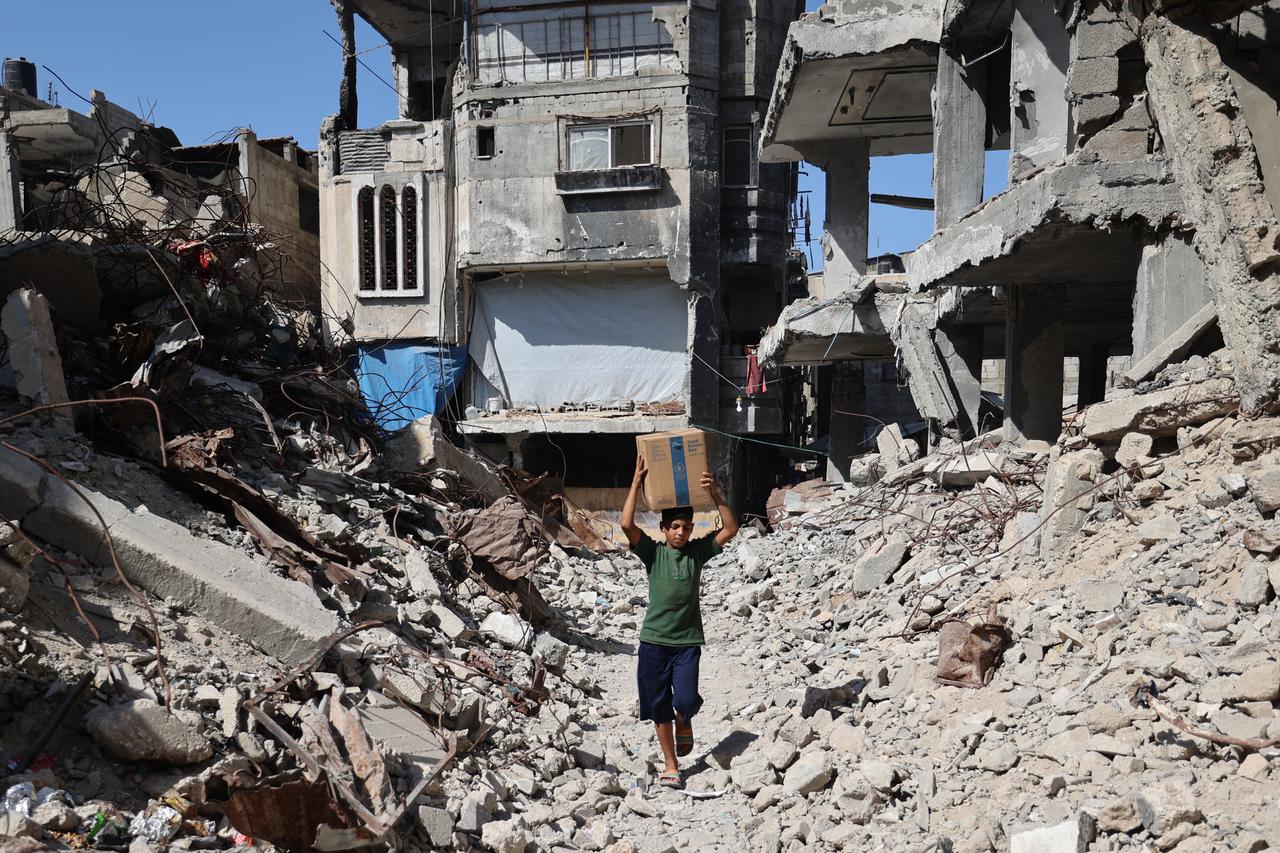
In your opinion, what is the most significant problem with the Gaza plan? How do you see the future of Gaza and Palestine? Do you believe it would be possible to establish an international stabilization force in Gaza?
The biggest problem now is that Hamas has to disarm, though it is already retreating from that commitment. If they refuse to disarm, I believe Israel will go back in with full force. However, if the disarmament issue is resolved, then the most significant problems after that are the lack of an accepted governing structure and security force, as both will be required to rebuild.
I believe an international stabilization force can eventually be established, but all countries potentially taking part in the force have stated they will not participate in disarming Hamas, so that hurdle must be crossed before that can become a reality. The question is whether Hamas will disarm voluntarily or whether Israel will attempt to force it militarily. Suppose a governing authority or security force is imposed or does not enjoy popular support, and the Gazan people take up arms against it as a result; that is the definition of an insurgency. That would be a catastrophe.
The longer-term strategic problem that is outside the deal's framework is that there is no plan for a two-state solution and there is no support for it in Israel after Oct. 7. Most people don’t understand the impact that it had on the Israeli psyche and society. This conflict is far from being resolved, and there is a lot of work left to do to bring it to a peaceful conclusion. Even then, there’s no two-state solution on the horizon.
Considering that the leader of HTS, a designated terrorist organization with a bounty on his head not long ago, now finds himself welcomed at the White House in the capacity of a head of state, could a similar scenario ever be possible for Hamas and its leader?
I don’t think we would see a similar scenario with Hamas leaders as we saw with Syrian President Ahmad al-Sharaa visiting the White House. While it’s true both Hamas and HTS were designated terrorist organizations, HTS fought a revolutionary war against the Syrian state, has reformed, and did not conduct an attack like 10/7 from a Western perspective. However, having just returned from Iraq, I can tell you that militia leaders there who belong to designated terrorist organizations are reconsidering how to approach the United States in light of the HTS transition and normalization. So, the rapprochement is having an impact, but that will not extend to Hamas.


 Set as preferred source
 Set as preferred source


 1 min read