Newsletters


U.S. Defense Secretary Pete Hegseth shared an image of a surveillance tower collapsing at Iran's Chabahar port following repeated U.S. strikes, as American forces expanded their airstrike campaign against Iran for a sixth consecutive night. The intensifying operations hit bridges across southern Iran, prompting new Iranian strikes on U.S. allies across the Gulf.
According to Iran's state-run IRNA news agency, the maritime surveillance tower at Chabahar's Shahid Kalantari port was struck for a third time in a U.S. attack early Friday and was completely destroyed, based on IRNA's own reporter's on-site observations.
IRNA reported no casualties or injuries from the blast, crediting pre-existing crisis management and civil defense measures. The agency noted that these emergency protocols prevented casualties despite the sheer force of the explosion.
IRNA said technical and operational teams arrived at the site immediately to assess damage, secure the area and evaluate conditions for resuming port operations, adding that cargo loading and unloading at the port was expected to resume shortly once safety checks were completed.
Hegseth shared the image of the tower's collapse as part of what the Associated Press (AP) described as an effort to assert American control over the strait.
The image had already circulated on social media via activists before Hegseth shared it.
Chabahar, on the Gulf of Oman, is a key trade route for landlocked Afghanistan and has been run with support from India. Iran described the destroyed tower as overseeing commercial port traffic, though the AP noted Iran's Islamic Revolutionary Guard Corps (IRGC) also operates at ports across the country.
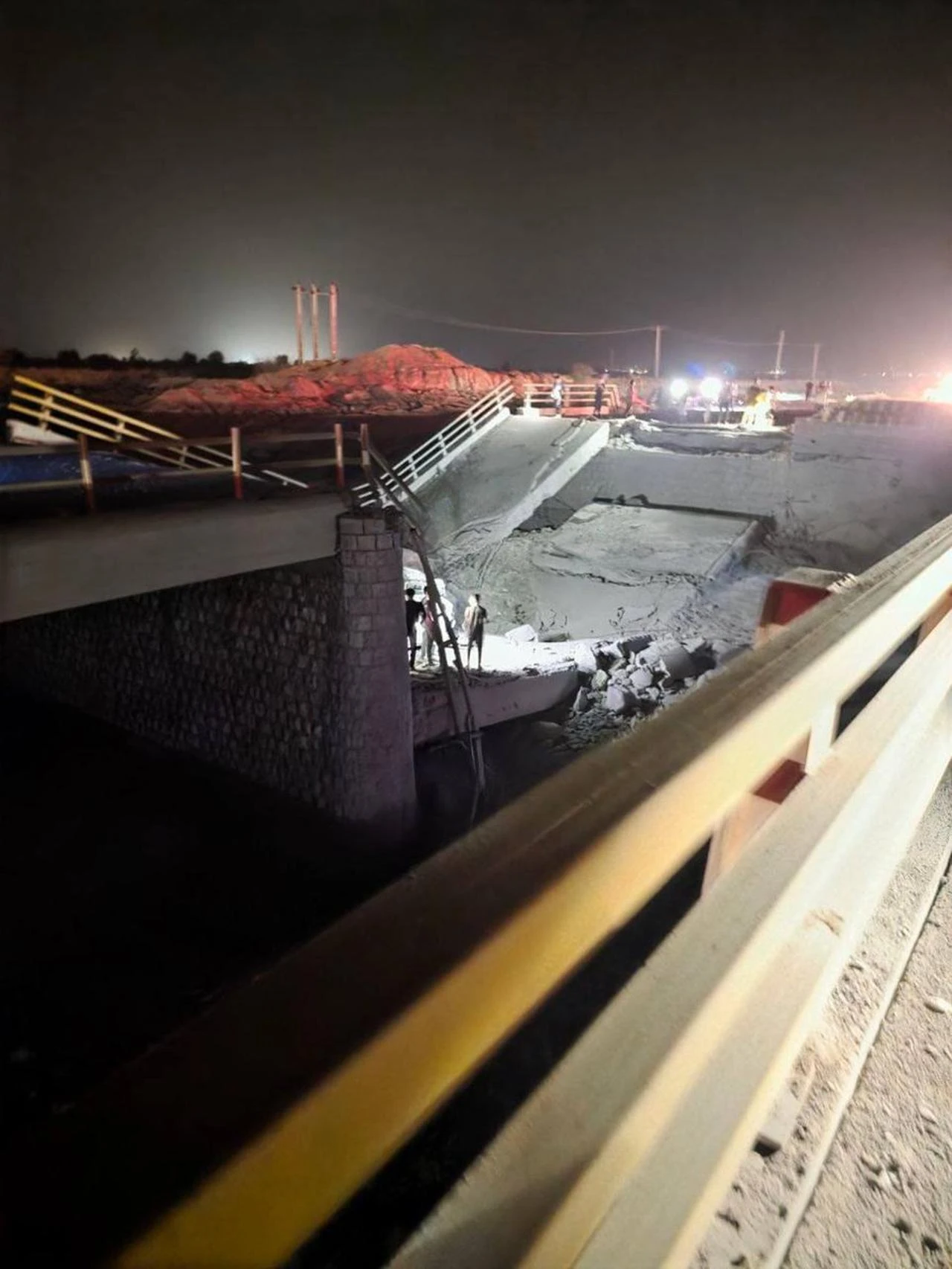
The provincial government of Hormozgan said six bridges in the Hamir county were struck and damaged in U.S. attacks overnight into Friday, according to IRNA.
U.S. forces struck multiple bridges and cities across southern and southeastern Iran.

U.S. Central Command (CENTCOM) said on X that it completed its "latest major wave of strikes against Iran" at 9:40 p.m. ET Friday.
"U.S. forces, including fighter jets, aerial drones, and warships, launched precision munitions that hit dozens of Iranian military targets such as coastal surveillance and air defense sites, military logistics infrastructure, and maritime capabilities. This was the sixth consecutive night of U.S. strikes against Iran," the statement said, adding that CENTCOM was "further degrading Iranian military capabilities and holding Iran accountable for recent attacks on commercial shipping" at the president's direction.
CENTCOM said more than 50,000 U.S. service members are currently operating across the Middle East and remain "vigilant, lethal, and ready."
White House press secretary Karoline Leavitt said the strikes were a response to Iran's violation of the Memorandum of Understanding (MoU) it signed with the U.S.
"Specifically, in the Memorandum of Understanding that they signed, they were not to fire on commercial vessels moving through the Strait of Hormuz, and unfortunately, they have made the tragic decision for them to do that," she said.
The U.S. said Friday it had resumed a naval blockade on vessels transiting to or from Iranian ports. CENTCOM said forces had redirected three commercial vessels attempting to run the blockade, disabled one that did not comply, and boarded another to ensure compliance.
In a primetime address, Trump said the war was going well.
"We are likewise winning big in Iran, and you will see the fruits of that labor very, very shortly," he said.
The interim ceasefire agreed to last month has collapsed, with the region enduring days of back-and-forth strikes as the U.S. and Iran battle for control of the Strait of Hormuz, a waterway Iran effectively closed to shipping when the U.S. and Israel launched their war on Feb. 28, sending oil prices soaring and giving Tehran significant leverage in negotiations.


 Set as preferred source
 Set as preferred source


 2 min read