Newsletters


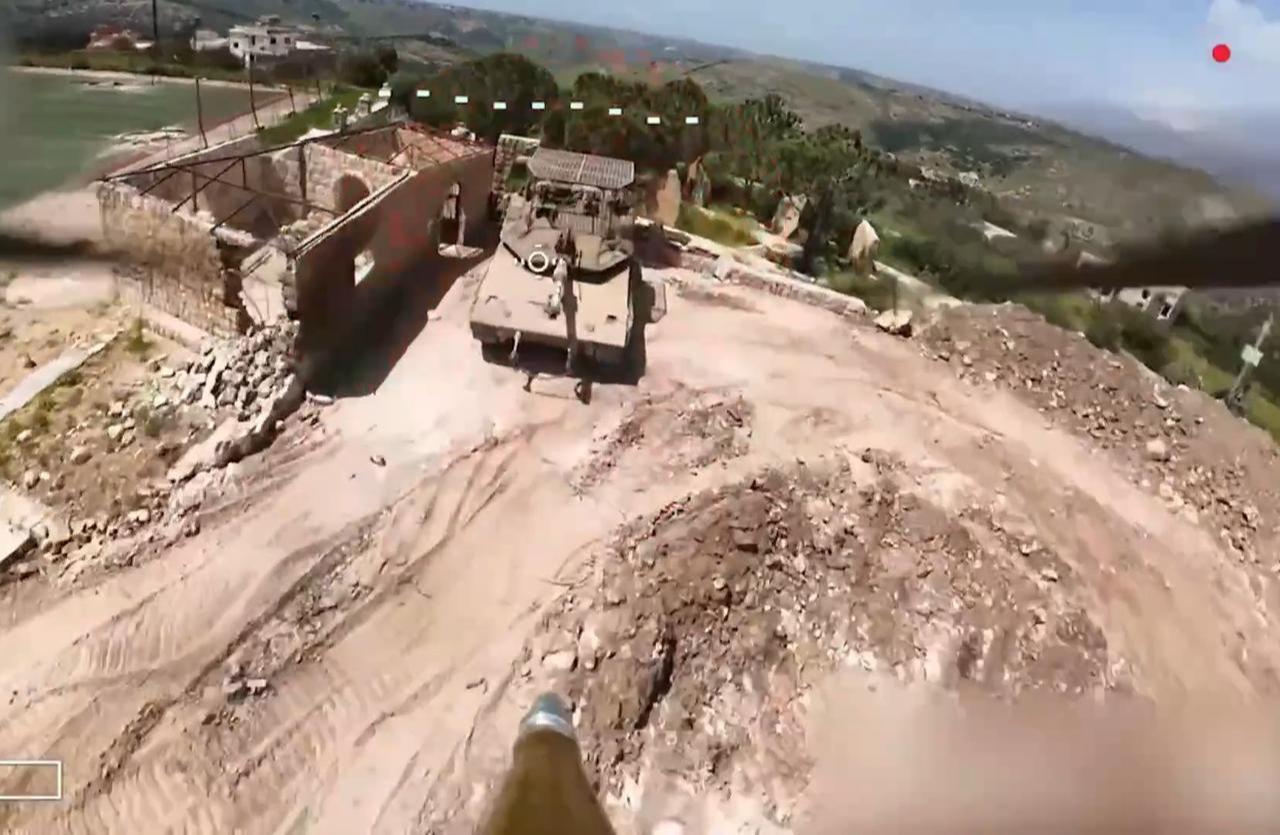
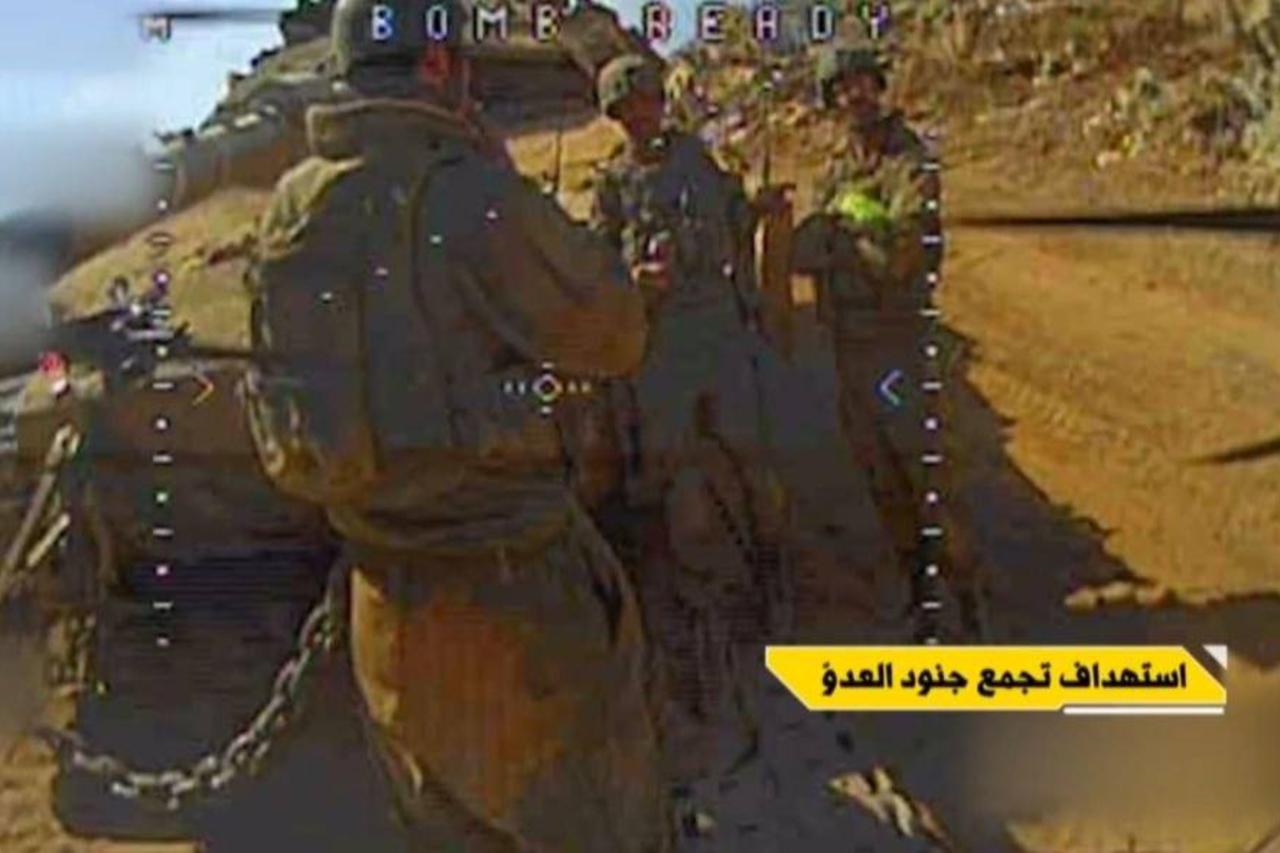
Hezbollah published footage Friday showing a fiber-optic first-person view (FPV) drone striking a Merkava Mk. 4 Barak main battle tank (MBT) in the southern Lebanese town of Qantara, the first confirmed loss of the tank model to an FPV drone, with the shaped charge penetrating the turret roof's cope cage and triggering an ammunition cookoff.
An Institute for National Security Studies (INSS) researcher told Agence France-Presse (AFP) that the Israeli army "does not have any response" to the threat nowadays.
The death toll in Lebanon since March 2 has passed 2,600, as Israeli strikes continue daily despite the ceasefire extended until May 17.
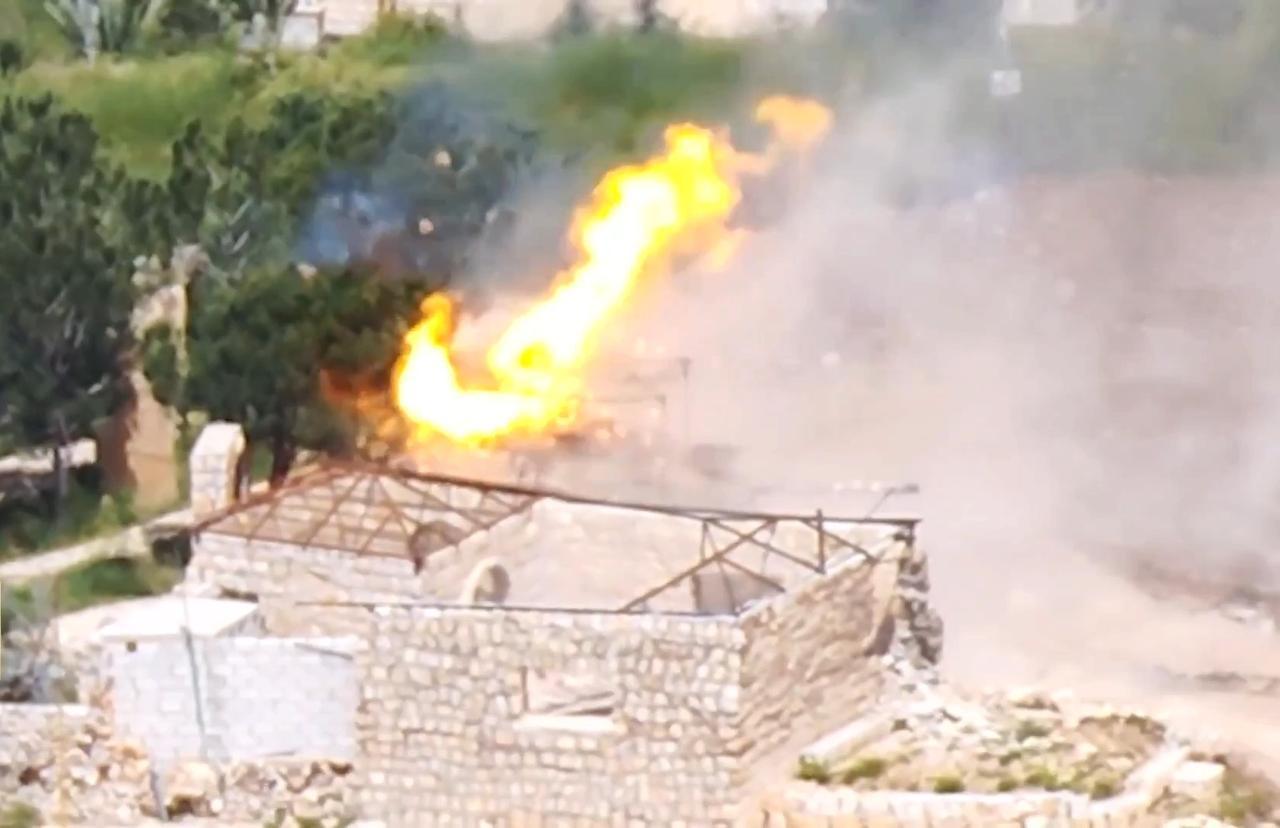

Hezbollah published footage showing an FPV drone guided by a fiber-optic cable flying into the cope cage of a Merkava Mk. 4M in Qantara, striking the turret roof above the isolated ammunition compartment and triggering a catastrophic ammunition cookoff.
Military analysts noted the cope cage, designed to defeat top-down drone attacks, failed to prevent the penetration. While analysts said the tank may not be a total write-off pending repairs, the penetration of one of the world's most protected tanks, which is equipped with Israel's Iron Fist active protection system (APS), by a relatively cheap drone underscored the asymmetric nature of the drone threat in a modern warfare environment.
INSS senior researcher Orna Mizrahi told AFP the devices were like "children's toys" and that the military "does not have any response for that nowadays, because they didn't prepare themselves for such low-tech explosives."
INSS expert Arie Aviram explained the core challenge: "Since the drone does not transmit the image via radio broadcast and does not receive guidance commands via a radio receiver, it cannot be detected by electronic intelligence means or blocked through electronic warfare."
Unlike GPS- or radio-guided drones, fiber-optic cables, which can stretch up to 15 kilometers, leave no electronic trace, leaving troops dependent on radar or visual detection, which typically comes too late.
Components for the drones can cost $300-$4,000 and are purchasable on AliExpress. Operators use FPV goggles requiring minimal training.
Israeli army's Chief of Staff Lt. Gen. Eyal Zamir has reportedly instructed Northern Command and the Israeli Air Force (IAF) to strike the production and supply chain of FPV drones, including deep inside Lebanon, a significant escalation of targeting doctrine following multiple soldier deaths in under a week from drone strikes.
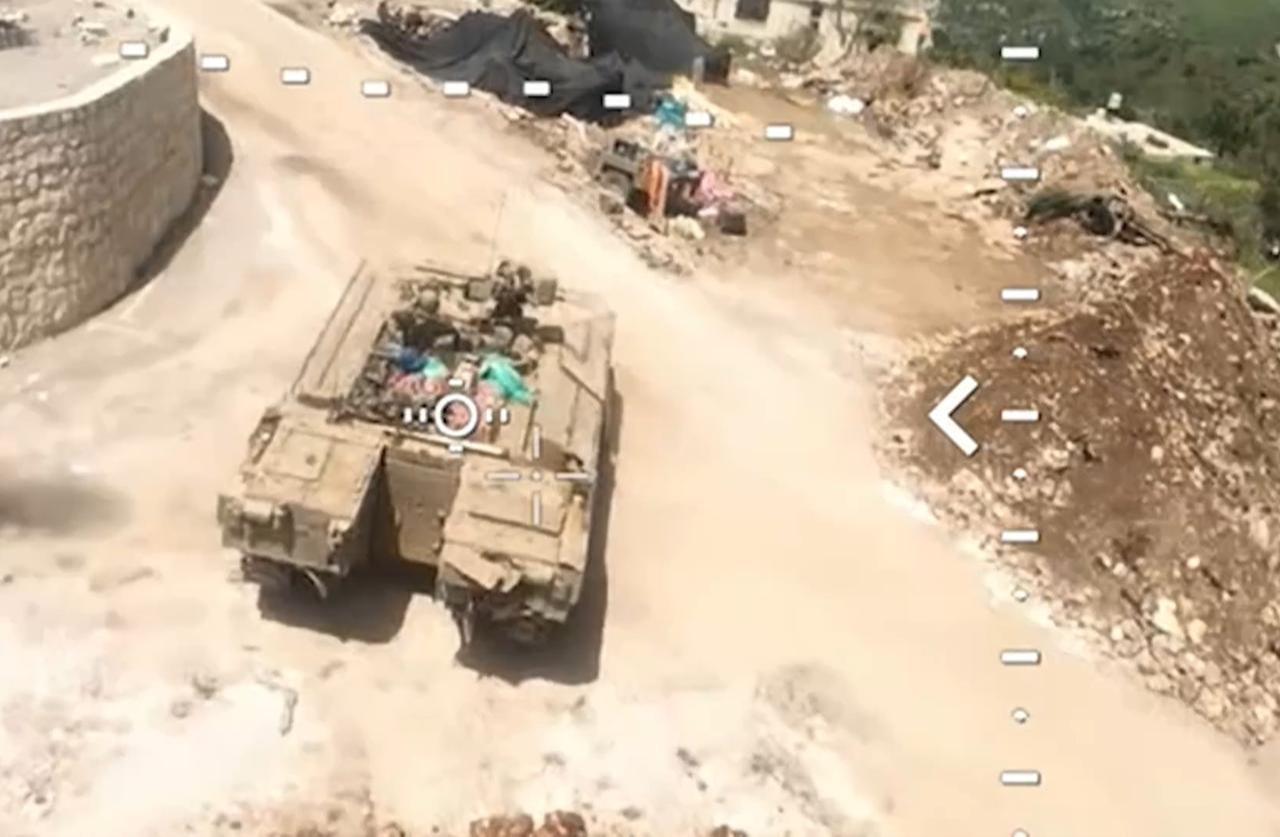
The Israeli army also deployed mobile Iron Dome radars inside Lebanese territory to detect incoming drones earlier and has equipped some vehicles with anti-drone netting, metal arms extending above vehicles draped in mesh to trap drones before detonation.
However, analysts noted netting offered minimal protection against warhead detonation at close range inside open-top vehicles.
On April 11, Israel's Defense Ministry's R&D directorate published a public call for "proposals to identify additional capabilities to address the threat of fiber-optic-controlled FPV drones," nearly two years after the technology first emerged in Ukraine.
Israeli Mako reported that Ukraine offered its FPV expertise to Israel several years ago but was rebuffed: "There was no concrete response," former Ukrainian defense minister Oleksii Reznikov told Mako.
A senior Israeli army official cited by the media said the military was "learning from the war in Ukraine" but admitted: "It's a threat that we're still adapting to. There's nothing that is foolproof."
Lasers, such as Israel's Iron Beam system, were identified by Aviram as a potential solution "provided they were widely deployed," which he said was not yet the case.
Lebanon's Health Ministry confirmed Friday that 2,618 people had been killed and 8,094 wounded since March 2.
The ceasefire, which extended to May 17, continues to be violated daily through airstrikes and the demolition of homes. Hezbollah also confirmed a D9 bulldozer, Namer IFV, and an Eitan APC had been struck in recent FPV strikes.


 Set as preferred source
 Set as preferred source


 1 min read
 1 min read