Newsletters


Growing ties between Yemen's Houthis and al-Shabab, an al-Qaida-linked terrorist
group in Somalia pose a "highly concerning, escalatory threat to regional stability," U.S. Africa Command (AFRICOM) said, as the Iran-backed rebels consolidate control over Yemen's Red Sea coast.
The Houthis have sold weapons to al-Shabab, trained hundreds of its members in drone and explosive use, and made frequent trips to areas of southern Somalia it controls, security and military experts told the Financial Times (FT).
The Houthis seized the Yemeni port of Mokha this month and advanced on the Bab el-Mandeb Strait, through which a tenth of global trade flows.
A foothold across the Gulf of Aden could let them pressure the waterway from both shores, experts say.
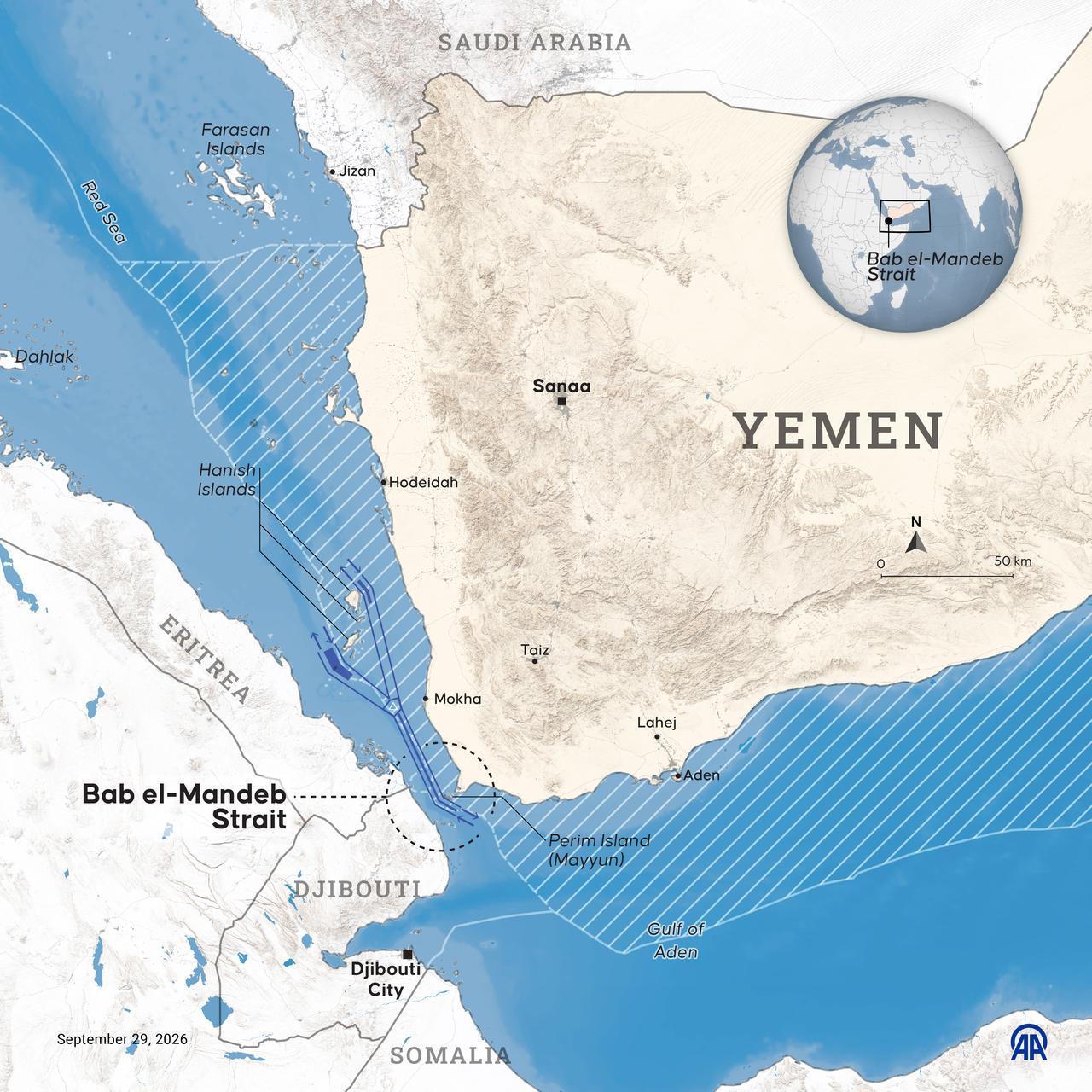

"By bridging operational capabilities, this alliance threatens to expand al-Shabab's lethal reach in the Horn of Africa while simultaneously giving the Houthis deeper access to project influence and disrupt vital maritime corridors in the Red Sea and western Indian Ocean," an AFRICOM spokesperson said.
Al-Shabab, an al-Qaida affiliate, occupies about 40% of Somalia, mostly rural areas.
"This makes perfect sense to the Houthi playbook, especially when it comes to the waterway, to be able to squeeze it from both sides," said Tim Lenderking, a former U.S. special envoy for Yemen.
He said Washington became concerned about the relationship in 2024.
"The relationship is viewed by the Houthis with increasing importance because their game plan includes expanding influence beyond the borders of Yemen," Lenderking noted.

As many as 1,500 al-Shabab terrorists and other factions have trained with the Houthis in Yemen, said Matt Bryden, who headed the U.N. panel of experts on Somalia.
Bryden said Houthi envoys have visited al-Shabab's stronghold at Jilib more often this year and used the alliance to install radar and other equipment to monitor shipping from the African coast.
Al-Shabab has also sought more sophisticated weapons, including Iranian surface-to-air missiles (SAM), though none have appeared on the battlefield.
"There is an intent," he said.
"The relationship between al-Shabab and the Houthis is evolving beyond smuggling into an operational partnership involving weapons, drones and technical expertise," said Guled Ahmed, a Somali regional security expert.
"If al-Shabab acquires the expertise to operate Houthi-supplied medium-range missiles and drone boats, this network could extend into the western Indian Ocean," Ahmed said.
Israel's recognition of Somaliland as an independent state last December gave the relationship new impetus, experts said.
Both groups share a fiercely anti-Israel, anti-U.S. doctrine.
"The Houthis want permission to recruit in Somalia and they want the ability to use Somalia to both surveil the Gulf of Aden and launch attacks," said Peter Salisbury, an adjunct professor at Columbia University.
Salisbury said the long-term aim remains hard to read, noting, "It could turn out there was some training and some arms moved but it didn't amount to much."
Somali pirates, who are not affiliated with al-Shabab, have launched the highest number of attacks in a decade this year, including last month's seizure of a Turkish ship.

Meanwhile, Saudi Foreign Minister Prince Faisal bin Farhan and U.S. Secretary of State Marco Rubio met in Washington on Monday and "stressed the importance of safeguarding maritime security and freedom of navigation through international waterways, notably the Strait of Hormuz and Bab el-Mandeb," the Saudi Foreign Ministry said.
The talks also covered the situation in Yemen.


 Set as preferred source
 Set as preferred source




 3 min read