Newsletters


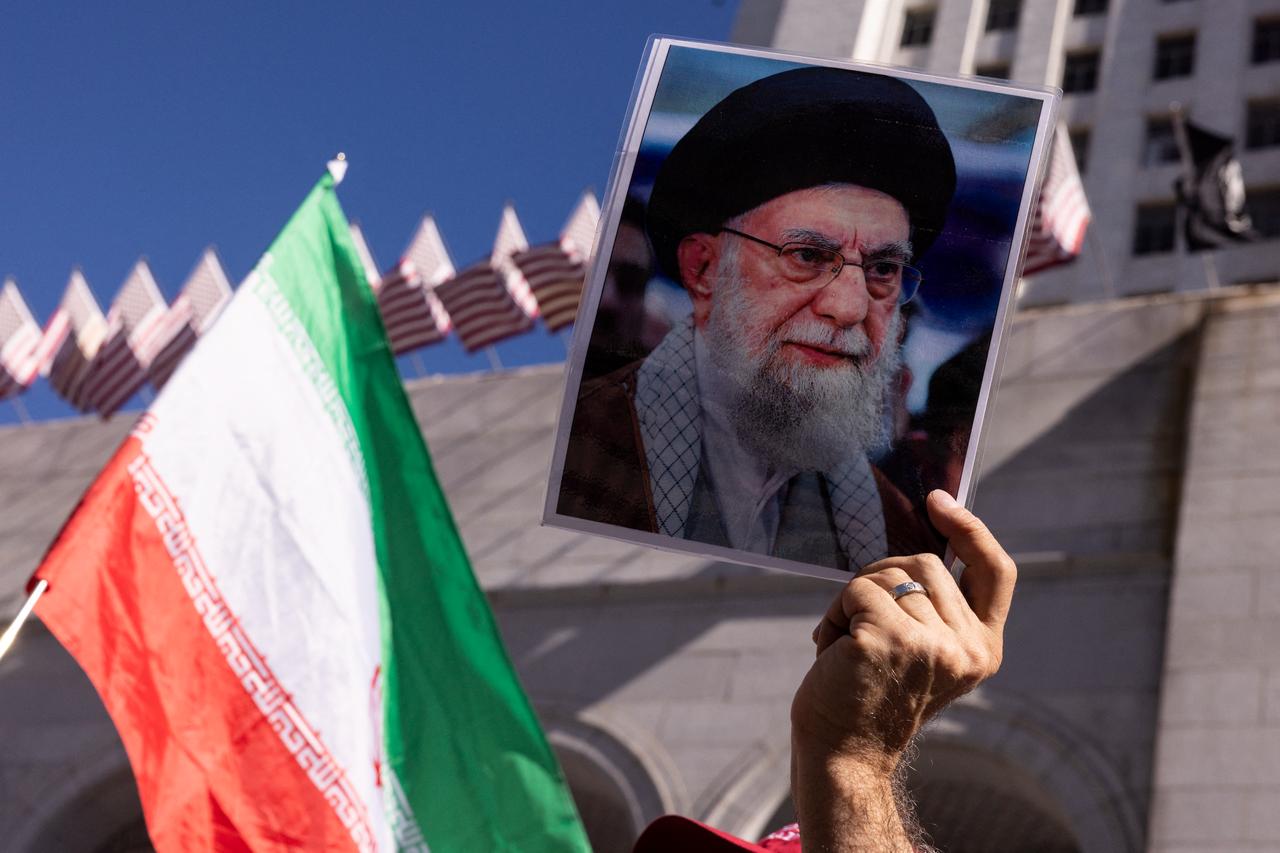


Joint U.S. and Israeli strikes killed Iran’s Supreme Leader Ali Khamenei early Saturday after last-minute intelligence pinpointed a rare high-level meeting in Tehran, in a blistering operation that caught Iranian security forces off guard, reports suggest.
The intelligence confirmed that Khamenei was meeting top advisers Saturday morning at a secure compound in central Tehran, and the CIA had tracked the supreme leader for months and provided what officials described as "high fidelity" intelligence on his location, U.S. sources who spoke to Reuters confirmed.
The U.S. and Israel had initially planned to strike at night, but Israeli intelligence detected that a high-level meeting was taking place Saturday morning instead of the expected evening session, prompting officials to move the operation forward.
U.S. sources indicated that confirmation that that Khamenei was meeting top advisers set the joint U.S.-Israel air and naval assault in motion. The plan called for striking him first to preserve the element of surprise, amid concerns he could go into hiding if given time.
Two Iranian sources stated that Khamenei had met earlier that day with Ali Shamkhani and Supreme National Security Council Secretary Ali Larijani at a secure location shortly before the strikes began.
The operation started around 6:00 a.m. Israel time, with warplanes striking targets in Tehran at approximately 9:40 a.m. local time, two hours and five minutes after takeoff. Israeli jets dropped 30 bombs on Khamenei’s high-security compound, leaving it destroyed.
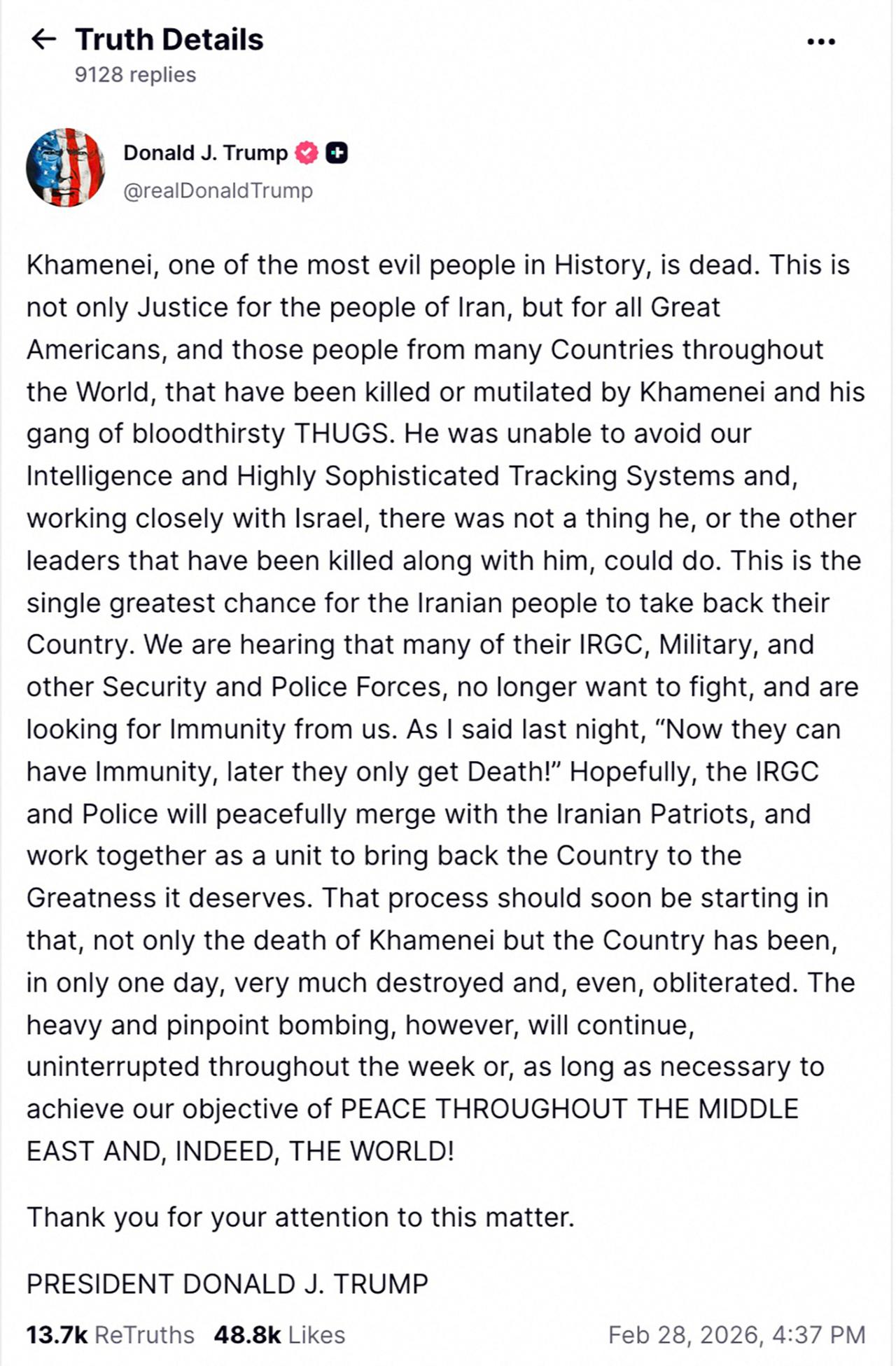
U.S. President Donald Trump wrote on Truth Social that U.S. tracking systems had located Khamenei and that the strikes eliminated him along with other Iranian leaders.
A senior Israeli official also confirmed that Khamenei’s body had been found.
Israel stated that Khamenei was killed alongside several senior military and political figures, including Ali Shamkhani, a former secretary of Iran’s Supreme National Security Council, and Mohammad Pakpour, commander of the Islamic Revolutionary Guard Corps (IRGC).

Iran’s state news agency IRNA confirmed on Sunday the deaths of Shamkhani and Pakpour. Other officials reportedly killed included Seyyed Majid Mousavi, commander of the Revolutionary Guard Aerospace Force, and Mohammad Shirazi, deputy intelligence minister, bringing the overall number of Iranian officials killed in the coordinated strikes to roughly 40.
Separately, Iran’s Fars News Agency reported that several of the supreme leader’s family members were also killed in the U.S.-Israeli strike on the compound where he lived and worked. Those reported dead included his daughter, son-in-law, grandchild, and one of his daughters-in-law. Their names were not released.
Later, Iranian media confirmed that the Chief of Staff of the Iranian Armed Forces Maj. Gen. Abdolrahim Mousavi was also killed.
Iran declared 40 days of national mourning following Khamenei’s death and warned that the strike would not go unanswered, stating that those responsible and those who ordered it would "regret" the attack.
Khamenei’s adviser Mohammad Mokhber stated that under Iran’s Constitution, the Assembly of Experts—an elected clerical body tasked with appointing and overseeing the supreme leader—must choose a new leader as soon as possible. Until then, a three-member council made up of the president, the judiciary chief, and a cleric selected from the Guardian Council will temporarily assume the leader’s duties.
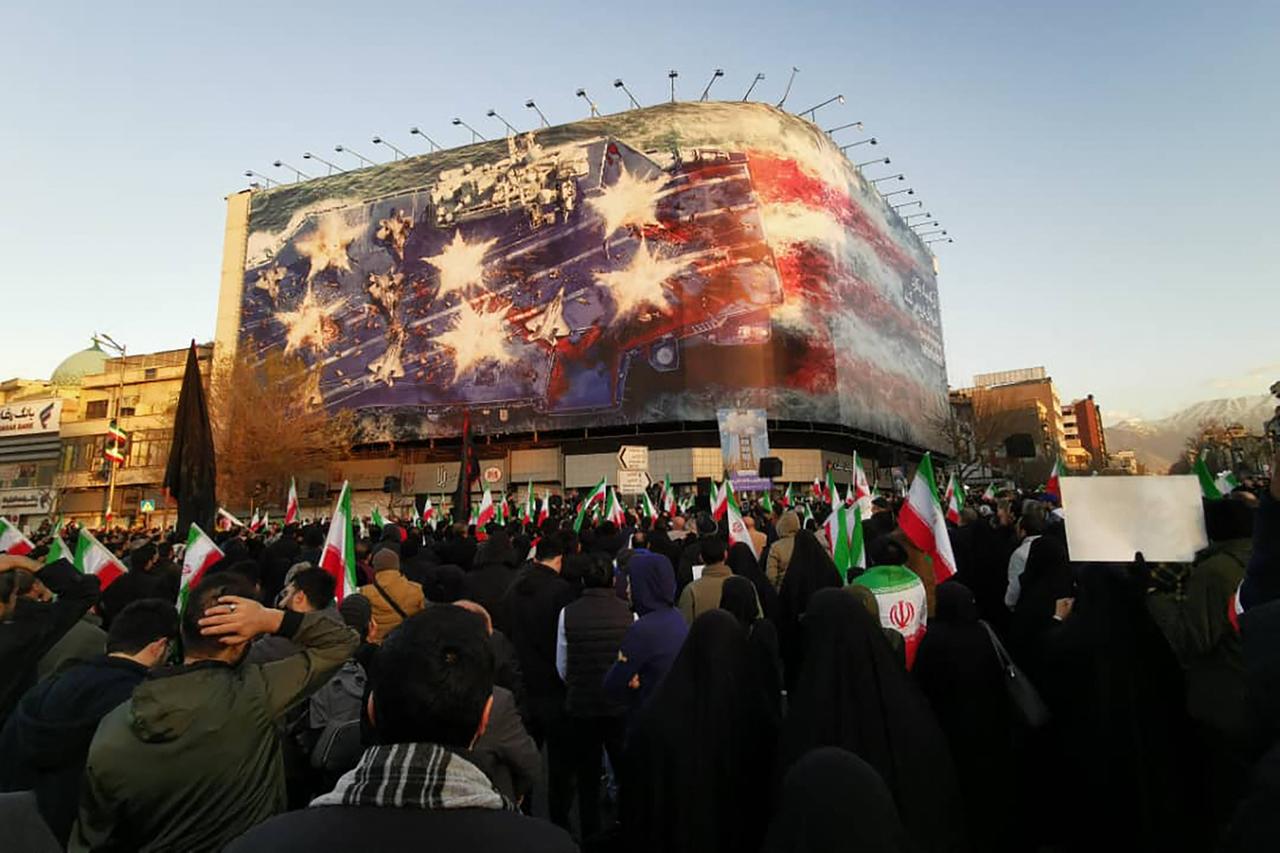
Before the attack, the U.S. Central Intelligence Agency assessed that Khamenei could ultimately be replaced by hardliners from the IRGC, according to two sources briefed on the intelligence, indicating that Washington expected limited ideological change at the top despite the leadership vacuum.
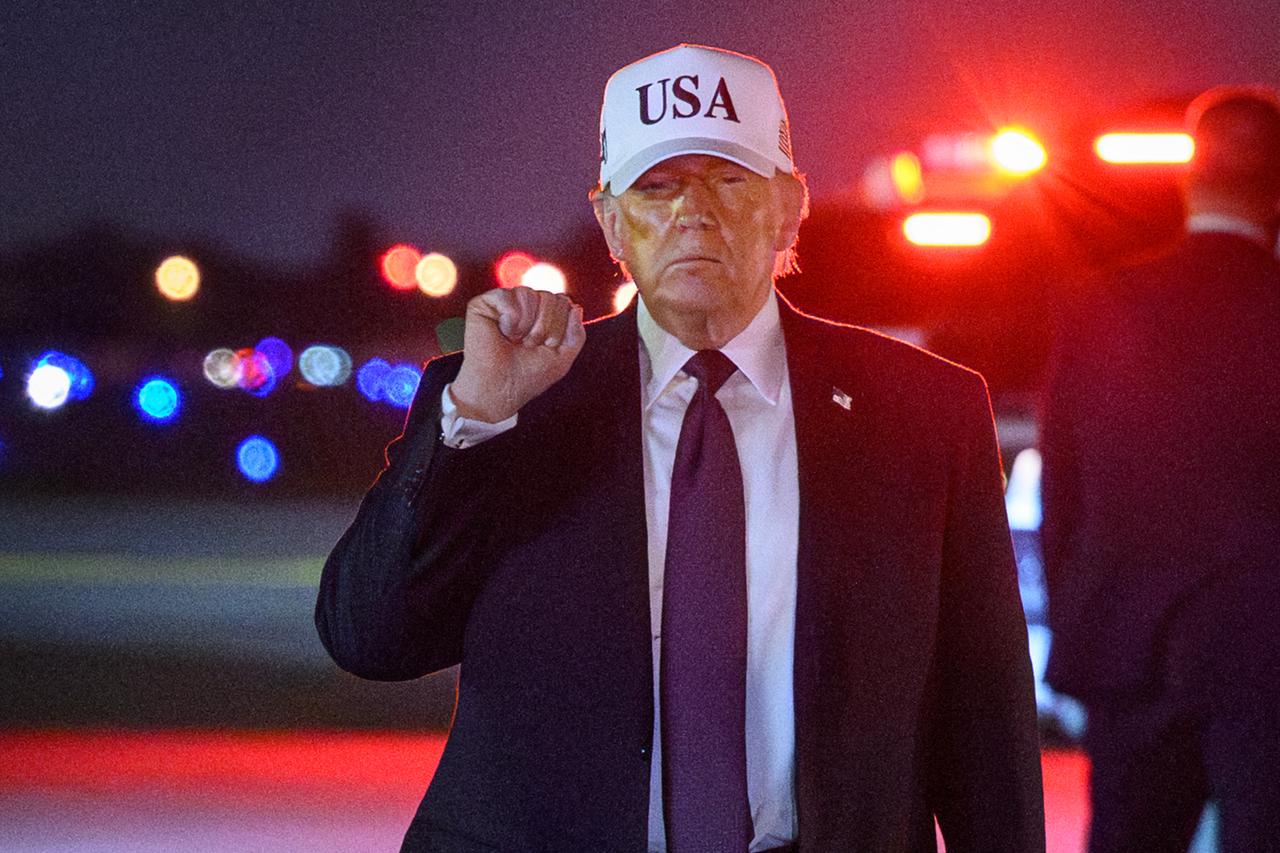
U.S. President Donald Trump described the joint U.S.-Israeli operation as a severe blow to Iran and argued it had made a diplomatic outcome more attainable.
In remarks to U.S. media following the killing of Ali Khamenei, Trump said the situation is "much easier" than a day earlier because Iran had been hit hard, calling the operation "a great day" for both the United States and the wider world.
He expressed confidence that the military action achieved its objectives and pointed to what he called "good candidates" who could take over leadership in Iran, without providing further details.


 Set as preferred source
 Set as preferred source


 1 min read
 1 min read