Newsletters


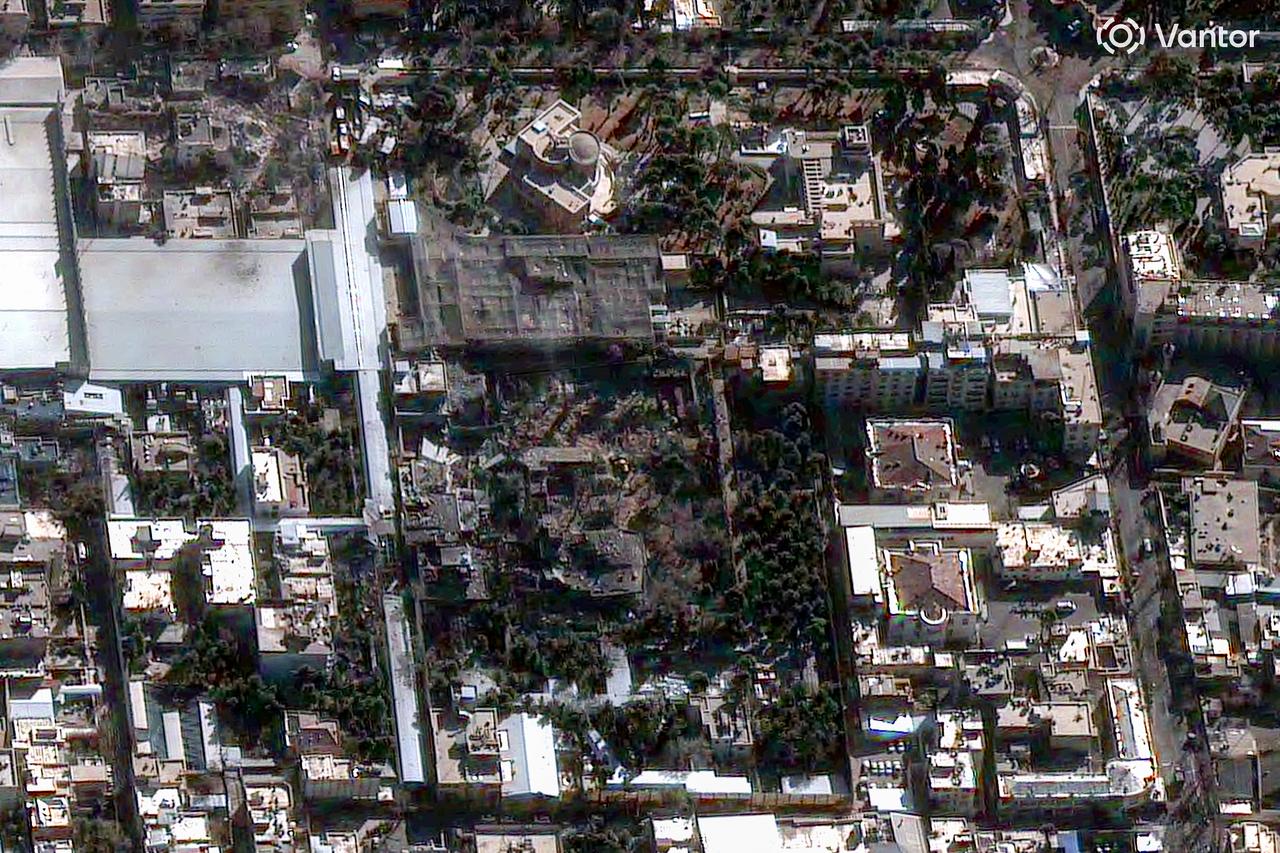


Supreme Leader Ali Khamenei was at his residence with his family, not in an underground bunker, when Israeli jets launched a precision daylight strike that killed him on Saturday morning, the Wall Street Journal (WSJ) reported, reconstructing the operation through interviews with current and former Israeli and U.S. officials, satellite imagery, videos and photographs.

The operation, codenamed Operation Genesis, was the opening blow of the U.S.-Israeli war with Iran.
Iran's leadership did not see the morning strike coming, the Journal reported.
For more than two decades, Unit 8200, Israel's covert intelligence unit specializing in phone intercepts and cyber operations, tracked Khamenei and Iran's top leadership, mapping their daily routines and habits.
Analysts monitored senior officials' communications, increasingly relying on artificial intelligence to sift through a massive volume of intercepted calls.
"Israel recruited spies and hacked into traffic cameras across Tehran for real-time information," according to a person familiar with the matter.
The CIA also shared information with Israel.
On Saturday morning, intelligence indicated that meetings among senior leaders were scheduled and that Khamenei would be at his residence with members of his family.
"Khamenei, who typically retreated to bunkers at night when the regime believed Israeli attacks were likely, was above ground that morning," according to the report.
To maintain the element of surprise, Israel had to kill Khamenei with the first shots of the war, even before disabling Iranian air defenses. If he escaped the attack, Israel feared he would be moved to a secure location beyond reach, according to WSJ.
Israeli F-15 jets and other aircraft took off at around 7:30 a.m. Iran Standard Time. At about 9:40 a.m., dozens of Israeli munitions, including Blue Sparrow missiles, began hitting their targets.
The missiles, Blue Sparrows, were launched from a distance. They exit Earth's atmosphere before crashing. "Their high trajectory surprised people in the Iranian leadership compound in Tehran," people briefed on the operation said.
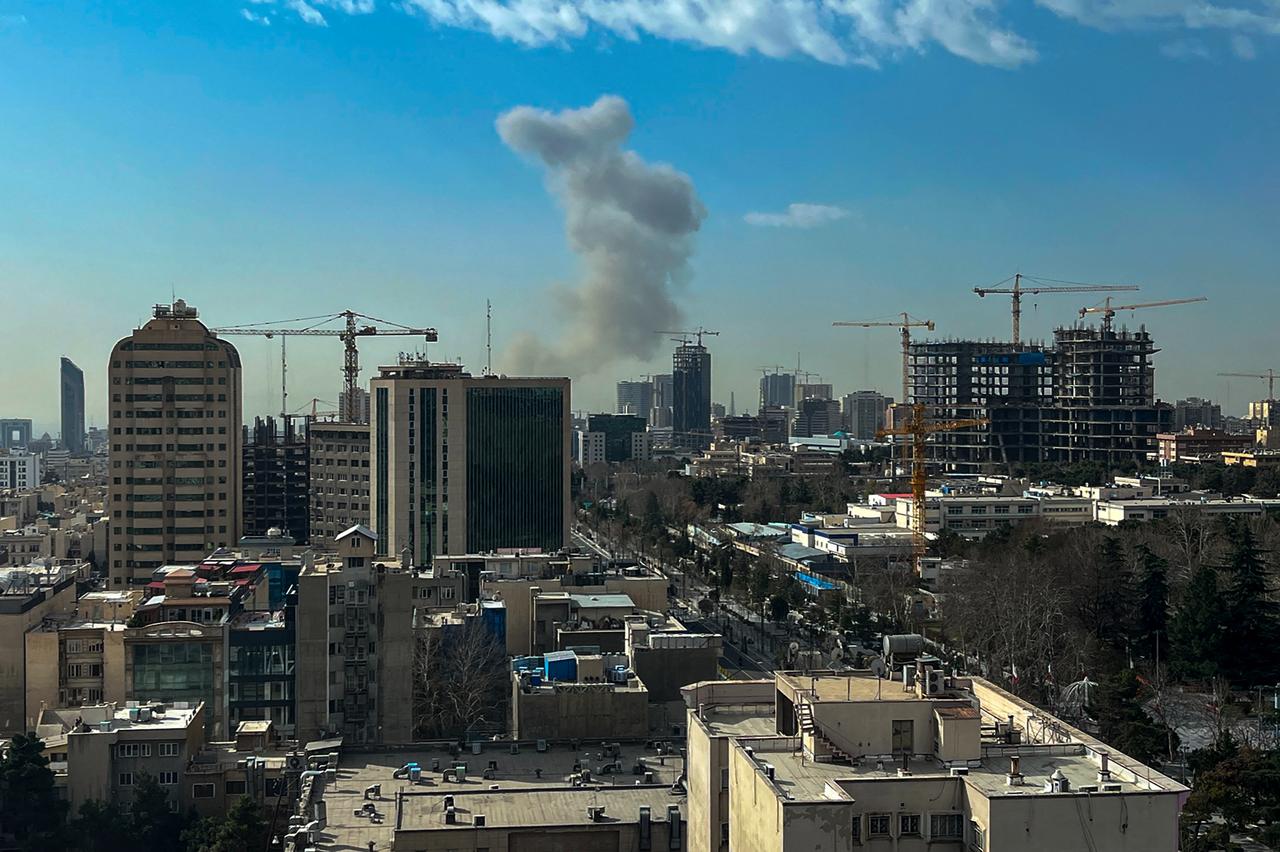
By around 9:45 a.m. local time, people across Tehran were watching smoke billow from the leader's compound.
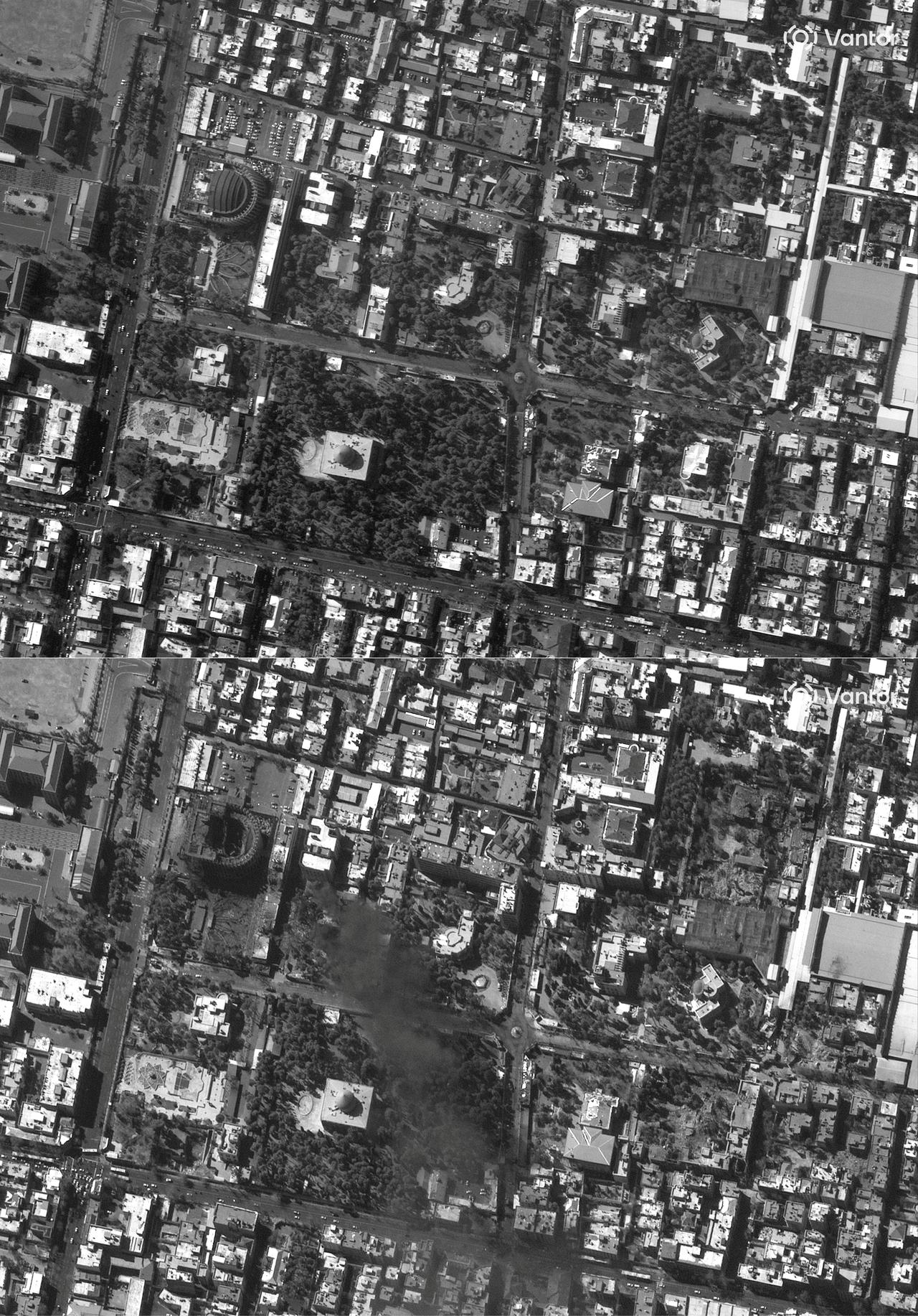
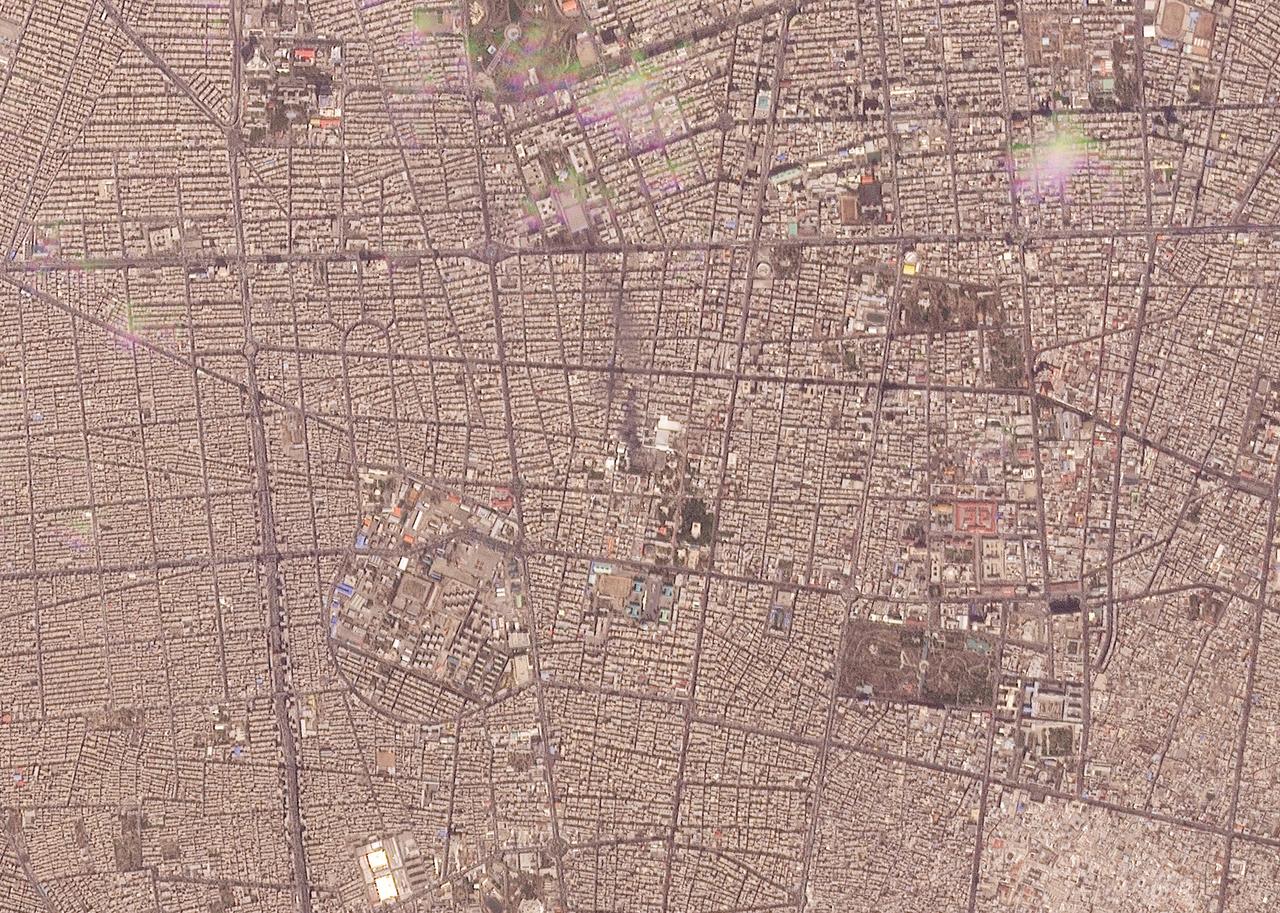
A satellite image captured at 5:47 p.m. showed smoldering damage at the compound, which includes a vast mosque, a presidential complex and Khamenei's residence.
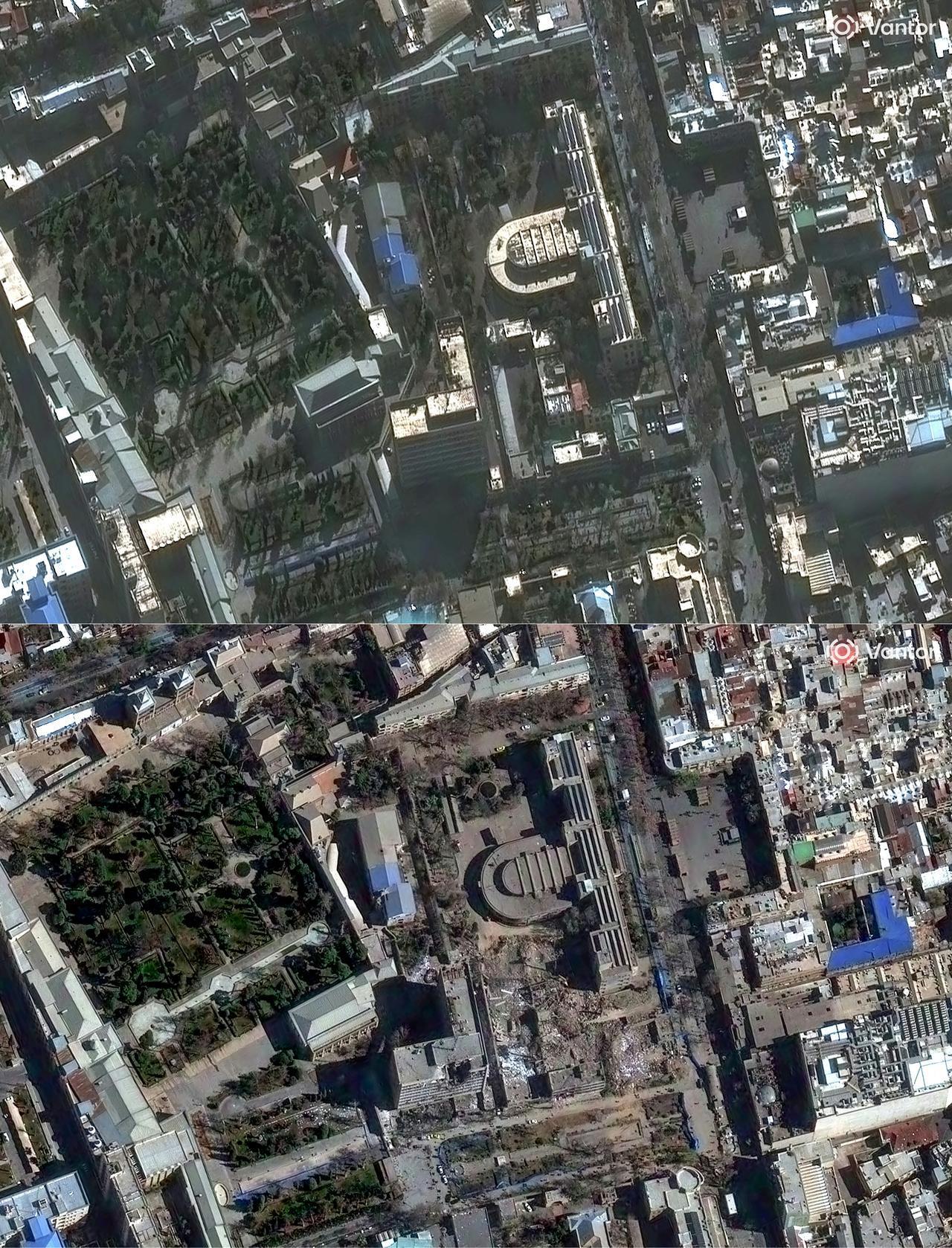
The strike damaged at least six buildings, including metal roofs and structures running between buildings, according to satellite images analyzed by the Journal.
The area around Khamenei's residence sustained the most visible damage, the imagery showed. The strikes also killed top officials, including Khamenei adviser Ali Shamkhani, Defense Minister Aziz Nasirzadeh, Deputy Intelligence Minister Sayed Yahya Hamidi, head of espionage Jalal Pour Hossein, and IRGC commander Mohammad Pakpour, according to an Israeli security official.
After killing Khamenei, both the United States and Israel began attacking Iran's air defenses and other military infrastructure.
The U.S. Navy launched Tomahawk cruise missiles and HIMARS rockets, conducting strikes across southern Iran and destroying Iranian Navy ships, hitting more than 1,000 targets in the first 24 hours.
Israel sent in 200 jet fighters, nearly the country's entire air force, striking 500 different targets including radar arrays, air defense batteries, command centers and missile systems.
By nightfall, videos showed public gatherings across Tehran, Karaj and Isfahan, where thousands of Iranians celebrated or mourned Khamenei's killing.
The previously undisclosed call was made from the White House Situation Room. At Trump's direction, the CIA verified the Israeli intelligence.
President Masoud Pezeshkian, judiciary chief Gholam-Hossein Mohseni-Eje'i and an appointee from Iran's 12-member Guardian Council formed a temporary three-person council to govern the country, the Journal reported.
Khamenei was 86 years old when he was killed.
Iran announced a three-day state funeral, with the slain leader to be buried in his home city of Mashhad in northeastern Iran.


 Set as preferred source
 Set as preferred source


 1 min read
 1 min read