Newsletters


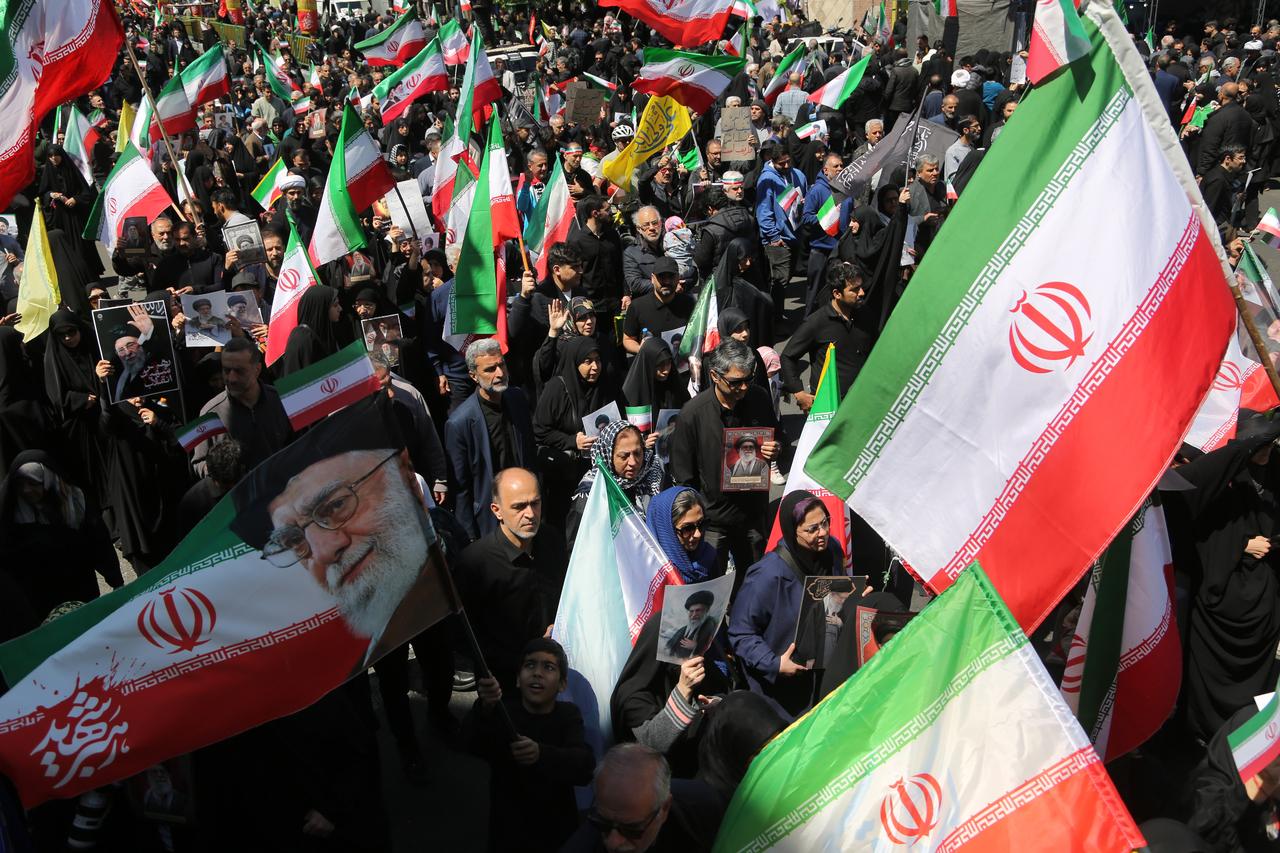


Iran’s First Vice President Mohammad Reza Aref issued a stark warning on Saturday as the most significant U.S.-Iran talks since 1979 opened in Islamabad, saying there would be no deal if the American delegation represents “Israel First” rather than “America First.”
Meanwhile, Iranian Foreign Minister Abbas Araghchi separately told his German counterpart that Iran is entering negotiations with "complete distrust" of Washington.

Aref posted the warning on X as the delegations gathered in Islamabad.
"If we negotiate in Islamabad with representatives of 'America First, an agreement beneficial to both sides and the world is probable. However, if we face representatives of 'Israel First,' there will be no deal; we will inevitably continue our defense even more vigorously than before, and the world will face greater costs," Aref wrote.
He added that if no deal were reached, Iran would "continue its defense decisively," a situation he said would be "more costly for the world."
In a phone call with German Foreign Minister Johann Wadephul on Friday, Araghchi said Iran would "fight with full authority to secure the interests and rights of the Iranian people" amid what he described as repeated "betrayals of diplomacy" by Washington, Tasnim News Agency reported.
Araghchi called Iran's entry into the ceasefire a "very responsible" step that should be recognized by all parties and stressed the importance of all countries taking responsible positions in line with international law and the principles of the UN Charter.
Wadephul expressed support for halting the war, emphasized the need to stop Israeli attacks on Lebanon, and expressed hope that the upcoming negotiations would restore peace and stability to the region, according to Tasnim.
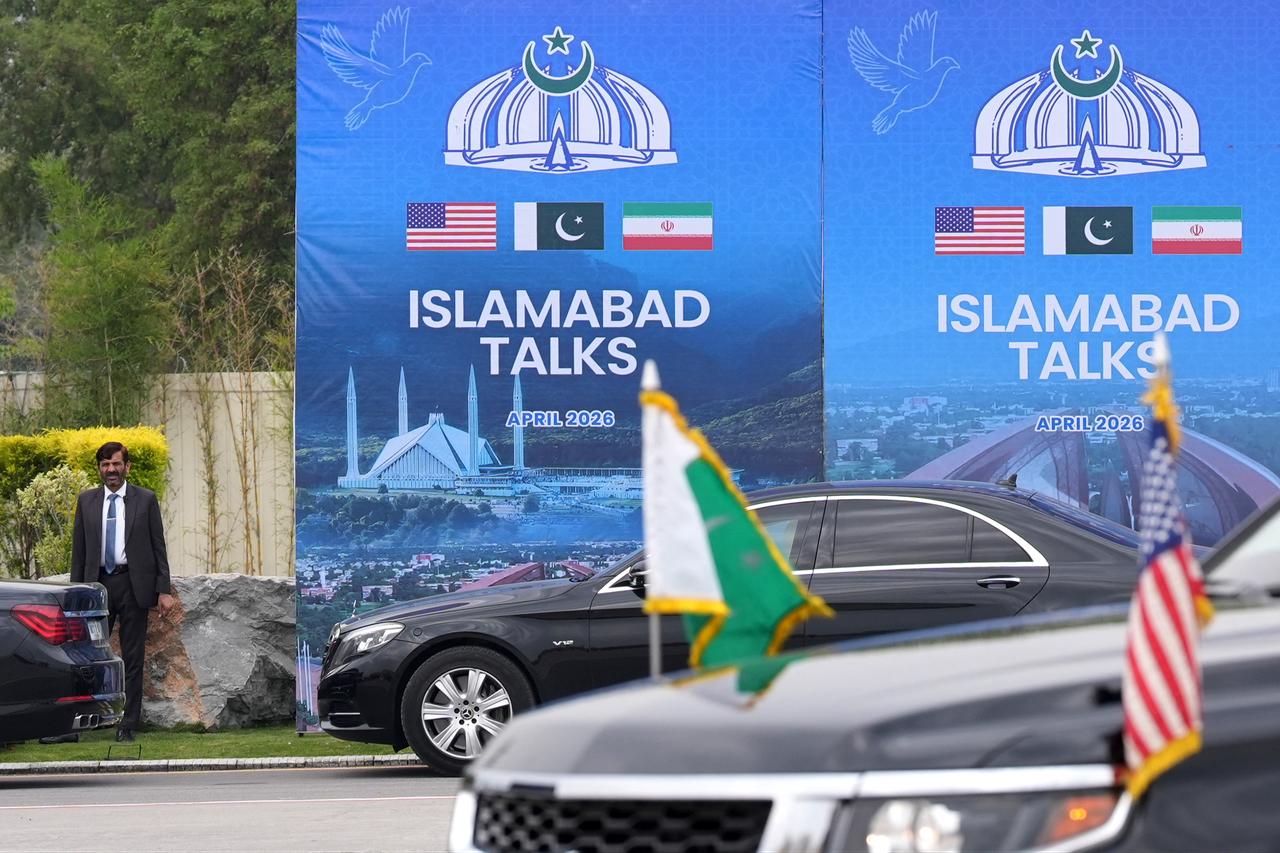
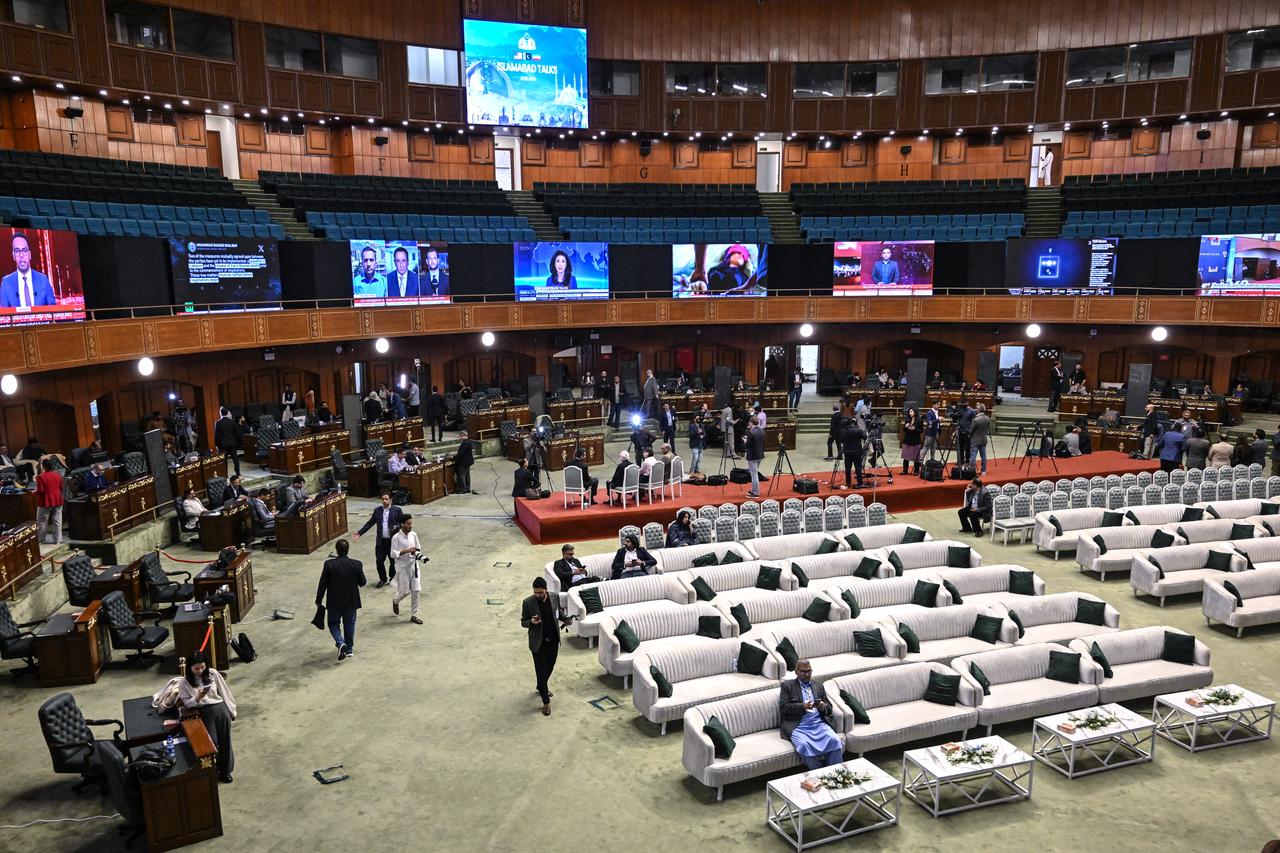
The talks, dubbed the Islamabad Talks and mediated by Pakistan, are being held at an undisclosed, heavily fortified location in the Pakistani capital and may continue for several days, Pakistani officials told Türkiye's state-run Anadolu Agency (AA).
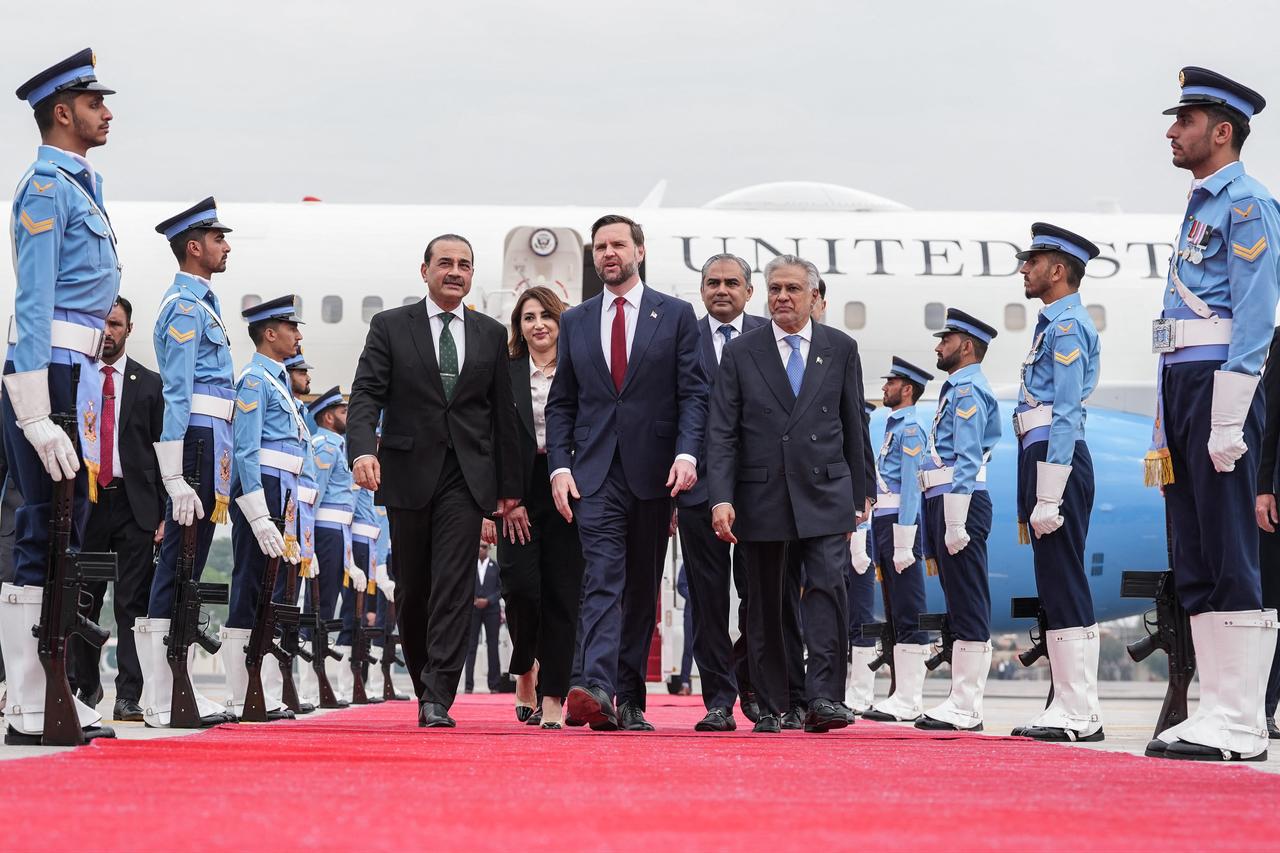
The U.S. delegation is led by Vice President JD Vance and includes Special Envoy Steve Witkoff and Jared Kushner.
The Iranian delegation is led by Parliament Speaker Mohammad Bagher Ghalibaf and includes Foreign Minister Araghchi and National Security Council deputy Ali Bagheri Kani, among others.
Pakistan's Foreign Minister Ishaq Dar will represent Islamabad. Both delegations are also scheduled to meet separately with Prime Minister Shehbaz Sharif, a senior government official told Anadolu.
Pakistani officials told Anadolu the format includes a mix of direct and indirect talks.
Expert Trita Parsi noted on X that Ghalibaf "may meet directly with Vance," a level of engagement that would surpass any previous U.S.-Iran diplomatic contact since 1979.
Munawar Hussain Pahnwar, associate professor at the Area Study Centre for Africa, North and South America at Quaid-i-Azam University in Islamabad, told Anadolu the talks represent "a turning point in the history of the relationship between" the U.S. and Iran, the Middle Eastern power structure and global politics since the 1979 Islamic Revolution.
"If succeeded, this engagement would change the nature of the diplomatic relationship between the two longtime foes," he said.
Ali Vaez, Iran project director and senior adviser at the International Crisis Group, told Anadolu that the "upgraded seniority in each delegation is a signal that they both mean business."
He cautioned, however, that senior ranks of the Iranian establishment "remain deeply mistrustful of the US and seem confident, arguably overconfident, on what the war has done for their leverage."
Vaez noted that any agreement Ghalibaf secures "is likely to be met with some internal pushback" given the influence of the Islamic Revolutionary Guard Corps (IRGC), and that "previous talks and the contrasting understandings of the ceasefire show that even having a fundamental baseline on the parameters can be a challenge before getting into the technical details."
Shamshad Ahmad, a veteran Pakistani diplomat who served as foreign secretary in 1998, called the talks "most significant" since 1979.
"It is not significant just for the two sides or Pakistan. These talks are important for global peace as the whole world is affected, the economy is choked, and there is an energy crisis," Ahmad told Anadolu.
Iran's Deputy Foreign Minister Majid Takht-Ravanchi said Tehran's 10-point framework has been accepted as the basis for negotiations.
The framework includes guarantees of non-aggression against Iran, continued Iranian control of the Strait of Hormuz, recognition of Iran's right to uranium enrichment, lifting all U.S. primary and secondary sanctions, termination of U.N. Security Council resolutions against Iran, termination of IAEA Board of Governors resolutions, payment of war damage compensation, withdrawal of U.S. combat forces from the region and ending hostilities across all fronts including Lebanon.
Trump has demanded Iran cease its nuclear program, limit its ballistic missile program, and dismantle its regional proxies, while threatening to strike critical infrastructure if Tehran fails to reach a deal.
The talks are set to begin in Islamabad exactly 46 years after the U.S. Embassy siege in Tehran that initiated a 444-day hostage crisis and a total breakdown in relations that has persisted, with no direct diplomatic ties, since 1979.


 Set as preferred source
 Set as preferred source


 3 min read