Newsletters


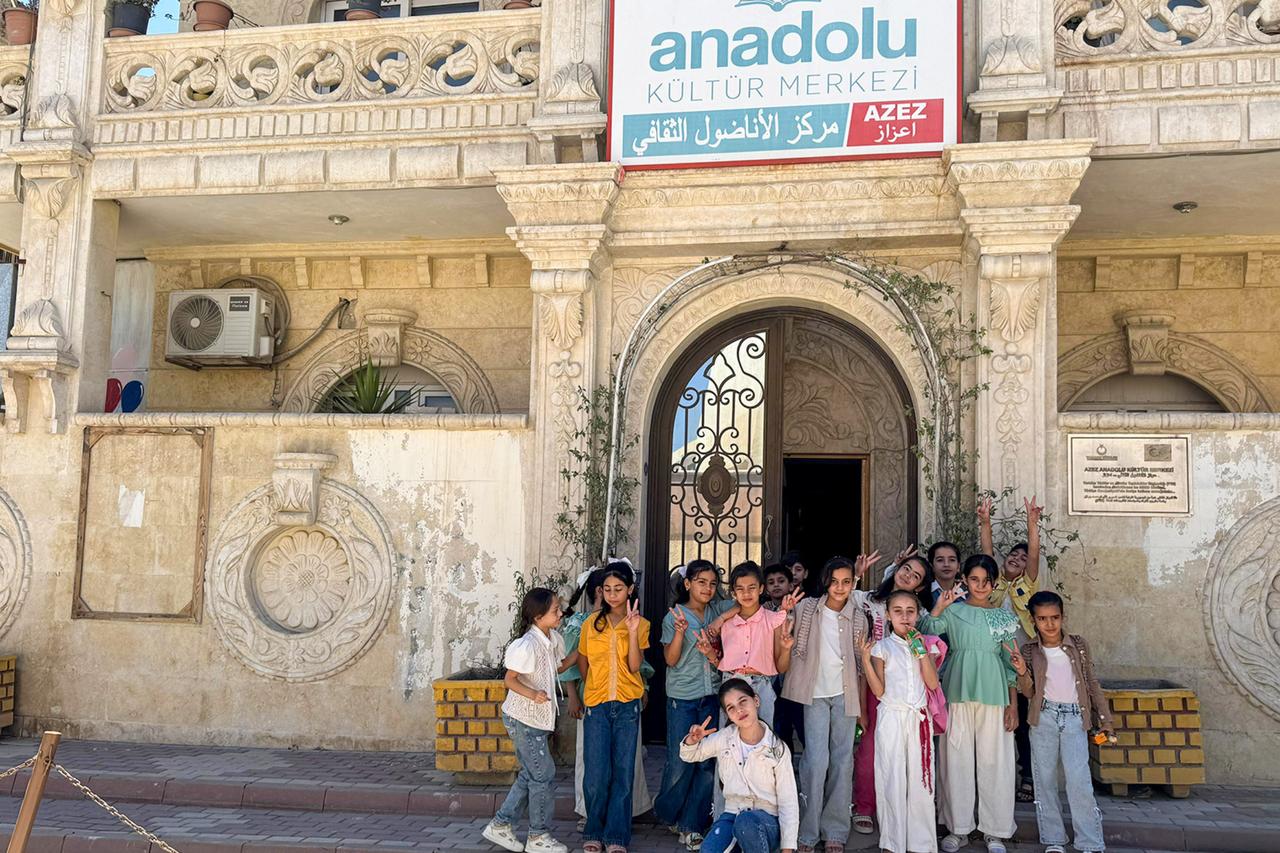


The building has been standing since 1912. Ottoman stone, Aleppo sun, 44 years of Baathist youth programming baked into its walls.
When the Bulbulzade Foundation opened it as a cultural center earlier in 2026, they didn't gut it—they restored it.
Around 1,000 people show up regularly. Another 10,000, the foundation’s chairperson Turgay Aldemir tells Türkiye Today, are effectively on a waiting list.
Aldemir is also the chair of the Anatolian Federation, and he has been thinking about Syria's reconstruction longer than most Western think tanks have been writing about it.
When Türkiye Today sat down with him, the conversation moved quickly past the familiar talking points on humanitarian aid—past the refugee numbers, past the operational logistics of Euphrates Shield and Olive Branch—into territory that rarely surfaces in the reconstruction discourse: what do you do with a society's interior life after 12 years of organized destruction?
His answer is not what you might expect from a charitable foundation.
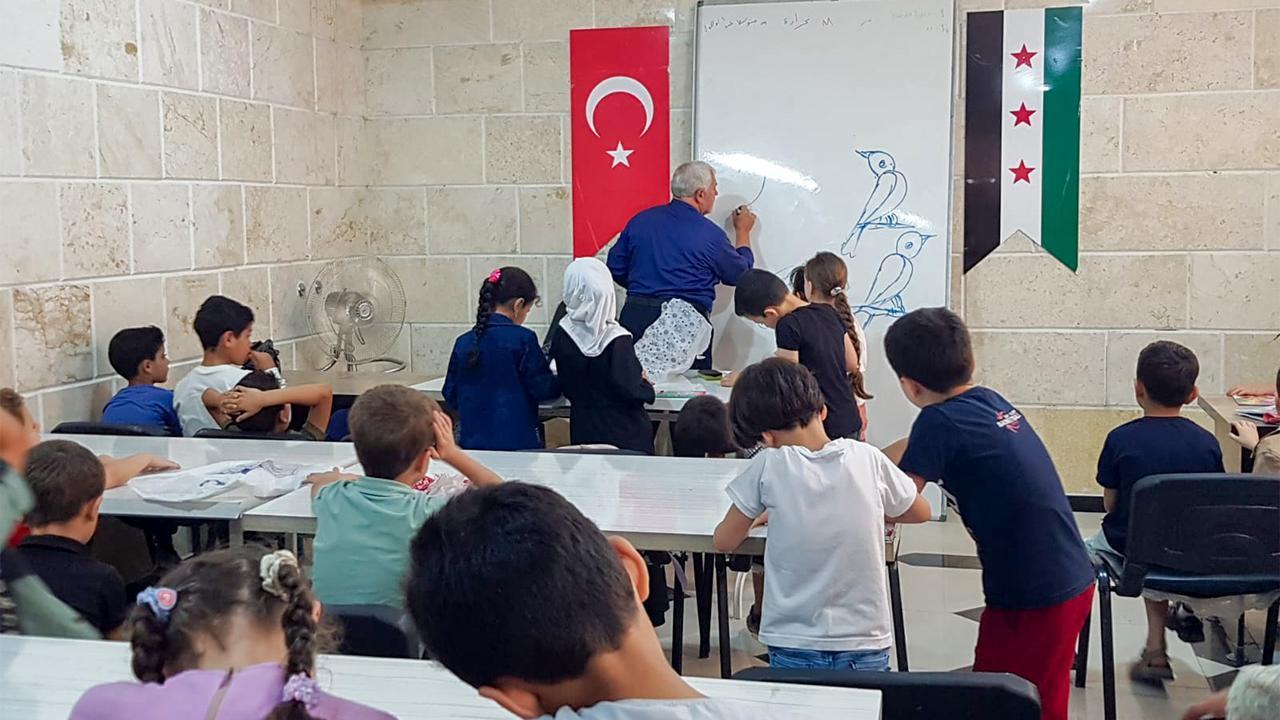

"We need to invest in the ontology of the human being," Aldemir said, adding, "His mind, his thought, his heart."
The Anatolian Culture Centers, now operating at eight locations across Syria and expanding into Aleppo and Damascus, are the institutional expression of that philosophy.
Philosophy workshops, painting ateliers, digital arts, rehabilitation programs, legal rights advocacy.
A publishing house and a radio station are in preparation. The Aleppo center alone is running workshops in visual arts, thought, and what Aldemir calls "rights, law, and justice."
The critique embedded in all of this is directed, gently but unmistakably, at Türkiye's own philanthropic culture.
Traditional charity, Aldemir argued, stops at the physiological: food packages, sacrifice donations, and emergency relief.
Necessary, yes—but insufficient. "Is the human being only this?" he asked. The foundation's wager is that rebuilding Syria's educated class, its artists, and its thinkers is not a luxury to be addressed once the rubble is cleared. It is the clearing of the rubble.
The Bulbulzade Foundation has been operational in Syria's conflict zones since the early days of Türkiye's cross-border operations, and Aldemir has watched the standard humanitarian playbook run its course. Food reaches people. Shelter gets built.
And then, very often, the harder work—the work of reconstituting a society's psychological, intellectual and civic tissue—simply doesn't happen, because it doesn't show up cleanly in donor metrics.
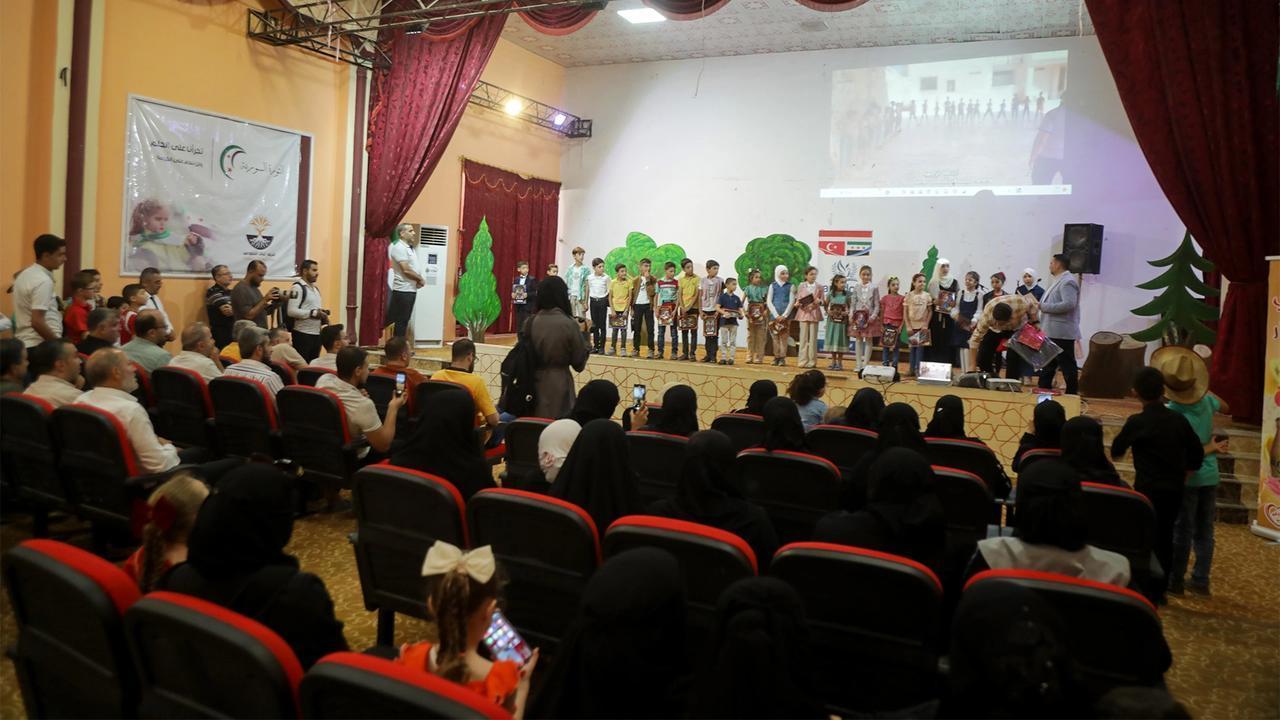
The centers, he is careful to note, are not vehicles for Turkish cultural export. "We are not bringing a cultural imposition from Türkiye. We are strengthening what is already there." The Aleppo center's attendees are Muslims of different sects, Christians, Kurds, Arabs, Turkmens and Turks.
When he describes the early work in the safe zones—“those playing the guitar, the ney, the baglama, we were creating a symphony with all of these”—it feels less like a conventional Western nongovernmental organization (NGO) and more like a lived argument about pluralism, expressed through practice.
The counterpoint he raises, and the one that sharpens the argument, is about who else is doing the selecting. Germany, he notes, recruited 5,400 Syrian doctors during the peak of the crisis.
Western organizations, he argues, have long operated in conflict zones by identifying and extracting specific human capital—gifted children, technical professionals, and future political operatives—while leaving the rest.
"Everyone goes to the market for what they are looking for," he says. "For us, the whole market." Somalia's parliament, he points out, was at one point more than half composed of Western diaspora-recruited figures.
The conflict in Afghanistan created parallel examples. Indeed, talent extraction is a form of long-term influence projection, and the region has seen enough of it.
"We (Turkish philanthropy) also tend to focus on the unusual and marginal. We should do both—but also nurture people's development after that."
The foundation's response is its own talent identification program—run through the organization he leads, using advanced educational screening across a pool of over 100,000 Syrian children in Türkiye to select and develop exceptional students. One of them, a boy named Faysal, was accepted to Harvard later on.
Out of a budget of eventually reconstructing what the U.N. estimates will require over $600 billion, cultural centers and gifted-child programs are a rounding error.
Aldemir knows this. But physical reconstruction without intellectual and civic infrastructure produces, at best, populated ruins. At worst, it produces the conditions for the next conflict.
The Damascus youth center restoration is currently underway, a joint project between the Turkish Traditional Sports Federation and the foundation.
A radio station and a publishing house are being prepared.
The footprint is expanding precisely as Syria's political transition remains unresolved and international attention cycles toward other crises.
From the ruins, Aldemir said, "a great civilization is emerging."
Whether that reads as vision or projection depends on what happens next in Damascus. But the 1912 building in Aleppo, with its waiting list, suggests that at least some Syrians are not waiting to find out.


 Set as preferred source
 Set as preferred source


 3 min read