Newsletters


Iran's Islamic Revolutionary Guard Corps (IRGC) claims it struck and halted two oil tankers attempting to pass through the Strait of Hormuz under the "air escort" of the U.S. military.
It claimed four other tankers quickly turned back, a direct challenge to Washington's effort to shepherd commercial shipping through the closed waterway.
The claimed strikes, which could not be independently verified, escalate the contest over who controls the world's most critical oil chokepoint.
Iran is demanding permission and transit fees for its designated route, and the U.S. is escorting vessels through what Tehran calls an "undeclared" and "illegal" alternative corridor.
"The non-compliant oil tankers... were struck and brought to a halt, while four other oil tankers quickly changed course and returned to their previous positions," the IRGC said in its 57th operational statement, carried by Iran's Tasnim News Agency.
The Guards said the two tankers moved in the early hours of Friday "under the influence of CENTCOM's enticements," believing they could transit the strait via an "undeclared route" under the air escort of the U.S. military without heeding Iranian warnings, calling the path "unsafe and illegal."
The IRGC's naval force said it had warned shipping companies and insurers overnight, in response to what it called a "false CENTCOM statement," to "pay no attention to CENTCOM's announcements, and ask those who were deceived and met with incidents."
It warned again that "the unlawful interventions and dictates" of the U.S. military to vessels in the region "will not go unanswered."
Tasnim later published what it described as images showing the result of ignoring the IRGC navy's warnings and "moving on CENTCOM's orders."
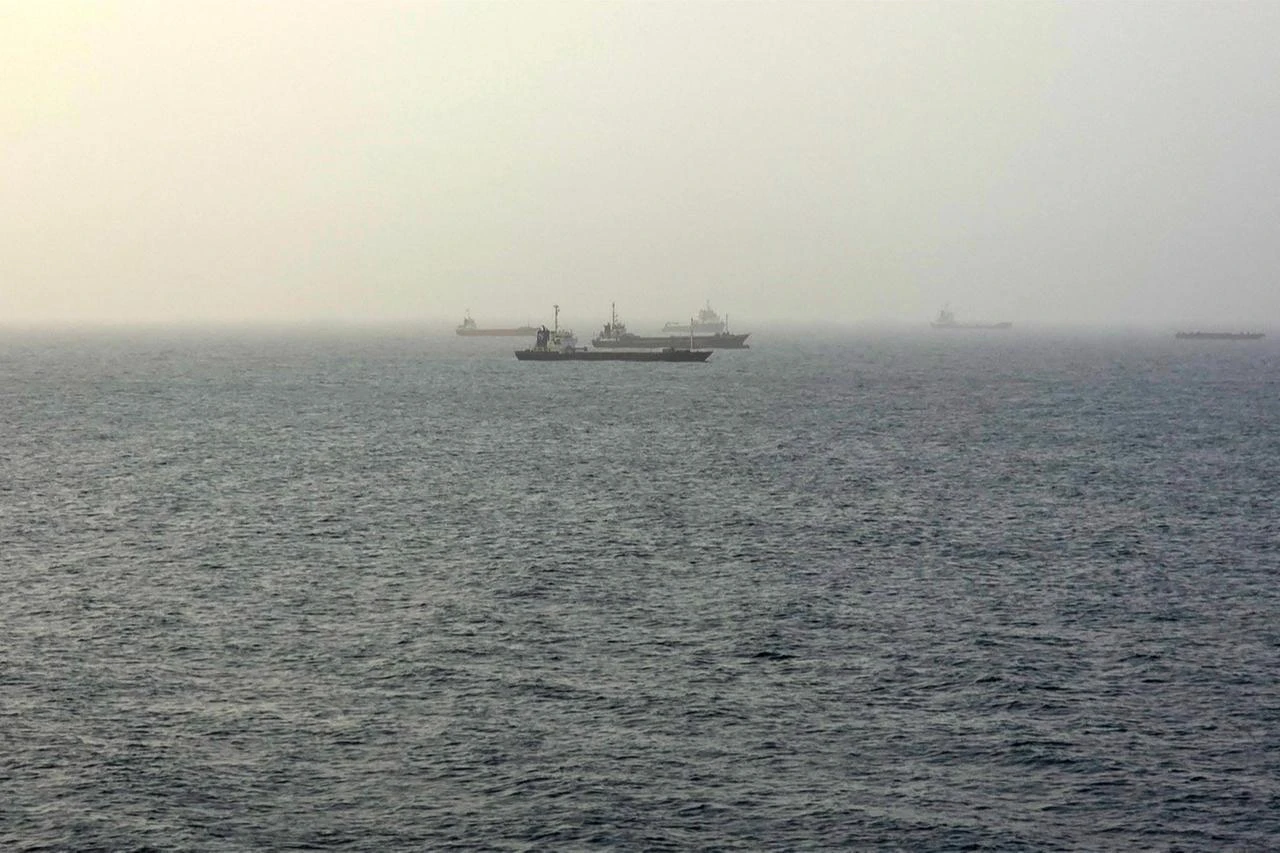

Iran has effectively maintained control over navigation through Hormuz since the war's outbreak on Feb. 28, requiring vessels to obtain permission and pay transit fees before using the waterway via Tehran's designated route closer to its own shores.
On Thursday, the Guards said two oil tankers attempting to transit the strait turned back after one caught fire, and U.S. Central Command (CENTCOM) the same day rejected IRGC claims that the U.S.-backed routes are dangerous, saying the "immediate dangers posed to commercial vessels and their civilian crews are the IRGC's verbal threats and attempted attacks."
CENTCOM has said more than 20 warships and hundreds of aircraft are enforcing a "steel wall blockade" of Iranian ports while facilitating commercial transits, some 900 vessels carrying about 450 million barrels of crude since early May.
Tensions between Washington and Tehran have escalated in recent weeks, with the U.S. carrying out strikes on Iran and Tehran responding by targeting what it says are U.S. military facilities and equipment across the region.
The U.S. and Israel initiated the war and launched nearly 900 coordinated airstrikes across Iran, targeting government buildings, military sites, missile infrastructure and air defenses.
More than 3,300 people were killed in Iran, while tens of thousands have been displaced inside the country.
The war has also affected citizens from several Asian and regional countries.


 Set as preferred source
 Set as preferred source


 2 min read

 1 min read