Newsletters




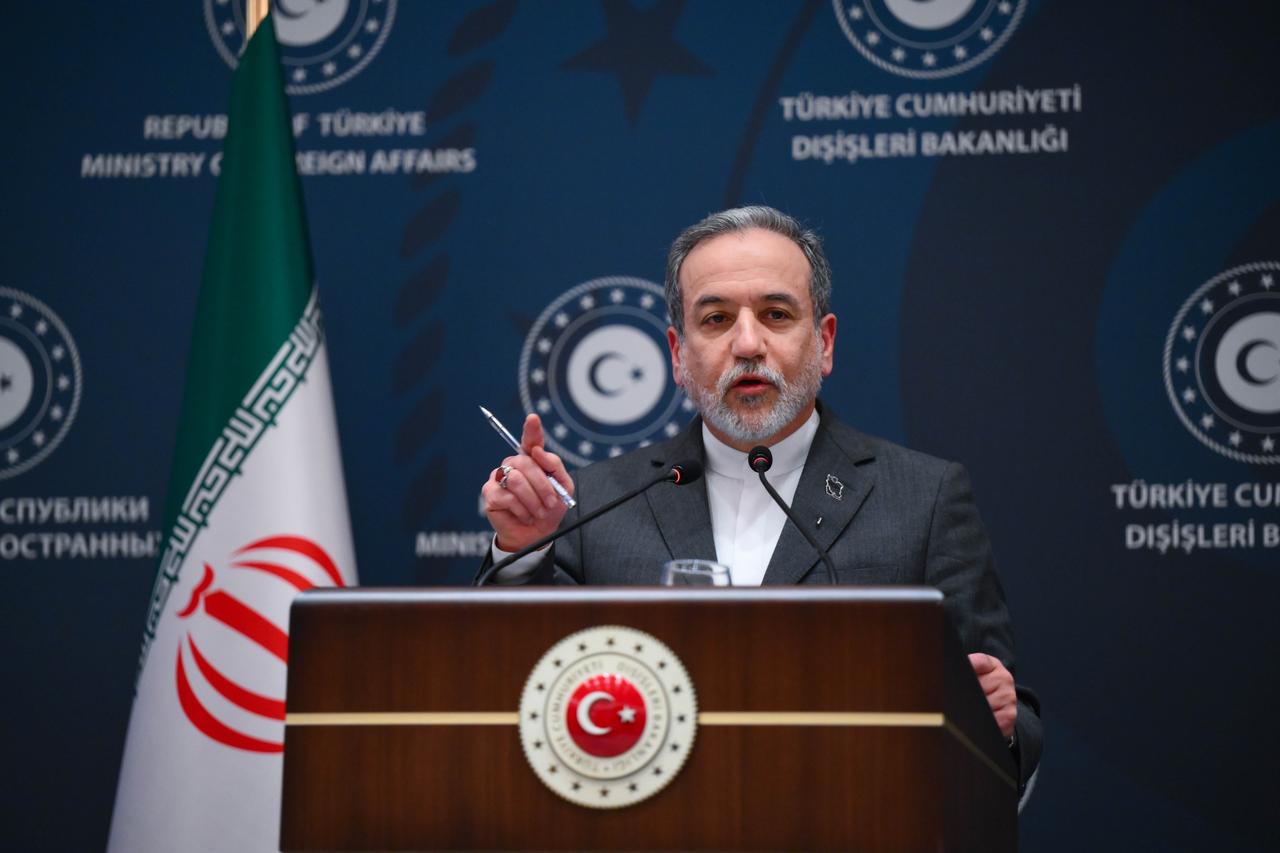
Iranian Foreign Minister Abbas Araghchi said a nuclear agreement with the United States is possible and that Tehran fully agrees with U.S. President Trump's position that Iran should not have nuclear weapons.
He also warned that a U.S.-Iran war would spread across the region. Meanwhile, Israeli media reported Tel Aviv has set three conditions for any U.S.-Iran deal.

In an interview with CNN shared on his official Telegram account, Araghchi said Iran is working with regional countries to find a way to restart negotiations with Washington.
"President Trump said there should be no nuclear weapons, and we fully agree with him. Agreement is possible only in the nuclear field," Araghchi said.
"We can negotiate about our nuclear program to guarantee that our nuclear program is completely peaceful. In return, we expect the lifting of sanctions. However, we need trust. A minimum level of trust is absolutely necessary," he added.
Araghchi said Iran is ready to discuss all details as long as the country continues uranium enrichment activities for peaceful purposes.
He emphasized that Iran has trust issues stemming from the 2015 nuclear deal signed with the U.S., China, Russia, Britain, France and Germany, from which Washington withdrew in 2018.
"The U.S. withdrew from the agreement without providing a reason. Last year, we were attacked at a time when we had decided to negotiate. Therefore, we have lost our trust in the U.S.," Araghchi said.
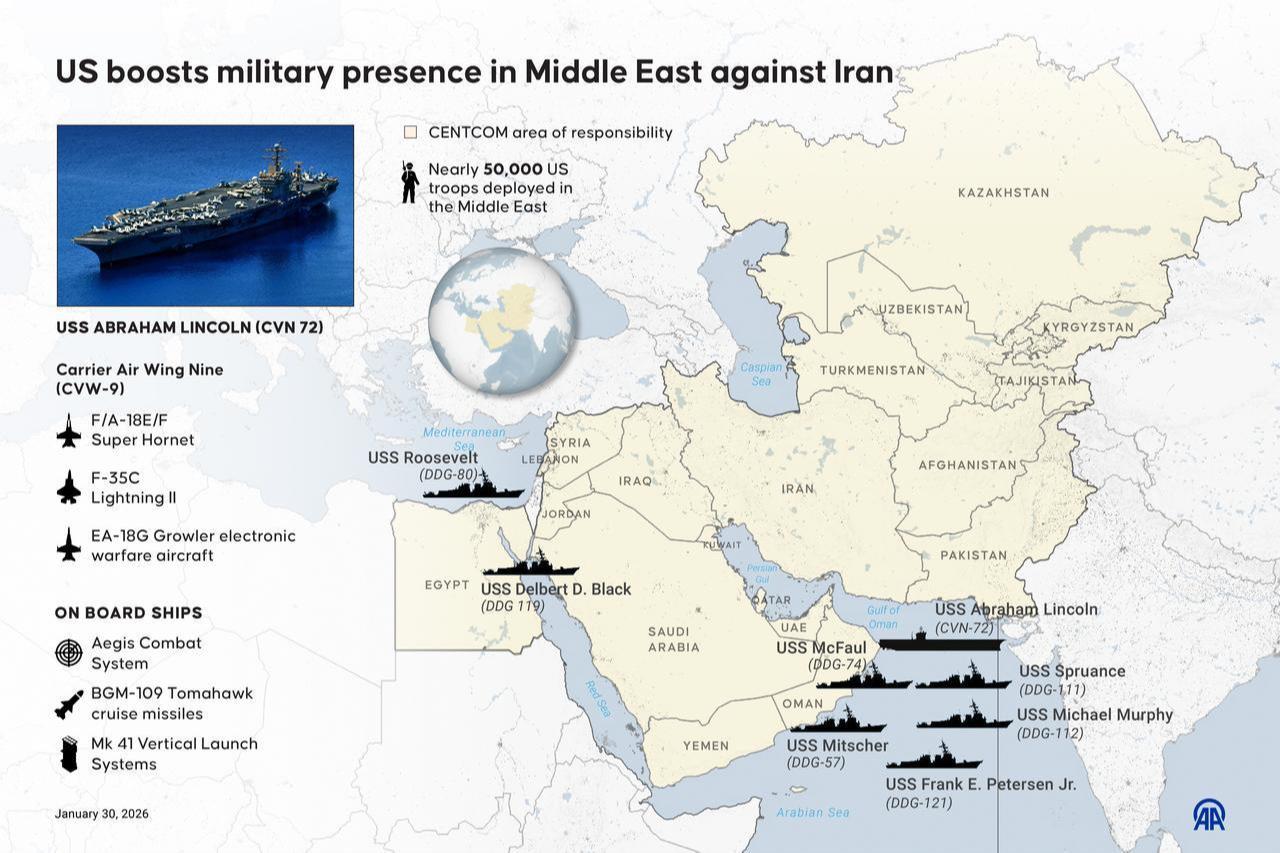
Araghchi addressed the escalating U.S.-Iran military tensions, saying Iran is not worried because it is prepared for war.
"In my opinion, war is not inevitable and can be prevented. The best way to prevent war is to be ready for war. Being ready for war does not mean we want to fight; on the contrary, it means we are avoiding war," Araghchi said.
"My biggest concern is military operations based on misinformation and miscalculations on these issues," he added.
Araghchi said "different elements" are trying to drag the U.S. into war but that President Trump is "smart enough to make the right decision." The Iranian foreign minister warned that a potential war between Iran and the U.S. would negatively affect the entire region.
"In the war with Israel, we made efforts to prevent the conflict from expanding. However, if we fight with the U.S., given the U.S. bases in the region, it is also a fact that the conflict will spread to wider areas," Araghchi said.
He noted that if an agreement is reached between Iran and the U.S., the regional economy would also be revitalized.
"There is no problem on our part regarding U.S. companies operating in Iran in various fields. The party causing the problem is the U.S. because they do not allow their own companies to work in Iran," he noted.

Israeli media outlet Channel 12 reported that Tel Aviv has warned Washington against making a "bad deal" with Tehran and set three conditions for any potential agreement.
According to the report, Israeli Chief of Staff Eyal Zamir conveyed during his Washington visit that "Iran is trying to deceive the U.S."
Israel's three conditions for a "good agreement" are:
Zamir reportedly visited Washington out of concern that "the U.S. will make a bad deal with Iran" and delivered the message: "Pay attention to Tehran's dazzling games."
Turkish columnist Abdulkadir Selvi wrote in Hurriyet that diplomatic sources indicate a countdown began on Feb. 1, with Trump planning a "rapid, intense operation that will produce results in a short time."
Selvi noted that while Qatar's mediation continues and Türkiye's efforts persist, "the information coming in unfortunately indicates that the U.S. is preparing for war."
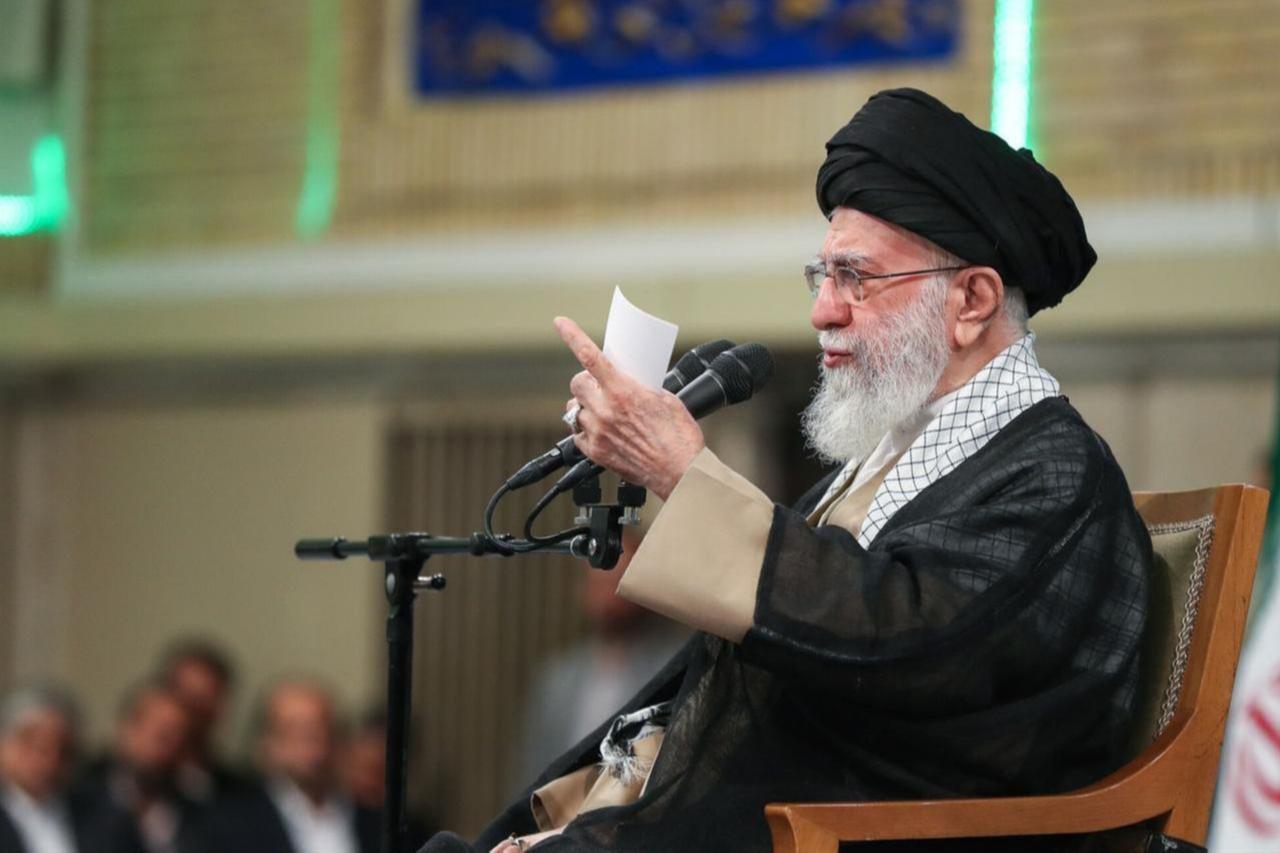
"Trump gave the first signal of the path to war. He said, 'If Khamenei doesn't agree, he will see war.' Trump's warning must be taken seriously," Selvi wrote.
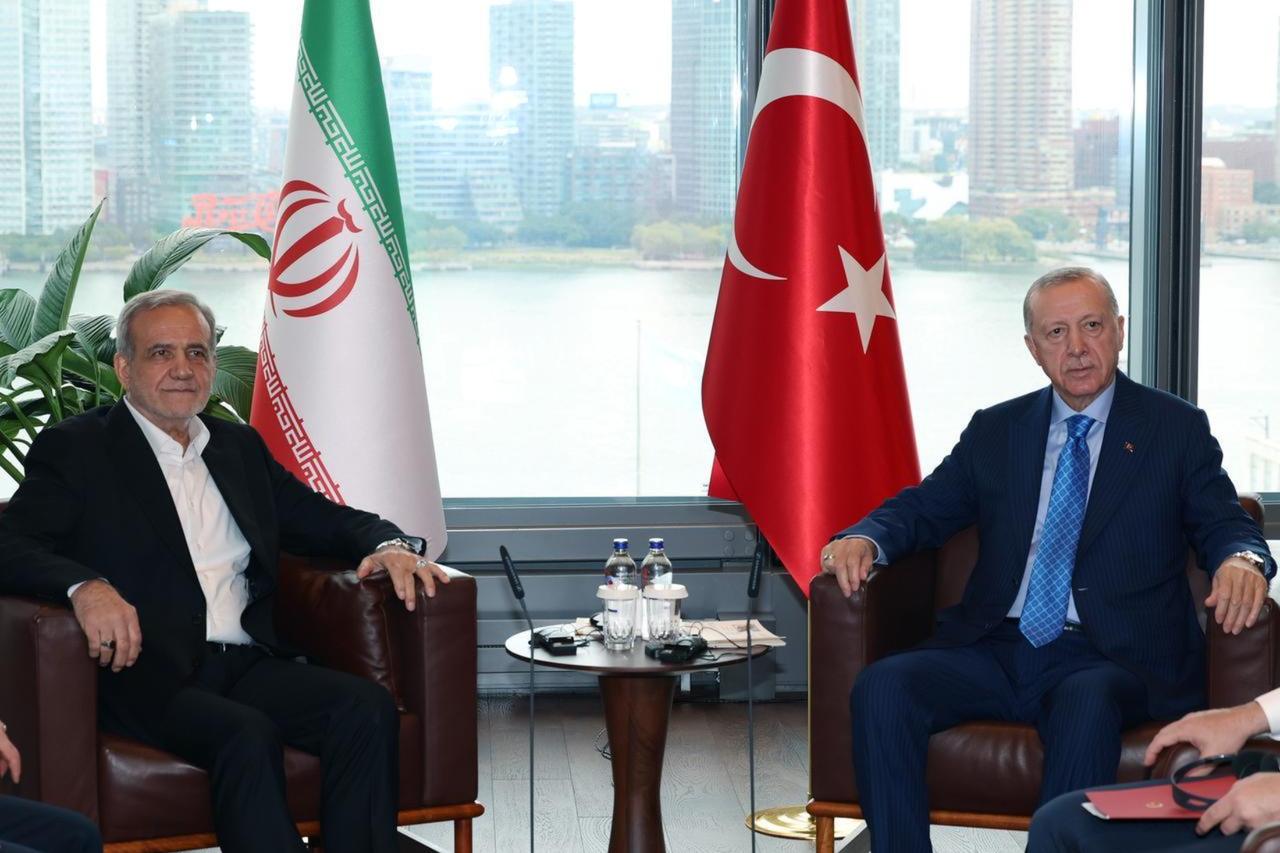
He highlighted President Erdogan's unique diplomatic position: "The only leader who can talk to both Putin and Zelenskyy in the Russia-Ukraine war is Erdogan. The only leader who can talk to both Trump and Pezeshkian in the U.S.-Iran tension is again Erdogan."


 Set as preferred source
 Set as preferred source


 1 min read
 1 min read