Newsletters


A senior Iranian military official has warned that Tehran could extend its maritime campaign to a second strategic waterway, the Bab el-Mandeb strait, if the United States makes what he described as a "strategic mistake," raising the prospect of simultaneous disruptions to the two chokepoints through which much of the world's energy trade flows.
In remarks to Al Jazeera on Tuesday, the unnamed official said another strait could face a situation "similar to the Strait of Hormuz" in the event of American miscalculation. The official added that the region "may enter a regional war soon" and that Iran still has "many cards to play."
The warning came on day 12 of the war between Iran and a U.S.-Israeli coalition, with the Strait of Hormuz already effectively shut down to commercial shipping. Vessel traffic through Hormuz has plummeted from an average of 138 ships per day to as few as two in a single 24-hour period.
On the same day, the IRGC declared it would not allow "a litre of oil" through the waterway, warning that any vessel linked to the United States, Israel or their allies would be treated as a legitimate target.
The threat to extend the disruption to the Bab el-Mandeb, a 26-kilometre-wide passage between Yemen and Djibouti at the southern entrance to the Red Sea, would signal a dramatic escalation in Tehran's maritime strategy and could sever the last viable energy export route available to Gulf oil producers.
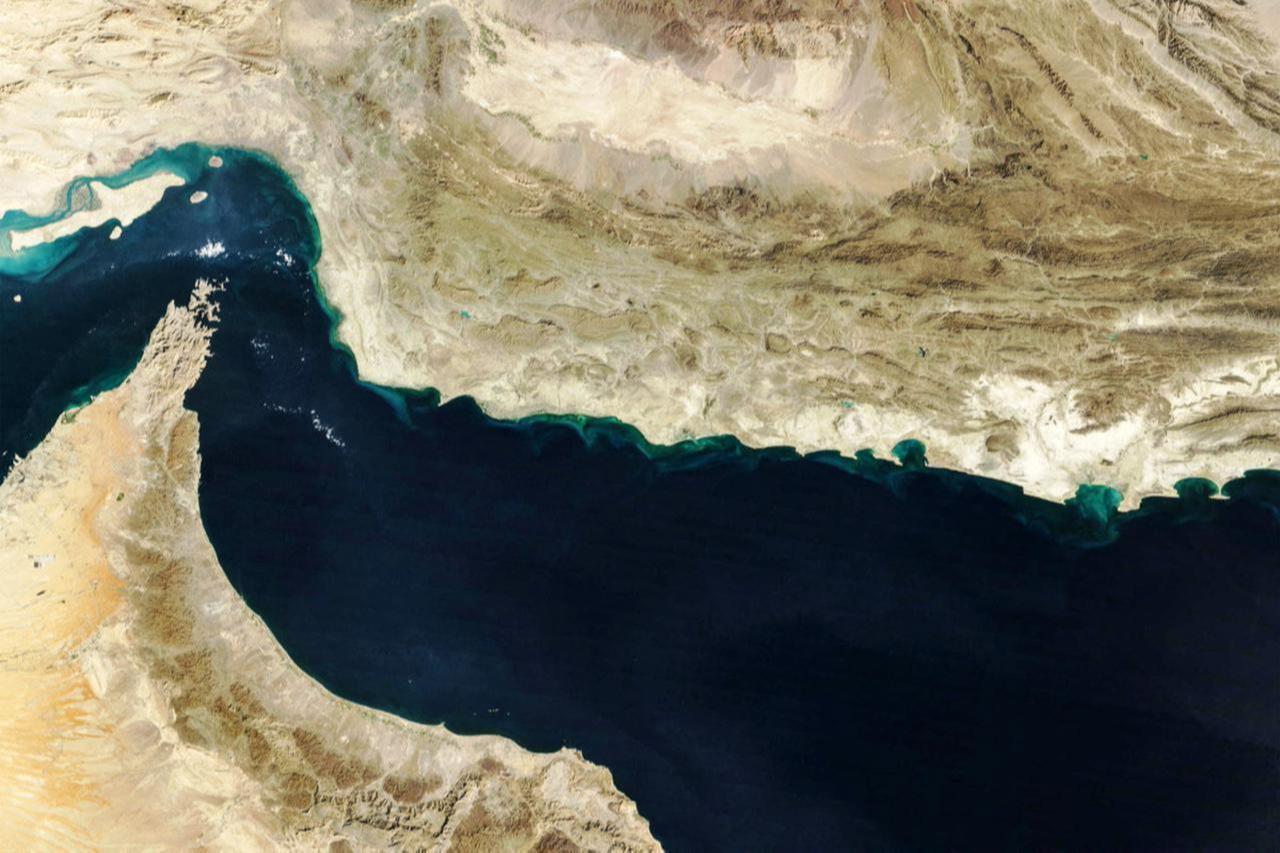

The Bab el-Mandeb has long been identified by analysts as Iran's secondary maritime pressure point, a chokepoint where Tehran can project power through its Houthi allies in Yemen without directly exposing its own forces
More than 20,000 vessels pass through the Bab el-Mandeb annually, carrying an average cargo volume of nearly 1.6 billion tonnes. An estimated 6.2 million barrels per day of crude oil, condensate and refined petroleum products flowed through the passage in 2018, representing about 9 percent of all seaborne-traded petroleum.
Before the Houthi campaign that began in late 2023, the broader Suez Canal route handled an average of 59 to 75 vessels per day, including approximately 8.7 million barrels per day of oil and significant volumes of liquefied natural gas.
The strait's closure would eliminate the shortest maritime route between the Persian Gulf and European markets via the Suez Canal, forcing vessels on diversions around the Cape of Good Hope that add roughly two weeks and upwards of $1 million in fuel costs to each voyage.
With Hormuz effectively frozen, the Bab el-Mandeb has become critical infrastructure for Gulf states scrambling to maintain oil exports.
Saudi Arabia is currently relying on its Red Sea facilities and east-west pipelines to sustain some level of crude exports, most of which are destined for Asian markets and would typically transit southward past Yemen.
A closure of the Bab el-Mandeb would cut off that lifeline. Luca Nevola, a Yemen and Gulf maritime security expert with Armed Conflict Location and Event Data, warned that if the Houthis shut the passage while Hormuz is also disrupted, Gulf oil exports could grind to a halt within weeks.
Around 70 percent of OPEC+ spare production capacity sits in the Gulf, meaning there are no readily available alternative sources that could compensate for a sustained interruption at both chokepoints.
Maritime intelligence data underscores the shifting traffic patterns. On March 9, the Bab el-Mandeb recorded 16 crossings, including crude oil tankers, container vessels and bulk carriers, while Hormuz saw virtually no commercial movement.
Traffic through the Bab el-Mandeb has remained elevated relative to Hormuz throughout the conflict, supporting the assessment that trade is being redistributed across regional chokepoints rather than normalizing.
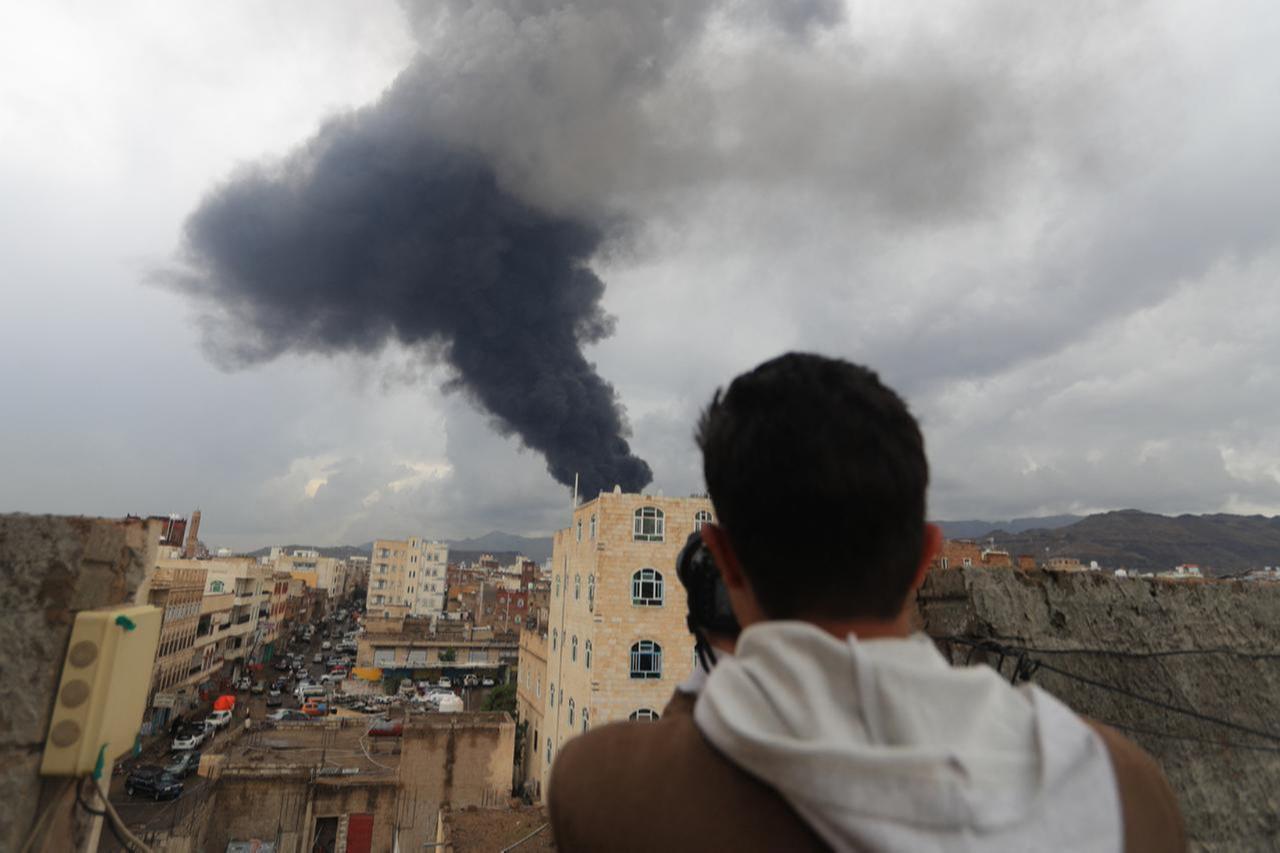
Iran's capacity to threaten the Bab el-Mandeb rests on its relationship with Yemen's Houthi movement, which controls territory adjacent to the strait and has proven its ability to disrupt maritime traffic.
Since November 2023, Houthi forces have launched more than one hundred attacks on commercial vessels in the Red Sea corridor, affecting over sixty nations. By the end of 2024, oil flows through the Bab el-Mandeb had fallen by more than 50 percent, with LNG tanker transits nearly ceasing altogether.
Yet so far in the current conflict, the Houthis have been conspicuously restrained. One week into the war, the group had not come to Iran's defense but warned that their "fingers are on the trigger." Analysts attribute this caution to several factors: U.S. strikes during the Gaza war degraded their arsenal, Israeli operations eliminated much of their leadership, and their economy has suffered under sanctions.
The Houthis are also mindful that attacking Red Sea shipping could rupture a Saudi-Houthi detente in place since 2022, potentially plunging Yemen back into active war with Riyadh at a time when Saudi Arabia depends on the Red Sea route for its remaining oil exports.
Still, analysts caution that Houthi restraint should not be mistaken for incapacity. Their drones, missiles, sea mines and fast boats could render the Bab el-Mandeb impassable without the group needing to hold territory, much as their earlier campaign forced the vast majority of commercial shipping to seek diversions.
Al Jazeera's Yemen affairs editor has noted that the Houthis may seek to support Iran through the Red Sea front rather than through direct military intervention, using it as a pressure tactic to disrupt international supply lines while avoiding open conflict.
 1 min read

Iran's use of maritime chokepoints as strategic leverage has deep historical roots.
During the Iran-Iraq War in the 1980s, both sides targeted commercial vessels in the Persian Gulf in what became known as the Tanker War, damaging or destroying more than 500 ships and prompting the United States to launch Operation Earnest Will, the largest naval convoy operation since the Second World War.
That conflict culminated in Operation Praying Mantis in April 1988, when Iran underestimated the U.S. Navy and lost half of its naval assets in a matter of hours, an engagement that remains the largest American surface naval action since 1945.
The experience instilled in Tehran a lasting wariness of direct confrontation with American naval power, which analysts say has driven Iran's subsequent preference for asymmetric tactics, including the use of proxies, mines and fast attack boats.
The current crisis marks the first time Iran has moved from threats to actual enforcement at Hormuz.
On March 2, a senior IRGC official confirmed the strait was closed and threatened any ship that attempted to pass. The U.K. Maritime Trade Operations Centre has reported at least 13 attacks on vessels in the Gulf, the Strait of Hormuz and the Gulf of Oman since the conflict began on February 28.


 Set as preferred source
 Set as preferred source



 1 min read