Newsletters





The use of more than 3,000 precision-guided munitions and missile defense systems by the United States and Israel in the first 36 hours of their attacks on Iran has highlighted the need to replenish ammunition stockpiles while exposing structural vulnerabilities in Western defense supply chains, including dependence on rare earth elements largely controlled by China.
Foreign Policy magazine examined the scale of ammunition used by the United States and Israel during the initial phase of the strikes on Iran, based on open-source data and expert analysis.
According to the report, Iran launched more than 1,000 missiles across the region during the escalation, prompting numerous interception attempts by the United States and Israel.
U.S. B-2 bombers dropped dozens of 2,000-pound bunker-busting bombs targeting deeply buried Iranian ballistic missile launchers, U.S. Central Command (CENTCOM) Commander Adm. Brad Cooper said Thursday.
Speaking at a Pentagon press conference, Cooper said U.S. bomber forces struck nearly 200 targets across Iran over the past 72 hours, including sites around the capital Tehran.
He added that U.S. operations against Iranian naval forces have also intensified.
“You may have heard the president say just a little while ago that we have sunk 24 ships. That was true at the moment. We’re now up over 30 ships,” he said.
Cooper also said Iranian attacks have declined significantly since the beginning of the operation, with ballistic missile attacks down 90% and drone attacks down 83%.
Experts say Iran is conducting a “war of attrition” aimed at exhausting the defensive resources of the United States and Israel. Iran’s air defense systems remaining largely “passive” during the attacks has been interpreted as a result of the technological superiority of U.S. and Israeli forces.
Although the United States and Israel have achieved considerable success in neutralizing Iranian missile attacks, the cost of the operation has been significant. The use of more than 3,000 guided munitions and missile defense systems in the first 36 hours has raised questions about how Washington and Tel Aviv will replenish their stocks.
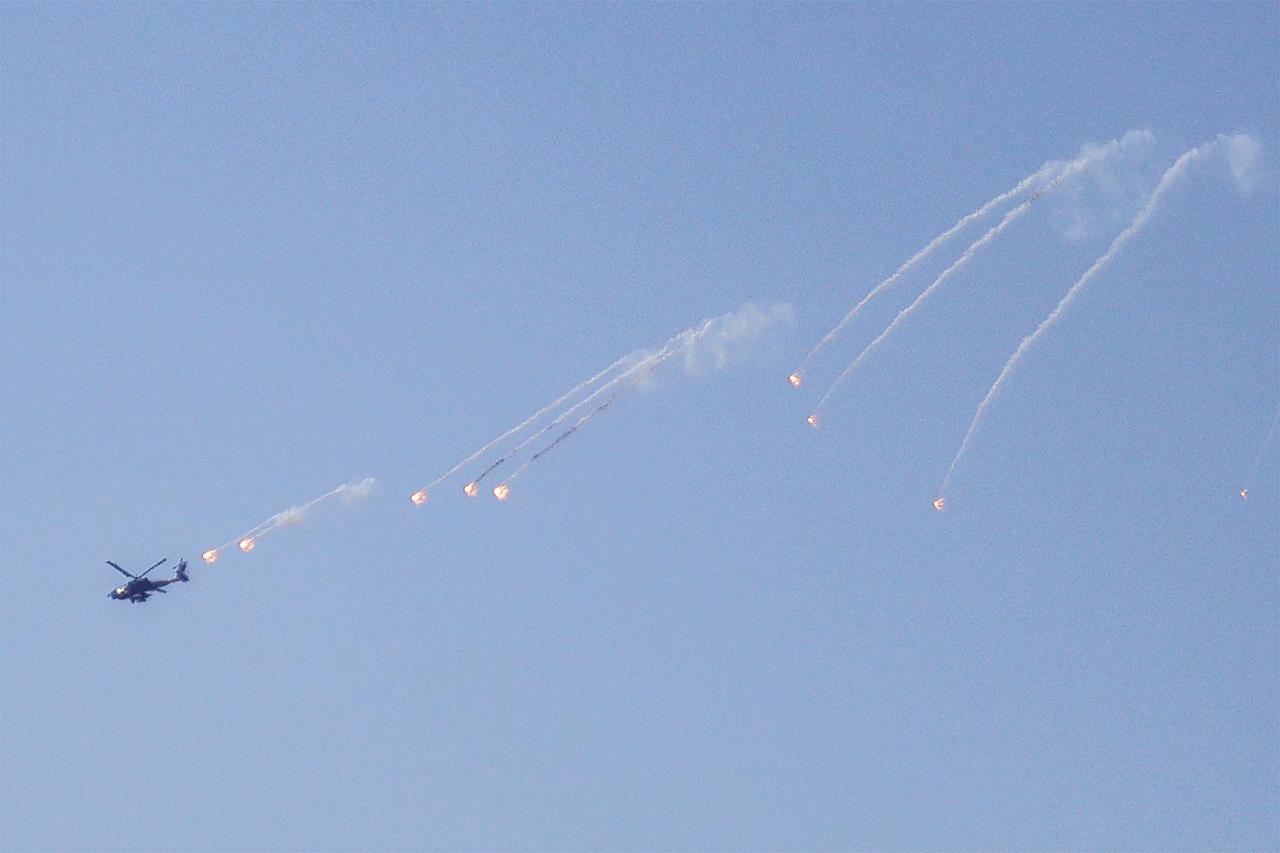

Replenishing ammunition stockpiles requires a multi-stage process, ranging from the extraction of raw materials needed for munitions to industrial processing and manufacturing, in addition to budgetary requirements.
It has also been reported that U.S. Chairman of the Joint Chiefs of Staff Gen. Dan Caine previously raised concerns about potential ammunition shortages before the strikes on Iran.
The U.S. Navy has reportedly been consuming ammunition stockpiles faster than production capacity, a trend that had also been observed during earlier operations in the Red Sea.
Tensions have surged across the Middle East after the United States and Israel launched airstrikes on Iran beginning Feb. 28, which have killed more than 900 people, including Iran’s Supreme Leader Ali Khamenei and at least 165 schoolgirls.
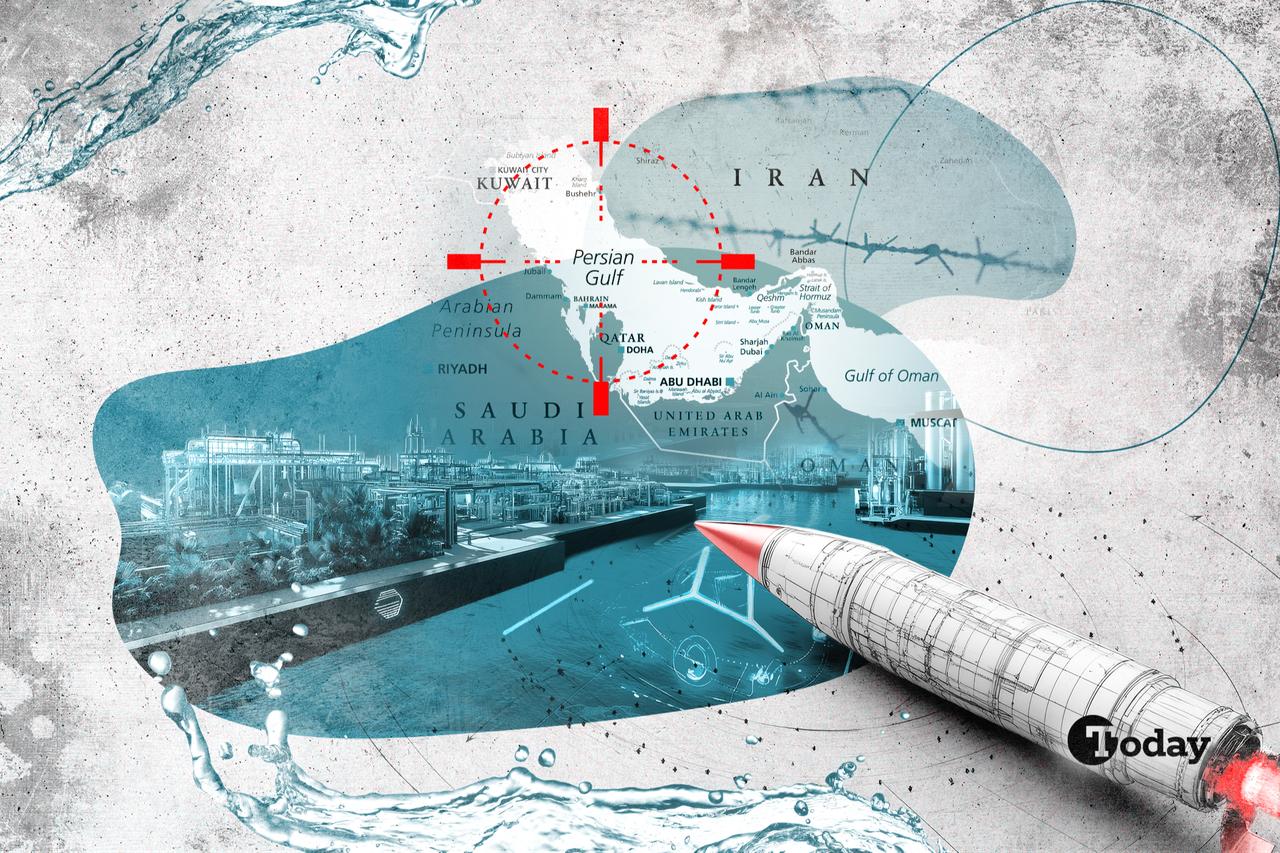
Iran has retaliated with drone and missile attacks targeting U.S.-linked sites in Gulf countries.
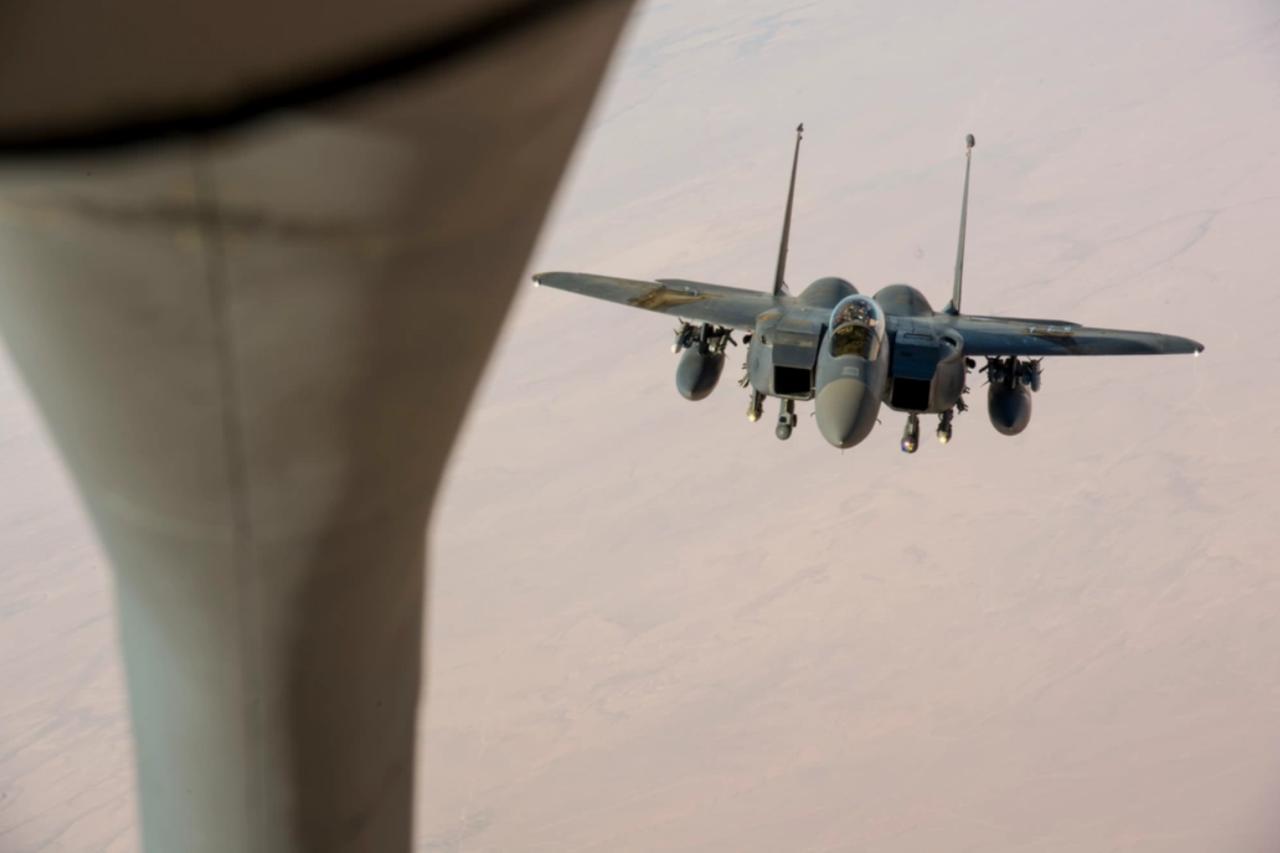
Over the weekend, a drone strike in Kuwait killed six U.S. service members at a tactical operations center.
Even the most basic munitions rely on complex supply chains, many of which depend on minerals largely controlled by China.
Guidance kits used in modern munitions require high-performance components that depend on rare earth elements, a market dominated by China.
Replacing expended resources, therefore, requires not only increased production but also access to minerals and raw materials largely controlled by Beijing.
While challenges such as raw material orders and financing may be resolved relatively quickly, experts estimate that securing a trained workforce, specialized equipment and sufficient industrial capacity will take significantly longer.
War simulations conducted in 2023 suggested that if the United States attempted to defend Taiwan in the event of a Chinese invasion, U.S. ammunition stocks could be depleted within one week.
For this reason, analysts say the first 36 hours of the strikes on Iran represent a significant test of Western defense industrial resilience.
In addition to the heavy consumption of ammunition, the destruction of high-value military systems has added further complications.
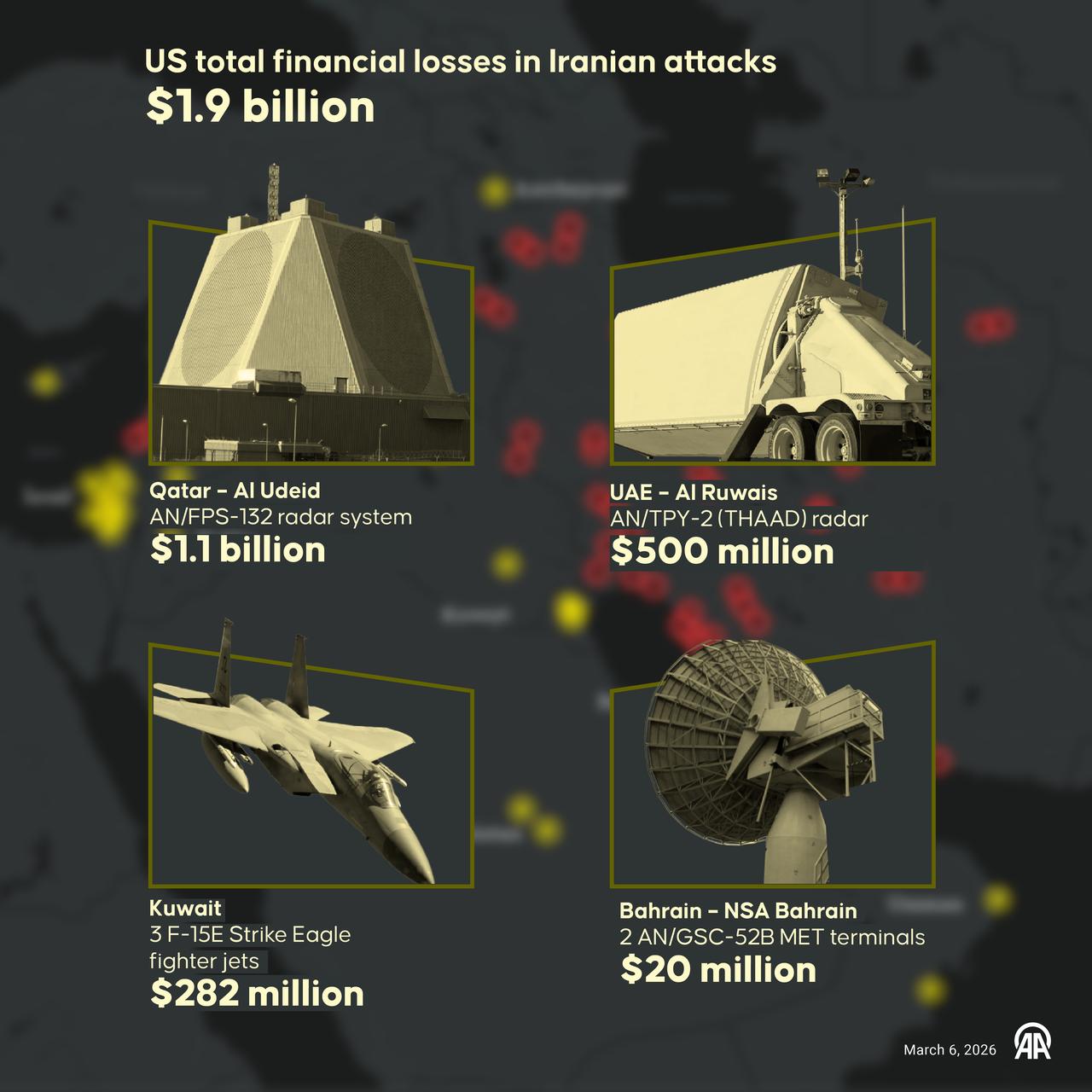
An AN/FPS-132 early warning radar system located at Al Udeid Air Base in Qatar, valued at approximately $1.1 billion, and an AN/TPS-59 radar system in Bahrain were destroyed in Iranian missile attacks.
Replacing these systems is expected to take considerable time.
Construction of a new AN/FPS-132 radar is estimated to require between five and eight years. Replacing an AN/TPS-59 system could take between 12 and 24 months and cost between $50 million and $75 million.
Producing both systems also requires approximately 77.3 kilograms of gallium, a mineral whose global supply is roughly 98% controlled by China. Additionally, about 30,610 kilograms of copper would be required for production.
Western military preparedness has also drawn criticism from analysts who say the strategic cost of prolonged conflict is often underestimated.
As in the Russia-Ukraine war, experts say the real cost of modern warfare is frequently miscalculated.
Military strength is often measured by the number of platforms, such as tanks or missile launchers. However, analysts argue that the more critical factor is the volume of ammunition that can be sustained during prolonged combat and how quickly depleted stocks can be replenished.
Several structural issues complicate the rapid replenishment of advanced weapons systems.

Tomahawk cruise missiles depend on a single manufacturer, while strategic munitions such as the GBU-57 bunker-buster are produced in limited quantities and can only be used by specific aircraft.
Some systems rely heavily on older stockpiles, while advanced air defense systems such as THAAD are extremely difficult to produce and require specialized components.
Analysts note that most advanced Western weapons systems depend on complex and lengthy supply chains, warning that the outcome of future conflicts may be determined not by which side has superior technology, but by which can replenish ammunition stocks more quickly.
U.S. Defense Secretary Pete Hegseth rejected claims that the United States faces ammunition shortages, arguing that the military remains capable of sustaining its operations.
Speaking alongside CENTCOM Commander Adm. Brad Cooper at the command’s headquarters in Tampa, Florida, Hegseth said Iran believed the United States could not maintain its offensive operations.
“This is a really bad calculation for the Revolutionary Guards in Iran. As you can see, there is no lack of American resolve here,” Hegseth said.
He insisted the U.S. military has sufficient offensive and defensive capabilities to continue operations as long as necessary.
“If you think you have seen something so far, just wait,” Hegseth said, arguing that the combined military power of the United States and Israel could project significantly greater force in the coming days.
Hegseth also said the U.S. military now operates with broader battlefield authority.
CENTCOM Commander Cooper said Iran’s military capabilities were weakening while U.S. operational strength was increasing.
“Our air superiority allows us to strike Iran’s center of gravity with overwhelming force and reach,” Cooper said.
“In just the last 72 hours, American bombers have struck approximately 200 targets in Iran’s interior. In just the last hour, two U.S. bombers dropped dozens of one-ton bunker-busting bombs on deeply buried ballistic missile launch sites.”
Cooper also said U.S. forces have intensified operations against the Iranian Navy, claiming that a total of 30 Iranian ships had been sunk so far.
“When we compare the situation at the beginning of the operation with the last 24 hours, we see that ballistic missile attacks have decreased by 90% since the first day, and unmanned aerial vehicle attacks have decreased by 83%,” he said.
Cooper added that future operations would focus on eliminating Iran’s missile production capacity.
“This will take some time, but our forces are well supplied,” he said.


 Set as preferred source
 Set as preferred source


 1 min read
 1 min read