Newsletters


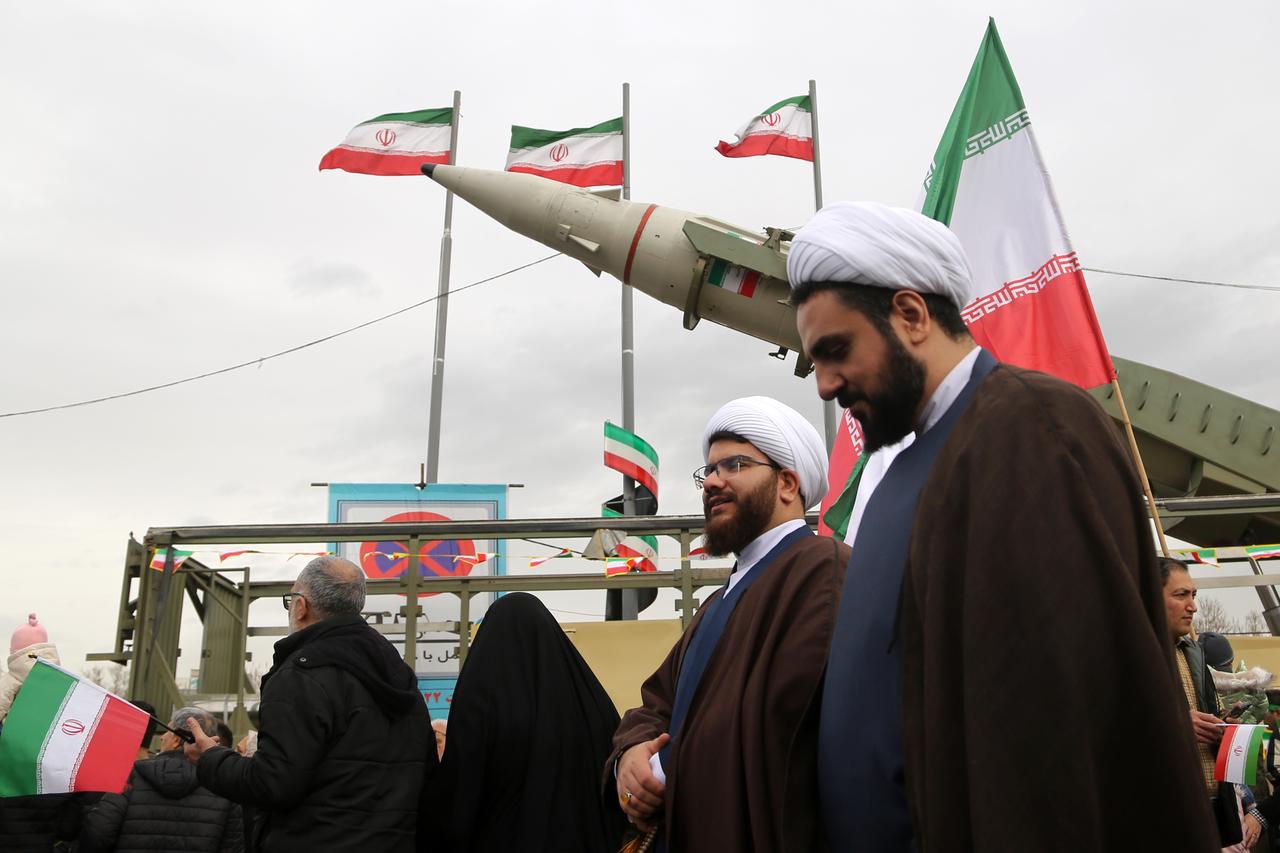


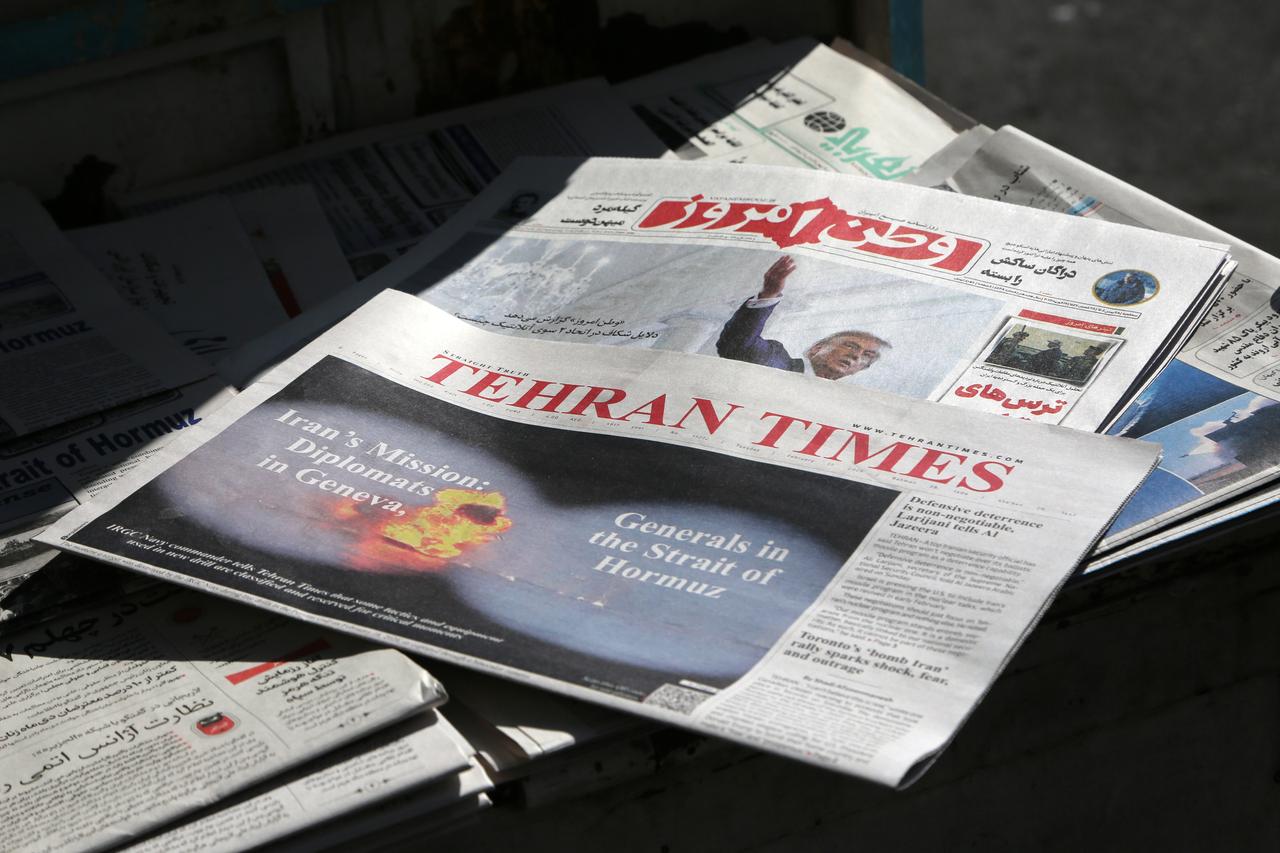
Iran warned Friday that U.S. bases, facilities and assets in the region would become "legitimate targets" if Washington follows through on military threats, as U.S. President Donald Trump declared Iran has at most 10 to 15 days to strike a deal on its nuclear program.
"In the event of military aggression, all bases, facilities, and assets of the hostile force in the region would constitute legitimate targets in the context of Iran's defensive response," Iranian U.N. Ambassador Amir Saeid Iravani wrote in a letter to U.N. Secretary General Antonio Guterres and the Security Council president.
Iravani said that if attacked, "Iran will respond decisively and proportionately, exercising its inherent right to self-defense under Article 51 of the United Nations Charter."

Trump told reporters aboard Air Force One on Thursday that Iran had a limited time to reach an agreement.
"We're either going to get a deal, or it's going to be unfortunate for them," Trump said. On a deadline, he said 10 to 15 days was "pretty much" the "maximum" he would allow for negotiations to continue.
"I would think that would be enough time," he added.
The warning echoed previous patterns.
Last June, White House press secretary Karoline Leavitt cited a "substantial chance of negotiations" with Iran, telling reporters the president planned to make his decision "within the next two weeks."
Two days later, Trump ordered strikes on three Iranian nuclear sites.
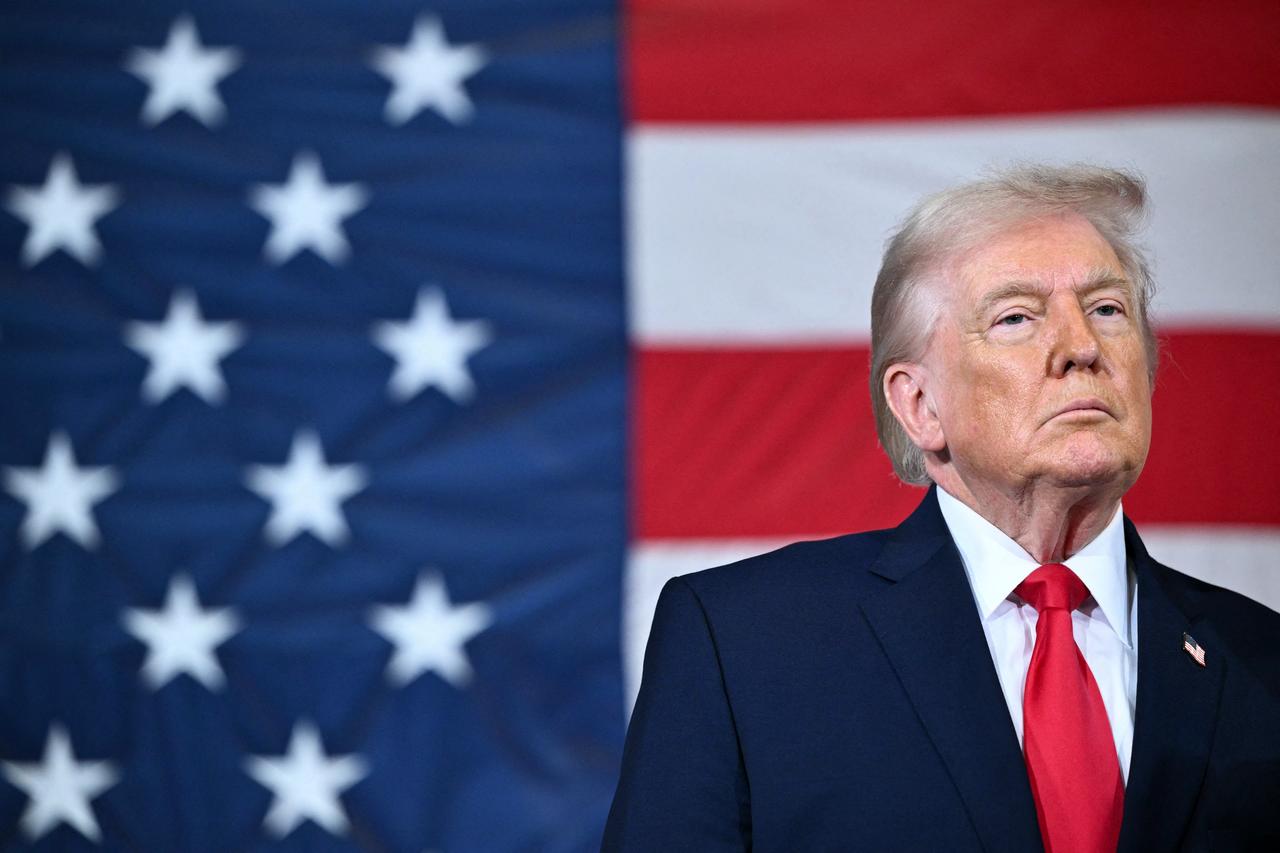
Trump is considering a limited military strike on Iran to pressure Tehran into agreeing to a new nuclear deal, the Wall Street Journal (WSJ) and ABC News reported Thursday.
The initial operation—if approved—could take place within days and would target a limited number of military or government sites, designed to intensify pressure while stopping short of a full-scale attack that could provoke major retaliation.
If Iran refuses to comply with demands to halt nuclear enrichment activities, Washington could escalate to a broader campaign against regime facilities, potentially aimed at destabilizing the leadership in Tehran, the report added.
One source said, "Trump could escalate gradually—beginning with smaller strikes and expanding operations if necessary—until Tehran either abandons its nuclear program or the regime collapses."
"Trump has not made a final decision but is reviewing options, including a short, intensive campaign aimed at forcing regime change and limited strikes on government and military targets," officials reportedly stated.
In his letter, Iravani said continuing U.S. threats of force violate the U.N. Charter and international law while risking plunging the region into a new crisis and instability.
"Such a belligerent statement by the President of the United States signals a real risk of military aggression, the consequences of which would be catastrophic for the region and would constitute a grave threat to international peace and security," Iravani wrote, citing Trump's social media post suggesting the U.S. may need to use UK military bases including Diego Garcia "should Iran decide not to make a deal."
Iravani called on the Security Council to "ensure that the United States immediately ceases its unlawful threats of the use of force."
"The Security Council must not allow the normalization and legitimization of threats to use force. If such unlawful behavior is not addressed, another sovereign member state will be next," he warned.
He emphasized Iran remains committed to diplomatic solutions and is negotiating with the U.S. government "seriously, in good faith and constructively," adding that a lasting and balanced solution is possible "if Washington approaches talks with equal seriousness and respect for international law."
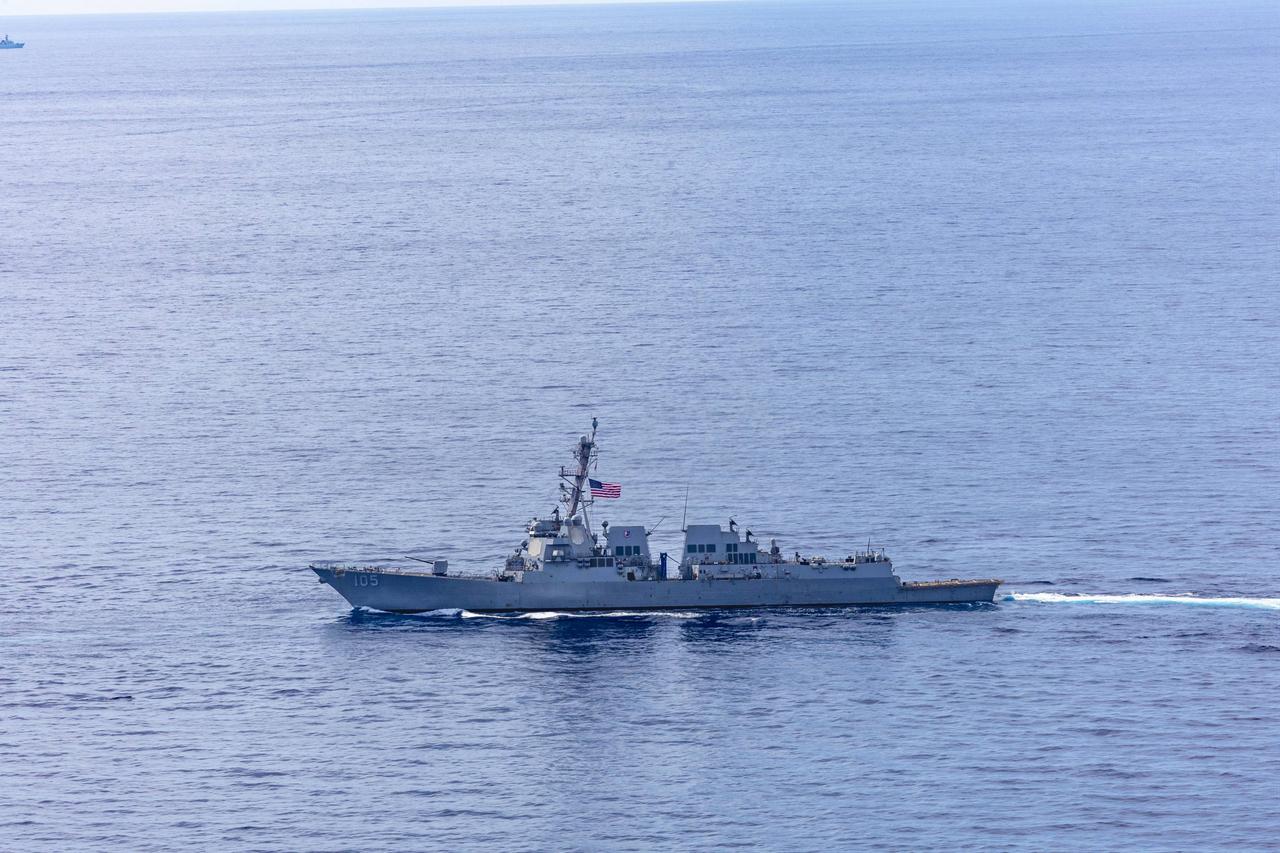
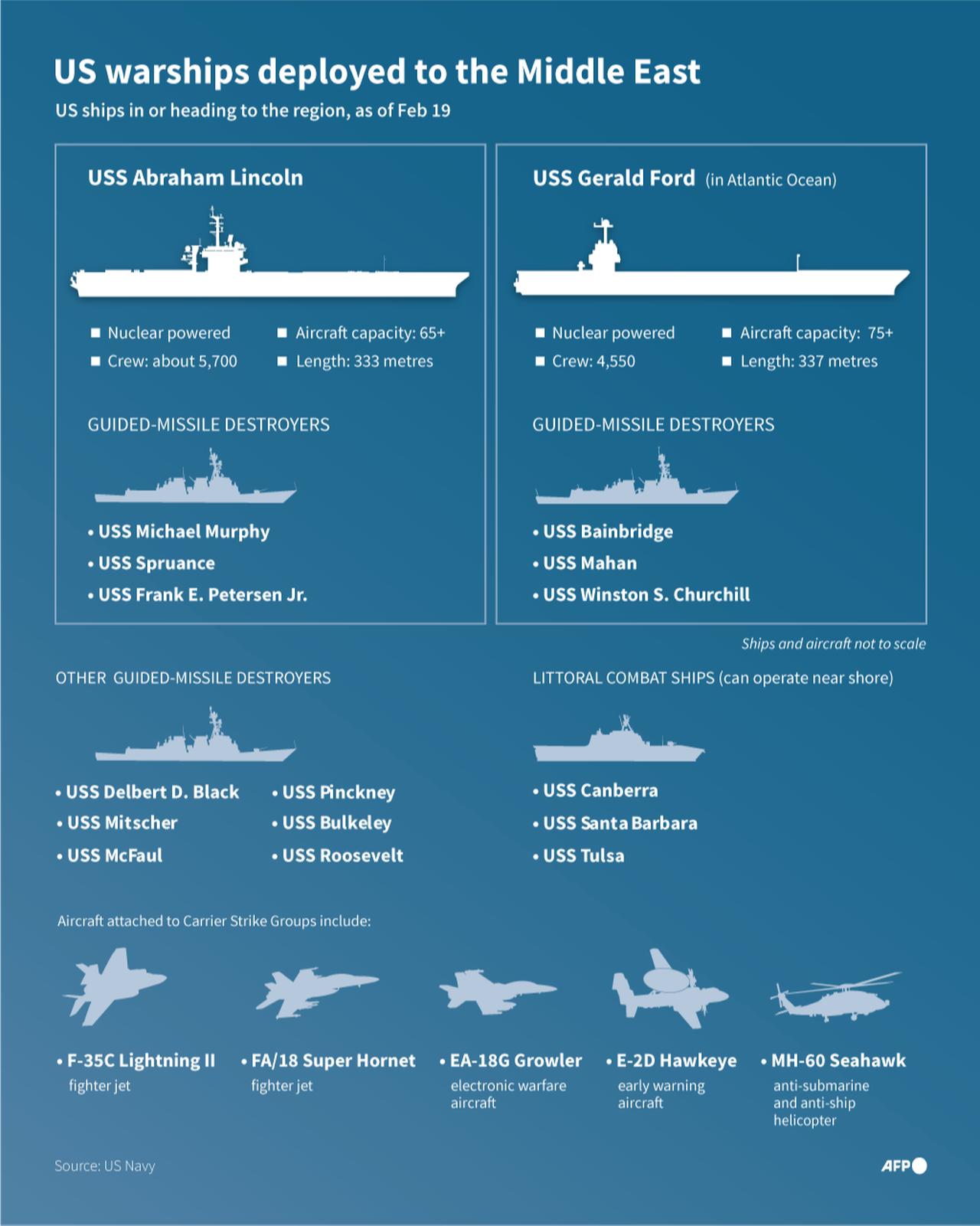
The U.S. military deployment to the Middle East is unlike anything since 2003, before the invasion of Iraq, dwarfing the buildup Trump ordered off Venezuela's coast before ousting President Nicolas Maduro.
Washington currently has 13 warships in the Middle East: the aircraft carrier USS Abraham Lincoln, nine destroyers, and three littoral combat ships.
The USS Gerald R. Ford—the world's largest aircraft carrier—is en route from the Atlantic, accompanied by three destroyers.
The U.S. has also sent F-22 Raptor stealth fighters, F-15 and F-16 warplanes, KC-135 aerial refueling aircraft, E-3 Sentry airborne warning and control aircraft and cargo planes.


 Set as preferred source
 Set as preferred source


 2 min read
 1 min read