Newsletters


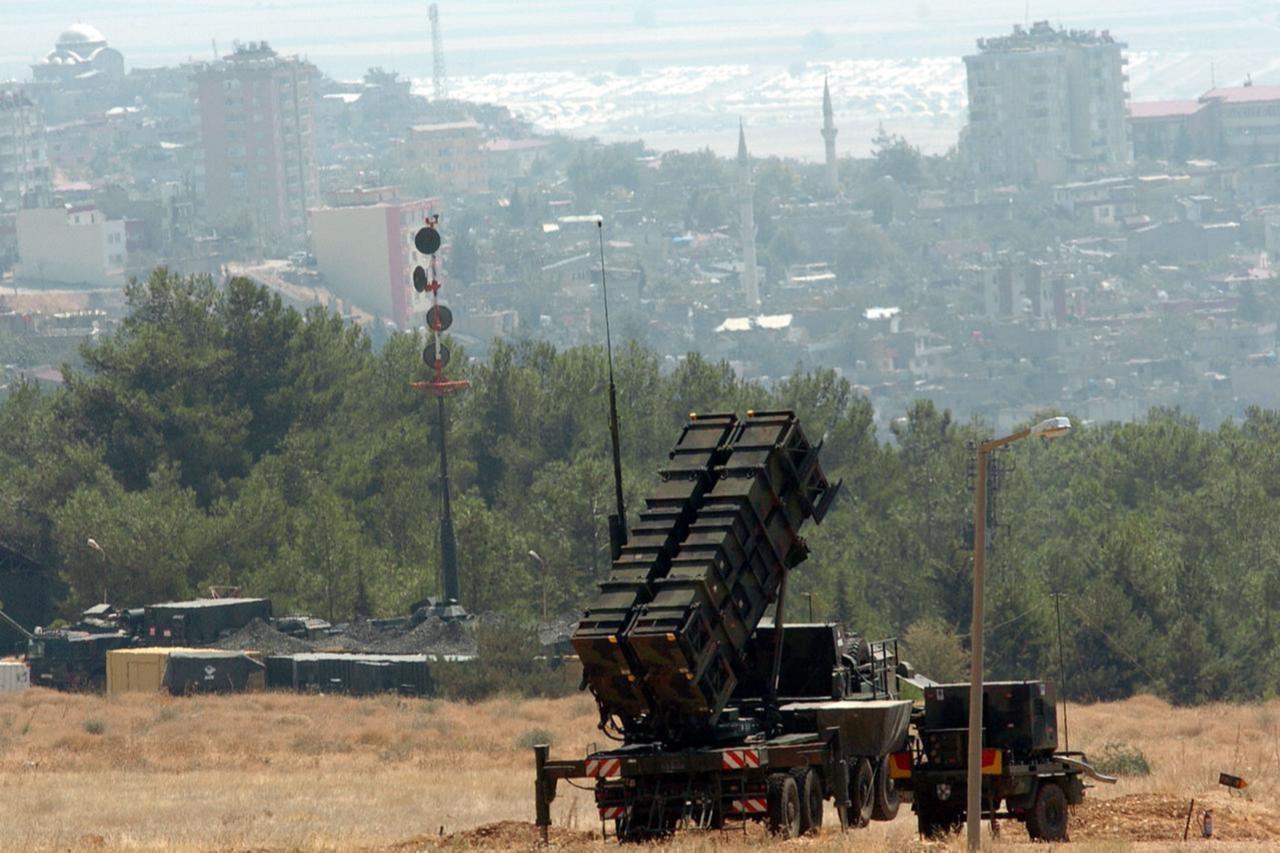


The Turkish Defense Ministry announced that a missile fired from Iran was intercepted over Turkish airspace on Monday.
"A ballistic munition, determined to have been launched from Iran and to have entered into Turkish airspace, has been neutralized by NATO air and missile defense assets deployed in the Eastern Mediterranean," the ministry's statement read.
It is the fourth incident involving Iranian missiles since the beginning of the Iran war on Feb. 28.
The ministry further said that all necessary measures are being taken decisively.
"All measures are taken without hesitation against any threat directed at our country’s territory and airspace, and all developments in the region are being closely monitored with priority given to our national security."
Hours after the incident, NATO spokesperson Allison Hart wrote on X that the alliance stands ready against "such threats."
Monday's interception is the latest in a series of incidents that have drawn NATO member Türkiye deeper into the widening conflict between Iran and a US-Israeli military coalition. The first Iranian ballistic missile fired toward Türkiye was intercepted on March 4, followed by a second on March 9, and a third on March 13, each prompting a fresh round of diplomatic protests from Ankara.
The trajectory of the earlier missiles illustrated how the threat was evolving: the first was intercepted before reaching Turkish airspace after passing through Iraqi and Syrian skies, while the second and third entered Turkish airspace before being neutralized. Debris from interceptor missiles fell in the Hatay and Gaziantep provinces during the earlier incidents, causing no casualties.
In the weeks preceding Monday's incident, Türkiye lodged formal diplomatic protests with Iran after each of the first three strikes and summoned the Iranian ambassador to the Foreign Ministry on multiple occasions.
Foreign Minister Hakan Fidan told his Iranian counterpart that any steps that could lead to the spread of the conflict must be avoided, while NATO condemned Iran's targeting of the alliance member and reaffirmed its collective defense commitments.
Iran denied responsibility after each of the earlier incidents, with its Foreign Ministry stating that Tehran had no intention of attacking Türkiye and that its defensive actions were focused solely on the sources of military attacks against it.
The Iranian Embassy in Ankara proposed forming a joint investigative team to examine the incidents, a suggestion Turkish officials left open while continuing to press Tehran for answers. President Recep Tayyip Erdogan has repeatedly said Ankara's overriding goal is to keep Türkiye out of the conflict, while making clear it would defend its airspace without hesitation.


 Set as preferred source
 Set as preferred source


 1 min read
 1 min read